Related Content#
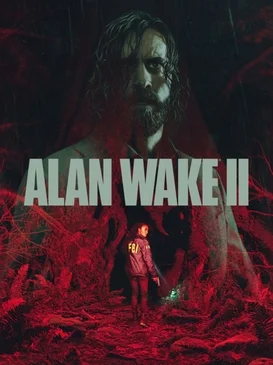
Alan Wake 2 is not a standalone work. It is a key piece of the shared universe built by developer Remedy: the Remedy Connected Universe. Grasping that layer of connection lets you recognise a huge number of echoes between background lore, characters and concepts while you play. They work as narrative foreshadowing, and they also shape how you read every story thread.
Two Protagonists, Two Worlds#
The game alternates between Saga Anderson and Alan Wake, two protagonists who each inhabit a world that mirrors the other:
| World | Protagonist | Characteristics |
|---|---|---|
| The real world | Saga Anderson | The Bright Falls, Watery and Cauldron Lake area; time runs linearly and obeys real-world laws |
| The Dark Place | Alan Wake | A twisted version of New York; time is non-linear and reality is rewritten by narrative |
| The Overlap | Shared by both | Where the two worlds bleed together and brief contact becomes possible |
The core of this structure is that switching protagonist means switching the set of rules you are playing under. In Saga’s world you rely on investigation and evidence; in Alan’s world you rely on writing and rewriting scenes. The puzzle logic on each side is completely different.
Key Characters Across the Universe#
The characters below recur in this game or across several Remedy titles. Recognising them helps you build a map of the whole universe:
| Character | Role in This Game | Related Works and Background |
|---|---|---|
| Alan Wake | One of the two protagonists; a writer trapped in the Dark Place | Protagonist of the original Alan Wake |
| Saga Anderson | One of the two protagonists; an FBI agent | A new character here, a descendant of the Anderson family |
| Alice Wake | Alan’s wife | Fell into Cauldron Lake in the original; referenced through memories and documents here |
| Barry Wheeler | Alan’s agent | A friend from the original; only mentioned here |
| Tor and Odin | Members of Old Gods of Asgard; seers | Appeared in the original; key figures here and elders of the Anderson family |
| Alex Casey | FBI agent | Both a real agent in this game and a character from Alan’s novels |
| Ahti | The janitor of Bright Falls | The janitor of the Oldest House in Control; a character who crosses between works |
| Jesse Faden | Mentioned in documents | Protagonist of Control |
| Scratch | Alan’s dark double | A concept deepened from the one introduced in the original American Nightmare |
Locations and Dimensions#
The stage of this game stretches across several interrelated locations and dimensions:
| Location or Dimension | Nature | Relationship to the Main Story |
|---|---|---|
| Bright Falls | Where the events of the original game happened in the real world | The main stage of Saga’s murder investigation |
| Watery | A small lakeside town in the real world | Home to Tor and Odin’s farm and to Anderson family leads |
| Cauldron Lake | The lake where the dark force is imprisoned | The source of the original events and the heart of the conflict here |
| The Dark Place | The dimension Alan is trapped in; a twisted version of New York | The main stage of Alan’s campaign, where reality is rewritten by narrative |
| Night Springs | A fictional TV show that is also a resort | Both a concept here and the theme for later playable chapters |
The Core Connection Mechanics: Overlap and Echoes#
To understand why the two worlds stay connected, you need to hold on to two mechanics-level concepts:
The Overlap#
The Overlap is the region where the real world and the Dark Place seep into each other. Inside an Overlap zone, the two protagonists’ space and time briefly intersect, and the environment itself starts behaving strangely. You can tell that you are standing in an Overlap zone by watching for these traits:
- The scene shows physical errors that break the laws of the real world, such as misplaced objects or warped space.
- The corrosive feel unique to the Dark Place spreads across the textures of the real-world scene.
- The protagonist senses traces of another timeline or of another person.
Echoes#
Echoes are residue left behind at a location by events in the past. Saga can sense Echoes, using them to look back at what happened to a place or to the people in it. The point is that Echoes do not ask you to fight; they ask you to observe and piece things together. A complete case is usually assembled from fragments found across several Echoes.
Connections to the Previous Game#
The original Alan Wake explained how Alan ended up trapped in the Dark Place, and this game picks that ending straight up:
| Element from the Original | Content There | Echo Here |
|---|---|---|
| Alice falling into the lake | The dark force tried to use Alice | Alice’s situation is raised again and extended here |
| Barbara Jagger | Final antagonist of the original; host of the dark force | Appears through documents and memories |
| Cynthia Weaver | The lighthouse keeper | Appears through memories |
| Cauldron Lake | The source of the dark force | The core stage here |
Connections to Control#
Control and Alan Wake 2 share the Federal Bureau of Control (FBC) worldview. This game stitches the two storylines together through FBC documents and characters:
| Connection Point | Presentation in Control | Presentation Here |
|---|---|---|
| Ahti | Janitor of the Oldest House | Appears in Bright Falls, still working as a janitor |
| Federal Bureau of Control (FBC) | The agency that handles paranatural events | Appears through documents and facilities |
| Altered World Events (AWE) | An archival theory in search of answers | The background framework that explains the supernatural phenomena here |
FBC Archival Concepts#
The FBC describes paranatural phenomena with a fixed vocabulary, and this game keeps using it:
| Concept | Meaning |
|---|---|
| Altered World Events (AWE) | Reality distortions caused by paranatural phenomena, corresponding to the whole event here |
| Objects of Power (OoP) | Items that carry special abilities |
| The Oldest House | The paranatural building that serves as FBC headquarters |
| The Dark Place | A dimension of inspiration and darkness, spanning the original and this game |
How to Tell Whether Something Is a Universe Easter Egg#
Plenty of players are never quite sure which details are real foreshadowing and which are only atmosphere. You can sort them out one by one with these criteria:
- Check whether the character’s name repeats across works — if a name shows up in several Remedy titles, the connection is usually deliberate and worth noting down.
- Check the source of documents and files — FBC documents are usually the densest source of worldview information.
- Check whether the scene shows impossible physics — Overlap zones normally come with recognisable environmental anomalies.
- Check songs and music — tracks tied to Old Gods of Asgard often appear as worldview leads.
- Check whether the narrative blurs reality and fiction — when a character is simultaneously a real agent and a novel character, that is foreshadowing at the author level.
Suggested Reading Order#
If you want the worldview connections to fully land, take them in the following order:
| Step | Content | Why Do It This Way |
|---|---|---|
| First | Play through both main campaigns and build a basic picture of Saga’s line and Alan’s line | Without knowing both lines, it is very hard to spot the connections between them |
| Second | Read every FBC document line by line | The documents actively spell out how the concepts relate |
| Third | Revisit the setup of the original Alan Wake | The original explains how Alan got trapped |
| Fourth | Then add Control and its expansions | For a deeper grip on systems such as Altered World Events and Objects of Power |
| Fifth | Run a second playthrough with that knowledge in “The Final Draft” mode and re-read the story | A second pass reveals a great many resonances you missed the first time |
Working with the Other Pages on This Site#
This page focuses on worldview connections, so read it alongside the following:
- Story Analysis — a breakdown of both campaigns and the branching endings.
- Echoes — every Echo location and its story significance.
- Manuscript Pages — how manuscript pages foreshadow where the story goes.
- Case Board and Profiling System — how Saga strings clues together through the board.