Echoes: Residual Memories in the Dark Place and How to Use Them#
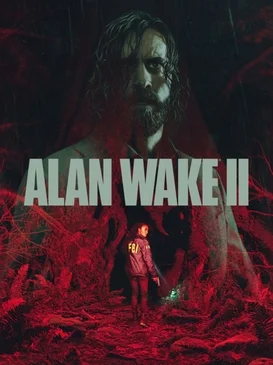
In the Dark Place sections of Alan Wake 2 (Alan Wake 2), Echoes are not a checklist of fixed names and coordinates to tick off one by one. They are a core experience running through Alan’s campaign: as you move through Dark New York, events that already happened play out again in front of you, like a residual memory left behind in place. To understand Echoes is to understand “how time works” in the Dark Place, and that makes them the key to a great many roadblocks.
What an Echo Actually Is#
| Angle of Observation | How an Echo Manifests |
|---|---|
| Visual | A scene from the past replaying on a loop, often with Alan himself standing inside it or watching it |
| Audio | Dialogue and object sound effects repeating, as if drawn from one fixed “fragment of the past” |
| Spatial | Usually anchored to one area, replaying in full once you step close |
| Logical | It is something that has already happened showing itself again, not the reality happening right now |
To judge whether a glowing or replaying image is an Echo, watch for whether it repeats one fixed stretch of the past: the same dialogue, the same gestures, the same outcome, cycling over and over. If what you are looking at is the environment itself, something you can change or interact with, then it is more likely a rewritable reality node. The two are different in nature.
The Role Echoes Play in the Dark Place#
Echoes are not pure decoration. They do two jobs at once, guidance and storytelling:
- Filling in the background: they show you what Alan has been through in this loop, what he has lost, and why he is trapped.
- Hinting at the next step: during a replay, they often demonstrate what you should do next, such as how a mechanism opens or which route to take.
- Pointing you in a direction: following the path along which Echoes appear usually leads you to the right area, instead of going in circles inside the loop.
Common Types of Echoes#
| Type | Traits | What to Focus On |
|---|---|---|
| Dialogue Echo | A conversation between two characters, or between Alan and someone, playing out again | Listen to the content; story clues and relationships are usually buried in it |
| Action Echo | A past action repeating, such as moving something, opening a door or walking a route | Watch the movement path; it is usually the route you need to take |
| Emotional Echo | Heavy on atmosphere and mood, with very little dialogue or only Alan’s inner monologue | Fills in Alan’s mental state and explains where the loop’s oppression comes from |
| Mixed Echo | One Echo delivers both dialogue and a key action | Read it together; take in the content and memorise the route |
How Echoes Relate to the Loop#
One defining feature of the Dark Place is the loop: the same scenes, the same movement, the same failure recurring. Echoes are proof that “the loop of the past is playing out again”, and they are also the key to breaking it.
- What plays out inside an Echo is usually what you are about to live through. Watch it to the end and you already know the answer that comes next.
- If you keep walking into the same dead end in one area, go back and re-watch the Echo. The block is usually not that you failed to find the path, but that you ignored the step the Echo already demonstrated.
- Echoes and scene rewrites work together: rewrite reality with light to open the way first, then follow the Echo to fix your direction. The two corroborate each other. Rewriting handles “making the path appear”, while Echoes handle “telling you where to walk”.
Judging It: Echo or Rewritable Reality Node#
In the Dark Place it is easy to confuse “an Echo of the past” with “reality that can be rewritten”, but the two call for completely different responses. Here are the judgement criteria:
| What You See | It Is More Likely | What to Do |
|---|---|---|
| Fixed dialogue or gestures repeating, restarting from the beginning once it ends | An Echo | Stand still and wait for it to replay, then act |
| Strong light or warping feedback, with the environment changing wholesale after you trigger it | A rewritable reality node | Trigger the rewrite with the Angel Lamp to change the scene |
| Characters and objects are translucent afterimages that do not interact with the current environment | An Echo | Just observe; you cannot and should not try to fight it |
| An isolated bright point or lamp socket in the scene | A portable light node | Use the Angel Lamp to carry the light where it needs to go |
| The image repeats but differs slightly each time and reacts to what you do | More like interactable reality right now | Follow the interaction prompt instead of standing by as if it were an Echo |
What to Do When You Meet an Echo#
- Do not walk away immediately: Echoes usually need you to step close and watch them all the way through. Leaving too early can cost you the key action demonstration.
- Do not attack: the characters and scenery in an Echo are afterimages of the past, and in most cases cannot be attacked and do not need to be. Save your firepower for real threats.
- Memorise the actions and the dialogue: the movement and lines inside an Echo are often the solution itself. Once it ends, repeat to yourself what it demonstrated before moving on.
- Watch the order of Echoes and rewrites: some areas need the rewrite triggered first before the path to the Echo’s location opens; conversely, some Echoes tell you where the thing you should rewrite is. If the order feels wrong, try the other way around.
Echoes and the Pacing of Alan’s Campaign#
| Stage of a Scene | What Echoes Emphasise | Where Your Focus Goes |
|---|---|---|
| Exploration and movement | Pointing the way and preventing you getting lost | Follow the Echo’s path and see what it points at |
| Areas that need rewriting | Hinting at what should be rewritten next | Watch the Echo first, then decide where to route the light |
| Where the loop repeats | Revealing the step you missed | Re-watch the Echo you just passed and look for overlooked details |
| Musical performance sequences | Atmosphere and story suggestion | Follow along as an experience rather than trying to solve or fight it |
Common Roadblocks Matched to Echo Clues#
| Roadblock | Likely Cause | How to Solve It with Echoes |
|---|---|---|
| You keep walking back to the same place | You are in a loop and your thinking is stuck in place | Re-watch the Echo along this stretch; it usually demonstrated the crucial step |
| A mechanism or door does not respond | A rewrite or light-carrying prerequisite is missing | Find the action performed in a nearby Echo and copy it once |
| You do not know which way to go | You missed a directional hint | Watch which direction the nearest Echo fades toward or points at |
| You brace for a hard fight | You mistook an Echo afterimage for an enemy | Tell residue from solid enemy first so you do not waste firepower |
Boundaries Worth Keeping in Mind#
- Not everything that glows is interactable: portable one-use light sources, decorative ambient light, rewritable nodes and Echoes of the past all look similar, and each requires a completely different interaction. When unsure, move closer and check for an interaction prompt instead of acting blindly.
- Echoes are not collectibles: they are closer to an experience that needs to be “understood” than a list whose count has to be completed. If one Echo does not appear or trigger yet, push the story forward first; once its condition is met, coming back later will usually trigger it.
- Loops reset the environment: after death or restarting the loop, the environment and your resources refresh, but the information an Echo demonstrated does not disappear. Remember what you understood and apply it directly on the retry.
Combining Echoes with Light and Rewrites in Order#
Seen inside the overall flow of Alan’s campaign, Echoes form a continuous chain with finding light, carrying light and rewriting reality, rather than separate tasks:
- First check whether the environment has a rewritable reality node: strong light or warping feedback means a rewrite comes first.
- Route the light to the node with the Angel Lamp: carrying the light usually makes the path or the next objective appear.
- Then follow the Echo to confirm direction: the rewrite opens the road, and the Echo tells you how to walk it and what to do next.
This order is not absolute. Sometimes you see an Echo first and only then understand where to look for light and which empty socket to put it in. The starting point is to watch both “where glows and can be carried” and “where the past is replaying” at the same time. The two hint at each other, so begin with whichever one you confirm first.
Practical Habits for Observing Echoes#
- Watch it through before leaving: Echoes frequently deliver their key information at the very end, so leaving early loses it.
- Say the demonstrated action over to yourself: if you cannot recall it afterwards, trigger it once more; confirm what it actually did before pushing on.
- Anchor the location to map and landmarks: Dark Place geography is easy to get turned around in, so once you see an important Echo, fix its region and landmark so you can return to re-trigger or recheck.
- Separate “observe” from “act”: Echoes only need watching, while rewrites and light-carrying need your hands. Mixing the two wastes resources and muddies your thinking.
Using Echoes at Different Stages of Progress#
| Your Progress | What Echoes Do for You | What to Watch For |
|---|---|---|
| Just entered a new area | Quickly tell you what happened here | Sweep for any replaying imagery first |
| Stuck in a loop with no way out | Point out the step you skipped | Re-watch Echoes you passed and may have skipped |
| Facing a scene that needs rewriting | Hint at the rewrite target and its order | Note the Echo first, then decide where to route the light |
| About to push the main story forward | Fill in the background of this loop | Do not rush; important dialogue often hides inside Echoes |
Echoes Against Saga’s Side#
Echoes in the Dark Place and the investigative logic on Saga Anderson’s side, piecing the truth together from clues, are essentially two forms of the same narrative technique. Saga strings scattered information together with the Case Board and profiling; Alan fills in the truth of the loop by watching Echoes of the past. Grasping this parallel makes switching between campaigns smoother: Saga’s focus is “collect and deduce”, Alan’s is “observe and rewrite”, and neither requires brute-force combat. When stuck, go back to each side’s core method and work the problem there. That is exactly what an Echo means: it does not ask you to defeat anything, only to understand what has already happened.
The One-Sentence Version#
Echoes in the Dark Place boil down to a single line: they are the answer the past replays for you to see. Whenever you get stuck in a loop, ask yourself first whether there was a fragment of the past here that you ignored, then go back and watch it to the end. Combine Echoes with finding light, carrying light and rewriting reality, and Alan’s campaign has no route you genuinely cannot open.