Silent Hill 2 Remake Secrets and Easter Eggs#

This chapter covers the game’s secrets and easter eggs: what categories exist, where they hide, and the habits that surface them. Silent Hill 2 Remake marks almost nothing — its secrets reward a specific way of walking through the fog, and this page teaches that way before listing the finds.
The Categories of Hidden Content#
| Category | What it is | Where it lives |
|---|---|---|
| Joke-ending items | The Dog ending’s two keys and the UFO ending’s obsidian gem line | New Game+ only, at spots you walk past blindly on a first run |
| Remake-new safe lines | The bowling alley safe (code 1887) and the Otherworld hotel safe (code 314) | The Bliss and Stillness ending chains |
| Series references | Callbacks to the original game and the wider series | Documents, scenes and item descriptions |
| Atmospheric details | Unmarked scenes, sounds and objects that reward a second look | Everywhere — densest in the apartments and hospital |
| Collection layer | Strange photographs and New Game+ glimpses | Tucked into visually busy spots across every area |
The unifying trait: nothing here is required to finish the game, and nothing announces itself. The Dog and UFO lines are the largest single block of secret content — their full item routes are detailed in the endings guide.
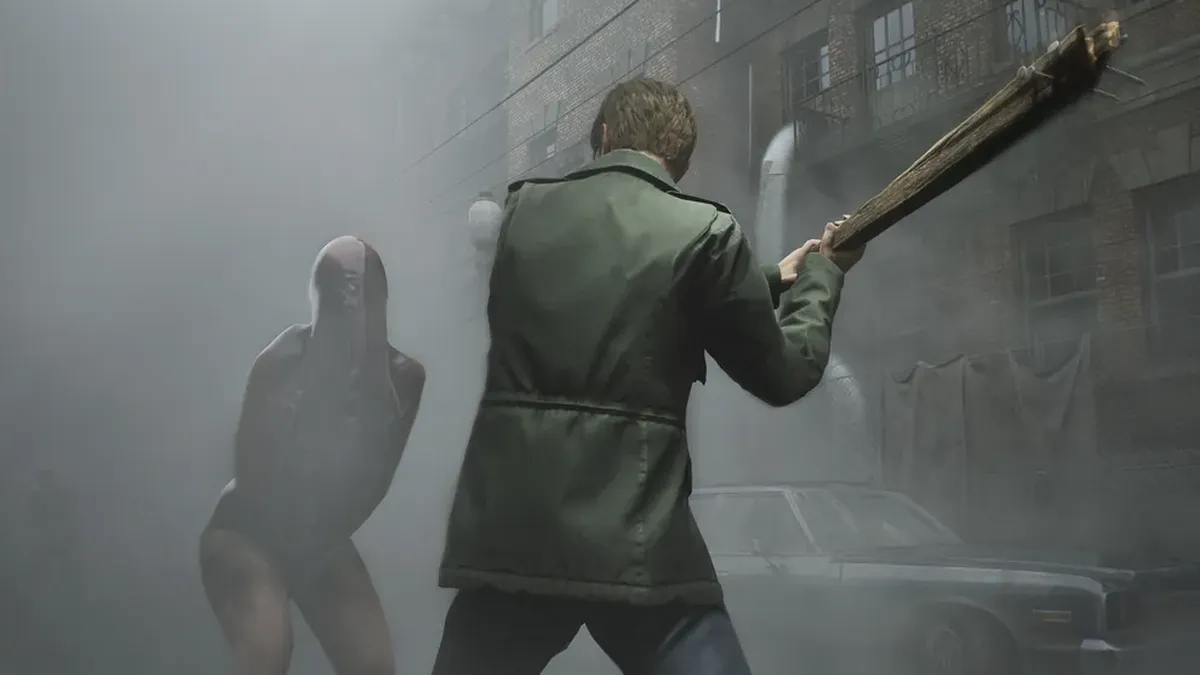
The Method: How to Find What Is Not Marked#
For players hunting secrets, the game’s core mechanics are not just fundamentals — they are the carriers. Run these five habits and most of the hidden layer surfaces on its own:
- Slow down and look around — entering every new room, pause before advancing. Interactables that contradict the scene’s logic are usually either a secret or a mechanism.
- Read every document — memos, notes and posters carry most of the reference material; easter eggs hide inside these texts, and only a full read catches them.
- Explore without a guide — the game marks nothing, and secrets are marked even less. Wandering the unmarked side of a map is not wasted time; it is where the content lives.
- Budget resources for detours — scarcity makes side paths feel expensive, but many secrets sit at the end of a fork. The trade-off is part of the hunt.
- Save before touching anything suspicious — a manual save before an odd interaction makes every experiment consequence-free.
Where to Search, by Location Type#
| Location type | What to check | Why |
|---|---|---|
| Ordinary rooms | Diaries, notes and paper documents | Drawers, cabinets and bedstands — documents press into the least conspicuous spots |
| Corridors | Wall graffiti and stain patterns | Abnormal symbols are often puzzle hints or reference material |
| Basements | Entrances to hidden areas | Look for walls inconsistent with the structure and doors that respond to interaction |
| Rooftops | Story-critical items | Try every reachable door on the floor, not just the obvious one |
| Bathrooms | Hidden documents in stalls | Push every stall door — hints stick to the inside of the panels |
| Storage | Supplies and tools | Check shelf ends and corner boxes; the edges are where things get missed |
| Hospital areas | Medical supplies and records | Clear wards and offices separately; compare documents against medicine cabinets |
The Joke Endings: The Biggest Secret Layer#
The Dog and UFO endings are the game’s most substantial hidden content, and both run on New Game+:
- The Dog ending requires two keys — one at the pet shop, one at the doghouse — both reachable spots that a first run passes without any hint they matter.
- The UFO ending runs a four-point investigation line: the obsidian gem taken from the Groovy music store’s broken window, then used at the Saul Street apartments’ roof, at Toluca Lake, and in the Lakeview Hotel’s room 312.
- Both are pure easter-egg content in the series’ tradition — the franchise’s decades-old joke endings, rebuilt for the remake’s engine.
The remake also adds its own secret layer: the Bliss and Stillness endings, whose safe codes and item chains are effectively two small hidden quests threaded through the bowling alley, the hospital garden and the hotel’s Otherworld. These are new-content secrets — returning players have not seen them before.
Series References and Callbacks#
The remake threads references to the wider series for attentive players:
- “Born from a Wish” is not here — Maria’s original bonus scenario was never added, and its absence is itself a talking point: reports in 2026 suggested its port may have been shelved, unconfirmed. Every Maria scene in the remake is all there is.
- The mask skins — the Deluxe edition’s Pyramid Head pizza-box mask and Robbie the Rabbit mask are official series references turned into cosmetics; Robbie reaches back to the original’s joke-ending lineage.
- Environmental callbacks — the series’ iconography recurs in posters, documents and scene dressing. The habit that catches them is the same one that catches everything else: read every document, examine every oddity.
- The original’s layout memory — players who know the 2001 town will notice where the remake expanded rooms and where it preserved them; the differences are themselves a kind of commentary.
The Collection Layer as Secret Content#
Two collection systems function as secrets for completion players:
- Strange photographs hide in visually busy spots — shelves, corners, window sills — across every area. They serve no puzzle function, which makes them the most commonly missed category; systematic room-by-room sweeps find them, organic play does not.
- New Game+ glimpses only appear in runs started after one completed clear. A first run cannot even see them — the game’s rare case of content that is literally invisible until a condition is met. Their locations and what they reveal make them the natural spine of a second-run route. Full lists are in the collectibles guide.
Enemies and the Secret Hunt#
Enemies shape the hunt’s rhythm as much as the hunt’s safety:
| Enemy | Effect on the hunt | Counter-habit |
|---|---|---|
| Quiet wanderers | Nearly silent approach punishes distracted searching | Search with your back protected; check corners before settling in |
| Nurses | Looting in their zones is high-risk | Clear or lure first; never search at an item point mid-combat |
| Heavy types | Entanglement burns supplies that side paths need | Disengage and route around; fight only blockers |
| Bosses | Lock the area during their fights | Sweep the surroundings before triggering; sweep again after |
The rhythm that works: clear the threat, then search in peace — an interrupted search loses more time than a detour, and a panic flight past a hidden item usually means never seeing it at all.
Reading the Environment’s Hints#
The environment doubles as a signpost system for the secret layer:
- Bloodstain patterns — beyond signaling past fights, broad traces sometimes point direction; following them pays off.
- Stuck doors — a jammed door is not always a dead end; note its position and return with a key or from the other side.
- Odd noises — first separate enemy approach from environmental staging; the latter often sits near something worth inspecting.
- Wall symbols — record their position and content; code-type secrets’ answers hide in their arrangement.
- Flashlight flicker — light anomalies serve the atmosphere, but they bind to upcoming events; observe a moment before moving on.
Newcomer Habits That Pay Off#
| Habit | Why it matters for secrets |
|---|---|
| Slow pace | Secret content almost never announces itself — speed guarantees misses |
| Full searches | Tap every interactable; hidden documents hide behind weak interaction feedback |
| Written notes | Most secrets cross-reference across areas; memory alone drops threads |
| Save discipline | A save before every suspicious interaction makes the hunt bold |
| Patience | Some secrets’ keys live in later areas — returning resolves them naturally |
Deep Dive: The Secret Systems#
Beyond individual finds, the secret layer has rules of its own.
Secrets Feed the Ending System#
Multi-ending design is the backbone of the secret layer: some endings trigger precisely on the hidden content this page tracks — whether specific items were collected, what was done at key nodes. The game records all of it and weighs it into the result. Clearing every ending, then, requires folding the hidden layer into the collection plan rather than playing the critical path alone; each ending’s exact conditions are itemized in the endings guide.
Hidden Areas Have Physical Conditions#
Some zones open only under conditions no hint states outright — a door that exists in one world-state only, an interactable that responds after a story beat, a key whose purpose is never explained. These are found by observation and experimentation, which is why the save-before-touching habit matters: bold experimentation on a saved state is the whole technique.
Items Have Second Uses#
An item’s stated purpose is rarely its only purpose. When a new key or tool arrives, re-check the doors and mechanisms that refused you earlier — “missing one thing” is the game’s most common hidden-door condition, and the item list is where it shows.
Timing Gates Exist#
Individual scene content ties to progression timing: the same location at a different story stage can hold new interactables, new documents or a changed layout. A location emptied on the first visit is worth one re-check after each major story beat — the game occasionally refills what it once withheld.
The Dreamlike Passages#
Some surreal stretches resist literal reading. Treat them as imagery rather than geography — they carry the series’ references and tonal callbacks, and hunting “logical” exits in them wastes the point. The references in these sections are the remake’s clearest act of series homage.
Inventory for the Hunt#
| Item type | Role in the hunt | Management advice |
|---|---|---|
| Medicine | Decides whether you dare take the long way | Keep headroom before unknown areas; never run the stock to zero |
| Ammo | Side paths mean more encounters | Plan the spend rather than hoarding; pay only for necessary routes |
| Batteries | Dark, texture-dense zones need light | Confirm before entering darkness; never search key scenes half-lit |
| Special keys | Most locked secret content starts here | Grab every key on sight — they are return tickets to old areas |
| Clue fragments | The raw material of code and symbol secrets | Note each fragment’s source before assembling anything |
Advanced Practices#
| Practice | How | When |
|---|---|---|
| Save everything | Before entering new areas and touching anything odd | The whole hunt |
| Look before moving | Full visual sweep of every new scene | First entry anywhere |
| Navigate by ear | Judge surroundings by sound | Low-light, low-visibility zones |
| Archive symbols | Consolidate every symbol and code with its source | Any code or symbol puzzle |
| Budget resources | Reserve supplies for planned long routes | Return-trip exploration runs |
Quick Reference#
| Item | Detail |
|---|---|
| Game type | Psychological horror |
| Core loop | Exploration + puzzles |
| Narrative mode | Fragmented storytelling |
| Endings | 8 (including the two remake additions) |
| Difficulty options | 3 levels, combat and puzzle tracks independent |
The unifying principle of the whole secret layer: Silent Hill hides its rewards in the directions it never points. The critical path is honest and complete; everything beyond it — the joke endings, the safes, the references, the photographs — exists for players who look at what the fog is not showing. That is the hunt, and the town rewards exactly one tool for it: the willingness to walk toward what the fog is hiding.