France National Team Guide#
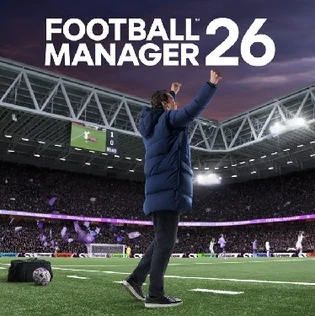
Taking over France in Football Manager 2026, you inherit a nearly flaw-free hand. But the real difficulty of managing France has never been player quality — it is fusing stars scattered across Europe’s elite clubs into a unit that can win seven straight matches inside tiny training camps. This page skips stat dumps and deals only in the mechanics, indicators and operations you will actually meet in FM 2026’s national-team mode.
France’s True Profile#
First be clear about France’s real-world identity — it decides where your resources should go in FM.
| Dimension | France’s real trait | FM implication |
|---|---|---|
| Wide penetration | World-class depth speed and one-on-one ability | Counters and wide overloads are priority one |
| Midfield hardness | Elite coverage and duels; can cut central supply | Big matches are won by midfield strangulation, not possession |
| Hidden weakness | Chronically low attacking efficiency — lively football, few goals | You need dedicated measures against packed defences |
| Short windows | Camp time far scarcer than at clubs | Build tactical familiarity early and narrowly |
Your first task in a new save is not setting the formation — it is identifying who is a genuine international-grade performer and who merely posts nice club numbers. Cross-check every player’s “international experience” and “big-match temperament” in the scout report; those two predict World Cup knockout output better than pace or finishing ever will.
Recent Tournament Record (Reference Criteria)#
France’s actual trajectory across recent tournaments is your benchmark when setting target floors in FM.
| Tournament | Result | Lesson to extract |
|---|---|---|
| 2018 World Cup | Champions | The peak template of counter-attacking football |
| 2022 World Cup | Runners-up (lost the final on penalties) | Core-player fitness management sets the ceiling |
| Euro 2024 | Semi-finals (lost to Spain) | When midfield build-up is suppressed, goals dry up |
The pattern: France in FM belong to the “extremely high floor” tier — they qualify no matter what; the real watershed comes after the quarter-finals. So the core question is not “how to avoid losing” but “how to turn half-chances into goals in tight matches”.
Criteria for Fixing Slow Tournament Starts#
Euro 2024’s France ran the classic script: dull group games, knockout wins dragged to penalties, then defeat to a technical side. FM 2026 will replay this script unless you intervene. The signals that you are sliding into the slow-start script:
- Consistently more shots, but almost no clear-cut chances.
- The pass network between attack and midfield heavily intercepted at the edge of the opponent’s box.
- Possession high, but touches inside the opponent’s box actually scarce.
On detecting these, adjust the initiator of the final pass first — do not just add strikers. Either designate a drop-in organiser who moves the ball from midfield into the channels behind the full-backs, or station a turn-and-go attacker between the lines whose job is to receive Mbappe’s counter through balls. Both routes fix the packed-defence problem better than repeatedly raising attacking mentality.
Squad Blocks and Their Roles#
By FM’s usual position blocks, here is what each unit actually carries. No hard numbers — your database, injuries and form will differ; what matters is knowing what each block is for.
Goalkeeping Block#
| Role | Profile | Selection criterion |
|---|---|---|
| Starter | Sweeping and coverage are the strengths | Prioritise keepers elite in one-on-ones and commanding the box |
| Backup | Rotation and friendlies | Tournament windows are short — always carry a steady number two |
The standout trait of France’s keepers is huge coverage and willingness to leave the box. In FM this lets you play a slightly higher line and use the keeper as a sweeper to cover the space behind — a freedom many other teams do not have.
Defensive Block#
| Position | Player profile | Usage note |
|---|---|---|
| Centre-back | Tall, strong in duels, decent on the ball | The absolute mainstay of aerial and set-piece defence |
| Right-back | Balanced, can tuck in | Tucks into midfield to form a back-three build-up when needed |
| Left-back | Overlaps and crosses | Combines with a pacey left winger for byline/cut-in patterns |
The defensive criterion: would you rather sacrifice some attacking depth for higher one-on-one margins, or let full-backs push up with the pivot covering? Against a top-class winger, switch the involved full-back to a more conservative role.
Midfield Block#
| Position | Player profile | Usage note |
|---|---|---|
| Anchor | Huge range, hard in the tackle, decisive | Sweeps large areas and plays the first pass out |
| Central midfielder | Can arrive late, joins the press | Bridges defence-to-attack rhythm |
| Attacking midfielder | Drops in to organise, links penetration | The “unlock the game” role in tight matches |
Midfield is France’s core competence — strong because it wins the ball back and moves forward fast. Against elite teams, tighten the midfield and cut their central supply with hardness; that beats chasing possession. Against parked buses, push one midfielder closer to the strikers to manufacture overloads.
Forward Block#
| Position | Player profile | Usage note |
|---|---|---|
| Left wing (the talisman) | Top speed, elite one-on-ones | The counter’s spearhead; cut-ins are the main scoring route |
| Right wing | Excellent dribbling and rhythm | The second explosion point, keeping the attack from going one-sided |
| Striker | Back to goal, links play | A pivot who also opens depth for the wingers |
The forwards’ rule in one sentence: France’s wide players are consumables — one intense burst drains them significantly. In congested tournaments you must carry two full wide rotations, or your trump card blacks out after the quarter-finals.
The Mbappe–Griezmann Coexistence Criteria#
This is the mechanic most often written off by assumption, and the one most worth detailing: one speed-based core, one drop-in core — do they fight for the same space?
Two actual indicators:
- Read the opponent’s line height. High line → the speed core runs in behind while the drop-in core delivers. Deep block → the drop-in core pushes to the box edge and penetrates the half-spaces with short combinations.
- Fix their role split. Never let both drift central. Pin the speed core to the wide corridor and let the drop-in core receive centrally — a “one stretches, one concentrates” complement rather than overlap.
Get both threats living inside one shape and France become a machine with an answer to whatever defence it faces.
Formation Recommendations#
| Formation | Best scenario | Key settings |
|---|---|---|
| 4-3-3 | First-choice XI, most balanced attack | Twin wide threats stretch the depth; lone striker holds the pivot |
| 4-2-3-1 | Stability in heavyweight clashes | Double pivot as insurance; CAM receives in the danger zones |
| 3-4-2-1 | vs sides with three forwards | Numbers to counter their wide overloads |
Fixture Rhythm and Camp-Window Management#
In national-team mode you do not get daily training. The season is sliced into international windows of only a few days each, creating two problems FM makes you solve.
First: tactical familiarity. With almost no training time, you cannot drill three formations to full familiarity. The correct play is to designate one main system as absolute first choice and try alternatives only in friendlies — never keep switching systems in competitive matches. The criterion: check each player’s tactical familiarity has stabilised before any switch.
Second: fitness. Players arrive carrying club-season fatigue. Your window job is not frantic extra training — it is managing recovery: sensible rotation before matches, light recovery sessions in congested spells, saving peak condition for matchday.
Qualifiers vs the Finals: Different Trade-offs#
| Stage | Goal | Operating choice |
|---|---|---|
| Qualifying | Qualify safely, build cohesion | Give youngsters and rotation minutes; win the winnable games |
| Group stage | Win the group, control expenditure | Protect starters’ fitness; rotate against weak sides |
| Knockouts | One goal decides everything | Shrink for margins; sacrifice some attack when needed |
The finals criterion is simple: in the groups you may plan for the long game; in the knockouts you play for today. Do not conserve legs in the round of 16 for “the next round” — there may not be one.
FM 2026 Closing Note#
France in Football Manager 2026 are a side that is unbeatable on paper and demanding in practice. Your job is not proving you can pick stars — it is proving you can make a collection of elite individuals fight as one unit inside short windows: spend the wide speed on the right lanes, spend the midfield hardness on the decisive clashes, and cure the slow-start habit in tight matches.
Convert chances into goals reliably in the hard games after the quarter-finals, and France are among the highest-probability title picks. The rest is up to your touchline judgement.