Football Manager 2026 Transfer Negotiations#
In Football Manager 2026, the transfer window is where you set your squad’s ceiling. A good window can carry a mid-table club into Europe; a bad one can mortgage the club’s finances for years. This page follows the transfer process you can actually execute: first how to judge a target’s real value, then every step from bid to negotiation to contract and registration, and finally the unavoidable territory of free agents, loans and budgets.
Judging Value Before You Bid#
Before pressing “make offer”, settle three things: the selling club’s willingness to sell, their mental price, and whether the player genuinely fits your tactics. These decide how much to offer — and whether to offer at all.
| Dimension | What to look at | Standard | What to do |
|---|---|---|---|
| Willingness to sell | Is the player listed? Has he handed in a request? | Listed or requesting means they will talk | Probe freely, but do not rush to overbid |
| Mental price | Current asking price, valuation range from scouting | Compare asking price to valuation to gauge the markup | Underbid in round one, but leave room to escalate |
| Role fit | Do his key attributes match the role on your board | Attribute fit matters more than overall rating | Walk away if the role does not fit — never pay for reputation |
Always confirm the selling club’s “willingness to sell” and the player’s “current value” on the scouting profile before bidding — those two numbers are the yardsticks of the negotiating table. If the club just signed him and faces no pressure to sell, even generous instalments may be flatly rejected.
How a Transfer Fee Is Structured#
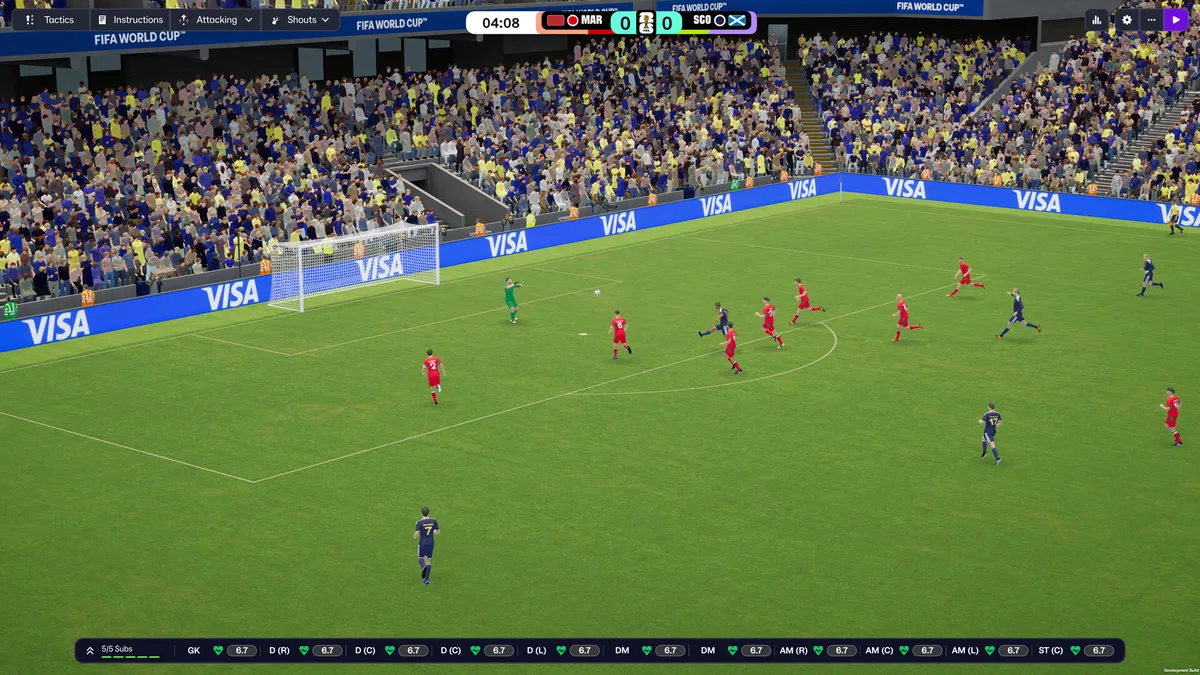
An FM transfer fee is never one lump sum — it is composed of upfront payment, instalments, add-ons and a sell-on clause. Understanding these four quadrants is the key to saving budget.
| Component | Typical setup | What it does | Operating point |
|---|---|---|---|
| Upfront fee | First 10-50% of the fee | Paid immediately; what the seller weighs most | The higher the upfront, the easier the nod |
| Instalments | Remainder over 12/24/36 months | Spreads your financial pressure | More instalments make sellers hesitate — balance it |
| Add-ons | Appearances, goals, international caps, promotion/survival bonuses | Ties part of the risk to performance | Keep amounts sane; absurd figures scare sellers off |
| Sell-on clause | 10-50% of the next sale goes to them | Lowers the price they demand today | Especially effective against youth-developing clubs |
The cheapest combination is usually: upfront around thirty percent, the rest spread over 36 months, plus a sell-on clause. The seller gets solid cash while your immediate pressure is diluted. One caveat: if the player already has suitors and the club needs cash urgently, speed is what matters — squeezing the upfront too hard then may just get you beaten to the signature.
Attack and Defence at the Table#
A rejected bid is not failure — it is the start of negotiation. These are FM’s most useful manoeuvres; pick by situation.
| Strategy | When to use | Operating point | Common mistake |
|---|---|---|---|
| Exploratory bid | Unsure of their mental price | Underbid 30-50% in round one | Going too low gets you blacklisted outright |
| Player-pressure leverage | Player has agreed personal terms | Let the player speak publicly to push the move | Overuse sours relations |
| Stretch instalments | They need cash flow urgently | More months, lower upfront | Too long a tail invites rival bidders |
| Add-on sweeteners | They refuse to drop the price | Appearance/goal/caps bonuses bridge the gap | Ridiculous clauses end talks |
| Cooling-off pause | Both sides deadlocked | Shelve for a week, re-approach | Relentless squeezing sends targets elsewhere |
Contract Negotiation Essentials#
Fee agreed, the battle moves to the player’s personal contract. FM contracts are a set of sliders — and what usually makes a player sign is not base wages but the signing-on fee and playing-time promises.
| Contract element | Suggested setting | Risk to watch |
|---|---|---|
| Base wage | Reference salaries of same-position squad members | Overpaying wrecks the wage structure |
| Signing-on fee | One-off payment on signing | Comes out of the current budget — do not concede easily |
| Agent fee | Paid to the player’s agent | Excess commission shrinks your usable budget |
| Appearance/goal bonuses | Tied to performance | Keep amounts affordable; never hard-code huge sums |
| Loyalty bonus | Reward for completing the contract | Lands in future budgets — plan ahead |
| Release clause | Smaller clubs: avoid writing one | Big clubs may include it, but the figure must be high |
Renewals have their own rhythm. The best moment to renew is with two years left on the contract: the player’s form is stable, his leverage has not peaked, and the club can lock reasonable terms. Wait until one year remains and his demands jump — or another club pre-signs him on a free. For academy products, holding the option to extend is the single most effective asset protection.
Free Agents and Expired Contracts#
Free transfers are the fastest way for smaller clubs to close the gap, built on the real-world Bosman ruling: with six months left on a contract, the player may negotiate and pre-sign a free move elsewhere.
| Timing | What you can do | Watch out |
|---|---|---|
| Every January | Pre-sign players entering their final six months | Fierce competition — move fast |
| Every June-July | Expired players officially join for free | Judge current form; do not buy reputation cheap |
| Throughout the season | Maintain a “free agent watch” shortlist | Scout early so you never scramble mid-window |
One high-value play is sign free, sell later: even without a squad need, sign an appreciating free agent and offload him for a fee six or twelve months later, pocketing the difference. The premise is confidence in his real level and in the market for him — otherwise you have signed a wage burden you cannot shift.
Loans and Try-Before-You-Buy#
When budget is short or fit is uncertain, a loan is the low-risk option. FM loan agreements can be customised with recall clauses and mandatory or optional buy-outs.
| Loan type | Cost | Recallable | Best scenario |
|---|---|---|---|
| Standard loan | Loan fee negotiable | Depends on terms | Giving young players competitive minutes |
| Loan with purchase option | Mandatory/optional buy-out clause | Depends on terms | Assess adaptation before committing |
| Short-term loan | Usually free | Often recallable | Emergency cover during an injury wave |
| Youth loan | Free, usually no buy-out | Often recallable | Routine development spells for academy kids |
When sending a player out, confirm the role he is promised at the receiving club. If they see him as rotation or bench cover, a season of scarce minutes is simply wasted. Push for a “key player” or “important player” commitment in the agreement, and where possible include a recall clause as the escape hatch.
Player Registration Rules#
Sign all you like — fail to register and it is money burned. FM enforces league and European registration rules strictly, so count the slots into your transfer planning from the start.
| Competition | Squad cap | Home-grown requirements | Foreign-player limits |
|---|---|---|---|
| Premier League | 25 | At least 8 home-grown | None |
| Spanish top flight | 25 | At least 8 domestically trained | Non-EU players capped |
| Champions League | 25 | At least 8 locally trained plus 4 club-trained | None |
Build a “22+3” squad: a stable registered core, academy/home-grown slots filled to occupy the quota, and three flexible slots for key utility players. Before every registration window, audit your first-team list against these rules — do not discover at submission time that you are one slot short and must dump a useful player from the list.
Moving Budget Between Fees and Wages#
FM lets you shift funds between the transfer budget and the wage budget. Many beginners watch only the fee — underestimating what wage space buys.
| Budget type | Suggested share | Transfer principle |
|---|---|---|
| Transfer fees | 60-70% | Pull from the wage side when the gap is large |
| Wage budget | 30-40% | Higher wages often close signings better than fees |
Shifting into the wage budget is often the deciding factor in signing a star: when you have fee to spare but his wage demand exceeds your ceiling, moving transfer budget across gets the signature. Conversely, if high-earning fringe players clog the wage bill, freeing that space is worth more than a small transfer fund — it improves your operating room for seasons.
Handling Rejections and Dead Ends#
Not every target lands. FM clubs may refuse to sell; players may refuse to join. Force gets you nowhere in these situations.
| Situation | Why it happens | What to do |
|---|---|---|
| Club rejects your bid | Sees you as a rival, or needs no money | Switch targets, or return after terms change |
| Player rejects contract | Unimpressed by your stature or results | Raise club reputation first, or offer European football |
| Bid dismissed outright | They view you as a direct competitor | Do not escalate; sign an alternative in the same position |
| Talks cool mid-way | A third-party bidder has entered | Decide fast — pay up or walk, do not linger |
The Rhythm of a Window#
Stringing it together, a real window runs roughly like this. Remember: a mature transfer plan is drafted two to three months before the window — the window itself is only execution.
| Window phase | What to do | Purpose |
|---|---|---|
| 2-3 months before opening | Fix the target list, order full scouting reports | Do the homework early |
| First week open | First bids on top priorities | Seize the initiative |
| Weeks two and three | Grind negotiations on core targets | Converge toward a price both sides accept |
| Final two weeks | Complete remaining reinforcements, clear fringe players | Discount and offload what will not sell |
| After closure | Assess squad gaps, plan free-agent cover | Patch what the window missed |
Do not chase a target mid-window on the strength of a few scattered scout notes. A mature manager executes a plan inside the window; he does not get pushed around by it. List set months ahead, budget allocated, terms framework agreed — treat the window as the stage where those prepared moves play out, and your success rate will clearly beat managers who start making calls on opening day.