Tales of Eternia Remastered: Party Building and AI Command#
The battle architecture is “you pilot one character; AI flies the rest,” with companions officially described as “acting together with distinct tactics.” So party building here is not a spreadsheet of optimal teams — it’s understanding each character’s tactical style and choosing the one you want to pilot. This page breaks down roles from the confirmed character files.
Why One Operator Plus AI#
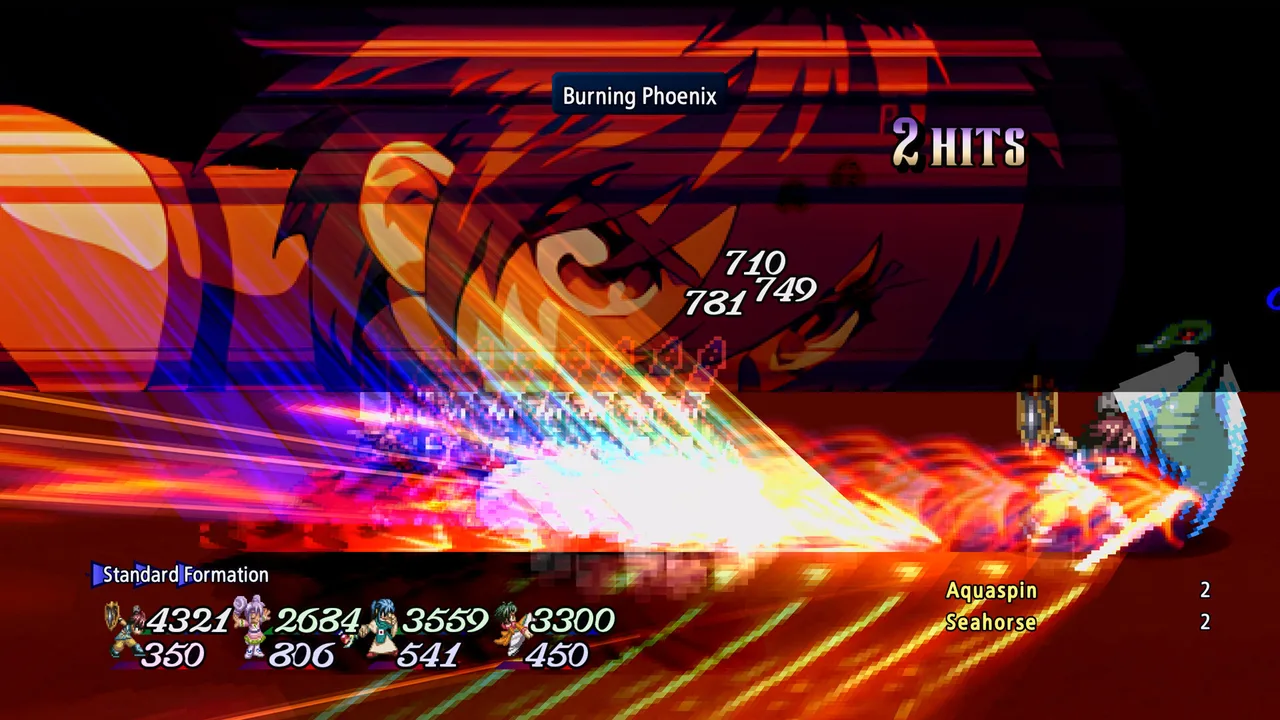
A-LMBS is real-time 2D combat (see the Chinese A-LMBS page) — nobody micro-manages four characters at that speed. The series’ answer, still standard today:
- One operator: you control exactly one character — footwork and arte inputs are yours;
- AI autonomy: the rest act on their own tactical styles;
- Indirect command: you shape overall tactics through party configuration, arte loadouts and operator choice — not frame-by-frame orders.
The design philosophy: you are the combo engine; your teammates are the tactical puzzle pieces.
The Cast, By Function#
Function table from the official character files (combat numbers trace to original-game fan data; remake values unconfirmed):
| Character | Role tag | File basis | Piloting advice |
|---|---|---|---|
| Rid Hershel | Melee sword core | Hunter lineage; arte tree spans Demon, Thunder and Tiger-Fang/Senkuu lines | First-choice operator; widest arte coverage |
| Farah Oersted | Melee martial artist | Trained at the Rasheans fighting dojo | Advanced operator; rhythm differs sharply from swordplay |
| Keel Zeibel | Magic support | Scholar with deep craymel research | Not recommended as a first operator |
| Meredy | Craymel magic damage | Prodigy of craymel sorcery | Distinct casting rhythm |
| Chat | Playable(?) cast member | Pirate girl | Playability follows the in-game roster |
| Max | Playable(?) cast member | Militia leader, powerfully built | Playability follows the in-game roster |
| Rassius | Story character | Elder knight | A story role |
Spoiler note: Rassius’s arc is detailed on the Chinese Chat/Max/Rassius page; skip it if spoilers matter.
Picking Your Operator: Three Standards#
Standard One: Tree Completeness#
Rid’s tree is the party’s most complete — three lineages, each with base, higher and arcane tiers (original-game data), the richest combo material in the roster. Lock Rid for a first playthrough: readable melee rhythm, high combo tolerance, a clear early goal (48 uses to his first upgrade).
Standard Two: Rhythm Preference#
| Operator type | Rhythm | Fits |
|---|---|---|
| Melee sword (Rid) | Thrust, sweep and aerial alternation; firm tempo | Instinct-driven players |
| Melee martial (Farah) | In-close flurries; choppy tempo | Speed-hands players |
| Magic / craymel (Keel / Meredy) | Distance management, cast timing | Observer players |
Standard Three: Complement With the AI#
Pick an operator by what the AI can cover:
- Piloting Rid: keep Keel or Meredy in the AI lineup so spell coverage is handled while you combo;
- Piloting Farah: melee redundancy rises slightly — make sure a magic seat is on the field;
- Piloting a caster: AI melee pins enemies while you manage positioning and cast timing — higher execution demands, better saved for run two.
Making the AI Work With You#
Accept Their Personalities#
“Distinct tactics” is a feature. AI styles — melee cut-ins, support follow-ups, casters holding range — are the battle’s background rhythm; your job is to build chains around their tempo, not to correct them.
Split the Angles#
You and an AI hammering the same side of the same enemy is the great combo-killer. Default division:
- You enter from the front or via thrust;
- AI fills flanks and backs;
- Enemies caught between faces give you the longest combo windows.
Hand Attribute Coverage to the AI#
Physical and magical damage are two separate coverage lines. Piloting melee into a physically-resistant enemy? Your AI casters are the answer. Piloting a caster? AI melee buys you cast time.
Set the Macro Tempo With Boost#
The party-level tuning levers are the Boost options (XP, encounters) and difficulty:
| Scenario | Setting |
|---|---|
| Leveling window | Encounters up + XP up; maximize AI clear efficiency |
| Main-line push | Encounters down; cut low-value fights for both of you |
| Challenge run | Everything default; test the party’s true strength |
What Was Not Verifiable#
These party details found no authoritative confirmation this round, listed to prevent misdirection:
| Item | Status |
|---|---|
| Active party size cap | No remake-official figure found; in-game governs |
| Mid-battle operator switching | Unverified; in-game governs |
| Granular AI behavior settings | Unverified; in-game governs |
| Chat and Max playability and join timing | Unverified; in-game governs |
| New Game+ party carryover rules | No detailed documentation found |
Three Scenarios#
Scenario One: The Standard Encounter#
Rid as operator, a magic seat and a melee/support seat in the AI lineup, Boost at defaults. Open with the thrust-line base and read the rhythm.
Scenario Two: The Leveling Window#
Push Boost XP and encounters up; let auto-battle high-speed absorb low-risk fights. Manual time goes to one target at a time — this is exactly the 48-use and 150-use gate territory from the artes guide.
Scenario Three: The Boss#
All-manual for bosses: AI keeps its tactical autonomy while you own footwork and combo windows. After a loss, Battle Retry restarts the fight directly — cheap experiments. Overall boss approach lives on the Chinese FAQ page.
One-Line Summary#
The correct way to run this party: lock Rid as your first operator, hand spell coverage to the AI, build chains around the AI’s rhythm, and steer the macro with Boost. Once the feel matures, try Farah’s flurries or a caster’s positioning game. Then read the Chinese Rid page to finish learning your main’s tree.