Sekiro Update History & Self-Check Guide#
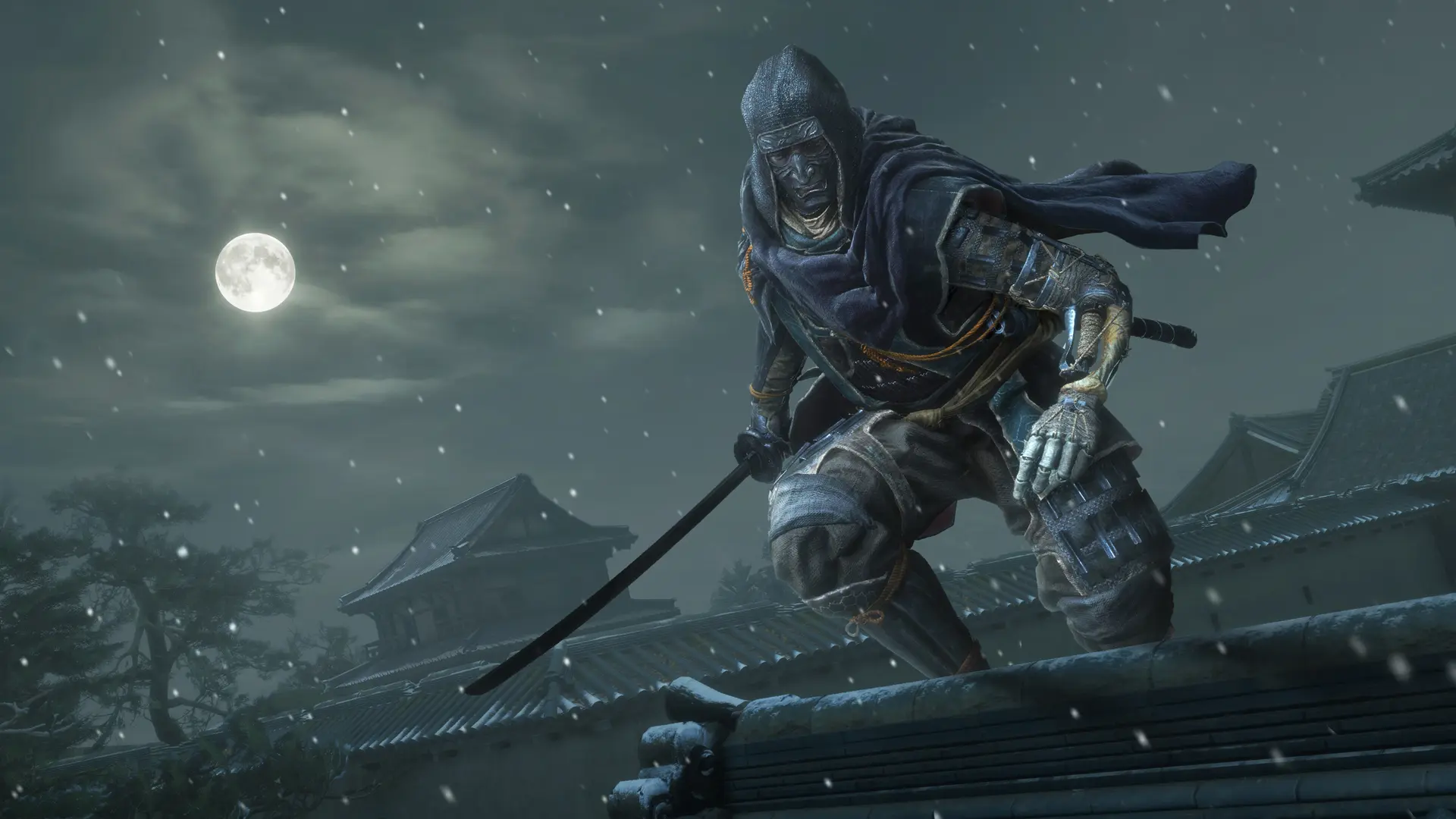
Sekiro: Shadows Die Twice is a FromSoftware-developed, Activision-published, strictly single-player action game that launched March 22, 2019 on PS4, Xbox One, and PC (Steam). With no multiplayer mode, patches never rewrite any online environment — changes land in exactly three places: enemy movesets and numbers, prosthetic and skill strength, and runtime stability.
This page does not transcribe a patch-number list — version numbers belong to the in-game display and platform store pages, and a copied list goes stale fast. What it provides is a self-check flow that works after any patch: how to confirm your version, test where changes landed, protect your save, and calibrate how you use guides.
Version Basics#
| Item | Detail |
|---|---|
| Developer / Publisher | FromSoftware / Activision, directed by Hidetaka Miyazaki |
| Platforms | PS4, Xbox One, PC (Steam) |
| Launch | March 22, 2019 |
| Multiplayer | None — fully single-player |
| Saves | Auto-written when you rest at a Sculptor’s Idol; no manual save button |
| Patch delivery | Pushed automatically by each platform client; Steam shows update notes on the store page |
The Timeline at a Glance#
The officially observable milestones, for orientation:
| Period | Update | What it brought |
|---|---|---|
| 2019-03-21 | Day-one patch | Stability fixes across all platforms |
| April 2019 | 1.01 / 1.02 | Balance, usability, and performance adjustments |
| 2020-10-29 | 1.05 | The free GOTY content: Reflection of Strength, Boss Gauntlets, Remnants, unlockable skins |
| 2020-11-20 | 1.06 | The last verifiable content patch — lock-on camera, UI text, and European language fixes |
After 1.06 the base game has had no further updates — a fixed point worth knowing whenever you calibrate any guide.
Three Things That Make Sekiro’s Updates Different#
- No multiplayer means no “patch environment” problem. The Souls series’ familiar trade-off — staying on an old build to keep matchmaking or invasions alive — does not exist here. Every patch touches only the single-player experience.
- Combat is deterministic. The same enemy move with the same input always produces the same result. Whether a patch changed numbers can therefore be measured with fixed tests, no announcement required — the fixed-target method below is built exactly for this.
- Saves write only automatically. Resting at an idol saves the game; there is no manual slot. Backing up important progress happens at the platform level, in-game it is impossible.
The Three-Step Self-Check After a Patch#
- Confirm the version: on consoles, check the update info from the game tile’s options menu; on Steam, review your library’s download history and run “verify integrity of game files” if a download looks broken.
- Back up the save: on PC, locate the save directory and copy the whole folder outside the game directory; on consoles, use the system’s save backup or cloud save. Back up before launching the game — an abnormal session can trigger an auto-save that overwrites your progress.
- Run a fixed-target test: return to an already-unlocked Sculptor’s Idol and run a comparison set against the fixed enemies nearby — the criteria are in the next section.
Fixed-Target Testing#
The logic is direct: pick enemies and items that existed before and after the update, run identical inputs, and compare results. Four workable test sets:
| Test | Method | What to Watch |
|---|---|---|
| Deflect feel | Deflect the same move of the same fixed enemy repeatedly | Whether spark and sound timing match memory; whether the retry count changed |
| Posture break speed | Break a regular soldier’s posture with the same combo | Whether the number of attacks needed changed — the most direct sign of number tweaks |
| Prosthetic effects | Firecrackers on beasts, Flame Vent on burnable enemies | Whether stagger duration and burn damage feel different |
| Perilous counters | Wait for thrusts and Mikiri Counter them | Whether the counter window shifted |
The recommended standard target is Genichiro Ashina — his moveset covers regular chains and thrust perilous attacks, the widest coverage available. After an update, fight him in the Reflection of Strength for a few rounds and note your deflect rhythm and posture-break time; repeat after the next patch for a before-and-after comparison.
Reading rule: only a clearly different result between the two tests counts as a change. “It feels harder now” is almost always recency and muscle-memory drift — test first, conclude second. The three perilous answers (thrust countered, sweep jumped, grab dodged) are the combat skeleton and do not normally move with patches; if all three feel broken, suspect an incomplete update file before blaming your hands.
Old Save vs New Save as a Baseline#
- Old saves suit full testing: prosthetics, skills, and collectibles are all in place — the widest fixed-target coverage, and the first choice for daily feel calibration.
- New saves suit cross-checks: the opening flow is fixed and variables are minimal; if you suspect a change the old save cannot show, rerun the same tests on a fresh character.
- When the two disagree: suspect in-save growth differences (beads, attack options) rather than the patch — patches treat every save identically.
Content Sensitivity: What Changes, What Never Does#
| Content | Sensitivity | Basis |
|---|---|---|
| Enemy movesets and numbers | High | The main target of balance patches; when practice and guides disagree, suspect the version first |
| Prosthetic and combat-art strength | High | Tool and skill numbers are common tuning points — fixed-target tests confirm |
| Post-game gauntlet and practice modes | Medium | Challenge content added and adjusted with patches; unlock conditions follow in-game prompts |
| Collectible locations | Very low | Beads, seeds, and materials are map content — they almost never move |
| The four endings’ conditions | Very low | Story branches are stable; check your prerequisites before blaming a patch |
| Saves and progression | Low | Patches assume old-save compatibility — still back up before major fights |
The post-game challenge modes have their own pages: the Gauntlet of Strength guide covers the one-life boss-rush routes, and the Reflection of Strength guide covers replaying beaten bosses for practice. Unlock conditions for both follow your current version’s in-game prompts.
Calibrating Guide Usage Against Versions#
Different guide types tolerate patches differently — consume them in this order of priority:
- Safe to follow outright: the items & collectibles guide and the all endings guide — map content and story branches barely interact with patches.
- Framework reliable, rhythm belongs to practice: the boss guides and combat system guide teach moveset frameworks, perilous answers, and posture thinking — the skeleton. When live rhythm disagrees, your current version’s practice is the final word.
- Watch the numbers: specific damage and stagger-duration claims can drift with patches. When “hits feel weak” or “deflect windows feel off”, run a fixed-target test before rewriting your approach — do not rush to discard the whole guide.
Save Protection and Version Control#
- Back up before boss fights: with no in-game multi-slot saves, a platform-level copy is zero-cost insurance despite the resurrection mechanic.
- Keeping an old feel: Steam lets you disable automatic updates in the game’s properties, paired with save backups — the cost is missing later stability fixes; weigh it yourself.
- When an update misbehaves: verify files (Steam) or reinstall (consoles) first; only then restore from a backup. Do not keep opening new characters before confirming your save state — that is how original progress gets overwritten.
Quick Judgement Table#
| Question | Judgement |
|---|---|
| Deflects always feel late after an update | Run the fixed-target test — matching success rates mean rust, not patches; warm up on a fixed enemy |
| Practice and guides disagree | Check both versions; framework content (three perilous answers, posture thinking) is version-proof |
| Will a patch change ending conditions? | Ending conditions are story branches and essentially never change — check prerequisite items and dialogue choices first |
| Will an update break collection progress? | Beads, seeds, and materials are map content; pickup anomalies mean verify your files first |
| Did a specific change actually happen? | Replay the same boss in the Reflection of Strength with identical inputs — far more reliable than impressions |
The Skeleton That Never Changes#
Whatever patches do to the numbers, these hold the highest return in every version of the game:
- Deflect beats dodge: rolls carry no invincibility frames — precise blocking is the defense core.
- Break posture, then deathblow: most enemies die to posture pressure, not health grinding.
- Three perilous answers: thrust countered, sweep jumped, grab dodged — three fixed solutions for the three red-danger types.
- Grapple and stealth: rooftop routes and backstabs clear patrols; open brawls with groups are always the worst option.
Master that skeleton and any version change costs you a few minutes of fixed-target testing to recalibrate — that is the real gift of a purely single-player, deterministic combat system.
Update FAQ#
| Question | Answer |
|---|---|
| Where do I see my current version? | Console: the game tile’s options menu; Steam: your library’s download history |
| Do I have to update? | Steam updates automatically unless disabled in properties; consoles push updates automatically |
| Can an update break my save? | Patches assume old-save compatibility — still back up before big fights |
| Do collectible locations change with patches? | Almost never — beads, seeds, and materials are map content |
| Is the game still being updated? | No — 1.06 (November 2020) was the last verifiable content patch |
Related Pages#
- Sekiro Gauntlet of Strength Guide — the one-life boss-rush routes added in 1.05
- Sekiro Reflection of Strength Guide — the practice mode used for fixed-target testing
- Sekiro Price & Purchase Guide — the current-version purchasing picture