Pokémon Legends: Z-A Mega Evolution Guide: Gauge, Timing, and 60 Forms#
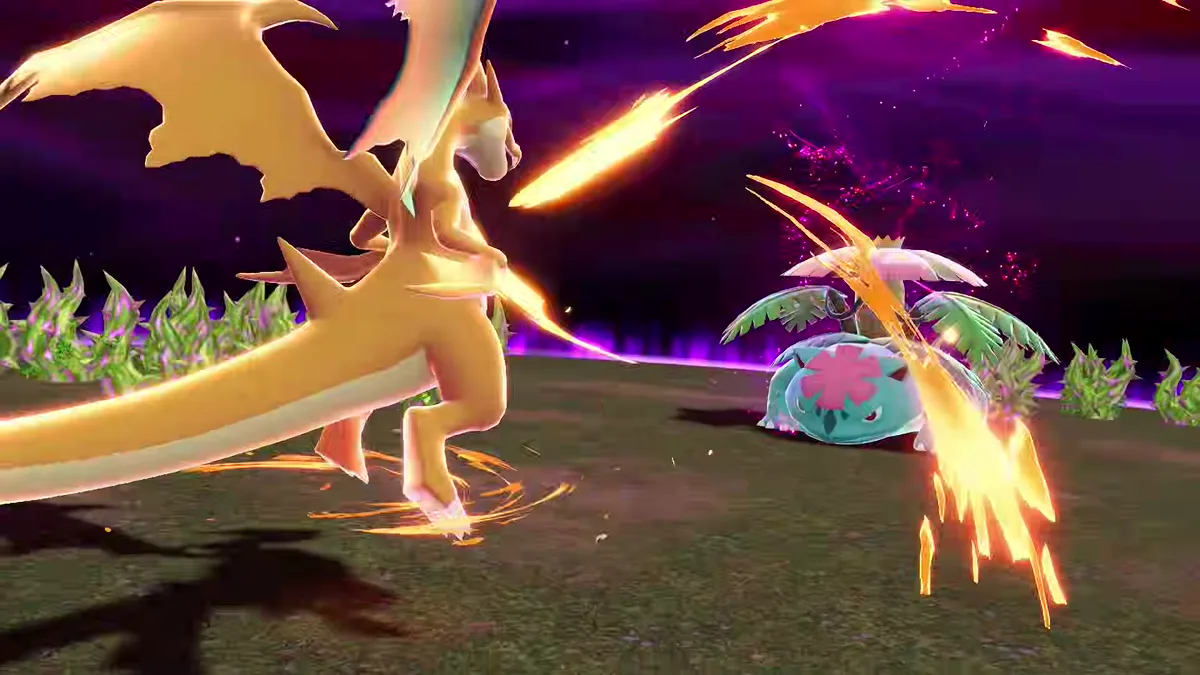
Mega Evolution is Z-A’s ceiling mechanic — the top of your combat system and the source of its central plot conflict (Rogue Mega Evolution). If the gauge feels like it fills slower than other players describe, the problem is almost always how you are charging it, not the game. This page dissects the whole loop: charging, triggering, operating the timed state, and spending your shard budget across 60 forms.
The Loop in Four Steps#
| Step | Mechanic | Key detail |
|---|---|---|
| Prerequisite | The Pokémon holds a Mega Stone | Stones come from shards — see the shop section below |
| Charging | A gauge fills via two channels | Landed moves + Mega Power orbs on the field |
| Trigger | Press the right stick (click) at full gauge | Enters a timed Mega state |
| Operations | Full offense inside the window | Then reset and recharge |
Read the loop as one sentence and the design philosophy becomes obvious: aggression is the charging mechanism. Want to transform sooner? Fight more bravely. Passive play loses twice in this system — it neither charges the gauge nor collects the orbs.
The Two Charging Channels#
| Channel | How | Character | Best use |
|---|---|---|---|
| Landed moves | Every hit accumulates gauge | Steady, tied to your cooldowns | Baseline charge in every fight |
| Mega Power orbs | Pick up orbs that spawn on the field | Positioning-based, no hits required | Collecting during cooldown gaps and dodges |
The combined strategy is the heart of Z-A battle rhythm: moves are the staple food, orbs are the snack between meals. Threading your dodge routes through orb spawn points makes gauge growth visibly faster. Players who charge with hits alone starve during cooldown gaps.
Trigger Timing: Three Judgments#
A full gauge creates the most important decision in Z-A’s controls. Before you click the stick, check three things:
- Range window: trigger at a distance and angle where your Mega form reliably connects. A transform that eats an immediate hit is a wasted gauge.
- Fight phase: trigger before the opponent’s burst window so your empowered state meets their empowered state — not their recovery.
- Resource state: at least half your move cooldowns should be ready. A Mega form with a fully grey move bar is a cosmetic upgrade.
And the counterintuitive rule that separates good players: do not save the gauge as insurance. Mega is a timed state; a full gauge sitting idle depreciates like an unspent budget. In consecutive Royale fights, “trigger every battle, use every second” outperforms “save it for the important one” over any long evening.
Operating the Timed State#
Inside the window, discipline fits on one card:
- All cooldowns open: fire every move the moment it turns available — this may be the only stretch of the fight where you ignore resource accounting.
- Keep grabbing orbs: pre-charging the next gauge while powered up. The vacuum after the window will thank you.
- Manage your health line: Mega is not invincibility. Standard movement rules apply, and you should have an exit route ready before the timer ends, because the classic loss pattern is a counterattack exactly at form expiry.
Handling the post-window cooldown gap — swapping in a flex member to cover, then recharging — is standard endgame procedure, covered for specific bosses in the Chinese tree at /pokemon-legends-z-a/boss-battles/.
The 60-Form Pool and What to Buy First#
The Mega pool is 26 new forms plus 34 returning classics. Confirmed new entries include Mega Greninja, Mega Dragonite, Mega Zygarde, Mega Victreebel, Mega Hawlucha, and Mega Malamar.
| Route | Member | Role logic |
|---|---|---|
| Mega Greninja | Greninja | Bread-and-butter offensive coverage, primary Mega holder |
| Mega Dragonite | Dragonite | Stats and bulk; doubles as boss-raid tank |
| Mega Zygarde | Zygarde | Highest team ceiling if acquisition progress allows |
| Free pre-order line | Ralts → Gardevoir | Holds Gardevoirite from day one; your pre-economy Mega output |
The signal from the pool: new Megas span pseudo-legendaries, legendaries, and staples, so team planning should be Mega-centric from the start. Shard exchange priority belongs to forms you can actually slot into your core — the team building guide explains the “fill a role, not a hype slot” rule.
Rogue Mega: The Same Power, Weaponized#
The plot mirror of your gauge is Rogue Mega Evolution — wild Pokémon that Mega Evolve on their own and become hazards. Strategically, understand that you share one physics: they charge, trigger, and dominate windows exactly like you do. The endgame campaign’s fights are a final exam on whether you actually internalized this page.
Five Gauge Mistakes, In Order of Frequency#
| Mistake | Symptom | Fix |
|---|---|---|
| Orb-blind routing | Gauge stalls during every cooldown gap | Thread dodge routes through orb spawns |
| Insurance hoarding | Full gauge still unused when the fight ends | Adopt the trigger-every-battle rule |
| Trigger into a telegraph | Mega form eaten by one immediate hit | Check range window and fight phase first |
| Empty move bar at trigger | Mega feels like a pointless glow-up | Wait until half your cooldowns are ready |
| No exit plan | Counterattack lands exactly at form expiry | Set the swap-out before the window closes |
Audit one mistake per session; four focused sessions and the loop runs itself.
Quick Answers#
Where do Mega Stones come from? Mega Shard accumulation and shop exchange; farming routes live in the Chinese tree at /pokemon-legends-z-a/mega-stones/.
How fast should the gauge fill? There is no published rate table; if it feels slow, audit your orb pickup first — it is the most-skipped channel.
Can multiple party members Mega in one fight? The gauge is per-activated-member logic; carrying multiple Stone-holders is strongly recommended in team building.
Do the 60 forms list every Pokémon? No — Mega eligibility is form-specific. In-game dex and shop lists are the authority; we do not reproduce unconfirmed leaks.
Related#
- Hub — system map and the four replacements
- Beginner’s guide — the first-week schedule
- Team building — who should hold the Stones