Mario Kart World Special Modes: Balloons, Coins, Item Scramble and Survival Races#
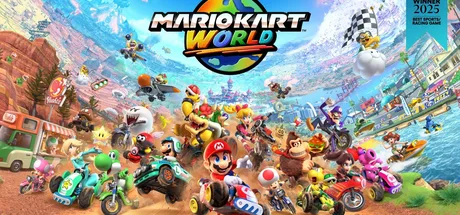
Mario Kart World launched with the Nintendo Switch 2 (Switch 2 hereafter) on June 5, 2025, developed by Nintendo EPD with Monolith Soft. Known for 24-racer online fields and open-world tracks, the game also ships a set of special modes with distinct goals beyond Grand Prix and the survival knockout.
These special modes are Balloon Battle, coin collecting, Item Scramble and Survival Races. They organize respectively around “popping”, “collecting”, “frequency” and “elimination”, each with its own rhythm and reward logic. Reading them together clarifies what variety the game offers beyond pure racing.
Every rule on this page comes from verified sources: Balloon Battle, coin collecting and Item Scramble are in fact card item 14, Survival Races in item 8. Details the sources don’t cover — balloon counts per player, coin effects, per-item numbers — appear nowhere on this page.
The Four Special Modes at a Glance#
One table first, laying out each mode’s goal and verified core rule; the sections below expand each in turn.
| Mode | Core goal | Verified key rule | Source |
|---|---|---|---|
| Balloon Battle | Pop rivals’ balloons | Use items to pop opponents’ balloons | Fact card item 14 |
| Coin collecting | Gather track coins | Coins spawn randomly; tallied after the race | Fact card item 14 |
| Item Scramble | High-frequency item play | Item frequency on the track raised 300% | Fact card item 14 |
| Survival Races | Survive through checkpoints | Three cumulative checkpoint failures end the race | Fact card item 14 / item 8 |
The first three come directly from the “game modes · special modes” entry; the three-failures rule for Survival Races sits in that entry’s survival race description too. What they share: simple, explicit rules, none of which treat lap time as the sole measure.
Balloon Battle: Pop Rivals’ Balloons with Items#
Balloon Battle’s goal is direct: pop opponents’ balloons using items. Verified sources give exactly that one-line rule, so this page adds nothing about balloon counts, respawn mechanics or win conditions.
- The core action is “popping”, and it must be done with items — not by ramming with your kart’s body.
- The targets are “opponents’ balloons”, so the mode is inherently adversarial, tied closely to other players’ presence.
- With up to 24 players in one online field, Balloon Battle gets livelier at scale — though team organization specifics have no first-hand source.
- To judge whether the mode suits you: are you comfortable tracking item pickups and rival positions at the same time while driving?
Positionally, Balloon Battle pushes the game’s item system to center stage: you use items not just to overtake but to destroy designated targets. That goal shift is its clearest difference from ordinary racing.
As for “how many points per balloon” or “do balloons respawn” — verified sources answer neither, and this page explicitly leaves them blank rather than guessing.
Coin Collecting: Random Spawns and Post-Race Tallies#
Coin collecting also comes from fact card item 14, with a two-part rule: coins spawn randomly on the track, and the haul is counted after the race. Together they set the mode’s focus on “scanning and grabbing along the way” rather than pure speed.
| Stage | Verified content | What to watch for |
|---|---|---|
| Coin appearance | Random spawns on the track | Positions vary; no fixed point list to memorize |
| Collecting | Drive through and pick up | Line choice affects how many you get |
| Results | Coins tallied after the race | Score is quantity, not finishing position |
| Unverified | Whether coins grant speed or item effects | Not in sources; no verdict drawn |
Random spawning gives coin collecting an exploratory streak. The game’s open-world track connects grassland, city, ocean and volcano seamlessly, and connector roads themselves may serve as coin-hunting ground — though “coins cluster more on connector roads” has no source support, so it’s mentioned only as an exploration direction, not a rule.
The post-race tally makes the mode feel like “Free Roam with a goal attached”. It de-emphasizes confrontation, fitting players who want to learn tracks while running and still see concrete feedback.
Item Scramble: Item Frequency Raised 300%#
Item Scramble is the most numerically explicit of the four: item frequency on the track rises 300%. The change reshapes the race’s resource environment — items stop being occasional supplies and become a high-frequency, always-available resource.
- The raise is 300%, quoted exactly as the fact card states it, with no rephrasing.
- High-frequency items mean cornering, shortcut-taking and position fights turn constantly on “which item, and when to use it”.
- Grand Prix connector roads already bristle with shortcuts and item boxes; the scramble’s high-frequency environment compounds their pace further.
- A raised item frequency doesn’t mean any specific item got stronger; per-item effect values are unverified and unlisted here.
| Aspect | Detail |
|---|---|
| Mode name | Item Scramble |
| Core change | Track item frequency raised 300% |
| Scope | Density and frequency of item pickups |
| Track relation | Connector roads already hold many item boxes, stacking with the high-frequency setting |
| Fact boundary | Per-item effects and values unverified; no list given |
Avoid one common misreading: “frequency raised 300%” does not mean “item power raised 300%”. The first says items appear more often; the second claims they hit harder. The fact card supports only the former. Holding that line keeps unverified numbers out of mode explanations.
Survival Races: Three Checkpoint Failures End It#
Survival Races set a tolerance cap around checkpoints, unlike the other three: three cumulative failures to pass a checkpoint terminate the race. The keys are “cumulative” and “three” — one mistake doesn’t end it, but the third does.
- Checkpoints line the route; you must pass them.
- Each failure is recorded toward a cumulative count.
- At three cumulative failures, the race ends.
- The mode therefore tests consistency: pass every checkpoint safely rather than chasing one perfect lap.
| Item | Verified content |
|---|---|
| Mode name | Survival Races (special mode) |
| Key rule | Three cumulative checkpoint failures end the race |
| Counting | Accumulated per failed checkpoint |
| End condition | Three cumulative failures |
| Fact boundary | Per-checkpoint elimination counts are a separate entry — see below |
One source discrepancy to note: official descriptions of the survival knockout mode’s checkpoint eliminations exist in two versions — the last four racers eliminated at each checkpoint, or racers eliminated unless passing within a required position. First-hand sources haven’t reconciled them, so this page keeps both side by side per the fact card and presents neither as the sole rule; the “three cumulative failures end the race” rule belongs to Survival Races as a special mode and should be read separately.
Mode Comparison and Fact Boundaries#
Placing the four modes together shows the four goal families the game offers beyond racing: confrontation, collecting, resource density and tolerance. Pick by the experience you want.
- Want confrontation: Balloon Battle — pop rivals’ balloons with items.
- Want collecting and exploration: coin collecting — random spawns with a post-race tally.
- Want high-density item chaos: Item Scramble — frequency raised 300%.
- Want a consistency test: Survival Races — three checkpoint failures and you’re out.
The modes also pair naturally with the game’s online scale: 24-racer fields give Balloon Battle more targets, scatter Item Scramble’s high-frequency items wider, and add variance to Survival Races’ checkpoint passes. By group size and pace:
- Small groups: coin collecting and Balloon Battle first — clear goals, controllable rhythm.
- Big groups: Item Scramble descends into joyful chaos, its high-frequency items pulling everyone in.
- Fair contests: Survival Races’ three-strikes rule treats everyone identically — a good even-playing-field choice.
Restating the fact boundary one last time: each mode is described only as far as the fact card supports. Balloon counts, coin effects, per-item power and checkpoint elimination counts all lack first-hand support, so none are asserted here. That restraint doesn’t weaken the picture — it focuses attention on the rules actually confirmed.