Mario Kart World Grand Prix: Four-Track Cups and Connector Roads#
Mario Kart World’s Grand Prix keeps the series’ signature cup framework but changes its most important rule: the event no longer resets between tracks. After finishing, the field drives along a connecting road toward the next course, and positions, items and speed momentum all carry over — while the connecting road itself becomes a race stage.
The change reworks the Grand Prix from “four separate races summed as points” into “one continuous race across four stages”. Where players once re-planned at every start line, they must now think on the scale of the whole cup: the position carried into the next segment, the item kept in hand, and the speed preserved through a corner all keep paying — or costing — down the line.
This page works through the Grand Prix’s verified rules in order: cup structure, what carries across tracks, the value of connector roads, and choosing engine classes and Mirror Mode, so the familiar-yet-new mode makes sense again.
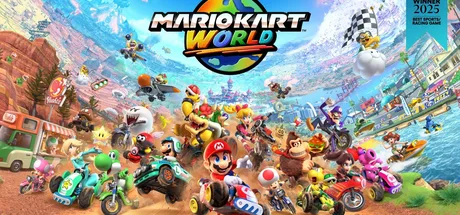
Cup Structure: The Four-Track Tradition and What Changed#
The Grand Prix still uses cups of four tracks each — the series tradition this entry keeps. The table below sets the retained pieces against the changed one.
| Item | Status |
|---|---|
| Cup structure | Retained: four tracks per cup |
| Track count | Four courses per group |
| Between tracks | No longer reset |
| Travel | Field drives connecting roads to the next course |
| Race continuity | Runs continuously across tracks |
“Four tracks per cup” still means one cup is four stages driven back to back; that frame is unchanged. The real change sits between tracks: older entries settled each course independently, while this one sends the field straight to the next venue with the race never breaking.
That continuity is one piece of the game’s open-world design. Now that courses are joined inside a single map, the Grand Prix simply folds “traveling” into the race, turning four stages into one complete route. Only with that in mind do the carried-over positions and items make full sense.
The No-Reset Rule: Positions, Items and Momentum All Carry#
No reset between tracks is the core of the Grand Prix change. The table below lists what carries into the next segment.
| Carried item | Note |
|---|---|
| Position | Your finishing position on one course becomes the start of the next segment |
| Items | Items left in hand carry over |
| Speed momentum | Driving momentum carries over |
| Race state | No interruption across the four stages |
Position carry-over means every stage’s finish is not “settled and done” — it is the next segment’s starting spot. Position grabbed at the end of the first course directly shapes where you set off onto the connector and how you are ranked entering the second course. The whole cup behaves like one long line where advantage and disadvantage accumulate.
Item carry-over changes timing. In older games items were re-dealt each track and could be spent freely; here an item kept into the next segment still has work to do, so “when to use it” outweighs “whether to use it”. On the connector roads especially, the item in hand may decide whether you hold your line at a fork.
Momentum carry-over is the feel-level change. After finishing, the kart does not stop to wait for results — it rolls onto the connecting road at speed, and corner quality and exit acceleration are carried down the chain. Keeping a consistent driving rhythm is worth more than relaxing at the end of each stage.
Connector Roads: Race Stages Full of Shortcuts and Item Boxes#
Connector roads are the most novel stages in this Grand Prix. The table below lists their properties.
| Item | Note |
|---|---|
| Role | A race stage in their own right |
| Function | Link neighboring courses |
| Contents | Filled with shortcuts and item boxes |
| Link to position | Positions lost here carry into the next course |
| Link to items | A chance to restock |
Connector roads are not intermission between courses — they are real race stages. What you contest here is not just arrival time but the qualification of entering the next segment with a given position and a given item. Treating them as “a stretch where you can ease off” usually bills you at the next course’s start.
Shortcuts and item boxes are the two attractions. Shortcuts let players who know the map cut distance and move up; dense item boxes give trailing racers a way back. Layered together, they make the connectors the most volatile part of the whole cup — one correct fork here can be worth more than another perfect drift on the course itself.
Because specific course names and shortcut locations lack first-hand confirmation, this page lists no routes. Learn the connecting roads one by one in Free Roam — which forks lead to shortcuts, where item boxes cluster — and bring that map knowledge back into the Grand Prix.
Engine Classes and Mirror Mode#
The Grand Prix offers several difficulty levels plus a Mirror version once unlocked. The table below lists confirmed information by level.
| Level | Note |
|---|---|
| 50cc | The selectable base level |
| 100cc | The selectable middle level |
| 150cc | The selectable advanced level |
| Mirror Mode | Selectable after unlocking |
The three engine classes map to different racing intensity, chosen by skill level. What the class changes is the overall pace of the race; the core rule — no reset between tracks, positions, items and momentum carried — applies identically at every level and does not bend by class.
Mirror Mode requires unlocking first. It is an inherited advanced challenge for players who know the routes and want to re-test their judgment on reversed lines. Because mirrors flip familiar corner directions, shortcut entrances learned by memory need re-learning; try Mirror after the regular levels are comfortable.
Specific speed values per class and unlock conditions lack first-hand confirmation in available material; this page confirms only that the levels and Mirror Mode exist, with no quantified parameters.
Turning the Carry Rules into Race Strategy#
With no-reset and connector rules understood, play can be adjusted accordingly. The table below lists stage-by-stage suggestions derived from verified rules — racing judgment, not official rules.
| Stage | Suggestion |
|---|---|
| End of each course | Defend position first to earn a forward starting spot on the connector |
| Before entering a connector | Check items in hand and decide whether to save them for a fork |
| Connector forks | Prefer shortcut routes you know |
| Dense item boxes | Restock deliberately when behind |
| Whole cup | Keep driving consistent; do not relax at stage ends |
The first suggestion is “do not treat the finish as the end”. Since positions carry, the final corners of every course are worth full effort — rank grabbed there rides all the way into the next segment. Slacking before a finish line costs you twice: on the connector and at the next course’s start.
The second suggestion concerns items. “Carry into the next segment” gives items cross-stage value, so at an item box think beyond the moment: would this item be more useful on the connector? Saving the right item for a fork or a corner entry usually beats spending it on sight.
The third suggestion is “make map knowledge a hard skill”. Connector shortcuts and item box placement make these segments the easiest places to gain or lose ground. Memorize the positions in Free Roam, and back in the Grand Prix you will pick the right line in the instant others hesitate.
Common Mistakes and How to Avoid Them#
Given the rules above, beginners in the Grand Prix tend to make a handful of errors. The table below pairs each with its fix.
| Mistake | Fix |
|---|---|
| Treating the between-track stretch as a settling pause | Keep speed and roll straight onto the connecting road |
| Ignoring end-of-stage position | Fight for position at every course’s finish |
| Burning items carelessly | Weigh the item’s value for the next segment |
| Taking the wrong connector fork | Learn the routes in Free Roam ahead of time |
| Underestimating momentum carry-over | Maintain a consistent driving rhythm |
The shared root of these mistakes is playing this game’s “continuous race” with an older game’s “stage-by-stage mindset”. Treat the whole cup as one unbroken route and the three carried-over things — positions, items, momentum — turn from annoyances into resources.
One more emphasis: shortcut positions, item effects and unlock conditions on this page are stated without unverified numbers or lists. Let the in-game presentation be the standard, use the verified carry rules as the judging frame, and confirm the remaining details in play.