Elden Ring FAQ: Answers to the Most Common Questions#
This page collects the questions Elden Ring players ask most, organized into five groups: basics, combat mechanics, co-op and multiplayer, weapons and upgrades, and progression advice with navigation. The Lands Between is vast and its systems interlock, so for anything specific, use the navigation at the bottom of this page to reach the matching guide; this page only gives directional answers and the shortest path to a decision.
Basics#
What kind of game is Elden Ring?#
Elden Ring is an open-world action RPG developed by FromSoftware and published by Bandai Namco Entertainment. It keeps the Souls framework: stamina management, precise dodge rolls, and learning enemy attack patterns until the fight breaks your way. The big difference is that the bonfire-style level design unfolds across one seamless map, and you choose your own route and pace. Demigod boss fights are the narrative and gameplay peaks, each with its own move logic and weakness design.
I have never played a Souls game. Can I still start here?#
Yes. The open-world structure naturally lowers the Souls entry barrier: if the enemies ahead are too hard, take another path, gather resources, upgrade your weapon, level up a few times, and come back. The Spirit Ashes summoning system also gives solo players the option of bringing a teammate, letting spirit ashes split enemy attention when the early game gets rough. The only real adjustment is mindset — dying is part of the learning process, and every defeat teaches you something about the next attempt.
What is Shadow of the Erdtree, and how do I enter it?#
Shadow of the Erdtree is the major expansion. The stage moves from the Lands Between to the Realm of Shadow, with its own level and difficulty curve independent of the base game. Entry requires advancing the main story to a specific progress point — the trigger is tied to how far you have progressed — so it is best to buy in after you are deep into the base game. For the expansion’s map mechanics, bosses, and rewards, see the site’s DLC guide page.
Combat Mechanics#
I keep losing to bosses. What should I do?#
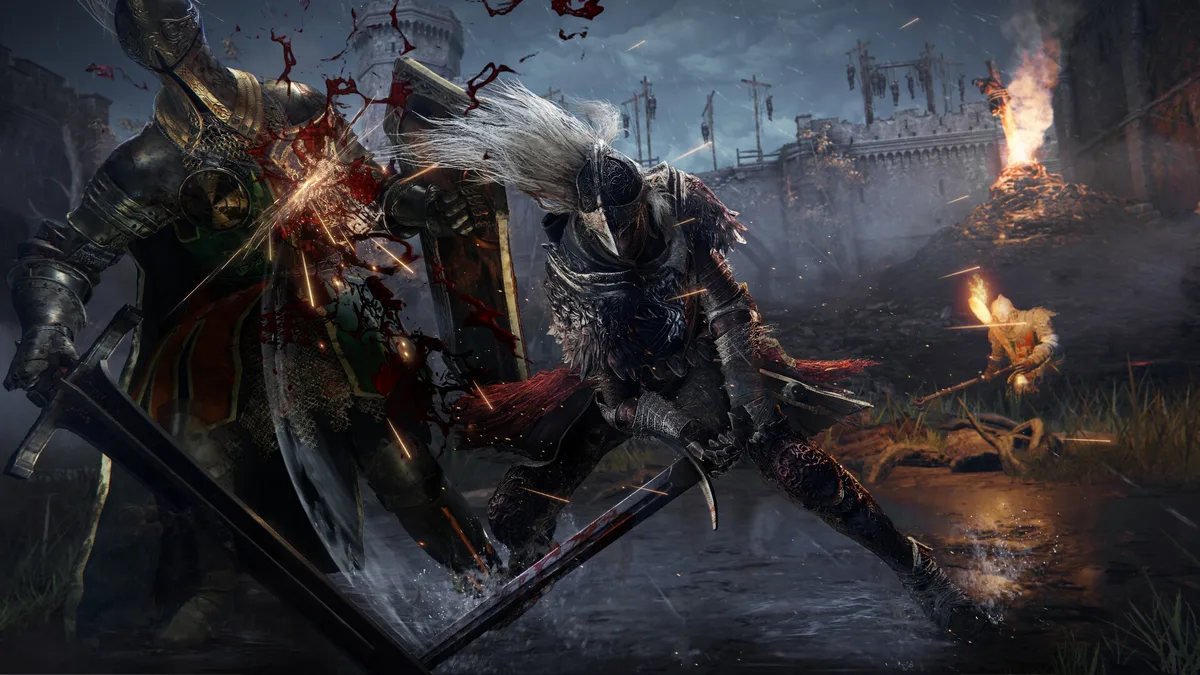
Check three things first: is your weapon level at the area’s baseline, do you have the right elemental or status advantage, and do you actually know the boss’s moveset. Souls boss combat revolves around turn-taking — one greedy extra hit or one extra dodge step makes a huge difference. This site has a dedicated weakness guide for every demigod boss, covering attack tell patterns and punish windows; if you want a different approach, the build guides can help you respecc and try again.
How does the Spirit Ashes summoning system work?#
Spirit ashes are summonable spectral allies. In boss rooms and some areas you spend FP to summon them, splitting enemy attention or adding damage. Key points: summons only work in areas marked with a dedicated monument, ashes can be upgraded, and different ashes play very differently — tank types draw attacks for you, damage types help break posture. Use whatever you find early, fill gaps by playstyle mid-game, and see the spirit-summons guide for the full upgrade route.
How should I combine talismans?#
Talismans are passive accessories, and slot count grows as the main story advances. The logic is simple: cover weaknesses first (FP regen if you run dry, damage reduction if you are squishy), then stack your build’s core (attack for melee, spell power for casters). In the first playthrough, a conservative “defense plus core boost” setup carries you until you know the bosses, then swap in max-damage configurations. The talisman recommendations guide has ready-made loadouts by build — copy them as-is.
How do I unlock all endings?#
Endings are tied to choices at key story junctures. Different endings have different trigger routes, and some require completing specific quest chains. A single playthrough usually covers only one or two endings; New Game Plus or separate save files are the main ways to collect the rest. Full unlock conditions and caveats are covered on the endings guide page — spoiler warning, finish the main story first if you mind.
Co-op and Multiplayer#
How do I play with friends?#
Use a Furlcalling Finger Remedy to reveal summon signs online, and set the same password so friends can see your sign. The summoned player does not advance their own world, but runes and materials they earn are theirs to keep.
Do bosses gain health in multiplayer?#
Yes. Boss health scales up with player count in co-op — more players means a tankier boss, an official balancing design. Fighting solo and cooperating online are simply different rhythms; either way the endings are unaffected.
What do I do when I get invaded?#
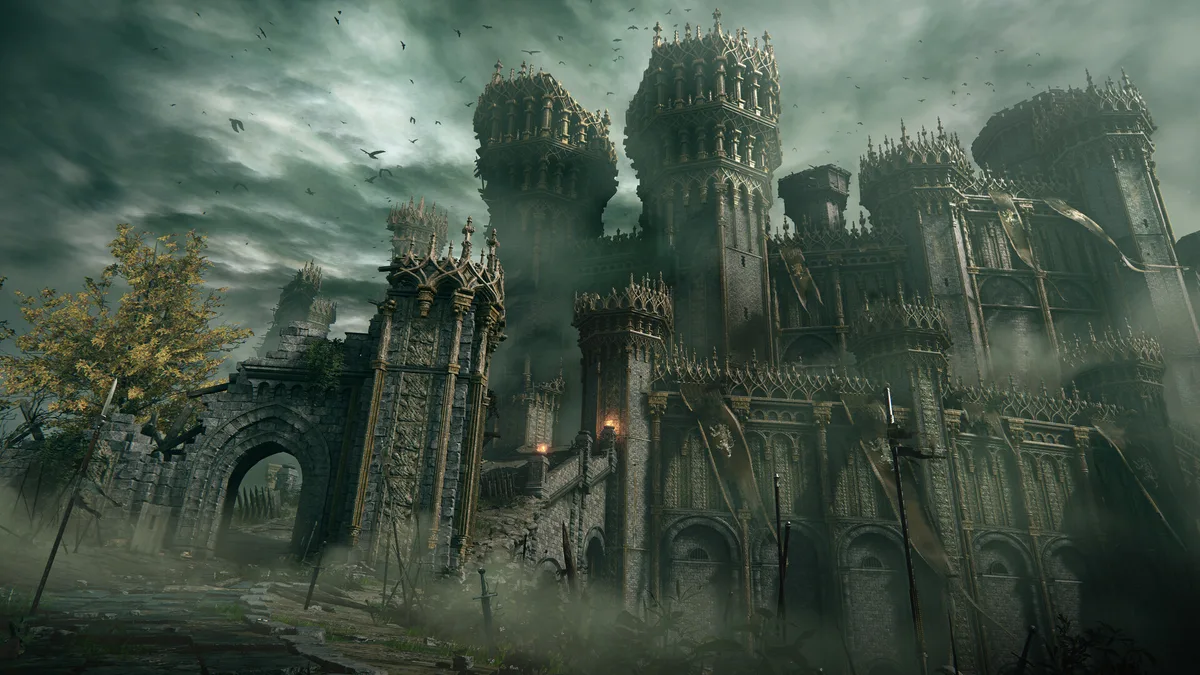
A Finger Severer cuts the invader’s connection; if you do not want to fight, hide in the boss room or retreat to a Site of Grace. Invasions are a byproduct of being online — offline play never sees them.
Why can’t I see my friend’s summon sign?#
Three common causes: level difference outside the matchmaking range, mismatched passwords, or the area’s boss is already dead. Areas whose boss has been defeated cannot host summons, so move to an area you have not cleared yet.
Weapons and Upgrades#
I never have enough upgrade stones. What now?#
Miners and catacomb enemies drop Smithing-Stone Bell Bearings. Hand them to the Twin Maiden Husks at Roundtable Hold and you can buy smithing stones of that tier without limit. This is one of the most valuable mid-game pickups to prioritize.
Can Ashes of War be swapped repeatedly?#
Yes. Ashes of War can be attached and removed freely, and duplicates of the same ash can be copied, so switching builds wastes nothing. Weapons whose attribute does not match the ash still function normally with it equipped.
Do somber weapons upgrade the same way as normal weapons?#
No. Normal weapons use regular Smithing Stones; special and legendary weapons use Somber Smithing Stones, and the two tracks do not share materials. When you get a strong somber weapon, save your somber stones for it.
Is there an upgrade cap?#
Yes. Normal and somber weapons have different upgrade limits. Upgrade level determines base damage and grows independently of character stats — you need to invest in both tracks.
Progression Advice and Navigation#
Which direction should a new player explore first?#
The open world has no forced route, but resource efficiency differs. The general advice: clear the lower-level areas to the east and south first, unlock the horse, the Spectral Steed Whistle, and base upgrade functions, then push toward the core regions. For the recommended order of the six major regions and each area’s resource notes, see the site’s main walkthrough; when truly lost, following the golden guidance light between Sites of Grace is the official low-cost solution.
How do I choose a stat build?#
Starting stats shape your early feel, and mid-game respec items exist, so there is no need for choice anxiety. Melee builds should start with Strength or Dexterity, casters with Intelligence or Faith, and Arcane suits special builds. The build guides collect stat templates and endgame loadouts by weapon type — compare and fine-tune around mid-game. Early on, put points into your main damage stat and Vigor, and your margin for error gets much more comfortable.
What other Elden Ring sections does this site have?#
The site’s guides follow the play loop: speedrun tricks, spirit summons, talisman picks, the upgrade system, a weapon catalog, and the Tarnished Edition and DLC hubs cover the full path from beginner to endgame, while demigod boss weakness guides get one page each. See the guide navigation above for all subpage entry points, or start from the section home.