Story and Worldbuilding Analysis#
Story Background#
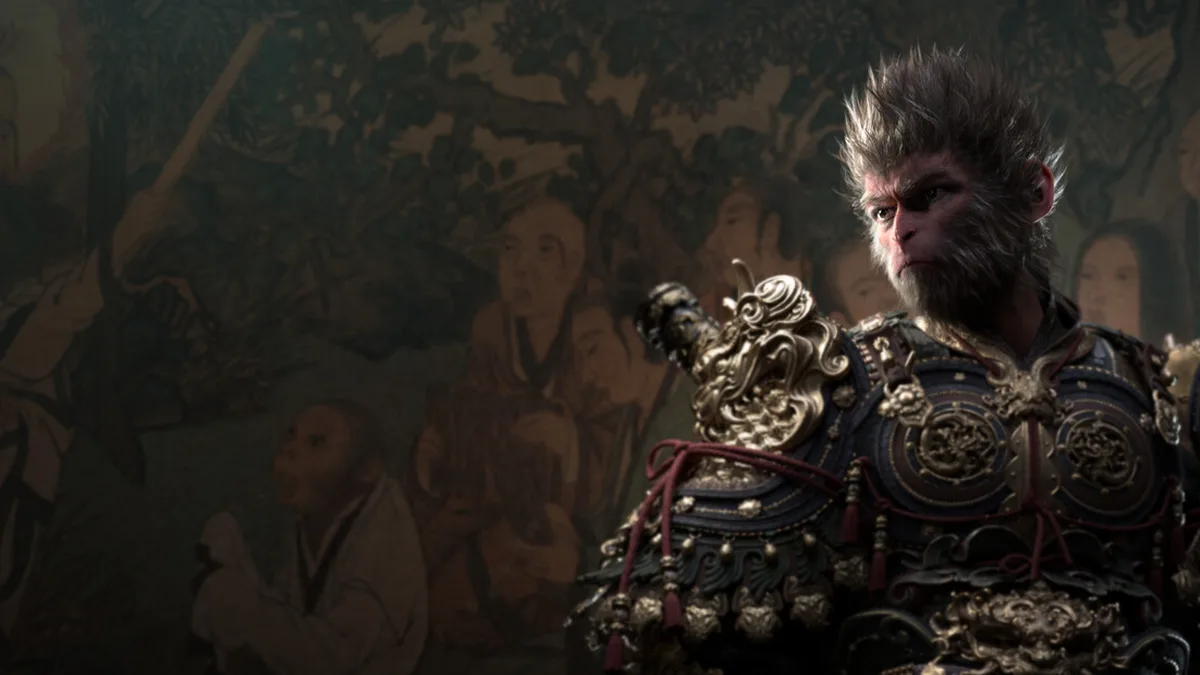
The story takes place several hundred years after the end of the pilgrimage to the West in Journey to the West. The Great Sage Equal to Heaven, Sun Wukong, exists no longer, and the rule of the Heavenly Court has grown harsher still. A new figure known as the “Destined One” sets out on a journey to find the six roots — the six relics left behind by Sun Wukong. Each root is hidden in a different chapter and guarded by a powerful yaoguai. As the Destined One’s journey advances, players gradually uncover the greater conspiracy concealed behind the pilgrimage.
| Timeline | Event | Significance |
|---|---|---|
| Ancient times | The Heavenly Court establishes its rule | Foundation of the worldbuilding |
| Before the pilgrimage | Sun Wukong wreaks havoc in Heaven | Backstory |
| During the pilgrimage | Eighty-one tribulations | Referenced by the game |
| After the pilgrimage | Wukong vanishes, the six roots scatter | Starting point of the main story |
| Present day | The Destined One sets out | The player’s point in time |
The story deliberately avoids directly retelling the details of the pilgrimage, instead treating it as a backdrop of history already past, letting players re-examine the true face of the Heavenly Court and the Buddhist order with fresh doubt.
Synopsis of the Six Chapters#
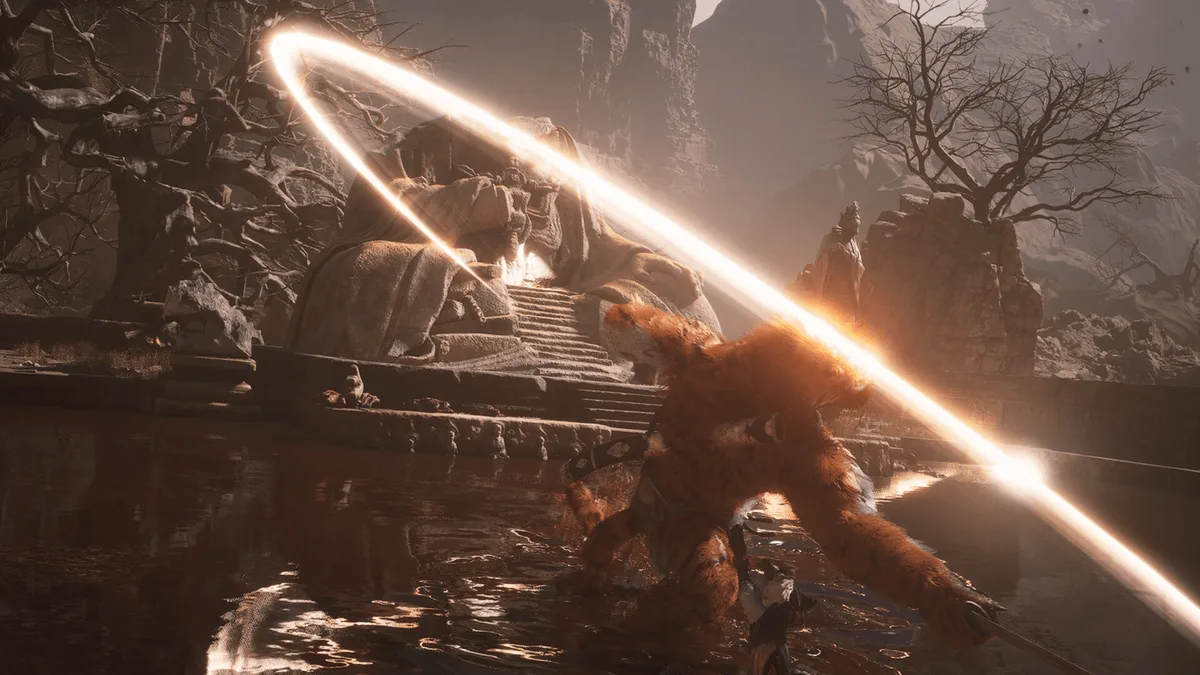
The game is divided into six chapters; each chapter corresponds to one relic and is at the same time a self-contained tragedy of its characters.
Chapter One: Black Clouds Lit by Fire#
| Element | Content |
|---|---|
| Location | Black Wind Mountain and Black Wind Cave |
| Core Boss | Black Wind King |
| Hidden Boss | Elder Jinchi |
| Chapter Theme | Greed and obsession |
| Relic | First Root: Eye |
| Key Story | Elder Jinchi’s obsession with gold leads to the fall of Black Wind Mountain |
Chapter Two: Wind Rises at Dusk#
| Element | Content |
|---|---|
| Location | Yellow Wind Ridge |
| Core Boss | Yellow Wind Sage |
| Hidden Boss | Spider Spirit side quest |
| Chapter Theme | Ambition and cost |
| Relic | Second Root: Ear |
| Key Story | The Yellow Wind Sage defies the Heavenly Court at any cost in pursuit of power |
Chapter Three: White Dew Born at Night#
| Element | Content |
|---|---|
| Location | Lesser Western Heaven |
| Core Boss | Yaksha King |
| Chapter Theme | Faith and betrayal |
| Relic | Third Root: Nose |
| Key Story | The hypocrisy and darkness behind the sacred Buddhist ground |
Chapter Four: Song of the Purple Lovebirds#
| Element | Content |
|---|---|
| Location | Webbed Cave |
| Core Boss | Violet Spider |
| Chapter Theme | Desire and traps |
| Relic | Fourth Root: Tongue |
| Key Story | The tragic love of the spider spirit and the curse of the Webbed Cave |
Chapter Five: Sunset Over the Mortal World#
| Element | Content |
|---|---|
| Location | Flaming Mountain |
| Core Boss | Red Boy |
| Hidden Boss | Poison Foe King |
| Chapter Theme | Family and destruction |
| Relic | Fifth Root: Body |
| Key Story | Red Boy inherits and transcends the hatred of the elder generation |
Chapter Six: Unfinished#
| Element | Content |
|---|---|
| Location | Mount Huaguo |
| Core Boss | Stone Monkey |
| Hidden Boss | Yang Jian (True Ending) |
| Chapter Theme | Fate and freedom |
| Relic | Sixth Root: Mind |
| Key Story | The true identity of the Destined One and the Heavenly Court’s final conspiracy |
The themes of the six chapters advance layer by layer, from individual greed to the hatred of a family, and on to the truth of the Heavenly Court’s power as a whole, presenting a complete dark fable structure.
Analysis of the Heavenly Court Conspiracy#
The Heavenly Court’s role in the game is far darker than in the traditional Journey to the West. Below is a summary of the conspiracy threads hinted at in the game.
| Conspiracy Thread | Chapter | Evidence Strength | Implication |
|---|---|---|---|
| The pilgrimage was orchestrated | Chapters 1-6 | Strong | The entire pilgrimage is the Heavenly Court’s game of chess |
| Wukong’s demise was unnatural | Chapter 6 | Strong | The Heavenly Court may have taken part in it in secret |
| The six roots are bait | Chapters 2-5 | Medium | The scattering of the six roots is the Heavenly Court’s plan |
| The Destined One was chosen | Chapter 6 | Extremely strong | The Destined One is himself a pawn of the Heavenly Court |
| Yaoguai are being used | Chapters 1-5 | Medium | Yaoguai are the sacrifices of the Heavenly Court’s power game |
These clues are scattered across the Shadow Spirit Compendium, dialogue, and map scenes, and players must piece them together on their own. Once you draw them into a single line, you find that the “pilgrimage” itself is a grand performance staged jointly by the Heavenly Court and Spirit Mountain.
Fates of the Core Characters#
The following are the fate trajectories of the game’s main characters and their symbolic meanings.
| Character | Fate | Symbolic Meaning | Chapters Appearing |
|---|---|---|---|
| Destined One | Chooses his own fate | Free will vs. predestination | Throughout |
| Sun Wukong | Passes away but leaves a legacy | The continuation of the spirit of rebellion | Backstory / Chapter 6 |
| Yang Jian | The Heavenly Court’s enforcer | Servant of power | Chapter 6 |
| Black Wind King | Devoured by greed | The price of obsession | Chapter 1 |
| Yellow Wind Sage | A casualty of ambition | The curse of power | Chapter 2 |
| Yaksha King | A fallen guardian of faith | The two-sided nature of faith | Chapter 3 |
| Violet Spider | A tragedy of love | The conflict between desire and true love | Chapter 4 |
| Red Boy | Inheritor of hatred | Intergenerational trauma | Chapter 5 |
| Elder Jinchi | The embodiment of greed | Destruction through material obsession | Chapter 1 hidden |
| Yuan Shoucheng | Mysterious guide | Observer of fate | Side character |
The fates of the protagonists and the yaoguai mirror one another: almost every character struggles between “being arranged” and “choosing for oneself”, and this is precisely the core of the game’s theme. Precisely because of this, very few characters in Black Myth are simply black or white.
Connection to Journey to the West#
Black Myth: Wukong does not retell Journey to the West; rather, it boldly reconstructs the original work in a modern form. Below are the game’s homages to and alterations of the original’s elements.
| Original Element | Game Presentation | Nature of Change |
|---|---|---|
| The pilgrimage team | The Destined One acts alone | Reinterpretation |
| The Buddha | Hinted at as a higher power above the Heavenly Court | Expansion |
| The tightening headband spell | A symbol of the Destined One’s bondage | Hint |
| The Seventy-Two Transformations | Transformation system | Direct homage |
| The golden cudgel | Core weapon | Direct homage |
| Mount Huaguo | Location of the final chapter | Direct homage |
| Havoc in Heaven | Backstory event | Reinterpretation |
| Eighty-one tribulations | Boss battles along the journey | Symbolic reference |
The game keeps the most symbolic episodes of the original but reinterprets them from an entirely new narrative angle, making them a dark fable whose worldbuilding is self-consistent.
Character Compendium#
The Pilgrimage Team#
| Character | Identity | Fate |
|---|---|---|
| Sun Wukong | Protagonist, Great Sage Equal to Heaven | Sets out on the pilgrimage because of the Golden Circlet, and finally completes his self-awakening at Mount Huaguo |
| Tang Monk | Initiator of the pilgrimage | Guides Wukong’s cultivation along the way, the spiritual core of the pilgrimage road |
| Zhu Bajie | Reincarnation of Marshal Tianpeng | The senior brother who travels with Wukong; deep meaning hidden beneath his laughter, jests, and fury |
| Sha Monk | Reincarnation of the Curtain-Raising General | A man of few words, yet the team’s most reliable support |
Heavenly Court Factions#
| Character | Identity | Stance |
|---|---|---|
| Yang Jian | War God of the Heavenly Court | Ostensibly ordered to hunt Wukong down, but in truth has plans of his own |
| Four Heavenly Kings | Guardian generals of the Heavenly Court | The gatekeepers of the final chapter |
| The Buddhas of Spirit Mountain | The hidden driving force behind the pilgrimage | The true architects who staged the great performance of the pilgrimage |
Lineage of the Demon Kings#
| Demon King | Chapter | Connections Behind |
|---|---|---|
| Black Wind King | Chapter One | Lord of Black Wind Mountain, used by Elder Jinchi and others |
| Yellow Wind Sage | Chapter Two | Lord of Yellow Wind Ridge, wielder of the Samadhi Divine Wind |
| Yellowbrow King | Chapter Three | Master of the Lesser Thunderclap Temple, impersonating the Buddha |
| Hundred-Eyed Demon Lord | Chapter Four | Master of the poison den of Webbed Ridge |
| Bull Demon King | Chapter Five | Lord of Flaming Mountain, an old friend of Wukong |
| Great Sage’s Broken Body | Chapter Six | A lingering shadow of Wukong’s past, the final battle |
Thematic Interpretation#
Black Myth: Wukong reinterprets the themes of “freedom and bondage” and “truth and illusion” on the foundation of the classic Journey to the West. The Golden Circlet is no longer a simple instrument of punishment, but a symbol of the awakening of Wukong’s inner sense of responsibility. Through the journey of six chapters, the game gradually uncovers the conspiracy behind the pilgrimage — the so-called “crossing the tribulation” is nothing more than a grand performance arranged by the Heavenly Court and Spirit Mountain. Wukong’s final choice is an affirmation of the “self” and a steadfast holding to the “original heart”.
This theme is projected onto the players as well: whether you choose to defy fate or accept what has been arranged depends on the understanding and awakening accumulated over the journey.
In-Depth Reading of the Endings#
The game has four endings, and each one represents a different understanding of fate. Below is an in-depth reading of each ending.
Bad Ending: Destiny Taken Away#
The Destined One is in the end trapped by the Heavenly Court’s game of chess and becomes another tool for the Heavenly Court to control the world. This represents submission to fate — even after walking the entire journey, if there is no true awakening within, you are still only a pawn being manipulated.
Good Ending: Defying Destiny#
By defeating Yang Jian, the Destined One proves his own strength. But this is only a temporary victory, because the system of the Heavenly Court has not changed. This represents the courage to rebel, yet also hints at the limits of individual strength before a system.
When the six roots are made one, the Destined One reaches a realm equal to Wukong’s — and even surpasses it. The game hints here: true power lies not in force of arms but in understanding and awakening, and this too is the gateway to the higher ending.
True Ending: Great Sage Equal to Heaven#
This is the most complete ending. The Destined One has not only defeated every challenge, but has also understood the true meaning of the six roots — they are not fragments of power, but symbols of awakening. The Destined One carries Wukong’s legacy and becomes a truly free being.
Hidden Ending: The Six Roots Returned to One#
The hidden ending requires that, after fulfilling every hidden condition, you end the final battle in a specific way to trigger it. It reveals that the six roots were originally one root, and that their tearing apart and scattering was nothing more than a device of the Heavenly Court’s design. At this point the Destined One completes the loop of consciousness, no longer needs the Golden Circlet as a restraint, and truly becomes narrator and heir in one.
The four endings advance layer by layer: from “taken away” to “defying”, then to “transcending”, and finally arriving at “returned to one”, representing the complete psychological arc of tragedy — rebellion — awakening — freedom.
Philosophical Themes in the Worldbuilding#
Beneath its shell as an action game, Black Myth: Wukong explores several profound philosophical themes.
| Theme | Game Presentation | Related Chapters |
|---|---|---|
| Fate and free will | The Destined One fights against an arranged fate | Throughout |
| Power and corruption | The fall of the Heavenly Court and the yaoguai | Throughout |
| Obsession and cost | Elder Jinchi, Yellow Wind Sage | Chapters 1-2 |
| Legacy and transcendence | The relationship between the Destined One and Wukong | Chapter 6 |
| Faith and doubt | The hypocrisy of Lesser Western Heaven | Chapter 3 |
| Love and sacrifice | The story of Violet Spider | Chapter 4 |
These philosophical discussions never step outside the basic ground of “telling a good myth”; on the contrary, they give every battle a weight of meaning. Combat experience and depth of thought are given equal emphasis, and this is one of Black Myth: Wukong’s most successful narrative designs.
Hidden Clues in the Shadow Spirit Compendium#
The Shadow Spirit Compendium (the in-game codex system) hides a large number of story clues. Below are the entries that are easily overlooked yet crucial to understanding the plot.
| Entry | Hidden Clue | Importance |
|---|---|---|
| Wukong’s Afterimage | Wukong’s original identity and obsession | Extremely high |
| Secret Order of the Heavenly Court | The true purpose of the pilgrimage | High |
| Demon King’s Own Account | The pilgrimage story from the yaoguai’s perspective | Medium-high |
| Mystery of the Iron Band | The true bond that binds Wukong’s fate | High |
| Detailed Explanation of the Six Roots | The true meaning of each root | Extremely high |
Every entry of the Shadow Spirit Compendium is worth reading, especially the Detailed Explanation of the Six Roots and Wukong’s Afterimage — only by putting the two together can you assemble the complete doctrine of fate. It is recommended to search through it once more after finishing the game; you will meet it again from an entirely different angle.