Area Exploration#
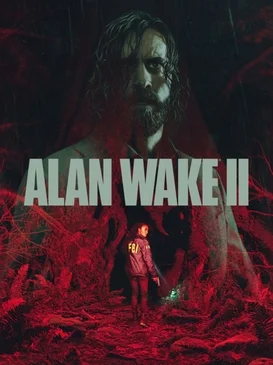
Exploration in Alan Wake 2 revolves around two worlds: the real world where Saga Anderson operates, and the Dark Place where Alan Wake is trapped. The two lines have completely different area structures, exploration methods, and sources of threat, so the same approach cannot be forced onto both. This page explains the role of each area, what is worth stopping to search, and the practical criteria for judging whether you should keep searching.
Area Overview#
| Line | World | Area | Role |
|---|---|---|---|
| Saga’s campaign | Real world | Bright Falls | FBI investigation site, Saga’s starting point |
| Saga’s campaign | Real world | Coffee World | Theme park setting, dense environmental storytelling |
| Saga’s campaign | Real world | Watery | Community and harbor, spread along the lakeshore |
| Saga’s campaign | Real world | Valhalla Nursing Home | Multi-level area combining interiors and courtyards |
| Saga’s campaign | Real world | Cauldron Lake | Lakeside wilderness, echoing the first game |
| Alan’s campaign | Dark Place | New York City | A city warped by darkness, constantly rewritten |
The Real World: Exploring Saga’s Campaign#
In the real world, Saga relies on the Mind Place to organize clues, and the core of exploration is the loop of “collect evidence — return to the Mind Place to profile / file it.” What is worth stopping for in every area usually falls into three categories: manuscript pages (which add story and foreshadowing), lunch boxes (which grant fixed attributes / fragments), and cult stashes (ammunition and supplies). But I do not list exact counts or codes here, because they vary with difficulty and progress — what matters more is learning to judge which places deserve a search.
Bright Falls#
Bright Falls is where Saga’s investigation begins, and a gentle onboarding area. The focus here is not combat but building familiarity with the “real world map”:
| Point of interest | Function | Notes |
|---|---|---|
| Police station | Investigation hub | Anchors Saga’s case board and Mind Place in reality; the core site for advancing the investigation |
| Diner and shops | Clues and environmental storytelling | Talking with townsfolk yields profiling material — don’t just read the flat map |
| Gas station / convenience store | Supply source | Ammunition and batteries; top up before heading into the wilderness |
| Edge woodland | Fast route | Trail entrances linking Bright Falls with Watery and Cauldron Lake |
Coffee World#
Coffee World is a coffee-themed park, a classic case of “looks harmless, feels deeply wrong.” Its value lies in environmental storytelling and enterable interiors, not combat. While exploring, note:
- The park is made up of several rides and plazas, and enterable indoor buildings are usually where key items and hidden spots live; indoor and outdoor threat levels differ.
- Sealed facilities and backstage corridors require detours to find their entrances — following “can open / can enter” prompts beats circling the perimeter repeatedly.
Watery#
Watery spreads out around the lakeshore and includes several sub-areas: community buildings, docks, and warehouses. Its trait is that the layout is large and there is far too much depth, so things are easy to miss. Practical criteria:
| Criterion | What to do |
|---|---|
| You see an enterable door / hatch | Go in first; interiors often hide supplies and story items |
| A main objective points to a building | Don’t rush the objective — sweep the enterable points around its exterior first, then go in |
| Your inventory is full | Return to a safe haven and stash non-quest items in the storage box before coming back, avoiding painful trade-offs |
Valhalla Nursing Home#
The nursing home is a mixed area of multi-level interiors plus courtyards; stairs and many rooms make its spatial layering more complex than Watery’s. Explore on the principle of “clear one floor at a time”: first enter every room on the current level, then take the stairs to the next, avoiding repeated up-and-down trips.
Cauldron Lake#
Cauldron Lake is a lakeside wilderness area that directly echoes the setting of the original Alan Wake, and it is the Saga line’s closest thing to natural wilderness: wide sightlines but heavy cover. Key points for exploring it:
- The wilderness trails branch often, so before following the main objective’s direction, check the branch points on the map and sweep the side paths.
- The shore and woods may hide scenes and documents echoing the first game’s story — players who enjoy connective worldbuilding should slow down here.
The Dark Place: Exploring Alan’s Campaign#
What Alan faces in the Dark Place is not an ordinary small town but a warped New York that is continuously rewritten and rearranged as the story advances. The biggest difference from Saga’s line is that the map is not fixed: the same location may look completely different after different “chapter rewrites.”
Exploration in the Dark Place does not follow the usual “collectible checklist” mindset; the core is advancing along “scenes that can be rewritten.” The key operational criteria:
| Criterion | Meaning and action |
|---|---|
| Interactive light / words in the environment | This is Alan’s handle for rewriting the world — approach and trigger it as prompted |
| You see semantically related scene objects | Note the “story links” between objects; a rewrite often requires turning the scene into a self-consistent story |
| The way somewhere is blocked | Don’t force it; go back and check whether you missed a rewritable trigger point |
| Darkness closes in around you | Move under a light source as fast as possible; darkness damages Alan continuously |
“Exploration” in Alan’s campaign is essentially solving a nested scene puzzle rather than looting. The standard for whether you are done is not “have I picked everything up” but “has this rewrite line told that area’s story completely.”
How the Two Lines Connect and Switch#
The game lets you switch freely between Saga’s line and Alan’s line, and that switch is not just a change of character but a change of exploration rules. Criteria for switching:
| Situation | Recommendation |
|---|---|
| A daytime / real-world-node Saga event has wrapped up | Switch to Alan’s line and push the Dark Place forward, easing resource pressure on the real-world line |
| Progress in the Dark Place hits a wall | Switch back to the real-world line and clear Saga’s case board — it often yields new hints |
| Resources are tight | Prioritize whichever line unlocks supplies / safe havens |
Safe Havens and the Mind Place#
Safe Havens#
Safe havens are recovery and organization nodes shared by both lines (in Alan’s line they take the form of the “Writer’s Room” type of safe space in the Dark Place, while in Saga’s line they are real-world safe houses). Their common functions:
| Function | Notes |
|---|---|
| Rest and recovery | A beat to catch your breath and reorganize |
| Save progress | Safe havens are stable, secure save points |
| Item management | Store and retrieve items to free inventory space before setting out |
The Mind Place (Saga)#
Saga’s Mind Place is a pure information space that costs no real-world resources, and it is her strongest exploration tool:
- Case board: pin collected evidence and clues to the board and work out character relationships and event logic.
- Map: the Mind Place map marks collectibles and explorable points that have been discovered but not yet obtained — the main defense against missed searches.
- Character profiles: profiling key characters often unlocks new lines of questioning, which in turn points you toward new evidence in the real world.
Criterion for use: when you do not know where to go in the real world, fall back to the Mind Place and check the case board and map — the vast majority of being “stuck” is unintegrated clues, not an unfound road.
The Writer’s Room (Alan)#
Alan’s line has the Writer’s Room as its corresponding information space, serving the role of rewrite and narrative outline. Here, Alan can review the structure of the current rewrite script and judge which passage of the “story” has not yet been rewritten into its correct state. If you hit an obstacle while exploring the Dark Place, return to the Writer’s Room and examine the current script — it usually reveals which link is not yet rewritten.
Light and Batteries: The Key to Exploration Endurance#
On either line, light is the lifeline of exploration: it is both a weapon against the darkness and what keeps you alive in the Dark Place. Endurance judgments while exploring:
| Situation | What to do |
|---|---|
| Battery level below half | Start conserving flashlight use; prefer ambient light and sprinting to disengage |
| You have entered a long segment / maze area | Confirm in advance whether supply nodes and safe havens lie along the way |
| You are holding off darkness with the flashlight | High drain, low return — find an ambient light source instead |
| An enemy is already broken | Switch the flashlight off at once and save batteries for the next encounter |
Suggested Order of Progress for Both Lines#
For exploration efficiency, the recommended order of progress is:
- On Saga’s line, sweep the outer ring as soon as you reach a real-world area, covering enterable interiors and branch points before pushing the main story.
- If you feel you missed something, fall back to the Mind Place and check the map for collectibles not yet marked as obtained.
- When resources are tight, switch to Alan’s line — progress in the Dark Place does not consume real-world collectibles.
- When both lines are stuck, integrate the information you already have (case board / script) before deciding which area to explore next.
General Criteria for Area Exploration (Should You Keep Searching?)#
Finally, here is a set of operational criteria with wide applicability, to avoid pointless backtracking:
| What you want to judge | What to look at | Conclusion |
|---|---|---|
| Is this room / side path worth entering | Whether it is enterable / holds interactive objects | If you can enter and see interactive points, it is basically worth stopping |
| Has this area been more or less fully explored | Whether the collectible markers on the Mind Place map are cleared | Markers cleared means this part is done |
| Should you chase a seemingly hidden gap | Whether light or an item lies beyond the gap | Only gaps with actual content are worth chasing |
| What to drop when the inventory is nearly full | Whether you still have combat / exploration needs | Stash non-quest items; never drop potentially useful key-type items |
| Should you return to a safe haven | Batteries / medicine critical, or inventory full | Yes — go back and reorganize, don’t tough it out |
These criteria do not depend on specific numbers and apply to any area and any difficulty in this game.