Alan’s Campaign Walkthrough#
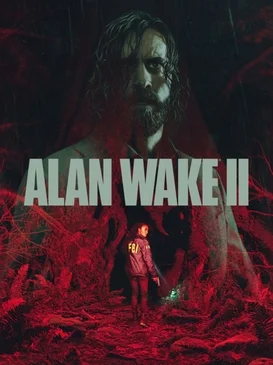
In the dual-protagonist narrative of Alan Wake 2, Alan Wake’s side unfolds in a space entirely unlike Saga Anderson’s crime-scene investigation: a writer trapped in the Dark Place, rewriting reality with pen and light. The core of this page is not “clear enemies and push forward” but understanding the rewrite rules of this world — when light is available, when a scene will be rewritten, how to tell which paths are real and which are looping traps.
How This Campaign Fundamentally Differs from Saga’s#
| Dimension | Saga’s Campaign | Alan’s Campaign |
|---|---|---|
| Core gameplay | Case clue collection, profiling deduction, area exploration | Scene rewriting, carrying light, puzzle loops |
| Main threat | Entities corrupted by darkness, scarce resources | Darkness itself and the distortion of scenes |
| Spatial logic | Relatively stable Bright Falls / Watery / Cauldron Lake | Constantly shifting, repeating Dark New York |
| Means of progress | Evidence, case board, witnesses | Find light, rewrite reality, follow echoes |
Understanding this difference helps you adjust your pace: in Saga’s campaign “loot everything” is almost always right, while in Alan’s campaign first checking whether the environment can be rewritten and where the light comes from usually matters more than rummaging through containers at random.
The Underlying Rules of the Dark Place#
The Dark Place is the dark mirror world of Alan’s writing, and it follows three rules:
- Light is safety: where light falls, dark corruption and threats are suppressed. The first principle of progress is not “find a door” but “find light.”
- Reality can be rewritten: the environment is not fixed. Certain nodes, once activated by light, reconstruct the entire scene and open new passages.
- Loops repeat: you will experience similar scene segments over and over. If a path will not open, do not bash against it; look for nodes that can be rewritten — that is usually the answer to your blockage.
The Angel Lamp: The Core Tool for Carrying Light#
The most important interaction mechanic in Alan’s campaign is the handheld lamp (Angel Lamp). Its purpose is not to shine on enemies as a weapon, but to move light from one place to another.
Operational Criteria#
| What you see | Judgment | What to do |
|---|---|---|
| A glowing outline / symbol appears on a wall | This is an interactive light node | Shine the lamp on it and activate the node |
| A standalone lit light source in the scene | Light can be carried away from here | Guide the light to another place that needs it |
| Darkness ahead, no way forward | You likely need to carry light to “pave the road” | Look around first for lamp stands, symbols, or light points |
| A mechanism / door entangled by darkness | The corresponding node must be lit first | Use light to remove the entanglement, then interact |
Key Judgment Techniques#
- Light nodes usually come in pairs: one light source and one empty slot that needs light. Connect them and the path appears. If you cannot find the slot, look in the opposite direction.
- Not everything that glows is interactive: distinguish “portable one-time light sources” from “ambient decorative light.” Interactive nodes usually have obvious outlines or show an interaction prompt when you approach — confirm up close before acting.
- Compare the scene before and after moving light: once the light is removed, the original spot goes dark and new collectible or interactive content may appear. Do not leave in a hurry.
Scene Rewriting: Rewriting the Environment#
When a “reality node” entangled by darkness appears in the environment, triggering a rewrite with strong light can change the entire scene’s form — for example, adjusting passage layouts, raising or lowering bridges, or flipping room structures.
When to Use a Rewrite#
| Situation | Rewrite goal | Result |
|---|---|---|
| A cliff or dead end ahead | Change the passage structure | A new walkable path appears |
| A room sealed by darkness | Disperse the darkness entangling reality | Unlock the door or mechanism |
| A puzzle lacks a key condition | Reconstruct elements in the scene | Supply the item or position the puzzle needs |
Rewriting is not unconditional. The criterion is: the trigger shows strong light / distorted rewrite feedback, or the environment shows an obvious sign that it can be changed. If the current scene shows no sign of being rewritable, what you need is light and an interaction point, not forcing a trigger.
Echoes: Afterimages of the Past#
While exploring the Dark Place you will encounter echoes of the past — repeated memories or afterimages of events. They serve three purposes:
- Delivering background: filling in what Alan has experienced in this loop.
- Hinting the next step: some echoes show “what to do next” as they replay.
- Pointing the way: tracing the path where echoes appear often leads you toward the right area.
The interaction is usually approach, observe, and let the echo replay. Watch an echo through to the end — many blockages resolve naturally once you have seen it.
Loops, Saves, and the Cost of Failure#
“Death” in Alan’s campaign carries little penalty, but loops reset resources and environment state. Therefore:
- Put the weight of progress on puzzle-solving and rewrite thinking, not on hoarding ammunition to tough it out.
- Check where the nearest checkpoint is before entering a high-risk area — the Dark Place has a complex structure, and knowing where saves are reduces repeated work.
- When stuck, review the scenes you have already walked through first: looping content often gave the rewrite clue in a corner you ignored.
The Musical Chapter: Drop the “Combat Mindset”#
Alan’s campaign contains a full musical chapter, one of the most iconic set pieces in the game. The point of this section is not a victory condition, but the experience and following along.
| Do | Don’t |
|---|---|
| Follow the rhythm and nodes, advance with the performance | Treat it as a regular combat encounter and fight it head-on |
| Pay attention to the lyrics and staging, which hide story hints | Reload repeatedly out of fear of failure |
| Treat it as a pure audiovisual experience | Rush to skip it |
If you “fail” in this section, you only need to replay it once; no real progress is lost, so relax and enjoy it.
Resources and Strength Judgment#
Unlike Saga’s campaign, Alan’s campaign has no large number of lootable supply points; resource gain depends more on scene arrangement. Therefore:
- Make sure you carry enough batteries / ammunition for key encounters first, rather than spreading resources evenly across every exploration run.
- Avoid the encounters you can avoid, and save your firepower for scenes you must resolve.
- Watch for supplies hidden in rewritten scenes: after each rewrite, newly appearing areas often hold collectibles or supplies worth sweeping again.
Common Blockages and How to Deal With Them#
| Symptom | Likely cause | Solution |
|---|---|---|
| No path ahead, dead ends everywhere | You have not found a rewritable reality node | Look around for strong light / distortion spots and trigger a rewrite with light |
| A mechanism will not start | The light was not routed to the right node | Use the Angel Lamp to route light to where the mechanism needs it |
| You keep returning to the same scene | You are in a loop and thinking the wrong way | Review your last step and look for an overlooked light source or rewrite point |
| The next direction is unclear | You missed an echo or a story prompt | Rewatch the echoes you just passed and pay attention to the story beats |
One-Sentence Summary of the Approach#
The logic of clearing Alan’s campaign condenses into one chain: observe the environment → find light → carry light to a node → trigger a scene rewrite → follow echoes forward → break out of the loop. Whenever you get stuck, return to the two keywords “light” and “rewritable node” and re-examine the scene.
Other Related Guides on This Site#
- Saga’s Campaign Walkthrough — investigation and case deduction along the Bright Falls line
- Story Analysis — the dual-world setup and ending explained
- World Connections — links to the Remedy universe
Once you master the rewrite rules of the Dark Place, Alan’s campaign becomes the most inventive puzzle line in the whole game. May you find that path in the darkness.