Gallery & Appreciation#
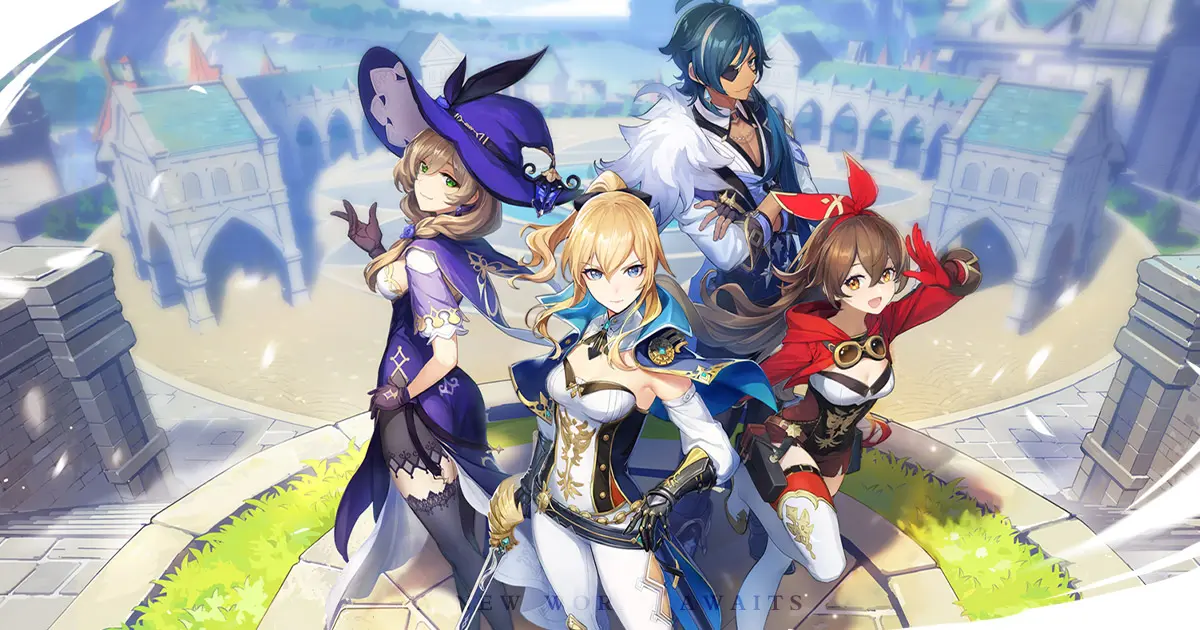
Genshin Impact’s appeal goes beyond combat and character building - it’s a gallery you can walk through and screenshot at will: dandelions swirling on the wind, lantern-lit boats in Liyue Harbor, a lakeside corridor after Inazuma’s rain, starlight through Sumeru’s rainforest canopy, Fontaine’s bridges seen from afar, and islands floating in Natlan’s sea of clouds. This guide rereads that walking museum from eight angles: scene scouting, character art, regional styles, lighting and atmosphere, engine visuals, photo techniques, music, and fan creativity. For characters, scenes, and version details, defer to what’s in the game now - including the official names shown on the in-game map.
1. Scene Scouting Across Teyvat#
The first impression of open-world art comes from how differently each region speaks in landscape and architecture. Listed roughly in main-story order, here are each nation’s signature shots and how to frame them.
1.1 Mondstadt - the lakeside city of wind and songs#
Mondstadt’s look is built from low hills, windmills, Gothic arches, and lakeside castles - warm, translucent tones with a dry, free-spirited air. The signature shot is the lone giant tree at Windrise: look up from beneath it and the blue sky frames its canopy of light like a painting.
| Spot | Where | Highlight | Shooting tip |
|---|---|---|---|
| The Windrise tree | The valley between Windrise and Dawn Winery | Giant oak with swirling air currents, light pooling on the ground | Golden-hour side backlight on a clear evening - let the tree’s shadow fall toward the lens |
| Mondstadt plaza | City center, by the Anemo Archon’s statue | European bell tower, fountain, pigeons | Morning front light, character silhouette as the foreground |
| Stormterror’s Lair | Broken bridges and old ruins to the north | Broken masts, blue haze, rising wind pillars | After rain on an overcast day, before the mist clears |
| Dawn Winery | The southeastern slopes | Vineyards and the manor at sunset | Warm silhouette at dusk, a few grape bunches in the foreground |
| Dragonspine | The snow kingdom to the northeast | Pale frozen ground against crimson wood | In blizzard haze, backlight to punch out the rock |
1.2 Liyue - a thousand years of mountains and harbor#
From port to mountain city, Liyue speaks in upturned eaves, layered grey tiles, and white stone steps - a composition of mountain, water, and people. Morning calls at the docks and the harbor’s night lanterns are the shots players keep.
| Spot | Where | Highlight | Shooting tip |
|---|---|---|---|
| Liyue Harbor at night | Overlooking the port | Ten thousand lights in layered doubles | After dark, shoot downward from high ground |
| Guyun Stone Forest | Sea stacks off the coast | Giant pillars, sea of clouds, distant sails | Fogless morning panorama - maximum depth |
| The Chasm | The mining zone to the northwest | Huge caverns with receding lights | Frame down the tunnel mouth for depth |
| Wangshu Inn | The tall inn over Dihua Marsh | Grassland and green-blue mountains | Mid-shot when rain clouds cap the roof |
| Qingyun Peak | High above the cloud sea | Floating stones at the cliff edge | Put a character in frame for scale |
1.3 Inazuma - thunder, shrines, island aesthetics#
Inazuma’s look is multi-island: thunderclouds, shrines, tiled eaves, and maples, often washed in rain and lightning. Low clouds, coastal markers, and wet boardwalks are ready-made compositions.
| Spot | Where | Highlight | Shooting tip |
|---|---|---|---|
| Grand Narukami Shrine | The cherry shrine atop the mountain | The sacred sakura and petal-strewn paths | Shoot as the thunderstorm clears - blue-violet sky |
| Inazuma City streets | Stone corridors of the castle town | Evening lamps and eave lanterns | Blue-hour shots of lanterns and figures |
| Watatsumi Island | Sangonomiya’s reef coast | Blue dome reflected in water | Low angle, waves in the foreground |
| Ritou | The port bridge and gate | Wooden bridge, red gate, reflections | Night shots: expose for the sky to avoid blowouts |
| Enkanomiya | The undersea palace streets | Blue-violet sun and still water | Kill stray light sources - let the gloom glow |
1.4 Sumeru - rainforest and desert in contrast#
Sumeru is split in two: the dense green rainforest, all vines and temple mazes guided by light and fog, and the desert, all golden sand, ruins of an ancient kingdom, and sun-dried obelisks. That cold-warm contrast is Sumeru’s finest trick.
| Spot | Where | Highlight | Shooting tip |
|---|---|---|---|
| Sumeru City | A city in a giant tree’s crown | Vine-like architecture threading the branches | Frame the city through distant branches |
| Vanarana | The storybook village deep in the rainforest | Hanging vine bridges, blue luminescence | Blue-leaning night shots, a touch of warm morning light |
| Mausoleum of King Deshret | The great ruin at the desert’s edge | Dune silhouettes and a sunset halo | Blue-violet after sunset for silhouettes |
| The Eternal Oasis | Waters beneath the desert | Dome and reflections in dim light | Long-exposure the water reflections |
| Rukkhadevata’s old abode | A tree-hollow ruin by quiet water | Calm refractions on the surface | Symmetry from the mirror-flat water |
1.5 Fontaine - the industrial city of water and steam#
Fontaine renders “elegance” as fountains, towers, arc bridges, and glass domes - the water mirrors the whole city everywhere you look. Morning steam and sunrise light make its iron bridges hard yet weightless: a sea city chronicled in iron and light.
| Spot | Where | Highlight | Shooting tip |
|---|---|---|---|
| Court of Fontaine | The plaza and fountain quarter | Bridges, fountains, and statues in layers | Morning side light for crisp reflections |
| Opera Epiclese arcades | The theater district | Glass dome, steam, wave-form roof | Shoot across the water for a mirror reflection |
| Old port bridges | The freight quarter | Rails, pipes, industrial brick | Rain days are Fontaine’s signature blue |
| The harbor lighthouse | The headland | Sea glitter and mast silhouettes | Dusk: let the sea color take over the sky for depth |
1.6 Natlan - lava and tribal red highlands#
Natlan puts volcanoes, cliffs, mines, and tribal villages side by side in primary, gorgeous color - lava red, rock brown, stream blue in one frame. From a high ridge the whole red land seems to burn at sunrise: the most visually striking of the six nations.
| Spot | Where | Highlight | Shooting tip |
|---|---|---|---|
| Natlan lava corridors | The crater walkways | Lava veins and rock-pillar outlines | Slow shutter for the liquid texture |
| People of the Springs village | The waterside settlement | Rope bridges, wooden platforms, banners | Backlit silhouettes grab the eye |
| The volcanic coast | Near the sea | Red-black rock against deep blue water | Wait for a cloud’s shadow as your natural diffuser |
| The sacred mountain shrine | The summit temple | Light pillars and smoke | Night shots: fill light for floating dust |
2. Character Art#
2.1 Illustrations vs in-game models#
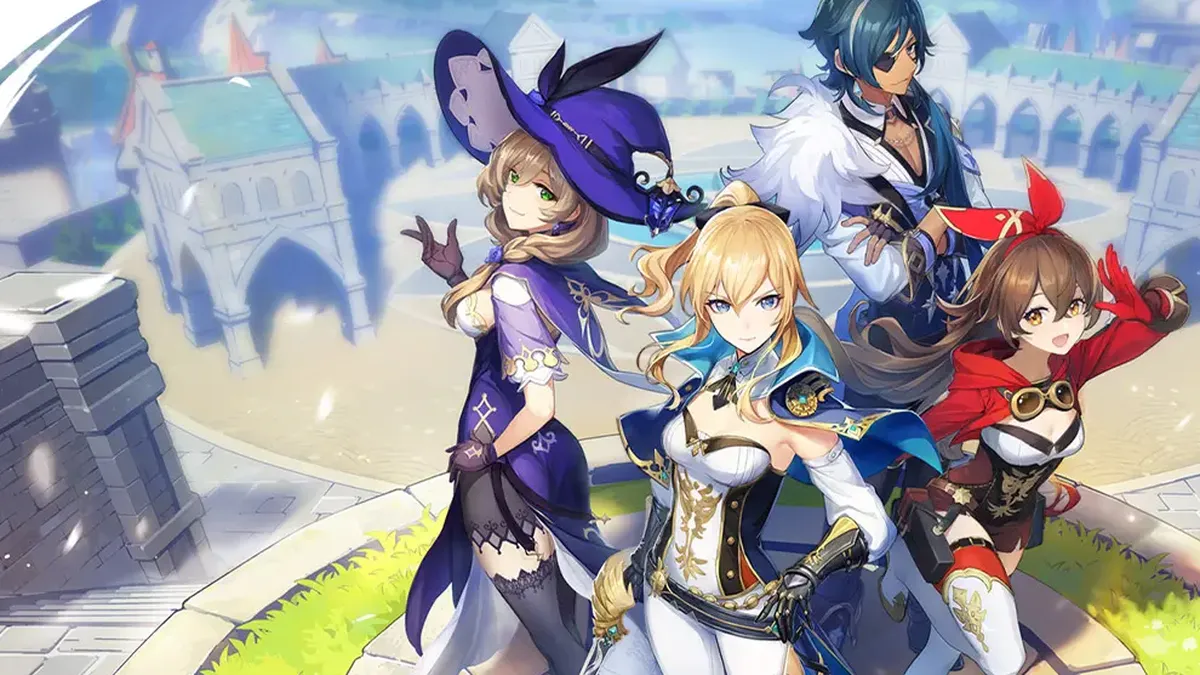
A character’s visual identity has two layers: official illustrations and the in-game cel-shaded model. Illustrations carry the narrative - full-body art fills the frame with elemental motifs and costume detail - while the in-game model compresses proportions for readability.
| Art layer | Used for | Visual traits | Appreciation tip |
|---|---|---|---|
| Illustrations | Wish promotions, official site, character stories | Full-body, atmospheric light, drifting particles | Note the elemental crest and palette |
| Models | The in-game look | Optimized proportions, clear silhouette | Check weapon scale and accessory fidelity |
| Avatars | Menus, dialogue, party screens | Bust shots emphasizing eyes and hair | Hairstyle is the quickest identifier |
2.2 Representative characters by rarity#
Characters and looks keep iterating - defer to the in-game archive.
| Rarity | Character | Nation | Design signature |
|---|---|---|---|
| 5-star | Venti | Mondstadt | Green wind garb, black shoulder guards, glider motifs |
| 5-star | Diluc | Mondstadt | Deep-red coat, black-and-gold palette, longcoat |
| 5-star | Zhongli | Liyue | Ornate robes, gilded patterns, polearm |
| 5-star | Raiden Shogun | Inazuma | Purple-gold armor, lightning blade, naginata |
| 5-star | Nahida | Sumeru | Crown and willow robes, forest-princess aura |
| 5-star | Furina | Fontaine | White dress, top hat, mask-like eyes |
| 5-star | Mavuika | Natlan | Biker hairstyle, earth-tone shawl and gear |
| Rarity | Character | Nation | Design signature |
|---|---|---|---|
| 4-star | Xiangling | Liyue | Chinese-style shorts, Guoba, apron details |
| 4-star | Kamisato Ayaka | Inazuma | Kimono hem, folding fan, sakura motifs |
| 4-star | Diona | Mondstadt | Cat ears and lavender cape |
| 4-star | Collei | Sumeru | Short hair, green-and-brown palette |
| 4-star | Charlotte | Fontaine | Photojournalist look, shutter, round hat |
| 4-star | Kachina | Natlan | Athletic wear and braids |
2.3 Regional costume styles#
| Region | Style | Design core | Common elements | Examples |
|---|---|---|---|---|
| Mondstadt | European fairytale | Wind and freedom | Capes, coats, soft hats, violins | Jean, Barbara, Diluc |
| Liyue | Classical silks | Ceremony and rivers | Robes, tassels, ribbons, han motifs | Zhongli, Keqing, Xiangling |
| Inazuma | Kimono formality | Samurai dress | Buns, fans, tabi | Ayaka, Raiden, Beidou |
| Sumeru | Scholar-rainforest | Learning and nature | Hoods, belt pouches, plant charms | Nahida, Collei |
| Fontaine | Steampunk refinement | Elegance and order | Top hats, lace, workwear | Furina, Charlotte |
| Natlan | Tribal earthwear | Primal vitality | Woven bands, hide patterns, short capes | Mavuika |
2.4 Characters and their elements#
- Character palettes broadly follow their nation’s element: Electro characters bridge cold and warm with black, purple, and cyan, while Dendro characters spread greens, golds, and creams.
- Elemental crests and weapon types bind to a character’s role; hair and eye color are the fastest keys to their temperament. Try reading “hair - eyes - element glow” as one color system.
3. Regional Art Styles Compared#
3.1 Color and mood#
| Region | Palette | Mood | Design intent |
|---|---|---|---|
| Mondstadt | Moss green, cream | Relaxed, light | Low-pressure starter zone |
| Liyue | Vermilion, ultramarine | Solemn, weighty | Ceremony holding up a thousand years |
| Inazuma | Indigo, dark crimson | Oppressive, mysterious | The thunder theme and island isolation |
| Sumeru | Jade, sand ochre | Life and desolation together | Rainforest plenty against desert dryness |
| Fontaine | Ice white, brass | Elegant, industrial-romantic | A steam city of glistening droplets |
| Natlan | Red ochre, umber | Fierce, primal | Warm tones stating the land’s power |
3.2 How architecture and terrain say “nation”#
| Element | Tendency | Aesthetic role |
|---|---|---|
| Color temperature | Mondstadt warm, Inazuma cold-dark | Separates regions, avoids eye fatigue |
| Skylines | Towers, giant trees, shrines | Silhouettes as memory anchors |
| Soundscapes | Wind, thunder, rain, sand | Makes shots cinematic |
| Horizon haze | Thin in Mondstadt, thick in Liyue, steam in Fontaine | Layers foreground and distance |
The look varies with version and graphics settings - trust what you see in-game.
4. Lighting and Atmosphere#
4.1 Day and night#
| Time | Visual | Best scenes |
|---|---|---|
| Morning (5:00-8:00) | Clear grey-blue, long shadows | Windrise, Liyue docks, forest paths |
| Noon (12:00-15:00) | Hard contrast | Desert and lava-corridor textures |
| Dusk (17:00-19:00) | Golden slant light, orange sky | Winery reflections, warm seaside silhouettes |
| Night (19:00-24:00) | Lanterns, stars, moonlight | Liyue Harbor, Fontaine’s old bridges, Inazuma shrines |
Different times of day deliver different light - if the hour you want isn’t coming, come back another day.
4.2 Weather effects#
| Weather | Typical look | Highlight |
|---|---|---|
| Clear | The default | Open blue skies, soft clouds |
| Thunderstorms | Fixed in some regions | Lightning, rain streaks, wet-leaf shine |
| Sandstorms | Desert bursts | Long-exposure swirl |
| Morning mist | Valley dawns | Mountains cut into white layers |
| Volcanic haze | Natlan’s lava belt | Orange fog under crimson sky |
Some regions hide rainbow-style easter-egg weather at certain conditions - when you see one, press the shutter.
5. Engine Visuals#
Genshin Impact ships one art asset set across PC and mobile, with dynamic resolution and draw-distance control keeping the big world stable. Worth noticing:
| Feature | What it does | Notes |
|---|---|---|
| Volumetric light and fog | Realistic forest and sandstorm haze | Stronger at high settings |
| Real-time shadows | Shadow tracks the sun, light pools through leaves | Tied to weather |
| Water reflections | Dynamic mirrors on lakes and seas | Shattered by a breath of wind |
| Plant physics | Grass bends, hems flutter | Feels alive |
| Resolution and AA | Flagship phones and high-end PCs can push it | Follows device and settings |
| Depth of field | Cinematic bokeh at distance | Adjustable in photo mode |
5.1 Graphics settings#
| Option | Effect | Suggestion |
|---|---|---|
| Render precision | Distant detail and vegetation density | High if your hardware allows |
| Anti-aliasing | Removes jaggies | Pair with high resolution |
| Model quality | Character/scene polygons | Default is fine |
| Motion blur | Slight smear on camera moves | Turn off before photos |
Setting names follow the in-game graphics menu.
6. Photography#
6.1 Photo mode and Elemental Sight#
Open the menu and choose the camera entry to enter photo mode: rotate, zoom, and frame freely with the HUD hidden. For atmosphere, trigger Elemental Sight (hold the trigger key) - it overlays a teal filter that makes Oculi, quest markers, and glowing objects the only bright anchors in frame.
| System | Use |
|---|---|
| Photo mode | HUD-free framing |
| Elemental Sight | Finds glowing objects and Oculi, aids composition |
| Photo album | Saves and revisits your shots |
6.2 Composition ideas#
| Technique | How | Best for |
|---|---|---|
| Rule of thirds | Put the subject on the intersections | Everything |
| Framing | Wrap the subject in a door, window, or arch | Inazuma shrines, Liyue towers |
| Leading lines | Roads, rails, rivers pointing at the subject | Ports, streets |
| Silhouette | Backlight, underexpose for outline | Dusk towers, ridgelines |
| Top-down | Shoot the whole from above | Valleys and layered ports |
Wide angle for close subjects, telephoto compression for distance; a “person a bit over half, scenery half” ratio is a good starting point.
6.3 Recommended shooting times#
| Time | Target | Approach |
|---|---|---|
| Morning | Clear mist and reflections | Mid-high angle, front light |
| Dusk | Warm silhouettes and sunset clouds | Backlight, drop exposure |
| After storms | Electric clouds, wet reflections | Wait for the clouds to part |
| Midnight | Lanterns and stars | Bracket exposures |
Photo-mode entries follow the current game UI.
7. Music Impressions#
Genshin Impact’s score comes overwhelmingly from HOYO-MiX, HoYoverse’s in-house music team - orchestral writing layered with each region’s folk instruments since Mondstadt and Liyue. Sumeru and Fontaine are especially distinctive:
| Region | Musical style | Keywords |
|---|---|---|
| Mondstadt | Pastoral flutes and bagpipes | Warm, journeying |
| Liyue | Strings and huqin | Solemn, mountains and seas |
| Inazuma | Taiko, shamisen | Dignified, lonely |
| Sumeru | Exotic plucks and drums | Mysterious, curious |
| Fontaine | Organ and cello | Elegant, industrial-romantic |
| Natlan | Tribal rhythms and chorus | Fiery, sacred flame |
Track lists and live-album details follow official music platforms and art books.
8. Fan Creativity#
8.1 Common fan categories#
| Category | Main platforms | Typical content |
|---|---|---|
| Guide videos | Bilibili | Character guides, reaction demos, material routes |
| Music covers | Bilibili, music platforms | PV arrangements, regional BGM remixes |
| Crafts | Weibo, Xiaohongshu | Papercraft figures, miniature shrines |
| Artwork | Weibo, international art sites | Illustration-style fan art, wallpapers |
| Photo tutorials | Douyin, Bilibili | Recreating official shots’ framing |
8.2 How to join in#
- Around character launches and festivals, officials and communities run scenery-photo and fan-art contests with Primogem or merchandise prizes - check each event’s rules.
- Bilibili and similar platforms host beginner courses on editing and namecard making - a good place to start.
- Officially licensed exhibitions and themed installations appear irregularly - the displays themselves are photogenic.
Follow the official usage guidelines and platform rules when creating; use your own screenshots or credit sources properly.
9. Closing Notes#
| Theme | One-line summary |
|---|---|
| Scouting | Each nation has a dominant palette; rainy nights and dusks shoot best |
| Timing | Dusk backlight plus morning mist are the most valuable filters |
| Characters | Palette, costume, and elemental crest all rhyme |
| Lighting | Morning light, warm gold, and night are the three magic grades |
| Photos | Elemental Sight + rule of thirds + framing never gets old |
May every journey leave a bit of Teyvat in your album.
This page was last updated on 2026-07-25, based on the current game version.