Dark Souls Remastered Reinforcement and Forging Guide#
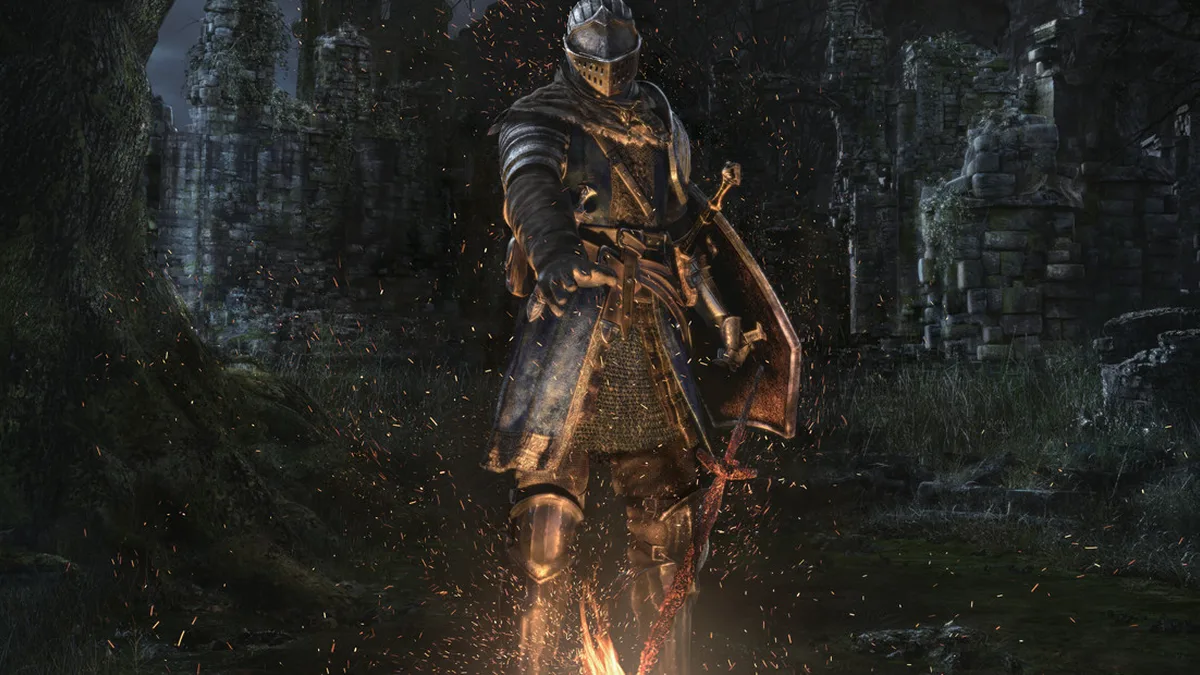
Weapon growth in Dark Souls runs on two axes: reinforcement level decides base attack, and the infusion path decides damage type and stat scaling. Every upgrade goes through a blacksmith and consumes titanite materials. This page lists only paths and tiers that actually exist in the game, each verifiable in the smith menu — no estimated panels.
The Blacksmiths#
Four blacksmiths handle weapon reinforcement, each owning different infusion paths:
| Blacksmith | Location | Paths handled |
|---|---|---|
| Andre of Astora | Undead Parish smithy | Normal, Raw, Divine, Occult |
| Rickert of Vinheim | New Londo Ruins waterway | Magic, Enchanted |
| Vamos | The Catacombs | Fire, Chaos |
| Giant Blacksmith | Anor Londo | Lightning, Crystal |
Usage notes:
- Andre is the first smith you meet — up from Firelink Shrine into the Undead Parish. Every early-game upgrade starts with him.
- Rickert hides in the New Londo Ruins waterway, out of the way but worth a dedicated trip — Magic infusion is the early answer for Intelligence builds.
- Vamos sits deep in the Catacombs; Fire infusion is the strongest bridge while your stats are still forming.
- The Giant Blacksmith is in Anor Londo, the only smith for Lightning and Crystal — and the one who forges boss soul weapons.
Beyond these, special forging exists: boss soul weapons require a base weapon at +10 first, and tail-cut and unique weapons upgrade with Demon Titanite, Twinkling Titanite, or Dragon Scales. The full forging table lives in the Weapons Guide.
Titanite Tiers#
The normal path’s materials progress by tier, each covering a fixed range:
| Material | Reinforcement range |
|---|---|
| Titanite Shard | +1 to +5 |
| Large Titanite Shard | +6 to +10 |
| Titanite Chunk | +11 to +14 |
| Titanite Slab | +15 (normal path cap) |
Once you internalize this ladder you can always read your progress from your inventory: shards push a new weapon to +5, large shards aim for +10, and the Slab is so rare it goes to the one weapon you commit to.
The infusion material system runs parallel: low-tier elemental upgrades mainly consume Green Titanite Shards; deeper tiers use path-specific titanite — Magic and Enchanted use blue, Divine and Occult use white, Fire and Chaos use red, while Lightning and Crystal keep using normal titanite. Don’t forget the conversion gates: most infusions require a normal weapon at +5 first, Lightning and Crystal require +10, Divine-to-Occult requires Divine +5, and Fire-to-Chaos and Magic-to-Enchanted follow the same pattern. Exact per-level costs display in the smith menu — no memorization needed.
Infusion Paths and Caps#
The paths and their caps, the core quick-reference of this page:
| Path | Cap | Damage and scaling traits |
|---|---|---|
| Normal | +15 | Keeps stat scaling; the highest-end general route |
| Raw | +5 | Higher base physical, heavily reduced scaling |
| Magic | +10 | Adds magic damage; scaling moves to Intelligence |
| Enchanted | +5 | Higher INT scaling than Magic, lower base damage |
| Crystal | +5 | Base and scaling both above Normal, at one-tenth durability and unrepairable |
| Divine | +10 | Faith scaling; permanently kills Catacombs skeletons |
| Occult | +5 | Stronger Faith scaling; bonus damage against holy enemies like Silver and Black Knights |
| Fire | +10 | Fire damage, no stat scaling at all |
| Chaos | +5 | Fire damage that rises with Humanity carried |
| Lightning | +5 | Flat physical plus lightning damage, no scaling |
Two patterns make this table easy to remember:
- Scaling-keeping paths eat stat investment: Normal +15 is the endpoint of mature builds; Magic +10 and Divine +10 pair with Intelligence and Faith; Crystal +5 has the best panel but broken durability.
- Scaling-dropping paths deal flat damage: Fire, Lightning, and Chaos ignore stats — ideal for early runs and low levels. Only Fire reaches +10; Chaos, Lightning, Occult, Enchanted, Crystal, and Raw all cap at +5.
Path-specific warnings:
- Divine weapons’ strategic value is more than numbers — Catacombs skeletons reassemble under the necromancers’ influence when killed with ordinary weapons, while Divine weapons erase them permanently. The single best preparation for that dungeon.
- Chaos weapons scale off Humanity currently carried — the more you hold, the harder you hit. Pairs naturally with humanity-hoarding playstyles.
- Crystal weapons shine on the panel but hold one-tenth durability and can never be repaired once exhausted — only further reinforcement resets it. Carry a backup weapon.
Paths by Playstyle#
Recommended routes per build direction (directional advice; in-game panels are the standard):
| Play direction | Recommended path | Why |
|---|---|---|
| First playthrough, stats unset | Fire or Lightning | Ignores stat scaling — misallocated points don’t hurt |
| Intelligence caster | Magic | Pairs with the spell system; high INT scaling returns |
| Faith build | Divine | Also solves the Catacombs skeleton problem |
| Long-term main weapon | Normal | +15 cap is highest; scaling pays most late |
| Humanity hoarders | Chaos | Held humanity converts directly into firepower |
A common beginner mistake is infusing too early: Fire and Lightning dominate the opening but mostly cap at +5 with zero scaling growth (only Fire reaches +10), so damage falls behind a properly leveled normal path by mid-game. The safer rhythm is elemental infusion as a bridge, then switch your committed main weapon back to the normal route for the high tiers.
Dark Souls Remastered FAQ#
Q: Do upgrades really require a blacksmith? Yes. There is no self-service forge in Dark Souls — all reinforcement and infusion happens at a blacksmith. Bonfires cannot substitute.
Q: Does a weapon’s name change after infusion? Yes. Infused weapons take the path prefix — a Longsword becomes “Divine Longsword,” “Lightning Longsword,” and so on. Read the prefix first when checking a panel.
Q: Do elemental weapons still benefit from my Strength and Dexterity? No. Fire, Chaos, Lightning, and other pure elemental paths carry no stat scaling at all. Their value is low stat gates and flat damage, not growth.
Q: Is the Occult path DLC content? No. Occult belongs to the base game: the Dark Ember sits in the Painted World, and delivering it to Andre converts Divine +5 weapons to the Occult route. The only items requiring the Artorias of the Abyss DLC are two soul forges — the Abyss Greatsword and Manus Catalyst, from the DLC bosses Artorias and Manus.
Dark Souls Remastered Summary#
The forging system compresses into three sentences: four blacksmiths split the paths — Andre handles Normal, Raw, Divine, and Occult; Rickert Magic and Enchanted; Vamos Fire and Chaos; the Giant Blacksmith Lightning and Crystal. Materials ladder from Shard to Large Shard to Chunk to Slab, with red/blue/white path-specific titanite for deep elemental tiers. Remember the caps: Normal +15, Fire +10, Magic and Divine +10, everything else +5. With that framework installed, the only real decision left is which weapon at the bonfire deserves your limited titanite — in Lordran, that choice often decides your success earlier than skill does.