Dark Souls Remastered Weapons Guide#
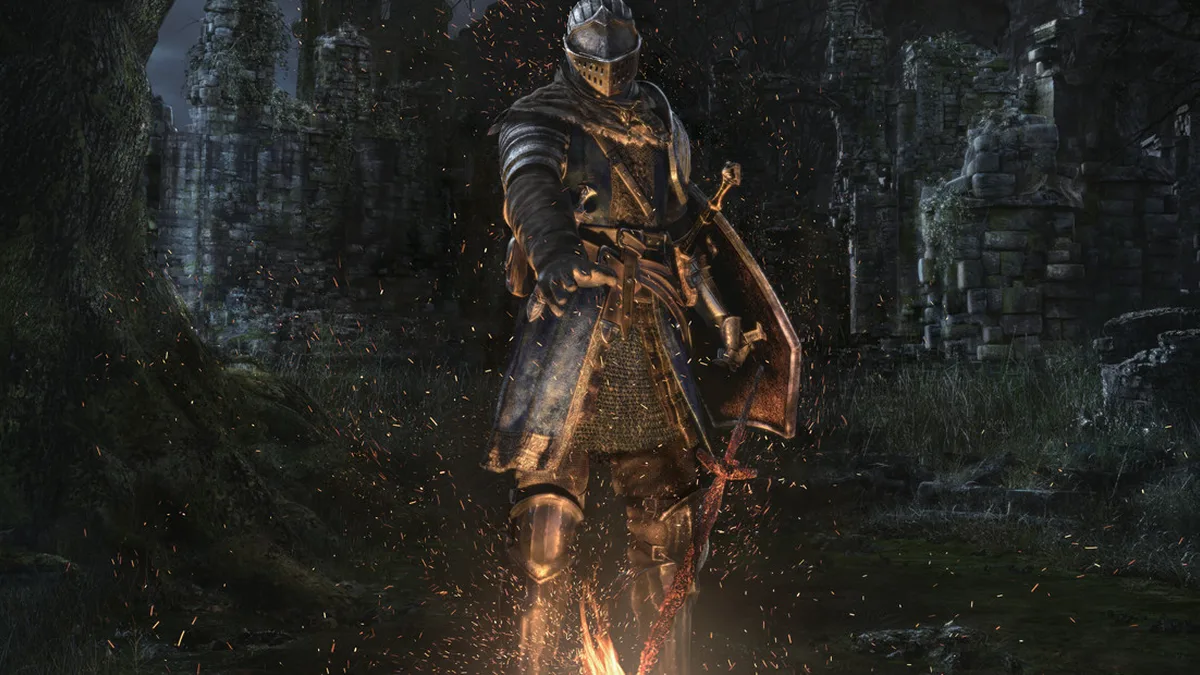
Weapons in Dark Souls: Remastered have no “endgame piece” — only “does it fit your hands.” Attack panels shift constantly with reinforcement level, infusion path, and soul level, so memorizing numbers is pointless; reading the rules is what keeps you from pacing back and forth at the blacksmith. This guide gives role checks per weapon class and upgrade-route advice, with every path cap and acquisition route cross-checked against community wikis — no estimated AR tables.
Why There Is No Damage Panel Table#
This guide deliberately lists no AR numbers, for three verifiable reasons:
- The panel is multiplicative, not additive. Weapon attack = base damage × scaling coefficient, and that coefficient changes with every upgrade level and infusion path. Any “fixed AR table” goes stale the moment you level up or hit +10.
- Scaling letters change. Strength/Dexterity/Intelligence/Faith scaling grades run E/D/C/B/A/S from lowest to highest, and the same weapon shows different letter combinations on different paths at different upgrade stages. Take the Zweihander: the normal path carries respectable Strength scaling, the Raw path strips most of it away, and on the Enchanted path its Intelligence letter climbs from C to A.
- Two-handing changes requirements. Two-handing grants half your Strength as a bonus toward requirements — the Dragon King Greataxe demands 50 Strength one-handed but swings fine at 34 when two-handed.
So this guide covers exactly three things: scaling-letter rules, acquisition routes, and upgrade-path advice. For concrete panels, trust the in-game status screen — it is always right.
Weapon Class Role Checks#
| Class | Role | Examples and how to get them |
|---|---|---|
| Straight swords | Low requirements, fast swings, mix of slashes and thrusts — the balanced default | Longsword, Broadsword; the Astora Straight Sword carries innate divine auxiliary effect, bonus damage against skeleton-type enemies |
| Rapiers | Thrust damage, clean swings, high value against thrust-weak foes | Velka’s Rapier carries innate dark auxiliary effect, bonus damage against knight-type enemies |
| Greatswords | Strong per-hit poise damage with reach — the universal boss-fight answer | Greatsword of Artorias, Moonlight Greatsword, Black Knight Sword are all greatswords |
| Ultra greatswords | Highest Strength demands, strongest poise damage and knockback, at the cost of slow swings | The Zweihander sits in the Firelink Shrine cemetery; Black Knight Greatsword drops from Black Knights |
| Curved swords | Fast swings with bleed buildup, for close-quarters scrapping | Curved sword class; the Enchanted Falchion sits ready-made in the Duke’s Archives |
| Great curved swords | Wide reach, heavy poise damage, but slow and heavy | The Gravelord Sword is the class representative — join the Gravelord Servant covenant to receive it |
| Spears | Shield-up thrusting for safe clearing; keeping distance is the core value | The Demon’s Spear has the longest melee reach in the game; the Silver Knight Spear carries innate divine auxiliary effect |
| Halberds | Slashes and thrusts with wider range than spears | The Crystal Halberd sits in Anor Londo’s first mimic chest |
| Axes, greataxes | Heavy single hits; whiffing causes a visible stagger, so confirm range before swinging | The Dragon King Greataxe comes from cutting the Gaping Dragon’s tail; its two-handed heavy attack is an area magic shockwave |
| Hammers, great hammers | Strike damage, excellent against shells and heavy armor | Smough’s Hammer is forged from a boss soul; the Dragon Tooth upgrades with Dragon Scales |
| Daggers | Extremely fast, high critical multiplier, for close scrapping and backstab builds | Priscilla’s Dagger comes from cutting Crossbreed Priscilla’s tail |
| Whips | Unusual attack arcs that land even at some point-blank ranges | The Lifehunt Scythe is forged from Priscilla’s soul and halves the target’s health on bleed |
| Fists, claws | Fast, oppressive up close; stamina control is everything | The Dragon Bone Fists are forged from the Iron Golem’s Core |
| Bows, crossbows | Targeted pulls and ranged finishers — enormous value while clearing | The Darkmoon Bow is forged from Gwyndolin’s soul |
| Catalysts | Spell-power tools, not damage weapons; pick by spell type | Manus Catalyst is forged from Manus’s soul; the Demon’s Catalyst drops from the Fire Sage |
How to Read Scaling Letters#
Scaling letters are the one thing in this game’s weapon system worth memorizing:
- Letter order: E < D < C < B < A < S. Higher letters mean a larger share of that stat flows into damage — but a letter is not a final number; the payoff also depends on the weapon’s base damage.
- Scaling shifts with upgrades. On the normal path each reinforcement level raises the Strength/Dexterity letters; elemental paths rewrite the scaling target: Magic goes Intelligence, Divine and Occult go Faith, Chaos keys off Humanity held, and Fire and Lightning zero out stat scaling entirely.
- Paths are not simple conversions. Divine and Occult both scale with Faith, but Occult carries the higher Faith letter with lower base magic damage; by community-wiki math, even at 99 Faith a Divine weapon’s general output still beats an Occult weapon of the same tier. Occult’s irreplaceable value is the auxiliary effect — bonus damage against “holy” enemies such as Silver Knights, Black Knights, Dragon Slayer Ornstein, and Lord Gwyn.
- Requirements and scaling are separate checks. Below the requirement, swings bounce off and damage suffers; two-handing counts Strength at 1.5x, the standard bridge while your stats catch up.
The Ten Reinforcement Paths#
The core quick-reference table of this guide. The conversion column states each path’s entry gate so you never waste upgrades at the wrong tier:
| Path | Cap | Conversion | Blacksmith | Embers required | Scaling and traits |
|---|---|---|---|---|---|
| Normal | +15 | Shards to +5; Large Ember unlocks +6–10; Very Large Ember unlocks +11–15 | Andre | Large Ember, Very Large Ember | Str/Dex scaling climbs with each level — the final home of mature builds |
| Raw | +5 | Convert a normal weapon at +5 | Andre | Large Ember | Higher base damage, heavily gutted Str/Dex scaling — for pre-scaling phases |
| Fire | +10 | Convert a normal weapon at +5; past +5 requires the Large Flame Ember | Vamos | Large Flame Ember | Str/Dex zeroed; doubled base damage plus flat fire — strongest for low levels and early NG |
| Chaos | +5 | Convert a Fire weapon at +5 | Vamos | Chaos Flame Ember | Str/Dex zeroed; scales off Humanity carried — 10 humanity on you maxes it |
| Lightning | +5 | Convert a normal weapon at +10 | Giant Blacksmith | No ember needed | Scaling zeroed; flat physical plus lightning — the other low-level answer |
| Magic | +10 | Convert a normal weapon at +5; past +5 requires the Large Magic Ember | Rickert | Large Magic Ember | Intelligence scaling with split physical/magic damage — mid-game INT mainstay |
| Enchanted | +5 | Convert a Magic weapon at +5 | Rickert | Enchanted Ember | Higher Intelligence letter than Magic, lower base damage — for high-INT, low-Str/Dex casters |
| Divine | +10 | Convert a normal weapon at +5; past +5 requires the Large Divine Ember | Andre | Divine Ember, Large Divine Ember | Faith scaling plus divine auxiliary effect: bonus damage against skeletons in the Catacombs and Giant’s Tomb, the gas ghosts in New Londo Ruins, and Crow Demons; stops skeleton revival |
| Occult | +5 | Convert a Divine weapon at +5 | Andre | Dark Ember | Higher Faith letter, lower base magic damage; bonus damage against holy enemies — Silver/Black Knights, Ornstein, Gwyn |
| Crystal | +5 | Convert a normal weapon at +10 | Giant Blacksmith | No ember needed | Highest base and Str/Dex scaling of any path, but durability drops to a tenth and it can never be repaired |
Three usage rules:
- Elemental paths (Fire, Lightning, Chaos) deal flat damage that ignores stat investment, making them optimal at low levels, off-meta builds, or a first playthrough. Once Str/Dex mature, Normal +15 overtakes every elemental route.
- Only Normal, Raw, and Crystal weapons accept spell enchantment and resin buffs; every other path refuses both. For the “resin plus weapon buff” burst playstyle, keep the weapon on a normal-family path.
- Crystal is trap and dessert in one: the highest panel in the game, at one-tenth durability with no repair — reinforcement resets it. Fine for boss fights; carry a backup for long routes.
Ember Locations#
Embers decide whether a path can reach its cap; miss one and you are stuck at +5 forever. The list:
| Ember | Location | Delivered to | Purpose |
|---|---|---|---|
| Large Ember | Lower Undead Burg | Andre | Breaks the +5 cap on the normal path; also unlocks Raw |
| Very Large Ember | New Londo Ruins (after draining) | Andre | Breaks the +10 cap on the normal path, straight to +15 |
| Divine Ember | Darkroot Garden | Andre | Converts normal weapons to Divine, up to +5 |
| Large Divine Ember | Giant’s Tomb | Andre | Breaks Divine +5, straight to +10 |
| Dark Ember | Painted World of Ariamis | Andre | Converts Divine +5 to Occult |
| Enchanted Ember | Darkroot Garden | Rickert | Converts Magic +5 to Enchanted |
| Large Magic Ember | Duke’s Archives | Rickert | Breaks Magic +5, straight to +10 |
| Crystal Ember | Duke’s Archives | Giant Blacksmith | Converts normal +10 weapons to Crystal |
| Large Flame Ember | Demon Ruins | Vamos | Breaks Fire +5, straight to +10 |
| Chaos Flame Ember | Demon Ruins | Vamos | Converts Fire +5 to Chaos |
Two reminders: low-tier Fire and Lightning upgrades need no ember at all — Vamos and the Giant Blacksmith do them on arrival. Embers take effect the moment the right smith receives them and are never consumed, but each exists exactly once; lose one and that path is crippled forever.
Unique Weapon Upgrade Materials#
Beyond normal weapons, three classes use dedicated materials, all capped at +5:
| Material | Applies to | Notes |
|---|---|---|
| Demon Titanite | All boss soul weapons, Gravelord Sword, Demon’s Spear | Dropped by demon-type enemies and specific spots; 10 to max |
| Twinkling Titanite | Unique weapons such as the Black Knight series | Rare material — save it for the unique weapon you commit to |
| Dragon Scales | Dragon weapons such as the Drakewing and Moonlight Greatsword | Dropped by dragon-type enemies; 10 to max |
Boss Soul Weapon Forging Table#
A boss soul has two uses: consume it for souls, or forge it into a signature weapon. Forging requires the base weapon to be upgraded to +10 first (catalysts exempt — they cannot be reinforced):
| Forged weapon | Boss soul required | Base weapon (+10) |
|---|---|---|
| Greatsword of Artorias | Soul of Sif | Broken Straight Sword or Straight Sword Hilt |
| Cursed Greatsword of Artorias | Soul of Sif | Any dagger, straight sword, or greatsword |
| Greatshield of Artorias | Soul of Sif | Any shield |
| Chaos Blade | Soul of Quelaag | Any katana |
| Quelaag’s Furysword | Soul of Quelaag | Any curved sword |
| Moonlight Butterfly Horn | Soul of the Moonlight Butterfly | Any rapier or spear |
| Crystal Ring Shield | Soul of the Moonlight Butterfly | Any shield |
| Dragonslayer Spear | Soul of Ornstein | Any rapier or spear |
| Smough’s Hammer | Soul of Smough | Any hammer or great hammer (except Blacksmith Hammer, Dragon Tooth, Grant) |
| Golem Axe | Core of an Iron Golem | Any axe |
| Dragon Bone Fists | Core of an Iron Golem | Any fist weapon or claw |
| Great Lord Greatsword | Soul of Gwyn | Any dagger, straight sword, or greatsword |
| Lifehunt Scythe | Soul of Priscilla | Any halberd or whip |
| Darkmoon Bow | Soul of Gwyndolin | Any bow |
| Tin Darkmoon Catalyst | Soul of Gwyndolin | Catalyst (no reinforcement needed) |
| Manus Catalyst | Soul of Manus | Catalyst (no reinforcement needed) |
| Abyss Greatsword | Soul of Artorias | Any dagger, straight sword, or greatsword |
Key rules for the forging table:
- The true and Cursed Greatsword of Artorias use completely different bases: for the true version the base must be the Broken Straight Sword or Straight Sword Hilt — never sell those two near-useless starter swords. Any other sword yields the cursed version, which builds curse on you when it hits.
- Ornstein and Smough’s souls depend on kill order: whichever falls first drops its soul; the survivor absorbs its partner and transforms. Kill Smough first and Ornstein’s soul drops (Dragonslayer Spear); kill Ornstein first and Smough’s soul drops (Smough’s Hammer). Decide before the fight.
- Sif’s soul is the highest-stakes single material on the site: true greatsword, cursed greatsword, or Greatshield of Artorias — pick one, no takebacks.
- Boss soul weapons all upgrade with Demon Titanite, capped at +5. Logan’s soul is the core of the sorcery-vendor line but forges nothing — he sells spells.
Tail-Cut Weapons#
Six dragon weapons come from cutting tails — never rush the cut; where you hit the tail matters more than damage:
| Weapon | Cut the tail of | Notes |
|---|---|---|
| Drake Sword | The Hellkite on the Undead Burg bridge | No stat scaling; two-handed charged heavy fires a shockwave that costs durability. An early grab that any scaling weapon outclasses by mid-game |
| Gargoyle Tail Axe | The first Gargoyle at the Undead Parish bell tower or in Anor Londo | Either location works; the second gargoyle does not drop it |
| Dragon King Greataxe | Gaping Dragon | Two-handed heavy attack is an area magic shock, heavy durability cost each use |
| Priscilla’s Dagger | Crossbreed Priscilla | Innate dark auxiliary effect, the seed of a bleed build |
| Moonlight Greatsword | Seath the Scaleless (mid-tail) | The signature INT weapon, outstanding against magic-soft foes |
| Obsidian Greatsword | Black Dragon Kalameet | Two-handed heavy attack fires an area shock; pairs well with resin buffs |
Classic Weapons in Practice#
A few unavoidable icons — role and acquisition only, no invented numbers:
- Drake Sword: cut the Hellkite’s tail and it is yours — pure base damage with zero scaling, your first “real weapon” when Str/Dex fall short. Its keyword is transition: no scaling means no growth from leveling, Dragon Scales are expensive, and by mid-game any normal-path weapon overtakes it. Don’t sink scales into it; spend souls on your character instead.
- Black Knight Sword: drops from Black Knights wielding it, at a decent rate. The keyword is low demands, high returns: a forgiving Strength gate relative to its damage, lowered further by two-handing. As a Black Knight weapon it deals bonus damage to chaos servants like Taurus and Capra Demons — smooth all through the Demon Ruins. Upgrades with Twinkling Titanite, cap +5.
- Greatsword of Artorias: carries the strongest divine auxiliary effect in the game — bonus damage against skeleton-type enemies, New Londo’s ghosts, and the Painted World’s crows, and it stops Catacombs skeletons from reviving. A living divine weapon. It scales with Strength, Dexterity, Intelligence, and Faith all at once — the poster child of quality/Faith/INT hybrid builds, at the cost of first-tier weapon requirements.
- Gravelord Sword: obtained by joining the Gravelord Servant covenant — no need to defeat Gravelord Nito himself. The lightest great curved sword, heavy attack is a thrust that works in tight spaces, and it carries innate toxin — alongside Ricard’s Rapier it is one of the few weapons that can inflict poison. A parkour run grabs it from the start of the game — a classic speedrun and first-playthrough pick. Upgrades with Demon Titanite.
- Moonlight Greatsword: cut Seath’s tail. Nearly all its damage is magic, ignoring Str/Dex scaling — the INT build’s answer to “a second weapon besides the catalyst.” Upgrades along the Dragon Scale route and pairs naturally with enchantment spells.
- Demon’s Spear: the longest melee reach in the game, with a lightning damage component. Shiva of the East sells it in Blighttown; the Bat-wing Demons of Anor Londo drop it. Shield-up thrusting is the safest possible clearing, at the cost of a long heavy-attack windup that cannot be canceled.
- Zweihander: looted from a corpse in the Firelink Shrine cemetery depths, guarded by a Giant Skeleton — a starting parkour grab. The friendliest ultra greatsword by requirements; light attacks sweep, heavy attacks slam with knockback. A strength build’s card from start to finish.
Upgrade Paths by Playstyle#
| Play direction | Route advice | Why |
|---|---|---|
| Strength, Dexterity builds | Normal +15 | Scaling grows every level; stat investment pays without limit |
| Intelligence casters | Magic +10 or Enchanted +5 | The higher your INT, the more Enchanted pays; Magic +10 is the balanced pick |
| Faith builds | Divine +10 | Divine carries higher base magic damage; switch to Occult only for holy enemies |
| Early game, low level | Fire, Lightning, Chaos | Flat damage ignores stats — build mistakes don’t hurt output |
| Humanity-hoarding play | Chaos +5 | Carried humanity converts straight into fire damage |
| Burst playstyles (buffs, resins) | Normal, Raw, Crystal | Only normal-family paths keep enchant and resin eligibility |
Dark Souls Remastered Summary#
Weapon decisions take three steps: use the Combat System stamina and load rules to confirm you can actually swing it; read the scaling letters and acquisition route to confirm you can grow it; then pick a reinforcement path from the table above and concentrate embers and materials into one main weapon. Full stat and build planning lives in Builds, and pre-boss preparation in Boss Guides. Lordran does not reward collectors — one maxed weapon that fits beats a backpack of half-finished projects.