Cult Management: Fed, Housed, Clean#

New players tend to treat the management side of Cult of the Lamb as a side mode. It is not — it is part of the endgame requirements, because without 20 living followers the door to the One Who Waits never opens. This page breaks the camp down into executable loops: three basics, one faith rhythm, and two ways to use your followers as a workforce.
The Four Pillars#
Everything the game asks of your camp falls into four categories:
| Pillar | What it means | When it fails |
|---|---|---|
| Faith | Sermons and rituals keep belief up | Doctrine and cult actions stall |
| Food | Cook and feed | Follower condition sinks; unrest accumulates |
| Housing | Provide beds and shelter | Placement problems cascade into negatives |
| Hygiene | Keep the village clean | Filth amplifies negative events |
Priorities shift with headcount. Below seven followers, food is the burning issue; in double digits, hygiene and dissent handling eat real time every day. What all four share: they are daily work, not emergency repairs.
The Faith Loop: Sermons and Rituals#
Two actions keep belief alive:
- Sermons — the Lamb preaches to the flock on a regular cadence. This is the base layer.
- Rituals — collective actions aimed at the whole cult, with gains and costs attached; read the effect before you commit.
Faith is the camp’s universal currency — many actions consume it, so a steady sermon rhythm is the difference between a cult that hums and one that seizes. The doctrine unlock path and late-game expansions live in the faith and doctrine page of the Chinese tree.
Food: Cooking and Feeding#
Feeding scales badly with population, which is why it deserves its own production plan:
- Cooking is a daily action. Ingredient output and cooking capacity must track population.
- Feeding has a window. Hunger degrades condition and mood together, and recovery costs far more than serving meals on time.
- Expand before headcount doubles. Every gate level (7, 9, 12, 20) should trigger a pot-and-pantry audit.
A practical production reference by population:
| Follower count | Meal check frequency | When to expand |
|---|---|---|
| Under 7 | Once a day | Before you first approach 7 |
| 7–12 | Twice a day | Before you approach the 9 gate |
| Above 12 | Before and after every crusade | Before the 20-follower finale |
Housing and Hygiene#
The two pillars beginners forget first:
- Housing. Followers need placement; beds and living quality feed directly into camp stability.
- Hygiene. Cleanliness is continuous work, and filth breeds negative event chains.
One habit covers both: every time you return from a crusade, walk one loop around the village — check the pots, check the beds, check the ground for anything that should not be there. Three minutes clears most of the risk.
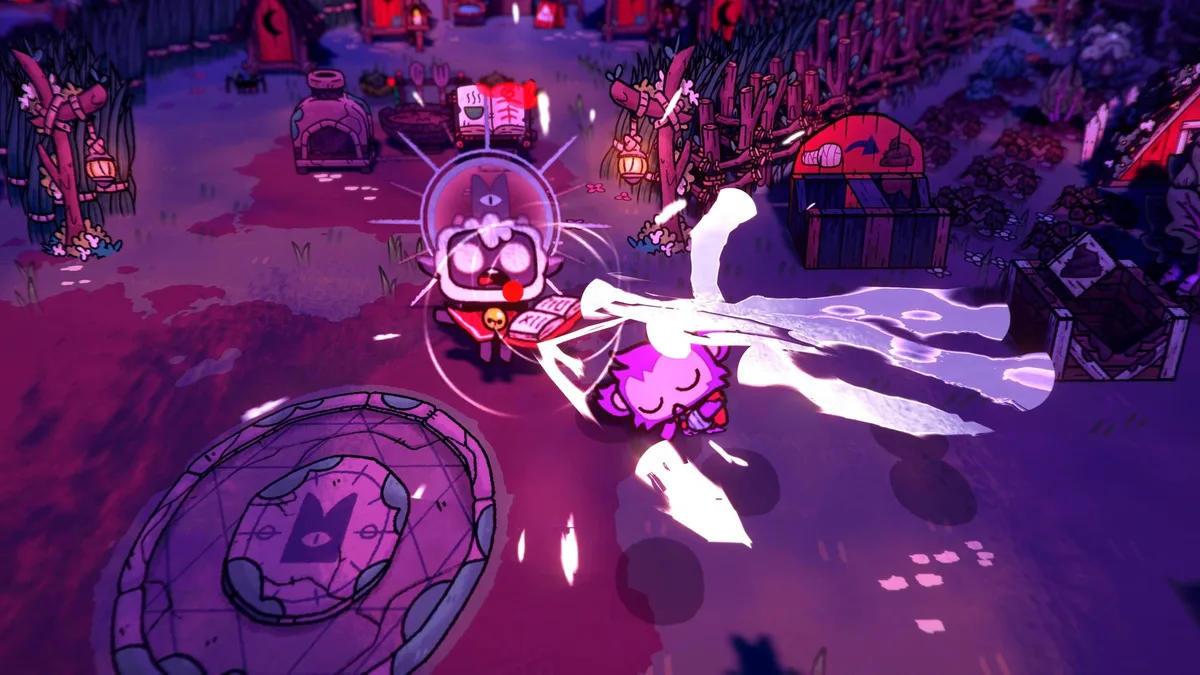
Your Followers Are a Workforce#
Followers are not just a faith meter with legs. They are labor you can schedule:
| Use | What it does | Best for |
|---|---|---|
| Assign gathering | Followers leave to collect resources | Passive income when you lack materials |
| Assign building | Followers help construct facilities | Saving your own time during expansion |
| Assign worship | Followers generate faith | Topping up belief between sermons |
| Bring along | Followers join crusades | Combat support and early-game margin |
Delegation buys parallelism: the camp keeps producing while you fight. Companionship buys presence: an extra pair of fists where you are. The two do not conflict — split your roster by the day’s plan.
One Day in the Cult#
String the pieces into a daily loop you can actually run:
- Morning: check feeding and hygiene, clear overnight negatives.
- Late morning: sermon, to hold the faith waterline.
- Afternoon: hand out assignments — gathering, building, worship all covered.
- Crusade: take a companion and push rooms per plan.
- Return: settle resources, induct recruits, one village lap, prep the next loop.
How Management Priorities Shift With Headcount#
Against the gate table (1, 7, 9, 12, 20), each level moves the focus one notch:
- 1 to 7: food first; camp facilities built from zero.
- 7 to 12: housing and hygiene go on the agenda; trait differences start to show.
- 12 to 20: dissent handling becomes routine; assignments need a system; sermon and ritual spacing can no longer be casual.
The trait system and the five dissent escalations — re-education, gifts, imprisonment, sacrifice, elimination — are covered in the follower traits page of the Chinese tree.
Where New Followers Come From: Twitch Integration#
Recruiting on crusades is not the only intake channel. The built-in Twitch integration, Companion of the Lamb, adds a streamer-facing pipeline with three features:
| Feature | Form | Direct effect on the cult |
|---|---|---|
| Follower Raffle | Viewers join the cult by raffle | New followers arrive with their usernames displayed |
| Twitch Totem Bar | Channel-points draws | Adds interaction between stream segments |
| Help or Hinder | Viewer vote events | Hands cult events to the audience |
The persistent usernames matter operationally: raffle winners move into the village under their own names, turning an audience into a visible roster. Streamers can run the raffle as a recurring segment, slot the totem draws between crusades, and schedule votes around whole-cult moments like rituals.
Running the Camp With Two Players#
The free Unholy Alliance update added local co-op, with the second player controlling the Goat. For management, the direct consequence is that camp and crusade can be watched separately: one player stays home to feed, clean and assign, the other pushes the dungeon, and both settle the return together. There is no canonical rotation — but the two lines never blocked each other anyway, so splitting them across two players is natural.
Woolhaven: New Questions for the Same Three Basics#
The Woolhaven expansion adds a layer under feed, house and clean. Its climate system brings blizzards and freezing weather — followers get frostbite and face famine — and answers with new buildings: heaters, warm baths and shelters, making warmth a daily task alongside housing. The story centers on Yngya, a winter god, as the cult rebuilds a lamb homeland in the mountains.
Herding gives the food line a buffer: fenced breeding of rare species such as the Llamaish, Yakish and Cowish, sheared for wool and milked in peace, slaughtered in famine. Animals can be tamed for riding, and their daily care can be assigned to followers.
| New element | Pillar it serves | Use |
|---|---|---|
| Heaters, warm baths, shelters | Housing and warmth | Survive blizzards and freezes; prevent frostbite |
| Herding fences | Food | Wool and milk in peace; meat in crisis |
| Taming, riding, assigned care | Workforce | Ride out; let followers handle upkeep |
The expansion’s climate details, herding line and two new dungeons live in the Woolhaven page of the Chinese tree.
After Headcount: the Long Faith Game#
Twenty living followers unlock the finale, but management does not end at the credits. The late-game Forgotten Commandment Stones keep expanding doctrine options, so the faith system built on sermons and rituals still grows after the story. Practical consequence: as you close in on 20, do not just stack headcount — pick recruits by trait, because every bad hire is deferred dissent-management cost.
Site Navigation#
- Faith system deep-dive: the faith and doctrine page in the Chinese tree
- The headcount gate table: the region-unlocks page in the Chinese tree
- The loop that feeds this one: Crusade basics and route choices
- When things go wrong anyway: the FAQ page in the Chinese tree