World#
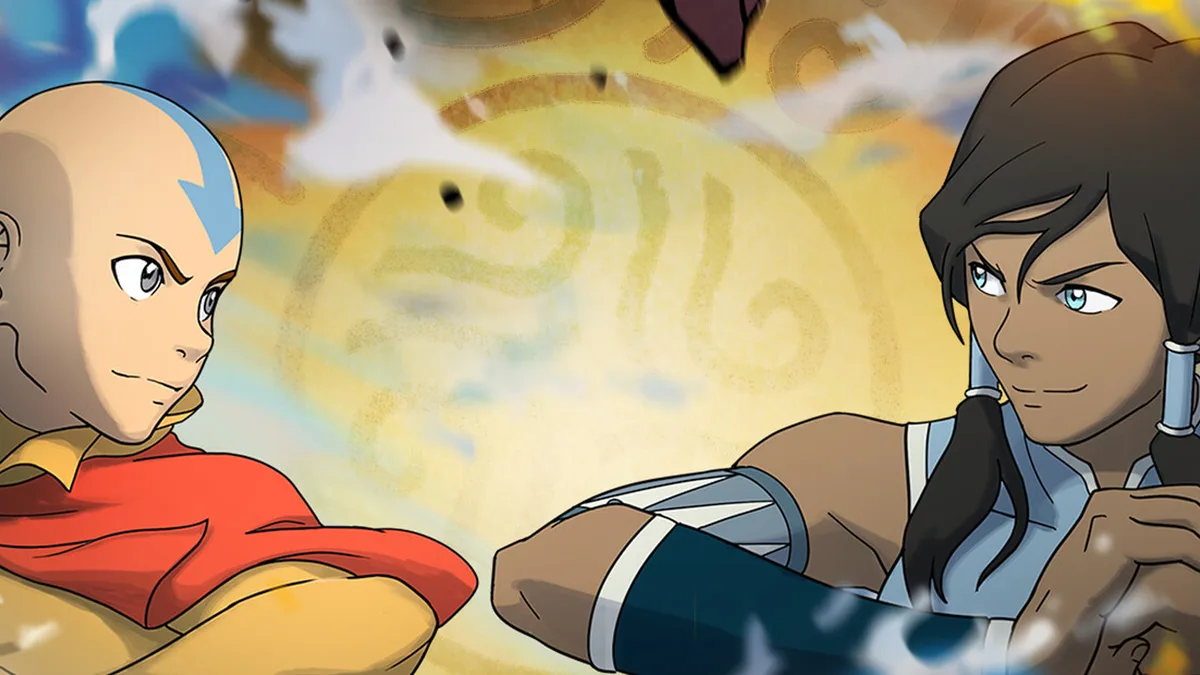
Avatar Legends is a crossover fighting game spanning two eras: Avatar: The Last Airbender and The Legend of Korra. This page only collects officially announced or otherwise documented setting information, and it is built around three core topics: the character roster, the differences between bending disciplines, and the battle stages, followed by notes on Story Mode and on how this page sources its information. Where the developers have published no data, this page gives a mechanical criterion instead and invents nothing.
A Setting of Two Eras#
In the original canon the world is made up of four nations — the Water Tribe, the Earth Kingdom, the Fire Nation, and the Air Nomads — with bending tied one-to-one to the four elements; the Avatar is the only being able to command all four and the bridge that keeps the world in balance. This game puts characters from two eras, decades apart, into the same arena. It is a crossover project, and its matches are not a continuation of the original canon.
| Era | Key events | Link to this game |
|---|---|---|
| Origin of the Avatar | Roughly 10,000 years ago the first Avatar, Wan, fused with the spirit of light Raava, and the Avatar Cycle began | The source of the setting for Avatar State characters |
| The Last Airbender era | The Fire Nation launched the Hundred Year War and struck the Air Temples with the power of a comet, nearly wiping out the Air Nomads; Aang woke after a century frozen in ice and united the nations to end the war | The era of Aang, Zuko, Katara, Sokka, Toph, Azula, and Ozai |
| The Legend of Korra era | After the war Aang and Zuko founded Republic City together; the next Avatar, Korra, grew up there, and the spirit portals reopened at Harmonic Convergence | The era of Korra and Zaheer, with Republic City as its landmark metropolis |
Characters from both eras sharing the stage is exactly the basis of this game’s cross-era duel angle: on one side the original cast that ended the Hundred Year War, on the other the Avatar and her enemies from the Korra era. Understanding where the two eras come from lets you read the relationships and positions between characters much faster.
The Origins of the Four Bending Arts#
In the original canon the four bending arts did not appear out of nowhere; the first people learned them from the natural world. That origin sets the tone of each discipline and is the cultural grounding for this game’s style design:
| Nation | Bending | Source of the art |
|---|---|---|
| Water Tribe | Waterbending | Early people watched the moon pull the tides and grasped the way of waterbending |
| Earth Kingdom | Earthbending | Early people learned earthbending from the badgermoles that tunnel underground |
| Fire Nation | Firebending | Early people learned firebending from dragons, revered as sacred by firebenders ever since |
| Air Nomads | Airbending | The Air Nomads lived alongside sky bison and learned airbending from them |
Character Roster (12 at Launch)#
The launch roster has 12 playable characters drawn from both eras, including 2 special-form characters who fight as separate entries. One point needs stressing: this is a fighting game, and the developers have never published character point values such as health, attack, or defense; any five-stat tables circulating online have no official source. Each character’s real strength and move performance is whatever the game shows in play, and it may be adjusted by later patches.
| Character | Era | Bending and combat background |
|---|---|---|
| Aang | The Last Airbender | The Avatar, born of the Air Nomads; airbending is his strength, and he trains in the other elements as well |
| Avatar State Aang | The Last Airbender | Aang after entering the Avatar State, fighting as a separate character |
| Korra | The Legend of Korra | The next Avatar, born of the Water Tribe; mastered water, earth, fire, and air in turn |
| Nightmare Korra | The Legend of Korra | A special form of Korra, fighting as a separate character |
| Zuko | The Last Airbender | Prince of the Fire Nation, a firebender who went from hunting the Avatar to fighting at his side |
| Katara | The Last Airbender | A master waterbender of the Southern Water Tribe, balanced between offense and defense, also skilled in healing |
| Sokka | The Last Airbender | A non-bender warrior who fights with boomerang, sword, and strategy |
| Toph | The Last Airbender | A blind earthbending master and the creator of metalbending |
| Azula | The Last Airbender | Princess of the Fire Nation, known for her rare blue flames, also trained in lightning |
| Ozai | The Last Airbender | The Fire Lord, the final opponent at the end of the Hundred Year War; firebending and lightning |
| Zaheer | The Legend of Korra | Leader of the Red Lotus; after awakening airbending he pursued absolute freedom and mastered flight |
| Qiyuxue | Per official materials | Specific bending discipline and move set follow the game itself |
Two things about the roster structure are worth noting. First, characters from The Last Airbender era are the majority, and the Fire Nation side (Zuko, Azula, Ozai) concentrates three generations of firebenders, which suits players who want to dig into the fire style; the Korra era is represented by Korra and Zaheer, bringing the face of bending in the spirit era. Second, “Avatar State Aang” and “Nightmare Korra” are listed as characters separate from regular Aang and Korra, and their actual differences follow the in-game move lists. If new characters are added after launch through patches, official announcements take precedence; this table records only the 12 launch characters.
Grouped by bending discipline, the style spread of the launch roster reads clearly (Korra trains in all four but is counted here by birth as Water Tribe; form characters are listed separately):
| Bending | Characters |
|---|---|
| Airbending | Aang, Avatar State Aang, Zaheer |
| Waterbending | Katara (Korra trains in all four) |
| Earthbending | Toph |
| Firebending | Zuko, Azula, Ozai |
| Weapon combat | Sokka |
| Unconfirmed | Qiyuxue, Nightmare Korra |
Bending Disciplines: Style Differences, Not Damage Multipliers#
The four elements appear in this game as different bending move sets and fighting styles, not as damage multipliers at the numbers level. The developers have published no damage bonus or weakness coefficient between elements, so the trade-offs between disciplines follow the actual in-game numbers and shift with balance patches. The original animation gave each of the four bending arts a real martial art as its model, and those differences carry over into this game’s move design:
| Discipline | Martial model | Style notes |
|---|---|---|
| Water | Tai Chi | Softness overcomes hardness; emphasis on redirecting force and switching between attack and defense |
| Earth | Hung Gar | Hardness against hardness; heavy, grounded moves built on close range and ground control |
| Fire | Northern Shaolin | Direct and fierce, highly aggressive, built around constant pressure |
| Air | Baguazhang | Circular and agile, focused on movement, evasion, and spacing |
A few further judgments: first, Sokka does not bend, and his move set is rooted in weapon combat, an independent style outside the four-element framework; second, signature abilities such as Toph’s metalbending and Azula’s blue flames usually get dedicated representations in character move sets, and their actual form follows the game; third, the range and tempo differences between disciplines are best tried one at a time in training mode before you settle on a main.
Battle Stages (8 at Launch)#
The launch build includes 8 battle stages drawn from landmark locations of both eras. The representative stages revealed so far are listed below; the remaining stages and their details follow the game itself:
| Stage | Source and background |
|---|---|
| Northern Air Temple | An Air Nomad ruin, occupied and rebuilt by the Fire Nation during the Last Airbender era; broken towers and corridors form the arena |
| Agna Qel’a | The polar battlefield beneath the Northern Water Tribe city, site of the decisive battle of the Northern Water Tribe siege in the Hundred Year War |
| Spirit Wilds | An otherworldly wilderness at the edge of the Spirit World, matching the spirit realm where humans and spirits coexist in The Legend of Korra |
| Republic City | The modern metropolis founded by Aang and Zuko after the war, a Korra-era landmark of steam and steel |
Every stage has a source in the original animation, and the looks differ sharply: pole, temple, metropolis, and spirit realm each have their own feel. Which stage you want to fight on is a matter of taste, but the match itself carries no stage bonus; stage differences follow what the game actually shows.
Story Mode: 27 Original Chapters#
Story Mode uses original plot written for the series, 27 chapters in total, with the franchise’s creators involved in the writing. The story is newly written for this game, not a retelling of the canon of the two animated series; how characters from the two eras meet inside this original story is something players need to experience in the mode itself. For chapter flow, boss fights, and unlockables, see Story Mode.
How This Page Sources Information#
This page follows a “better to omit than to invent” rule, and every uncertain point is given as a criterion instead:
- No invented numbers: official sources have never published character point values or five-stat attributes, so anything about strength, damage, or speed follows the actual in-game numbers.
- Roster follows official sources: if the 12-character launch lineup changes with version, platform, or later updates, official announcements and in-game data take precedence.
- No exaggerated elemental counters: the four elements are differences in move sets and fighting style; there is no published damage multiplier, and match outcomes shift with balance patches.
- Character backgrounds stay faithful to the source: a character’s bending and history follow the setting of the aired animation, while the game’s original interpretation follows the game’s actual content.
Further Reading#
- Characters — move sets and how to get started with each character
- Combat System — a detailed look at the core versus mechanics
- Story Mode — walkthrough of the 27 original chapters
- World and Story Home — section overview and game summary