Armored Core VI PvP Basics: Online Combat and Build Principles#
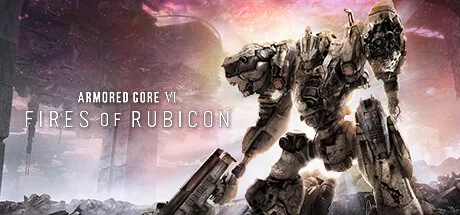
Beyond the single-player campaign and the Arena, Armored Core VI: Fires of Rubicon includes online player-versus-player combat. You take the AC you assembled yourself and face other players online — one of the game’s three main entry points.
PvP shares its build logic with the campaign, which means single-player habits transfer directly — and also that the hard constraints you ignored in the story get exposed faster against humans. Exceeding either total load or EN load blocks deployment, and the rule does not soften in PvP.
This page starts from PvP fundamentals: the dual constraints, weapon slots and weapon types, the Fire Control System (FCS), Core Expansions, and the light-mid-heavy trade. One warning up front: PvP balance may shift with patches — the notes below are principle-level; current-version strength is the standard.
PvP Fundamentals: Online Combat vs the Arena#
PvP means fighting real humans online; the Arena pits you against the game’s set opponents. Both test builds, but the opposition differs.
| Aspect | Online PvP | Arena |
|---|---|---|
| Opposition | Real players | Set opponents |
| AC origin | Both sides assemble their own | Player vs fixed opponents |
| Build logic | Same dual constraints | Same dual constraints |
| Main value | Tests builds and live reactions | Tests builds, produces rewards |
- PvP’s core variable is “the other AC is also carefully built” — your build cannot afford obvious holes.
- The Arena is a good place to internalize your AC’s handling before carrying that experience into PvP.
- Both share the build rules; sorting out the dual constraints is step one before going online.
The Dual Build Constraints: Load and EN Load#
The build system has two hard constraints: total load and EN load. Exceeding either blocks deployment.
| Constraint | Meaning | Overload result |
|---|---|---|
| Total load | Cumulative mass limit of all parts | Cannot deploy |
| EN load | Energy load cap of the AC | Cannot deploy |
- Weapons are the usual overload culprit — adding a strong weapon often means freeing headroom first.
- Lightweight parts buy mobility; going full tank buys firepower and HP at the cost of boost quality — the two ends of the spectrum.
- In PvP, overload means no match at all, so both bars must sit inside limits before anything else.
PvP balance may shift with patches, and the relative value of parts and weapons moves with it — judge by the current version when building.
Weapon Slots and Types in PvP#
The AC has four weapon slots: right hand, left hand, left shoulder, right shoulder. Weapon types are many, and their PvP roles differ.
| Slot | Notes |
|---|---|
| Right hand | The usual main weapon slot |
| Left hand | Auxiliary slot — but melee cannot be equipped here |
| Left shoulder | Shoulder slot |
| Right shoulder | Shoulder slot |
Common handheld and shoulder weapons:
- Handheld: laser guns, laser blade, drill, flamethrower, pulse gun, machine guns.
- Shoulder: missiles, cannons, homing missiles, laser drones.
- Restriction: the left hand cannot take melee — laser blades and their kin must occupy other available slots.
In PvP, weapon pairing must cover both range coverage and EN load — the more and heavier the weapons, the closer the AC creeps to the overload line.
The FCS: Lock-On and Stagger#
The Fire Control System (FCS) is an internal part alongside the booster and generator. It affects close-range, mid-close and long-range lock-on plus missile lock.
| FCS band | PvP meaning |
|---|---|
| Close-range lock | Hit foundation of point-blank brawls |
| Mid-close lock | Stability of mid-range firefights |
| Long-range lock | Long-range harassment capability |
| Missile lock | Whether you can hold a mobile opponent |
Against highly mobile enemies, an FCS with strong missile lock helps you keep them tracked and drive them into stagger — the key to breaking their rhythm and opening a damage window. But FCS choice still must mind the load; lock-on performance alone is not the criterion.
The Four Core Expansions in PvP#
Core Expansions are the AC’s trump cards; well-timed use swings PvP rounds. There are four types.
| Type | Effect | PvP thinking |
|---|---|---|
| Assault Armor | Pulsing blast from the core; blocks missiles, wide-area damage and impact | Defense plus clear-space when bursting in close |
| Pulse Protection | Shield that screens barrage until durability or timer ends | Blunting concentrated fire |
| Pulse Armor | Follow-type shield, greatly raises defense while it lasts | Survive a crisis and counter |
| Terminal Armor | Auto-shield at the HP threshold | Insurance at low health |
- Which Core Expansion to pick follows whether the build plays aggressive or defensive.
- Unlocking Core Expansions itself relies on chip upgrades — plan the source alongside Arena rewards.
- No type is strictly stronger; the criterion is fit with the AC’s playstyle and weapon ranges.
Light, Mid and Tank Builds#
Lightweight, mid-weight and full-tank ACs each hold a place in PvP; the trade is still mobility versus firepower.
| Orientation | Strength | Cost |
|---|---|---|
| Lightweight | Strong mobility | Thinner firepower and protection |
| Mid | Balanced mobility and firepower | Master of neither extreme |
| Full tank | High firepower, high HP | Poor boosting |
- Lightweight builds suit hit-and-run play built on boosters and aerial movement — they demand more lock-on and stagger discipline.
- Full-tank builds eat damage with firepower and HP but boost poorly; mobile opponents can drag them around.
- Mid builds are the compromise — the right start while your playstyle is still forming.
One more reminder: PvP balance may shift with patches; whether light or heavy is favored changes with adjustments — leave headroom in the build.