Why Stellar Blade Won Over Both Critics and Players#
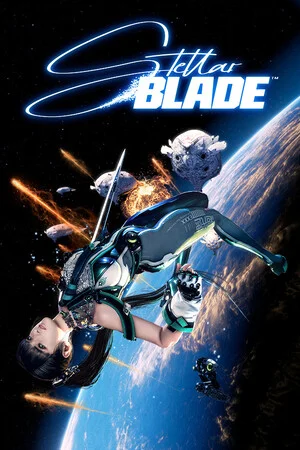
For a sci-fi action game from Korean developer Shift Up launching as a PlayStation 5 exclusive, Stellar Blade drew attention from the moment it was greenlit. Producer Kim Hyung Tae was previously known for titles like Goddess of Victory: NIKKE, and this game was his major move onto consoles. The game officially released on April 26, 2024, and the conversation around it ran from pre-launch art controversies straight into post-launch scrutiny of whether the core gameplay truly held up.
The question this page answers is direct: why did Stellar Blade command such a high level of attention, and why did its reputation diverge between the media and the players? Below we reconstruct the story along the lines of scores, gameplay, art, music, and post-launch operations.
First, the game’s pedigree. Stellar Blade was developed by Korean studio Shift Up with Sony Interactive Entertainment publishing, arriving on PlayStation 5 as a new-IP exclusive. Even before the official release, debates over character designs and combat showings had already pushed its profile very high, so whether the media and player verdicts could meet that expectation after launch became one of the most-watched topics in the gaming scene at the time.
A Double Endorsement in the Scores#
A Critic Average of 82#
On Metacritic, the mainstream review aggregator, Stellar Blade’s critic average settled at 82/100. For a new-IP action title, that is a remarkably steady start — it means the overwhelming majority of review outlets recognized the completeness of the core combat and art presentation, rather than dismissing it as a half-finished product that was “all looks, no substance.” An 82 sits in the “generally favorable” band: it neither slid into controversial territory nor left no room for goodwill to keep building afterward.
A User Score of About 9.1#
The player side of the scoring is more interesting. Stellar Blade’s Metacritic user score sits around 9.1 (roughly between 9.0 and 9.1), clearly above the critic average. This “players scoring higher than the press” phenomenon is uncommon among large commercial releases, and it usually means the game hit its target audience’s real preferences on certain dimensions, while the press made relatively restrained judgments on more “traditional” measures like narrative depth and map structure.
Player praise concentrated on combat feel and character design; the slightly lower critic scores were mostly tied to linear map design, some of the platforming sections, and story depth. The two scoring systems sketch the game’s real face from different angles — it is not a hexagon of all-maxed stats, but it made “action” pure enough to carry everything.
Why It Succeeded#
Combat Is the True Core Selling Point#
Stellar Blade’s most fundamental competitive edge is its combat. The design philosophy is “easy to enter, hard to master”: newcomers can prioritize survival and dodge-related skills to lower the barrier, while veterans who know the system combine combos, parries, and dodge counters into flashier, higher-yield routines. The skill tree never forces one fixed path — the choice stays with the player, which makes playstyles highly differentiated.
The thrill of the combat also rests on the opponents playing their part. Stellar Blade’s boss fights generally emphasize reading rhythms, precise parries, and counter windows rather than simply stacking stats. You watch the enemy’s movements and then decide whether to dodge, block, or trade blows head-on — that “read — decide — react” loop is exactly where an action game’s replay value comes from.
Around these mechanics, player-organized ways to play such as “no-hit challenges” and “speedruns” even formed on the market, further extending the game’s lifespan and keeping it in social discussions long after launch.
Art and Character Design Drove the Conversation#
Protagonist EVE’s design has been the center of the conversation since reveal. The debates over her look ran from the trailer stage past launch, but that very heat boosted the game’s spread. Whatever anyone’s take, the artistry is hard to deny — the desolation of a post-apocalyptic wasteland plays hard against the glow of a neon sci-fi metropolis, and the scene lighting and material detail hold a high standard throughout.
On the technical side, the game offers multiple graphics modes. Performance mode is recommended by most players for its smoother frame rate, while quality mode leans on excellent high-dynamic-range calibration to deepen light-and-shadow contrast. Both directions deliver a usable experience, and players can trade off by preference.
Worth adding: another strength reviewers frequently mentioned after launch was completeness. For a new release of this scale, it kept a fairly stable technical state at launch, without widespread vicious problems blocking progress — a “polished on day one” condition that looks especially precious in an era of chronic delays and day-one patches, and a major pillar of the critic average holding steady at 82.
Music Is the Easily Underrated Piece#
Stellar Blade’s soundtrack is another key component of its reputation. The score heightens tension in combat and soaks the exploration and story segments in end-of-the-world atmosphere, and its overall quality is considered first-tier among action game soundtracks of recent years. Music, visuals, and combat stack on top of each other to shape the game’s singular sense of atmosphere.
What the Officials Said#
Facing the gap between the media and player scores, the development team’s posture has been broadly open and pragmatic. Shift Up treats the player approval of combat and art as positive feedback, while continuing to listen to the criticism about map structure and the platforming sections. That “own the strengths, face the weaknesses” attitude shows plainly in the update cadence that followed.
The officials never treated the 82 critic average as a finish line; they chose to answer players with a steady supply of content. That operating approach kept Stellar Blade from cooling off quickly after launch, and it held considerable heat for a long stretch of time.
From the development team’s perspective, this score distribution also validated the early trade-offs. Stellar Blade never tried to out-fight the story-driven giants on narrative depth or map openness; it concentrated its resources on the two lanes it does best — action feel and art presentation. Asked about the road ahead, the team made clear it would keep shoring up the shortcomings players flagged while extending the strengths they praised — that clear-eyed sense of its own positioning is worth more than blindly chasing a higher score.
What It Means for Players: The Value of Ongoing Updates#
Stellar Blade’s biggest staying power came from the string of content updates after launch. Over a long stretch, the team kept adding new content: photo mode lets players pause the game at any moment, adjust camera position, depth of field, and filters, and capture frames of their own. That feature set off a screenshot-creation wave across social platforms, and plenty of players first noticed the game through someone else’s high-quality captures.
Later updates added crossover content with Nier: Automata. Both works are set in post-apocalyptic worlds and star artificial soldiers, and the collaboration carried that kinship into actual game content — a genuinely nice surprise for fans on both sides. Alongside outfit drops and other cosmetic additions, these updates kept pulling veteran players back while giving newcomers a reason to finally jump in.
Why It Still Attracts New Players After Launch#
An action game usually peaks in heat right at launch and then cools off fast. Stellar Blade traced a different curve, and there are several concrete reasons behind it:
First, word of mouth fermented over the long term. Early buyers’ recommendations and the steady exposure on social platforms kept the game visible for a long time, with potential players repeatedly running into it attached to labels like “underrated” and “worth a try.”
Second, the content kept flowing. Photo mode, boss challenges, new outfits, and crossover content generated a fresh wave of discussion every so often, breaking the “launch-and-done” convention and keeping the game at the center of the conversation.
Third, the stability of the action genre itself. Stellar Blade was never packaged as a live-service game demanding long-term commitment — it is a relatively complete single-player experience. In a moment when live-service games are everywhere and many players feel exhausted, that “pure and focused” positioning instead became its differentiation. It is also why it could keep a long tail of goodwill — not propped up by constant monetization, but by solid gameplay and a sustained run of positive word of mouth.
The NTGame Stellar Blade Guide Hub#
If the word of mouth has pulled you in, NTGame has built a complete guide system for Stellar Blade covering the full route from first steps to the platinum. Here are the guide pages we have:
- Beginner’s Guide: combat basics, interface walkthrough, and an intro to resource gathering
- Combat and Skills: the skill tree, Beta skills, Burst skills, and combo recommendations
- World and Collectibles: exploration for every region, can collectibles, and document locations
- Boss Guides: every boss’s mechanics explained with no-hit strategies
- Equipment and Items: Exospine, Body Core, outfit locations, and drone upgrades
- Build Recommendations: four endgame loadouts — all-rounder, burst, tank, and dodge
- Outfits Collection: how to obtain all 42 outfits
- Collectibles Guide: complete locations for cans, documents, and passcodes
- Skill System: recommended skill point routes
- Hidden Content: secret content and unlock conditions
- Endgame: post-clear endgame activities and challenges
- Tips Guide: a roundup of practical advanced techniques
- Upgrade System: weapon and drone upgrade materials at a glance
- Resources and Materials: where to farm every upgrade material and core
- Quest Guide: complete walkthroughs for side and main quests
- Controls and Settings: button layouts and graphics settings advice
- FAQ: answers to players’ most frequent questions
- Trophy Guide: a roadmap to unlocking the platinum
That is twenty guide entries in total, covering everything a new player through platinum hunter needs. Paired with this page’s breakdown of why the game succeeded, you can come away understanding the game — and get smoothly stuck into it.
Closing Thoughts#
Stellar Blade’s success was no accident. An 82 critic average proved its craft in action and art; a user score around 9.1 proved it genuinely moved its target players. The gap between the media and player verdicts is not a bad thing — it reveals the game’s distinct identity: it never chased completeness on narrative and map design, but polished “action” until it was pure enough. Beyond gameplay and art, the steady content updates and the emotional nod to Nier: Automata let it carve out a path of its own in a fiercely competitive console market.