Either-Or Under $55 Billion in Debt: EA Shuts Down BioWare and the Death of Mass Effect#
By Chasun | October 31, 2026
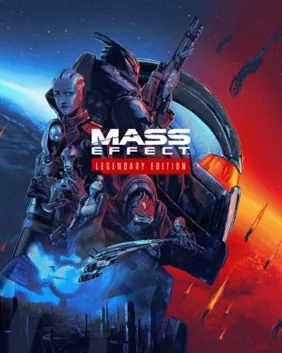
On October 21, 2026, Electronic Arts (EA) sent an internal memo confirming the closure of BioWare and its Edmonton, Canada office (per the publisher’s announcement). The same day, the studio said goodbye to players with a sentence that had no subject: “After more than thirty years together, BioWare is closing, and early development on the next Mass Effect project ends with it.” (per the publisher’s announcement) The closure itself has already been documented on this site in our report on EA shutting down BioWare, and will not be repeated here.
Nine days later, on October 30, Bloomberg reporter Jason Schreier offered a completely different explanatory path in his newsletter: while reviewing its upcoming lineup, the company found it had two sci-fi action games in hand, each expected to cost several hundred million dollars — one Star Wars Battlefront 3, the other the next Mass Effect; in the end the Star Wars project survived, because internal evaluation treated it as the lower-risk, more predictable bet (per people familiar with the matter).
The reporter then put the logic more bluntly on the social platform X: “EA needs predictable annual cash flow to service its debt. So a Star Wars Battlefront 3 that can ship on schedule is worth more than a Mass Effect that will most likely slip several times.” (relayed per media reporting)
To nail down the sourcing first: as of October 31, EA had not publicly responded to this report (per media reporting). The entire causal chain of “abandoning Mass Effect for Star Wars” is currently Bloomberg’s single-sided reporting based on people familiar with the matter, not the company’s own account. The company’s only public wording is that sentence from its spokesperson: “after months of planning, review and analysis, including careful consideration of the changing business environment, industry dynamics and long-term priorities” (per the publisher’s announcement). What this article does is take that reported decision chain apart layer by layer, not deliver a final verdict on behalf of either side.
Timeline: From a Basement in 1995 to October 2026#
| Time | Event | Sourcing |
|---|---|---|
| February 1, 1995 | Ray Muzyka, Greg Zeschuk and Augustine Yip, three medical school graduates, registered the company in Edmonton; the startup location was the basement of one of their homes | Per the publisher’s announcement |
| October 1996 | First commercial title Shattered Steel released; its demo drew a publisher’s attention and earned it deals on multiple games | Per the publisher’s announcement |
| November 2005 | Merger with Pandemic Studios announced | Per media reporting |
| October 11, 2007 (the official site also gives 2008) | Acquired by EA, retaining its own brand and culture | Per media reporting; the two official statements differ |
| 2007 | The first Mass Effect released, going on to become one of the studio’s best-known series | Per media reporting |
| 2017 | Mass Effect: Andromeda released to poor reception; on July 29 of the same year, the Montreal studio announced it was folded into the company’s Motive studio | Per media reporting |
| 2019 | Anthem released, seen as a live-service failure case | Per media reporting |
| 2024 | Dragon Age: The Veilguard released, selling about 50% below expectations, triggering major headcount cuts at the RPG studio | Per media reporting |
| September 2025 | Going-private acquisition of about $55 billion announced, financed with roughly $36 billion in equity plus about $20 billion in debt | Per the publisher’s announcement |
| August 4, 2026 | The buyer consortium’s acquisition formally closed | Per media reporting |
| October 21, 2026 | Memo confirmed the closure of the studio and the Edmonton office; only 50 employees remained at closure (another account says about 40) | Per the publisher’s announcement and media reporting; the figures diverge |
| October 30, 2026 | Bloomberg reported the real reason for the closure was the Star Wars project; as of the next day the company had not publicly responded | Per people familiar with the matter |
The thing worth watching in this table is not either end, but the gap in the middle: the deal closed on August 4, and the shutdown was announced on October 21 — only two and a half months apart. The moment the debt landed on the balance sheet and the moment a product trade-off was executed came almost back to back.
Edmonton Mayor Andrew Knack publicly expressed regret, saying Mass Effect is one of his favorite series, and stressed that “this has nothing to do with Edmonton, this is a decision made by their parent company”; the vice chair of local industry body Digital Alberta, Travis Gibson, called the matter “a gut punch” (per media reporting). The way local and parent-company responsibility are separated here says more clearly than any internal document could.
How $55 Billion Became a Product Question#
| Item | Figure | Sourcing |
|---|---|---|
| Total deal size | About $55 billion | Per the publisher’s announcement and media reporting |
| Equity portion | About $36 billion | Per the publisher’s announcement (as stated when announced in September 2025) |
| Debt financing | $20 billion, committed by JPMorgan Chase; Chinese media put it at $18 billion | The two accounts are listed side by side; no explanation of the calculation difference, neither can be picked |
| Buyer composition | Saudi Arabia’s Public Investment Fund (PIF), Silver Lake, Affinity Partners | Per media reporting |
| Closing date | August 4, 2026 | Per media reporting |
Translated into a product decision, the chain runs roughly like this (derived from people familiar with the matter and media reporting; analysis, not an official statement):
- The leveraged buyout put about $20 billion of debt onto the balance sheet, turning repayment obligations into an annual cash requirement;
- An annual cash requirement demands predictability on the revenue side, meaning the delivery window has to be locked to a specific fiscal year;
- At the product line level, projects that can ship on schedule get priority for funding and headcount;
- At the genre level, the company has long preferred to fund shooter projects, since production and scheduling uncertainty for shooters is lower in its internal evaluation;
- RPG projects have long cycles, huge content volume and a high chance of delay, so their delivery windows are hard to lock to a given fiscal year;
- So when two sci-fi action games that would each cost hundreds of millions collided, the shooter stayed and the RPG was out.
Not one link in this chain mentions “the quality wasn’t there.” It answers only one question: which project is more likely to earn the money back in the promised year.
One layer further down, the reason shooters are favored in this kind of evaluation is no mystery (the following is mechanical inference, not an official statement):
- Delivery windows are easier to slice: a multiplayer shooter can add or cut content volume and ship first with content added later; a narrative RPG has to be finished as a whole to work at all.
- The revenue model is closer to subscription and long tail: shooters keep generating cash flow after launch, while buy-to-play RPG revenue is heavily concentrated in the first few weeks.
- Failure samples are more controllable: for the same hundreds of millions invested, the loss ceiling of a shooter is easier to bound at greenlight, while the cost curve of a long-cycle narrative project converges much later.
Add the three together and you get a genre that fills in a financial model more neatly. The RPG was not judged unworthy of being made; it was judged hard to schedule.
One of Two: What Survived Was the One Not Yet Started#
| Dimension | Star Wars Battlefront 3 | The New Mass Effect |
|---|---|---|
| Genre | Sci-fi shooter | Sci-fi RPG |
| Development status | Had not entered development as of Bloomberg’s publication; the report mentions the Swedish studio DICE and Respawn Entertainment | A small team was already doing early development |
| Estimated cost | Several hundred million dollars | Several hundred million dollars |
| Internal evaluation | Lower-risk, more predictable bet | Likely to be delayed multiple times |
| Outcome | Kept, as part of expanding the shooter line | Not moving forward; studio closed |
| Sourcing | Per people familiar with the matter; the company has not confirmed | Per the publisher’s announcement and media reporting |
The most counterintuitive row in this comparison is development status: the one that survived had not even entered development as of publication, while the one that was cut already had a small team doing early development (per the publisher’s announcement). This shows the ranking criterion was not how much sunk cost had already been spent, but whether a delivery window could be promised.
In other words, early development is not a plus here, it is risk exposure: it means years of continued spending ahead with no definite revenue year to offer. A project not yet started is instead clean — it can be scheduled into whichever fiscal year needs it.
One more detail is worth comparing: the company’s memo said “a small team at BioWare” was doing early development, not “BioWare” was doing early development (per the publisher’s announcement). That tightening of wording is itself the step before a conclusion — when a team famous for RPGs is compressed into a small early-development squad, its weight in the product line is no longer enough to sustain a fight for resources.
As for the studio’s size at closure, the two accounts must be listed side by side: Bloomberg and UK games outlet Push Square give the figure of 50 employees; Trent Oster, one of the co-founders and now CEO of another company, says about 40 people remained, mostly working on the already cancelled fifth Mass Effect (per media reporting). The two figures come from different sources and may have been counted at different points; neither can be picked over the other, and they should not be added together.
Not a One-Day Story: How Legacy Baggage Cut the Studio to 50 People#
| Year | Title | Result | Direct consequence |
|---|---|---|---|
| 2017 | Mass Effect: Andromeda | Poor reception | The Montreal studio was folded elsewhere the same year, and the series went into long dormancy |
| 2019 | Anthem | Seen as a live-service failure case | The live-service pivot was set back, and resources flowed back to single-player narrative projects |
| 2024 | Dragon Age: The Veilguard | Sold about 50% below expectations | Triggered the company’s large headcount cuts at the RPG studio |
Beyond those three misses there is a personnel factor: Bloomberg notes that some EA executives who had previously supported the studio’s related business have left or changed roles, which also affected where the studio ended up (per media reporting). Having the people who spoke up for you inside the parent company walk away is harder to quantify than one game selling poorly, and is often more fatal.
Oster’s characterization of the two companies works almost as a footnote to this history: “EA is fundamentally a monetization company … BioWare is an innovation company, with long investment cycles and uncertain returns.” (per media reporting) The weight of that line is that it is not a criticism, but a statement that the two capital logics are incompatible.
There is also an easily overlooked point of order here: the title that sold about 50% below expectations was the 2024 Dragon Age game, not Mass Effect itself (per media reporting). In other words, the cancelled Mass Effect never really got its chance to play; it paid the bill for the entire genre’s historical report card.
So the closure did not happen on October 21, 2026. That day was only the final signature. The real cuts happened at the three nodes of 2017, 2019 and 2024, and by the time the memo went out the studio was down to 50 people (another account says about 40) — small enough to be wiped out outright by a single product line review. For the past and present state of the series involved, see the Mass Effect hub and the Dragon Age hub.
The Map After the Closure, and a List of Acquired Studios Shut Down#
The follow-on arrangements given in the same memo (per the publisher’s announcement):
- Merge Respawn Entertainment and the Swedish studio into an unnamed “future project,” sitting alongside future Battlefield titles, to expand the shooter line; the company has not said what game this project is — for background see the Battlefield hub;
- Focus the action-adventure line on Marvel’s Iron Man and the next Star Wars Jedi;
- The overall strategy is to “advance fewer large-scale projects at the same time.”
Read those three sentences together and the direction of the trade-off needs no further explanation: the shooter line expands, the action-adventure line contracts onto two licensed, established brands, and the number of large-scale projects is deliberately reduced. Every item points at the same thing — making annual output countable and schedulable.
And history leaves a contrast here that is hard not to mention: one of the reasons EA acquired BioWare back then was precisely the studio’s Star Wars: Knights of the Old Republic series (per media reporting). Twenty years later, Star Wars, in the shape of another genre, took this studio’s life.
| Acquired studios shut down | Signature titles |
|---|---|
| Westwood | Command & Conquer |
| Origin | Ultima, Wing Commander |
| Pandemic | Star Wars: Battlefront, Destroy All Humans |
| Black Box Games | Skate |
| Visceral | Dead Space |
| BioWare | Mass Effect, Dragon Age, Star Wars: Knights of the Old Republic |
It should be noted that this search did not turn up the disposition plan for office locations other than the Edmonton office, nor the specific number of laid-off employees and their severance arrangements; these gaps can only be left blank here, with no inference made.
That list is itself a narrative line: a company that traded acquisitions for capacity has, over thirty years, repeatedly used the same move to dispose of teams that no longer fit the current financial model. The only difference is that this time, what was shut down was a studio that defined the RPG genre.
Two Popular Explanations, Concurrent Layoffs, and One Unconfirmed Claim#
The reporter directly rebutted the two most widely circulated explanations on social media: “Twitter says the studio failed because it was too ‘woke,’ Bluesky says Saudi Arabia killed it because it was too ‘gay.’ The real reason? Star Wars.” (relayed per media reporting)
That rebuttal is worth quoting in full because it pulls an industry event back out of culture-war arguing: if Bloomberg’s sources are to be believed, what drove this closure was genre risk and debt service, not any cultural issue. Of course, this is still single-sided reporting.
The industry backdrop of the same period should not be ignored either: Microsoft’s gaming business launched a “major reset” in July 2026, cutting about 3,200 positions over the coming months (per media reporting). In the same quarter, two leading companies were both pulling headcount out of long-cycle projects with uncertain returns.
There is also one claim that must be handled with care: a former employee alleges that the company pressured for the removal of a flag in the new Mass Effect in development that appeared to support LGBTQ rights. This account appears only in a single outlet’s relay of a former employee’s statement, with no company response and no cross-verification from a second source; it is an unofficially confirmed allegation, recorded here only, and not used to infer the motive for the closure.
What players need to distinguish are three things: the officially confirmed closure, Bloomberg’s reporting on motive based on people familiar with the matter, and unsupported causal guesses online. The reliability of these three is completely different, and mixing them together only drowns out the real question.
The real question is actually one sentence: this was not a liquidation of a “studio that messed up,” but a trade-off in which “the debt structure rewrote the product line.” BioWare died because it made RPGs, not because it made them badly — if the sci-fi game in its hands had been a shooter, even with the same delays and the same hundreds of millions burned, it would have been the one that survived on that either-or list.
Sources#
- UK games outlet Push Square, relaying Bloomberg reporter’s October 30 newsletter (original headline meaning “New Mass Effect Cancelled So EA Can Focus on New Star Wars Shooter”) https://www.pushsquare.com/news/2026/10/new-mass-effect-cancelled-so-ea-can-focus-on-star-wars-battlefront-3
- InvenGlobal: “Bloomberg: EA closed BioWare and cancelled Mass Effect to back Star Wars Battlefront 3” https://www.invenglobal.com/articles/27962/bloomberg-ea-closed-bioware-and-cancelled-mass-effect-to-back-star-wars-battlefront-3
- CTV News Edmonton: “Loss of BioWare, ’legendary’ video game studio, hits like a gut punch: Digital Alberta” https://www.ctvnews.ca/edmonton/article/loss-of-bioware-legendary-video-game-studio-hits-like-a-gut-punch-digital-alberta
- 18183: “The Real Reason the New Mass Effect Was Cut: EA Made Way for Star Wars” https://news.18183.com/yxxw/202610/9075134.html
- Gamersky: “The Reason BioWare Folded Exposed! EA Chose Star Wars and Dropped Mass Effect” https://www.gamersky.com/news/202610/2238233.shtml
- Ali213: “EA’s Project Trade-Off Exposed! Star Wars Wins, Mass Effect Project Cut” https://www.ali213.net/news/html/2026-10/1050751.html
- BioWare official site, About page https://www.bioware.com/contact
- BioWare official site, Edmonton studio page https://www.bioware.com/studios/bioware-edmonton/
- Qiuwen Baike entry on BioWare https://www.qiuwenbaike.cn/wiki/BioWare
- Dragon Age Wiki entry on BioWare https://dragonage.fandom.com/wiki/File:BioWareLogoNew.png
- Related on this site: Fan petition and the aftermath of the new Mass Effect cancellation
