The Other Side of the 720,000 Peak: A Full Review of Phantom Blade Zero’s First-Day Data and Reception Accounts#
龙追日 | October 31, 2026
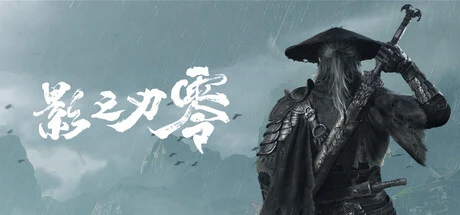
Phantom Blade Zero unlocked globally at 10:00 a.m. on October 29, 2026, developed and self-published by Beijing S-Game, launching simultaneously on PC across three stores — Steam, Epic and Tencent’s WeGame — as well as on Sony’s PlayStation 5 (PS5) console (publisher announcement and media reporting). Within twenty minutes of launch, concurrent players passed one hundred thousand; by that evening, the peak settled at 723,876.
The most eye-catching number Chinese players saw that day was “720,000.” But at least three concurrent readings circulated on the same day: 430,000, 662,000 and 724,000. They belong to different moments and different sampling methods, yet were relayed in a single sorted order, reading like a growth curve of “rising from afternoon into evening.” That curve does not exist.
Putting the concurrency numbers back on their timestamps is only the first step. The reception data from the same day is equally murky: the positive rating has three accounts at 75%, 79% and 84%, with sample sizes ranging all the way from 162 reviews to over twenty-seven thousand; on the console store side there is a different picture of 229 ratings, 4.93 stars and 97% five-star. Three sets of numbers coexisting with one 97% five-star figure does not tell you “whether reception is good or bad,” it tells you that “we read different things at different times on different platforms.”
This article is not a victory report. What it records is this: the second leg of Chinese single-player games really was caught, but the way it was caught carries an optimization debt that has to be repaid immediately after launch — because the peak and the negative reviews happened on the same day.
1. Three Concurrency Readings: Put the Timestamps Back First#
| Reading | Moment | Value (players) | Sourcing | Recorded by |
|---|---|---|---|---|
| Afternoon reading | October 29, 13:30 | 431,541 | Instant concurrency about three and a half hours after unlock | Third-party data site (SteamDB), relayed by media |
| Evening reading | Evening of October 29 | About 662,000 | Third-party platform instant sampling, minute not noted | Third-party reading relayed by WeChat games morning briefing |
| Day’s peak | Around 22:00 on October 29 | 723,876 | Extreme value within a rolling 24-hour window | Third-party data site (SteamDB) |
These three numbers cannot be connected by a line, and the reason is not “caution,” it is technical:
- Time precision is not on the same order. 430,000 is precise to the minute, 662,000 only reaches “evening,” and 724,000 is a window extreme rather than a sample at a given moment. The slope of a line through the three has no statistical meaning.
- Sources and deduplication rules differ. 662,000 comes from another platform; whether idle online accounts are counted and what the refresh frequency is have not been disclosed, so it cannot be subtracted from the other two.
- There is no public sampling for nearly nine hours in between. It is impossible to tell whether the day was single-peaked or double-peaked, or to rule out a shape of “dipping in the afternoon and spiking again at night.”
- The direction is unclear. 662,000 could have occurred on the way up, or after the peak. Looking only at the size of the values cannot put them in order.
Even for the same afternoon reading, versions differ between relays: one Hong Kong games site cites a data site reading of 434,028 players, while the table in an October 30 piece gives 431,541 (media reporting). The two differ by a little over two thousand, a rolling-refresh difference around the same moment; the magnitude does not change the conclusion, but it is enough to show that a “snapshot reading” and a “window extreme” are two different things.
One more boundary needs adding here, and it matters more than calibration: the 720,000 peak covers only one PC store platform. The console side never publishes concurrent player counts, and Tencent’s own channel data is likewise not folded into the same statistics. So 723,876 is neither the total across all platforms nor a conversion key for sales; it is only a known lower bound on all-platform heat. Translating “peak of 720,000” into “sold 720,000 copies” or “launch sales already over a million” stacks two conversions of different dimensions behind the same arrow.
Another condition often skipped: the October 29 unlock day was a weekday, and the peak came in the evening rather than on a weekend. That condition makes 720,000 all the more worth writing about, and it also means the next observation point should not be skipped — the first full weekend after launch falls on October 31 to November 1, and the peaks on those two evenings are the first valid comparison for judging whether first-day heat is a one-off. Before then, both “heat is still rising” and “it has already cooled” go beyond what the data can support.
There is only one accurate formulation: at 13:30 on day one a reading of 430,000 was taken, and that evening the 24-hour peak was 723,876 players. That sentence states two observations; “rising from 430,000 to 660,000 and then charging to 720,000” invents a trend that was never recorded. Another outlet mentions passing 300,000 within under an hour of unlock (media reporting), which is likewise a single-point reading and cannot be placed alongside the peak in any calculation.
2. What 720,000 Sits Ahead Of and Behind#
| Rank or comparison | Title | Peak (players) | Relative relation |
|---|---|---|---|
| 14th overall | Battlefield 6 | 747,440 | About 24,000 above this game, close together in the same tier |
| This game | Phantom Blade Zero | 723,876 | 15th overall, recorded in history |
| Surpassed | Goose Goose Duck | 703,000 | Pushed behind it on day one |
| Surpassed | Marvel Rivals | 644,000 | Same as above |
| Surpassed | Hollow Knight: Silksong | 587,000 | Same as above |
| Comparison within the year | Resident Evil Requiem | 344,214 | This game about twice it |
| Comparison within the year | Forza Horizon 6 | 303,000 | This game about 2.4 times it |
| Comparison within the year | Call of Duty: Modern Warfare 4 | 227,000 | Reading at launch; this game more than three times it |
| Comparison within the year | Nioh 3 | 88,000 | Largest gap in magnitude |
The ranking itself carries another trap: in Chinese reporting on the same day, this game was written both as “4th among single-player games” (overseas media account; the top three being Black Myth: Wukong at 2.42 million, Cyberpunk 2077 at 1.05 million and Hogwarts Legacy at 879,000) and as “6th on the single-player RPG sub-ranking” (media reporting). Neither ranking is wrong — the sub-ranking swaps the denominator for a specific set within the genre; the numerator stays the same while the denominator shrinks or grows, so the position naturally moves. Cite a rank without writing the list definition and “4th” and “6th” will be read as contradicting each other.
What is worth remembering is the relation between 14th and 15th: a gap of twenty-four thousand players is nearly equivalent for a single-player title with no replays, and any weekend return flow could rewrite the order. And above it, Baldur’s Gate 3 at 875,000 and Hogwarts Legacy at 879,000 are still more than one hundred and sixty thousand away from this game — that is another step entirely.
One concurrent heat sidenote worth recording: that evening the game had about 146,000 viewers watching on an overseas streaming platform, the most-watched single-player game on that platform and third across all categories, with the top two being two long-established multiplayer competitive products (overseas media reporting). Streaming data and concurrency data likewise cannot be inferred from each other — the people watching and the people playing are two different pools.
3. Three Positive-Rating Accounts: 79% to 84% Is Not a Rising Curve#
| Sampling moment | Sample scope | Sample size | Positive rating | Recorded by |
|---|---|---|---|---|
| October 29, unlock day | Simplified Chinese | 162 reviews | 75% | Gamersky |
| October 29, same day | First batch, all languages | 255 reviews | 79% / 80% | Gamersky and Tencent News reporting in the same period |
| October 30, 09:00 | Cumulative, all languages | 12,551 reviews | No account given | 18183 games site sampling |
| October 30 | Cumulative, all languages | Over 27,000 reviews | 84% | Relayed by App2Top |
| October 30 | PS Store ratings | 229 ratings | Average 4.93 stars, 97% five-star | Relayed by App2Top |
| October 29 | PS Store ratings | Not noted | 4.77 stars | NetEase reporting |
The difference between the first and second rows is the easiest to misread. 162 Simplified Chinese reviews give 75%, while 255 first-batch all-language reviews give 79% — a subset and a full set cannot be mixed, much less added to or subtracted from each other. What deserves more attention is another point: for the same “255 reviews,” one outlet writes 79% and another writes 80% (media reporting). One percentage point of difference for the same sample across two newsrooms shows that early numbers like these were themselves still rolling forward as the pieces were written, and drift within a few hours is far larger than any “change in reception” can explain.
So does 79% to 84% mean reception improved? Not necessarily — at least four variables are mixed in at once:
- Sample size changed by nearly two orders of magnitude. From 255 reviews to over twenty-seven thousand; early samples are dominated by core players who pre-ordered, while later ones add more ordinary-config users drawn by the 268 yuan standard edition price who may not be able to run the game.
- The time window crosses the day-one patch. A patch of about 5GB (per the publisher’s announcement) changed the first experience for later players, while earlier players’ negative reviews had already settled into the denominator and cannot be overwritten by later “it is fixed now” ones.
- Language composition changed. The Simplified Chinese region’s 75% is below the overall figure for the same period, showing that Chinese players’ tolerance threshold concentrates on runtime environment issues; a rising share of overseas players in later samples mechanically lifts the positive rating.
- The silent do not vote. Both the numerator and denominator of a positive rating count only people willing to write a review; those who cannot get it running and cannot be bothered to refund often simply say nothing.
The console store set has to be looked at separately. 229 ratings, 4.93 stars, 97% five-star is a very small sample from a single platform; another October 29 piece gives 4.77 stars (media reporting). The two are not far apart but should not be averaged either. Comparing it directly with the PC positive rating amounts to comparing “users who own a console and are willing to tap stars in a store” against “users willing to write a long review in a store” — the objects of comparison are themselves different.
4. Negative Reviews Cluster at the Entrance: Not a Content Problem#
The four things most often named in the first batch of negative reviews all happen after opening the game and before closing it:
- Cannot get into the game. Failing to start after unlock or getting stuck at verification is the most direct driver of refunds.
- Long shader compilation. The first launch requires a pre-compilation pass, during which occupancy is high and frame rate unstable; multiple players described that stretch as an experience “tougher to sit through than the first boss fight.”
- SteamAPI detection failure. An error at the platform API layer, a case of “stuck at the door,” with nothing to do with levels, numbers or story.
- Driver and size thresholds. The officially published PC install requirement is a solid-state drive with 300GB of free space (per the publisher’s announcement); at the same time, reporting mentions the team gave advice on compatibility with older graphics drivers (media reporting), while later entries still mention performance instability under new drivers.
What these four have in common: none of them amounts to a rejection of the game itself, but all of them convert into a negative review or a refund within an hour. And the counter-evidence exists too — multiple outlets gave high scores, with combat feel and boss design being the repeatedly affirmed parts (media review accounts). In other words, what the negative reviews talk about and what the positive reviews talk about are almost not the same thing: one is saying “I cannot get in,” the other is saying “getting in feels great.”
The official note on the day-one 5GB patch focuses on improving performance on low- and mid-range PCs and handhelds. Whether that patch shows up in the positive rating depends not on its size but on the tendency of newly added reviews in the same language and the same time window in the 24 to 48 hours after the patch. Public data is not yet sufficient to make that comparison, and any claim that “the patch worked instantly” goes beyond what has been verified.
5. Technical Side: Why One Console Gives You Three Modes#
| Item | Conclusion | Sourcing |
|---|---|---|
| Three console modes | Performance 60 fps / Balanced 40 fps / Quality 30 fps | Digital Foundry review |
| Graphics pipeline | Nanite virtualized geometry and the software version of Lumen global illumination | Same as above |
| Boss count | Over 50 across the whole game | Same as above |
| Combat style judgment | Closer to Devil May Cry-style combo-driven than to Souls-like | Same as above |
| Main story length | Main story about 30 hours, about 40 hours for platinum with full collection | Overseas media account |
| Another length account | Clearing all side content and challenges can approach 50 hours | Chinese reporting account |
The existence of three modes is itself the answer. On a console with fixed specifications, developers turning resolution, frame rate and lighting quality into three selectable trade-offs means this set of visuals is not comfortable on console hardware. The key point of software Lumen is that it does not rely on hardware ray-tracing units, trading general compute for usable global illumination, at the cost of that overhead landing on the CPU and general-purpose shader units; add the geometric detail Nanite brings and visual density goes up while the margin for a stable frame rate gets squeezed out.
The two length accounts also each carry their own qualifiers: 30 hours main story / 40 hours platinum and nearly 50 hours with all side content cleared have not been confirmed to use the same measurement method; this article lists them side by side and does not merge them.
Read those two together and you can see the density of this round of content: more than fifty bosses spread across a roughly thirty-hour main story means the gaps between boss fights are short, with almost no long empty stretches. Density is the selling point of this kind of action game and also its risk — once the experience at the threshold is interrupted, the higher the density, the lower the return rate. That is also why “entrance problems” cost this game more than they would other action games.
One other overlooked investment sits at the action layer: Donnie Yen and the Donnie Yen stunt team took part in the game’s motion capture (publicly stated by the publisher), which is one source of its “closer to combo-driven than to roll-and-read” label. For a game that designs more than 30 main weapons with completely different feel, the volume of action material sets the ceiling of combat design and also the floor of animation stitching and frame cost.
Other setting points worth recording: the game is built on Unreal Engine 5, its scenes set in the fictional world “Shadow Realm” that fuses Chinese wuxia with steampunk, and the player takes the role of a swordsman with a wounded heart and only 66 days left to live, closing in on a martial arts conspiracy while on the run; more than 30 main weapons and over 20 armaments taken from defeated opponents are available (per the publisher’s setting materials).
6. Scores and Sales: The High Scores Are Real, the Sales Are Estimates#
| Item | Value | Sourcing |
|---|---|---|
| Review aggregator, PC version | 88 | Metacritic page reading |
| Review aggregator, console version | 86 to 87 | Cited by media, still subject to change |
| Overseas media score | 9 | IGN |
| Domestic branch score | A perfect 10 | IGN China |
| Another overseas outlet | 9/10 | Insider Gaming |
| Comparison title Black Myth: Wukong | 81 | Media comparison account |
On the score side it is almost one-sided, with this game clearly above the predecessor used as comparison. For related in-depth content, see this site’s Black Myth: Wukong section page.
On the sales side the wording has to be absolute: all of the following figures come from third-party estimates, and not one of them is an official disclosure.
- Per estimates from third-party analytics firm Alinea Analytics, as of October 28 all-platform pre-orders were about 850,000 copies with pre-order revenue of about $43 million; the platform split is Steam 73.8% and PS5 26.2% on unit sales, and Steam 69.2% and PS5 30.8% on revenue (third-party firm estimate).
- At the regional level, about 62.5% of total sales come from China including Hong Kong, Macau and Taiwan, and 75.9% of Chinese players chose to buy on Steam; counting Tencent’s channel, the data site’s tally of total pre-orders has passed 1 million copies (third-party firm estimate).
- The same firm also cooled expectations, holding that this game is unlikely to reach the height of Black Myth: Wukong’s 10 million copies in three days; measured at the 70-day-before-launch mark, its pre-order sales over the same period are about 73% of that predecessor (third-party firm estimate).
- More aggressive external estimates (such as “2 million on day one, 10 million in the first month”) have been explicitly flagged by The Paper as external estimates rather than official disclosures; this article does not cite or convert them.
The pricing chain is relatively clear: the China-region digital standard edition is 268 yuan and the deluxe edition 328 yuan, with a physical collector’s box aimed at core collectors at 1,199 yuan, limited to 20,000 sets worldwide (per the publisher’s announcement).
7. The Industry Half: The 300 to 400 Million Yuan Ledger and the Second Leg#
| Item | Content | Sourcing |
|---|---|---|
| Company founding | Beijing Lingyoufang Network Technology Co., Ltd. founded on August 18, 2011, legal representative Liang Qiwei | Business registry information via media |
| Funding history | 2011 ZhenFund angel round, 2013 NetEase Capital Series A, 2018 equity financing, September 28, 2021 Tencent strategic investment | Media reporting |
| Equity | In 2021 NetEase exited and Tencent, through Guangxi Tencent Venture Capital Co., Ltd., holds about 25%; the company shifted from mobile games to AAA single-player development and publishing | Media reporting |
| R&D investment | Total development cost of Phantom Blade Zero is 300 to 400 million yuan | Disclosed by the founder |
| Project timeline | Conceived in 2017, greenlit in early 2022, released October 29, 2026; originally set for September 9 and proactively delayed 50 days for polishing | Earlier reporting account; no first-hand source obtained this round |
| Awards | Nominated for the 2026 Golden Joystick Awards “Ultimate Game of the Year,” to be awarded in London on November 11 | Media reporting |
Put R&D investment and pre-order revenue side by side: a development cost of 300 to 400 million yuan against pre-order revenue of about $43 million (about 287 million yuan) means this step before launch has not yet covered development spending, with the bulk of breaking even and turning a profit falling on the first month after launch and on long-tail sales (media business calculation account). That is precisely the economic reason the “optimization debt has to be repaid immediately” — a buy-to-play single-player game has no second launch window, the first weekend’s reception directly decides the slope of the long-tail curve, and the long tail is the main source of repayment on the bill.
There is another, harder arithmetic relation on this half: a pre-order scale on the order of 850,000 copies from third-party estimates, paired with a 268 yuan starting price for the standard edition, still leaves a distance between the resulting pre-order revenue and the 300 to 400 million yuan in development spending, and the gap can only be filled by continued sales after launch. And the pace of filling that gap depends on reception — finishing the patches can only reduce refunds; what actually pulls people in is recommendation. One lesson Chinese single-player games have verified repeatedly in these two years: the first three days decide whether it breaks out, the first month decides whether it breaks even, and the long tail decides whether there is a next game. The switches for all three sit in the hands of the people blocked at the entrance.
There is also something softer on this half. Start with the person: founder Liang Qiwei graduated from the School of Architecture at Tsinghua University, then went to Yale University for a master’s in architectural design; he had an offer from a New York architecture firm but chose to return home to make games, and during his studies used a hobbyist development tool to make the indie title Rainblood: Town of Death; S-Game grew from one person to a team of about a hundred (media profile reporting). That is also why this company’s English name matches its temperament — the level and scene pacing produced by a producer with an architecture background is not the same thing as that of a team purely from a numbers background.
Then the peers. The leaked “special thanks” list includes Tencent senior vice president Ma Xiaoyi, miHoYo co-founder Liu Wei, Kuro Games CEO Li Songlun, NetEase Leihuo head Hu Zhipeng, Game Science CEO Feng Ji, Kim Hyung-tae, and Clair Obscur: Expedition 33 producer Guillaume Broche (the list comes from the exposed version, with no complete official verification seen). Feng Ji posted a long Weibo on October 29 recalling his early friendship with Liang Qiwei from their mobile game days, and argued that “single-player games are not a more advanced kind of game; choosing single-player is mostly just that the developers themselves love this kind of work,” comparing a person’s aesthetic vocabulary to a large model — years of experience and feedback shape a creator’s taste (public Weibo content).
The follow-on pipeline is thickening too: besides this game, Shanghai Aurogon’s new Gujian series entry, Black Myth: Zhong Kui, and NetEase Leihuo’s Return to Tang are among the high-spec Chinese single-player titles still in progress (China Post Securities view; an institutional view, not a factual conclusion). With Chinese single-player games moving from “a lone shoot” to “a matrix,” the criterion is no longer the success or failure of a single title. All follow-up coverage of this game can be tracked continuously on the Phantom Blade Zero section home.
The closing point lands on this sentence: the second leg of Chinese single-player games was caught — the 720,000 concurrent peak, the bestseller chart position on unlock day, and the media scores clearly above the predecessor all prove that. But the way it was caught carries a technical debt: among the players who left reviews, the complaints concentrate almost entirely at the “can I even play it” layer rather than “is it good once I am playing.” No matter how high the review scores, they cannot replace that threshold blocking people at the door. The peak and the negative reviews happened on the same day, and that is the only conclusion about this day on which there is no dispute.
Sources#
- Third-party data site (SteamDB): first-day concurrency curve, 24-hour peak of 723,876 and historical ranking, read October 29 to 30, 2026.
- Gamersky: Phantom Blade Zero first-batch reviews at 255 with a 79% positive rating, of which 162 Simplified Chinese at 75%, October 29, 2026.
- Tencent News: the 80% formulation for the same batch of 255 reviews; also published “Chinese AAA game Phantom Blade Zero tops global bestseller chart on launch,” including Feng Ji’s long Weibo content, October 29, 2026.
- App2Top: the 84% positive rating (over 27,000 reviews) and the console store 4.93 stars with 97% five-star (229 ratings) accounts, October 30, 2026.
- Instant Gaming: 723,000 concurrent players, single-player chart ranking and streaming platform viewership data, October 29, 2026.
- GosuGamers: peak comparisons with Resident Evil Requiem, Forza Horizon 6 and Nioh 3, October 29, 2026.
- Sina Finance: reporting on pre-order structure, company history and R&D investment, October 29, 2026.
- The Paper: “Phantom Blade Zero tops global bestseller chart on launch,” explicitly stating external sales estimates are not official disclosures, October 29, 2026.
- China.com (relaying Blue Whale News): report on Phantom Blade Zero topping the global bestseller chart, including pricing, pre-order structure and length accounts, October 30, 2026.
- WeChat “10.30 Games AI Industry News” and “Daily Games Report”: special thanks list, review aggregator console version score, Golden Joystick nomination.
- Digital Foundry: PS5 three frame rate modes, Nanite and software Lumen, and the review conclusion of over 50 bosses.
- WeChat “Games Morning Brief” issue 002, October 30: explanation of the three accounts 430,000 / 662,000 / 724,000, the roughly 5GB day-one patch, and the Golden Joystick nomination.
- WeChat “Games News Morning Post” October 30: Digital Foundry review key points, the two length accounts, and the 300GB SSD requirement.
- 18183 games site: reading of 12,551 reviews sampled at 09:00 on October 30, 2026.
- Related NetEase reporting: passing 300,000 within an hour of unlock and the console store 4.77 stars account, October 29 to 30, 2026.
- A Hong Kong games site: the 434,028-player version of the afternoon reading and early sampling of about 5,300 reviews at 78.34% positive, October 29, 2026.