EA Shuts Down BioWare: A 30-Year RPG Legacy Ends in the Buyout Era#
By Long Zhui Ri (NTGame Editorial · Editor-in-Chief)
Hello everyone, I’m Long Zhui Ri. On October 21, Electronic Arts announced in an internal letter to employees that it is closing BioWare. The same day, BioWare’s official X account posted a farewell statement — “For more than 30 years, BioWare has been more than a studio: it has been a shared home for storytellers, developers, and the players who brought our worlds to life.” The sign-off carried no accusations and no self-defense, just a goodbye. A few veterans in our newsroom who have played Western RPGs for over two decades didn’t have much to say when they read it.
Frankly, as editors at a gaming news site, we could have pushed out a brief ten minutes after the news landed. But we decided to write this longread, because this isn’t just another “studio gets shut down” industry story — the studio being shut down once defined Western role-playing games at their very best. Some farewells deserve to be written properly.
The internal letter was signed by EA COO David Tinson and Chief Studios Officer Cam Weber, and the rationale was spelled out bluntly: the company had “taken a hard look at its business” and will focus going forward on proven hits — Apex Legends, Battlefield, and the sports category. Along comes a layoff of roughly 400 people, about 3% of a company that recently disclosed a headcount of around 14,500, of whom about 50 came from BioWare. What hit veteran players hardest was one more line: early development of the next Mass Effect entry (colloquially “Mass Effect 5”) has been terminated alongside it.
Before writing this piece, I ran through BioWare’s timeline since 1998 in my head. This isn’t going to be a pure news relay — as this studio, founded in 1995 in Edmonton, Canada, has just come to its end, I want to make three things clear: how it defined the golden age of Western role-playing games; why it ended up here; and what EA’s project slate and the fates of its two flagship series look like after the closure.
1. One Internal Letter: From Deal Close to Door Closed in Under Three Months#
Start with the timeline. On August 4, EA completed its $55 billion all-cash take-private buyout, with backers including Saudi Arabia’s Public Investment Fund (PIF), Silver Lake, and Affinity Partners, the firm founded by Jared Kushner. On October 21 — less than three months after the deal closed — the company under its new owners announced the closure of a role-playing studio with more than 30 years of history, along with layoffs of about 400 people.
The pace shouldn’t come as a surprise; the ledger was already out in the open. According to the overseas outlets covering the story, after going private EA told investors it would cut up to $700 million in annual costs, with roughly $170 million of that coming from “organizational efficiency” — this round of mass layoffs is that cut being carried out. One outlet also offered an estimate: EA has laid off roughly 970 people cumulatively over the past two years. That figure is not an official company number, but the direction is clear enough.
The Core Numbers of This Round#
| Metric | Figure | Notes |
|---|---|---|
| Closure announced | October 21, 2026 | Via internal letter to all staff |
| Layoffs this round | ~400 | About 3% of global workforce |
| EA global headcount | ~14,500 | Per the company’s most recent disclosure |
| Of which from BioWare | ~50 | BioWare had fewer than 100 staff before closure |
| Buyout value | $55 billion | All-cash acquisition, closed August 4 |
| Annual cost-cutting target | Up to $700 million | Communicated to investors after going private |
| “Organizational efficiency” portion | ~$170 million | Tied to this round of layoffs |
| Cumulative layoffs, past two years | ~970 | Media estimate, not an official figure |
Read that table top to bottom and every number points to the same word: returns. A company bought for $55 billion is carrying roughly $18-20 billion in debt (the two outlets’ figures differ slightly), and the new owners want cash flow, not a role-playing project that needs years of incubation. BioWare was precisely the part of the EA system furthest from “cash flow.”
The Newsroom Debate That Night#
The night the news broke, our editorial group talked well past midnight. Zixingzhao, as usual, ran the numbers first: a $55 billion buyout, roughly $18-20 billion in debt, an annual cost-cutting target of up to $700 million with about $170 million tagged “organizational efficiency” — read those four numbers together, he said, and you have a standard post-leveraged-buyout cost-surgery checklist; “shutting down a division that produces no live-service revenue is the rational move on this ledger.” Wubian picked up the thread from a long-term operations angle: the live-service model doesn’t want one game, it wants an ecosystem that keeps collecting rent, and BioWare’s product shape was never inside that logic. I pushed back: the math all checks out, but “rational” is an awkward word for delivering a eulogy to a studio that defined an entire genre. Zhanlan Yingren sent only one message: his shelf still holds the trilogy box set he bought back in the day. The group went quiet for a long while.
That discussion became the skeleton of this article: we concede the numbers first, then talk about what the studio meant — but none of the sentiment gets cut.
2. The Golden Age: The Western RPG Canon That Came Out of Edmonton#
BioWare was founded in Edmonton, Canada, in 1995. Even before EA acquired it (announced in 2007, deal completed in early 2008), it was already one of the flagship studios of Western role-playing games. Take one look at this timeline and you’ll understand why veteran players around the world reacted so strongly to the closure:
| Year | Title | Place in the lineage |
|---|---|---|
| 1998 | Baldur’s Gate | The milestone that brought the narrative depth of tabletop RPGs into video games |
| 2000 | Baldur’s Gate II | The sequel countless players revere as the peak of the traditional CRPG |
| 2002 | Neverwinter Nights | An experiment in handing toolset-based level editing to the player community |
| 2003 | Star Wars: Knights of the Old Republic | Proof that a Star Wars setting could carry serious narrative and faction choices |
| 2007 | Mass Effect | The opening of a sci-fi trilogy and a benchmark for space-opera storytelling |
| 2009 | Dragon Age: Origins | The culmination of the dark-fantasy strain |
From Baldur’s Gate to Dragon Age: Origins, that thread is practically a table of contents for the golden age of Western RPGs. What these games shared is clear: party-centered role-playing, long stretches of optional dialogue, choices that would stay with you for dozens of hours, and the patience to let narrative set the pace. RPGs of that era didn’t chase quantified daily active users; they chased “will you still remember this story ten years from now.”
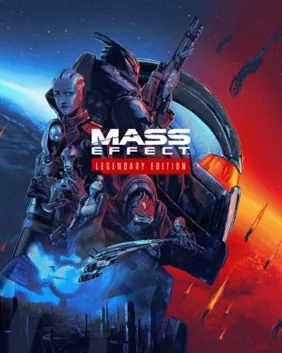
My own entry point was Knights of the Old Republic. Before that, I assumed Star Wars games were about shooting and flying, and it was BioWare that first made me seriously wrestle, inside a game, with whether to stand with the light side or fall to the dark. Later, the Mass Effect trilogy took those choices to a galactic scale, and the squadmates you raised with your own hands would accompany you through the entire arc across all three games. That experience is increasingly scarce in today’s industry — scarce enough that you need a remaster to find it again, which is exactly why 2021’s Mass Effect Legendary Edition exists.
To be fair: golden-age BioWare did not live on nostalgia. From Baldur’s Gate to Dragon Age: Origins, nearly every release stood up commercially and critically. The trouble came in the decade that followed.
One more thing worth recording: the legacy of that golden age did not evaporate with time. 2021’s Mass Effect Legendary Edition brought the remastered trilogy back in front of players and sealed the original choice system away intact. A studio’s best epitaph is not what the obituary says — it’s whether players will still go back and replay its work years later. By that measure, BioWare’s epitaph was written long ago, in the countless late-night saves of more than 30 years.
A side note on the lineage’s continuation: BioWare’s Baldur’s Gate I and II made party-based narrative role-playing the genre standard, and years later that banner was carried on by Baldur’s Gate 3. A banner can change hands, but players know exactly who set the standard in the first place.
3. The Cracks: How the Golden Age Ended#
The decline didn’t happen in a day, but looking back, the turning points are crisp. 2017’s Mass Effect: Andromeda slipped in both reception and sales — players had waited many years for a new mainline entry, and what arrived was not the sequel they had imagined. 2019’s Anthem was an outright failure: a mech title trying to embrace the live-service model that ended up as a textbook-scale industry cautionary tale.
Put those two games side by side and they read as two tuitions paid in the same transition: one a legacy series stumbling during the long wait, the other a deliberate pivot to a new business model that fell flat. For a studio built on narrative, the deepest wound isn’t one game selling poorly — it’s two in a row disappointing core fans who had waited years. Trust takes decades to build and two years to spend.
In 2020, EA announced a new Mass Effect, the one everyone calls “Mass Effect 5.” Until this closure it remained in early development, with only a small team attached. In 2021, Mass Effect Legendary Edition, collecting the remastered trilogy, shipped — a small measure of dignity preserved for the series, and one of the few BioWare projects of recent years that didn’t stumble.
The real hammer fell in 2024. Dragon Age: The Veilguard missed EA’s sales expectations, and the studio then took heavy layoffs in 2025, with multiple staff reassigned to other EA studios to work on skate., the Marvel Iron Man game, and other projects. By the time of this closure, a studio that once ran several flagship series simultaneously was down to fewer than 100 people — from more than 200 just two years earlier.
| Time | Event | Context |
|---|---|---|
| 2017 | Mass Effect: Andromeda ships; reception and sales both slip | The series’ previous all-new mainline entry |
| 2019 | Anthem fails | An outright failure of the pivot to live service |
| 2020 | New Mass Effect announced | Still in early development with a small team at the time of closure |
| 2021 | Mass Effect Legendary Edition ships | Collects the remastered trilogy |
| 2024 | Dragon Age: The Veilguard misses sales expectations | The straw that broke trust |
| 2025 | BioWare hit with heavy layoffs; staff moved to other EA studios | Destinations included skate. and the Iron Man game |
| October 21, 2026 | EA announces BioWare closure | Early development of “Mass Effect 5” terminated alongside |
Reading The Veilguard’s sales miss as the last straw that broke the camel’s back is the easy interpretation, but not necessarily a fair one. What’s really worth examining is the set of numbers below — it explains why, in EA’s new ledger, there is no room for a slow, meticulous narrative RPG studio.
4. The Ledger Doesn’t Lie: Premium Narrative RPGs vs. Live Service#
In the fiscal year ending March 2026, about $5.6 billion of EA’s roughly $8 billion in net bookings came from live-service revenue (DLC, microtransactions, and the like, per the annual report filed with the U.S. Securities and Exchange Commission (SEC)). Live service is the overwhelming bulk of that revenue mix. And role-playing games — especially single-player narrative RPGs of BioWare’s kind — are precisely the premium category with the highest costs, the longest cycles, and the slowest payback.
A Reconciliation Table: Where the Money Comes From#
| Metric | Figure | Notes |
|---|---|---|
| Net bookings last fiscal year | ~$8 billion | FY ending March 2026, per SEC annual report |
| Of which live-service revenue | ~$5.6 billion | DLC, microtransactions, and other recurring revenue |
| Apex Legends lifetime in-game spending | Over $3 billion | Previously disclosed by the company |
| Battlefield 6 | “Very successful” | The internal letter’s own words; Apex Legends to get renewed investment |
By contrast, Apex Legends has generated over $3 billion in cumulative in-game spending; the internal letter called Battlefield 6 “very successful” and pledged renewed investment in Apex Legends over the coming years (including a new multiplayer mode). The sports line keeps expanding: Madden and EA Sports FC carry on as usual, College Football 27 already drew controversy for adding in-game purchases to its single-player modes, and still ahead are an open-world football game and a revival of the Fight Night boxing series.
Look at BioWare’s position through that revenue mix and the conclusion was all but preordained: a division that produces no live-service revenue is a cost line on a balance sheet carrying roughly $18-20 billion in debt. When the internal letter says it will “focus on proven hits,” the translation reads: money flows to where the rent is already being collected. BioWare’s core assets — narrative, choice, party, world — not one of them monetizes by the quarter.
The starker contrast sits with the sports line: College Football 27 added in-game purchases to a single-player mode, and controversy aside, the business carried on. On one side, a category that keeps profiting by stuffing premium single-player games with microtransactions; on the other, a division that built its name on selling complete experiences and kept missing. Which one the ledger picks requires no imagination. What BioWare lost to may not have been its own games, but an increasingly monolithic yardstick — one in which a project that cannot keep producing service revenue is, however classic, merely a “historical asset.”
This is also the point I’ve most wanted to talk through with you these past few days: BioWare’s closure is not just one studio’s curtain call. It marks the moment when the “ten years to forge one sword” premium narrative RPG formally ceded its seat, in the giants’ ledgers, to the rent-collecting live-service model. The former bets that you’ll remember the story ten years from now; the latter counts this quarter’s $5.6 billion in service revenue. Neither logic is wrong — but when the ledger speaks only one language, the storytelling division is always the first to be shut down.
5. EA After the Closure: What Stays, What Gets Cut, What’s Up in the Air#
The internal letter and subsequent reporting lay out EA’s current project slate fairly clearly; I’ve organized it into a table:
| Project | Status |
|---|---|
| “Mass Effect 5” | Early development terminated |
| New Sims game (internal codename Project Lotus) | No longer moving forward (one account says paused, another canceled; the two outlets differ) |
| Another Sims project (internal codename Project Evergreen) | Proceeding |
| skate. | Still in development, team reduced |
| Next Star Wars Jedi | Continuing |
| Marvel Iron Man game | Continuing |
| New shooter from Respawn and DICE | In progress; Bloomberg reports it is very likely a new Star Wars: Battlefront entry |
Read down that list and the outline of the new EA is drawn: sports, shooters, live service — three pillars; not a single-player narrative RPG left among them. The Star Wars Jedi series and the Iron Man game survived, presumably because they have both a premium-sales base and strong brand backing — but behind them stand other studios, not BioWare.
As for the former BioWare staff reassigned to the skate. and Iron Man projects, and the roughly 50 employees laid off this round, the reporting so far says nothing about any follow-up arrangements. The last employees of a 30-plus-year-old studio simply scattered into other corners of the group.
Two discrepancies need to be flagged for you: first, whether the new Sims game (Project Lotus) was canceled or merely paused — the two outlets phrase it differently, and the table above uses the vague “no longer moving forward”; second, the roughly 970 cumulative layoffs over the past two years is a media estimate, not an official company disclosure. If follow-up reporting updates either point, we’ll cover it separately.
6. Two Franchises in Limbo: Players Still Hold One Legendary Edition#
The question players care about most has drawn not a single official word: as of publication, EA has announced no plans of any kind for the Mass Effect and Dragon Age IPs. Early development of “Mass Effect 5” is terminated; whether there could be a turn — another team taking over, or a license out — there is no official information, only media speculation. All I can tell you are the facts: the IP remains in EA’s hands, no plans have been announced, and nobody knows how many years the next mainline entry will take.
So for now, the most reliable road back into this universe is still 2021’s Mass Effect Legendary Edition — the remastered trilogy is all in there, with the Paragon and Renegade choices, the squadmates on the bridge, and every ending branch lying there intact. Our Mass Effect Legendary Edition guides hub covers the trilogy’s story choices, all six class builds, companion bonds, and the Paragon/Renegade morality system; veterans who want to walk the galaxy again can start there. Likewise, our Dragon Age: The Veilguard guides are still up — the newest entry on the series timeline is now the “newest” doorway into this IP.
If You Want to Go Back and Replay Right Now#
- To finish the trilogy proper: start with the Mass Effect Legendary Edition guides — one set runs through the remastered trilogy, with branches covered for both the Paragon and Renegade paths;
- To see the series’ latest form: head straight to the Dragon Age: The Veilguard guides — it is the newest mainline entry on this IP’s timeline, and the one whose sales crushed the studio’s standing;
- To understand why EA pivoted: look at the Battlefield 6 guides and the Apex Legends guides — the former is the current pillar called “very successful” in the internal letter, the latter the rent-collecting machine with over $3 billion in lifetime in-game spending. Put the two side by side and the ledger’s logic becomes clear.
Around the office these past two days, I kept coming back to the most striking phrase in BioWare’s farewell statement — “the players who brought our worlds to life.” The studio’s 30-plus years of history were, in the end, written together with its players. Now the storytelling division has closed its doors, but the stories themselves are still on players’ hard drives. That is probably what sets role-playing games apart from every other genre: services can shut down, but worlds don’t go offline.
Further reading:
- Mass Effect Legendary Edition guides — complete guides to the remastered trilogy, the first stop back to the galaxy
- Dragon Age: The Veilguard guides — the newest mainline entry on this IP’s timeline
- Baldur’s Gate 3 guides — the modern chapter of the Baldur’s Gate name
- Battlefield 6 guides hub — the new release called “very successful” in the internal letter
- Apex Legends guides — the live-service pillar EA will reinvest in over the coming years
7. Closing: A Belated Letter to BioWare#
I have no intention of fortune-telling for EA in this piece; the ledger is better at that than I am. I only want to speak, as a veteran who has played everything from Baldur’s Gate onward, a few words for this Edmonton studio.
Thank you for showing me that video games could hold on to you like a novel, that a single choice could weigh on your mind for weeks. Thank you to Knights of the Old Republic for making me seriously weigh my stance in the Star Wars galaxy for the first time; thank you to the Mass Effect trilogy for teaching me that squadmates are more than combat stats; thank you to Dragon Age: Origins for proving that dark fantasy could be told with such restraint. None of these memories expires because of an internal letter.
The industry always moves forward, and those who look back seem out of step. But someone has to look back, and keep a record for the cut projects, the reassigned developers, and the terminated plans: of what they once achieved. BioWare achieved it. More than 30 years — enough, and nowhere near enough.
Once this piece is filed, I plan to reinstall Mass Effect Legendary Edition tonight, start a new save, and walk it again from the very first step. Not to write a review, and not for a story pitch — just because some worlds are worth returning to regularly, while their lights are still on.
May everyone who tells stories have a place to tell them. May someone still be willing to spend ten years writing the galaxy’s next legend.
— Long Zhui Ri, Editor-in-Chief, NTGame
Fact sources for this article: Bloomberg’s October 21 report (as relayed by multiple outlets), BioWare’s official farewell statement, plus reporting from Polygon, Dexerto, heise, Gizmodo and other outlets, along with EA annual report data. Figures with conflicting accounts (the debt load, the fate of the new Sims game, the two-year layoff total) are flagged in the text.