After EA Closes BioWare: The Mass Effect 5 Cancellation and a 170,000-Signature Petition - A Postmortem on the Fate of the Franchise#
By Long Zhuiri (NTGame Editorial - Editor-in-Chief)
Hello everyone, Long Zhuiri here. On October 21, Electronic Arts announced the permanent closure of BioWare’s Edmonton studio - a 31-year-old Canadian institution responsible for Baldur’s Gate, Star Wars: Knights of the Old Republic, Dragon Age and the Mass Effect trilogy - and with it the termination of the next Mass Effect title, which was in early development. This round of layoffs hit roughly 400 people company-wide, about 50 of them from BioWare. I already wrote up the facts and the ledger of the closure in the previous piece, “EA Closes BioWare: The End of a 30-Year RPG Institution and a Farewell in the Age of Privatization” (see our report on the site), so I will not repeat them here.
Today’s piece is the second half of that story. What happened after the announcement is more worth writing about than the announcement itself: the design details of a game that was announced roughly six years ago yet never advanced beyond early development are now being pieced together from a livestream and a leaked clip; both of the original voice actors for Shepard have spoken out; people in Canadian politics have proposed that the government step in; and on a petition platform, a signature campaign started by an ordinary player is growing at a rate of 50,000 a day. This article wants to make three things clear: what the cancelled game was originally meant to be; how far the fan movement has come; and what else we can see once this franchise is laid out on the dissecting table.
1. 170,000 Signatures: A Rescue Lit the Same Day as the Announcement#
Start with the movement itself. On October 21, the same day EA published its announcement, a player named Joe Smith launched the #SaveMassEffect petition on Change.org. The petition’s demands are written with restraint - two of them:
- First, that EA continue developing Mass Effect with “appropriate funding, staffing and development time”;
- Second, that if EA is unwilling to continue, it license the IP to another studio with the passion and vision for it.
No slogans, no excessive demands - either do it properly or hand it to someone who will. The wording of those demands is calmer than a good many comment pieces. And the speed at which the signature count has grown shows the resonance is real:
| Date | Milestone | Note |
|---|---|---|
| October 21 | EA publishes its announcement; the petition launches the same day | Joe Smith launches #SaveMassEffect |
| October 24 | Roughly 120,000 signatures | Media begin following up |
| October 25 | Over 164,000-166,000 verified signatures | TweakTown puts the figure at 170,000+ |
| Next target | 200,000 signatures | Milestone posted on the petition page |
The steepest climb happened around October 25: according to TweakTown, the signature count went from 120,000 to 170,000 in a single day - 50,000 in one day. A player petition with no budget and no official backing reached that magnitude in four days. Bear in mind this is not review-bombing a game in its favor; it is asking a company that was just taken private in a leveraged buyout worth roughly 55 billion US dollars to pick a product line back up that had already been written into the cost-cutting list.
As of publication, EA has made no public response to the petition. That silence is itself unsurprising - as analyzed in the previous piece, the answer was already written in the new EA’s ledger. But the point of a petition was never instant fulfillment: it is a public, countable archive of public sentiment, telling anyone interested in picking up this IP how many people in this galaxy are still willing to come back.
2. Mass Effect: Universe - A Parallel Universe Assembled From a Livestream#
The cancelled title carries the reported working title Mass Effect: Universe. It was first announced at The Game Awards in 2020 and, by the time it was cancelled, had been around for roughly six years while never moving past early development. After the closure, information about “what it was meant to be” is flowing out through two channels: a livestream with a technical director, and an authenticated leaked trailer.
First, the livestream. Series technical director Romain Toutain discussed the project’s design concepts during a French-language Twitch stream, and there was a good deal in it:
- Core concept for the save system: incorporate every choice from previous games into the save, letting players “stitch saves together to generate parallel universes and different timelines” - Toutain drew an analogy to Zero Time Dilemma;
- World state management: the system has “a state for everything”, able to call a logic solver to verify the validity of a situation and branch the world state accordingly;
- Protagonist: customizable;
- Leaked trailer: internal use only, not representative of the final quality.
Now the leaked trailer. A pre-production trailer was released by someone claiming to be a former developer, and the footage shows fan favorite Liara T’Soni. Journalist Jason Schreier of Bloomberg authenticated it as genuine pre-production material - note that pre-production material only proves the project existed and that the art direction was serious, it does not indicate any level of completion. But the words “authenticated as genuine” were enough to send the whole internet into a frenzy for a round.
As for the setting itself, the reported account is: the story takes place roughly 600 years after the ending of Mass Effect 3, with the major powers in something like a “galactic cold war”, and espionage and political tension as the primary engines of conflict. Put these pieces of information together and you can faintly make out the outline of a work -
| Dimension | Disclosed concept | Sourcing |
|---|---|---|
| Save system | Stitch together previous saves to generate parallel universes / different timelines | Toutain livestream |
| State management | “A state for everything”; a logic solver verifies and branches the world state | Toutain livestream |
| Protagonist | Customizable | Toutain livestream |
| Timeline | Roughly 600 years after Mass Effect 3 | Media reports |
| Tone | Galactic cold war; espionage and political tension | Media reports |
| Leaked footage | Pre-production material featuring Liara, authenticated by Schreier | Bloomberg journalist authentication |
If this thing had actually been made, it would have been one of the most aggressive save-inheritance systems in RPG history. Anyone who has worked on long-running series narrative knows what “save inheritance” means: your Paragon and Renegade choices, the squadmates you saved or sacrificed, the final decision you made in the third game - the traditional approach carries a few key variables into the next entry, whereas what Toutain described takes every choice into account and has the world state branched and verified in real time by a logic solver. This is not an easter-egg-level inheritance handing veteran players a “medal of honor”; it takes the line “your choices define your galaxy” and treats it as an engine-level requirement.
BioWare was not without precedent in this direction: the Dragon Age series did Dragon Age Keep back in the day - an official tool letting players confirm previous-game decisions in a browser and carry that world state into the new game. Upgrading that thinking from “a web checkbox tool” to “a parallel universe driven by a logic solver” is an enormous leap, and an enormously difficult one. Spending roughly six years and reaching only early development says something about how large the ambition was; and the fact that it ended with “early development terminated” says something about how impatient the ledger ultimately was.
3. Shepard Speaks: Two Voice Actors Voice Their Support#
Beyond the fan movement, the most moving reaction has come from two voice actors. The original voice actors for Shepard - whether you played FemShep or BroShep - Jennifer Hale and Mark Meer, both spoke out after the news broke.
Hale’s response took the practical route: she floated an idea - a collective formed from fan crowdfunding, investors and a game company to revive the series. That sounds like a fantasy, but what she is describing is an approach that has genuinely appeared in this industry in recent years: when a publisher no longer wants to support an IP, a community and capital taking it over together is not without precedent. Of course, an idea is only an idea, but the fact that Shepard’s voice is willing to come back is itself a shot of adrenaline for fans.
Meer’s reaction was an entirely different register: he reposted the news and answered with lines from the series - “Hold the line”, and that other one every player has heard to death, “I should go”. The former is the signature line soldiers use to buck each other up across the trilogy; the latter is Shepard’s catchphrase when ending a conversation. Using a character’s words to say farewell to one of the character’s creators hurts more than any long statement.
As an aside: the voices Hale and Meer gave Shepard are a major part of this series’ emotional weight. How many players made their final choice before the endgame of the third game listening to that familiar voice over the intercom on the bridge. Now the owners of those two voices have stepped forward to say “hold the line”, and whether the line holds depends on whether anyone is willing to take it up next.
4. From a Petition Page to Parliament: Canadian Politics Steps In#
The third front of this movement is in Canadian politics. According to Polygon, the Canadian government is already considering providing assistance to BioWare; Avi Lewis, leader of Canada’s New Democratic Party (NDP), has publicly suggested that the federal government support former BioWare employees in acquiring the studio and running it independently.
The direction of that proposal is not hard to understand: Edmonton’s game talent is one of the calling cards of Canada’s creative industries, and losing a 31-year-old institution along with its people and its IP is a real loss to the local industry ecosystem. Government aid or an employee buyout both come down to the same question - when a multinational publisher makes its decisions based on a global ledger, can the home country catch these assets?
One rumor circulating on the side deserves a note: there are reports that former employees considered pooling money to buy back the studio and the IP. This claim cannot currently be verified - who the funders would be, whether a formal offer was made, how negotiations progressed - none of it is public. This is recorded only as the existence of a rumor, not accepted as fact; we will follow up if reliable reporting appears.
5. The Other Side: A Pulled Collaboration, a Silent EA, and an AI Bet#
Swing the camera back to EA and, with a few details assembled, the irony of the picture comes out.
First, the knock-on effects arrived fast: according to reports, Battlefield 6 has quietly pulled its planned Mass Effect collaboration cosmetics. An IP that is still on a petition list has had even the right to appear as a skin in another game taken back - there is nothing targeted about this, it is a standard commercial move of “clearing out invalid associations”, but for fans every detail is a reminder that this IP’s position in the new EA’s asset table has changed.
Second, EA has stayed silent in the face of 170,000 people. Read against the ledger calculated in the previous article, that silence is not hard to interpret: a leveraged buyout of roughly 55 billion US dollars, a closure decision less than three months after the deal closed, and plenty of analysts linking this closure to the debt burden the acquisition brought with it. On a balance sheet like that, a single-player narrative project needing years of incubation naturally sits behind every “already proven hit”.
Third, and the most stinging contrast: at the same time as it shut down a studio known for narrative, EA is reported to be setting up a cooperation posture with Stability AI. This must be stated clearly: the information currently comes from a single source, has not been verified by multiple parties, is not accepted as fact in this article and is recorded only as a direction to watch. But if this line is confirmed, the picture is complete - “the storytellers” collecting severance on one side, budget flowing toward a system that does not need stories on the other. Closing a studio and embracing AI in parallel is not a coincidence; it is two pages of the same strategy document.
I have no intention of condemning AI wholesale - technology is neutral, and Zixing at the editorial desk understands its potential better than I do. But when a company measures a genre that stands on human storytelling using the cost-effectiveness of generative tools, what gets sacrificed is never “efficiency”, it is the stories people will still remember ten years from now. The most valuable thing in the Mass Effect trilogy was never scene asset reuse rate; it was the trust built up over hundreds of hours between you and your squadmates. A logic solver cannot write that - and, interestingly enough, in Toutain’s cancelled design, the logic solver was precisely what was meant to protect those choices.
6. Twenty Years in the Galaxy: Why This IP Deserves a Petition#
At this point in the postmortem, the fundamental question deserves an answer: why does “a sequel that was never finished getting cancelled” stir up this much trouble? The answer is not in the new game, it is in the old ones.
Between 2007 and 2012, the Mass Effect trilogy brought space opera into the RPG: your customized Shepard commands the Normandy, makes choices on a galactic scale, and those choices accumulate across all three games through save inheritance. It proved something - that video game narrative does not have to be only “telling a good story”, it can be “letting the player take part in a story personally and be responsible for their own version of it”. That experience was groundbreaking in the industry at the time and remains rare today.
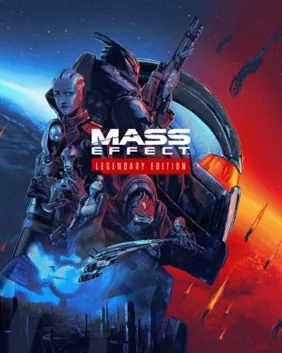
The road afterward was not smooth. Mass Effect: Andromeda in 2017 drew weaker reception and the series went into a long dormancy, until Mass Effect Legendary Edition - collecting remastered versions of the first three games - arrived in 2021 and, in a sense, preserved the series’ dignity. Veteran players say “I won’t buy it again” with their mouths and vote differently with their wallets - the point of Legendary Edition was not just a visual upgrade; it proved the series’ story structure still holds up more than a decade later, and that people willing to walk the galaxy again have always been there.
Polygon makes a sober judgment in its report: the petition will most likely not change the publisher’s decision. Historical experience does stand on that side - however pretty the signature count, it is hard to roll back a cost-cutting list that has already been written. But the petition has another value: it puts this IP’s market value on the table. 170,000 signatures are a free piece of market research, telling EA and telling every potential buyer eyeing this IP that the demand is real. If EA ever chooses to license or sell, this petition is a chip on the negotiating table.
So if you ask me what the point of this movement is, my answer is: it may not save Mass Effect: Universe, but it guarantees one thing - that when anyone opens the next chapter of this IP, the title page will read: this was not a story nobody wanted.
As things stand, there is only one road back into this universe: Mass Effect Legendary Edition from 2021. All three remastered games are in it - the Paragon and Renegade choices, the squadmates on the bridge, every ending branch, all lying there intact. Our Mass Effect Legendary Edition guide section covers trilogy plot decisions, all six class builds, squadmate bonds and the Paragon/Renegade morality system - veterans who want to walk the galaxy again can start there. To understand the new EA’s current strategic center of gravity, you can also look at the Battlefield 6 guides - the popular pillar that quietly pulled the Mass Effect collaboration items.
7. Closing: Hold the Line#
After finishing this piece, the editorial group chat got onto that old topic of “do petitions actually work”. Wubian said that from a long-operation perspective, 170,000 signatures show the community asset is still there, the publisher just does not intend to monetize it; Zhanlan Yingren said he has seen too many petitions sink without a trace, but every signature is a coordinate left for the future; and myself, I thought of the line Meer quoted - hold the line.
In the trilogy, “hold the line” never meant “victory is certain”; it meant “do not let the position be lost for nothing”. Everyone remembers how the trilogy ended, and that ending caused an enormous argument back then, but ten years on, what players still talk about is not whether the ending was perfect - it is that the path they walked was real. A new game whose core selling point was “every previous choice counts” has been terminated, and that hurts; but the numbers climbing day by day on the petition page also say that in the players’ saves, those choices still count.
EA has not responded, and the new game will most likely not come back in its original form. But the most important lesson this series taught players is precisely how to make your own choice in a situation that is doomed to be imperfect. Hold the line - even if there are no reinforcements behind it, holding it is itself the point.
As for that parallel universe dream six years in the making, I hope someone picks it up one day. Even if it is not EA.
– Long Zhuiri, Editor-in-Chief, NTGame
Sources for this article: TweakTown (relayed via rcg.news), Gamersky (relaying Polygon’s report), GamingAmigos, GameRiv and associated Associated Press coverage. Individual items not verified by multiple parties (EA’s moves toward cooperation with Stability AI, the rumor of employees pooling money to buy back the studio) are explicitly flagged in the text as single-source or rumor; readers are asked to distinguish accordingly. This article is a follow-up to our previous closure report, and the two pieces complement each other.