Lore and Worldbuilding#
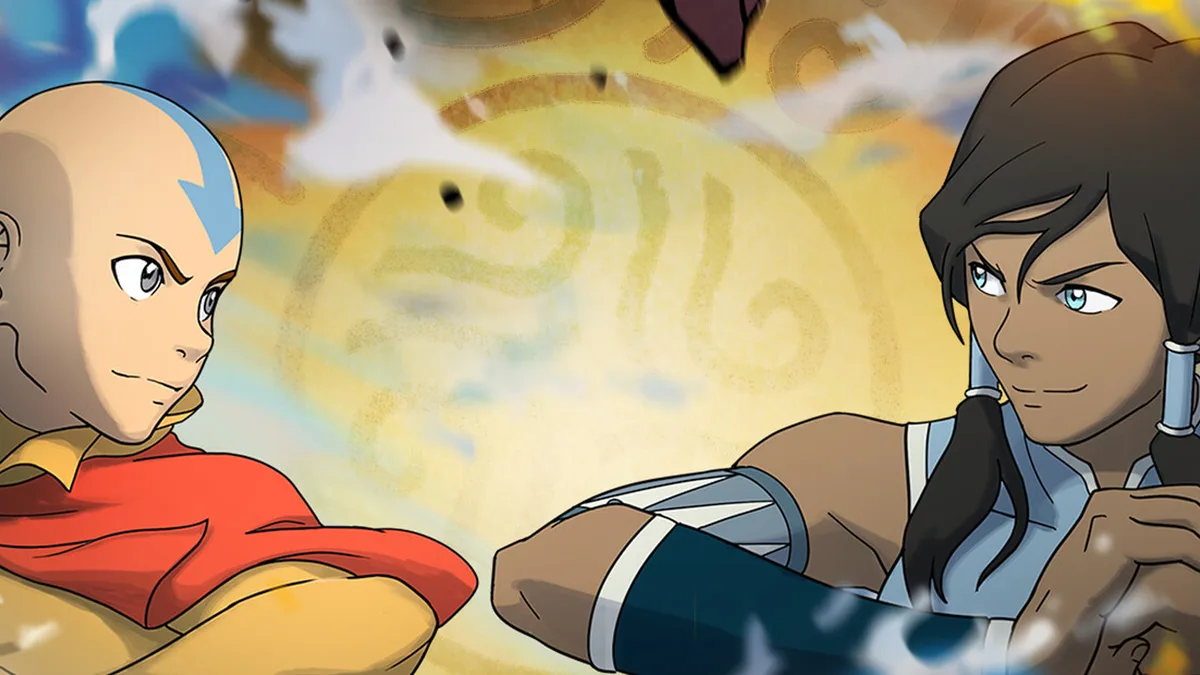
Avatar Legends stitches the universes of two eras — Avatar: The Last Airbender and The Legend of Korra — into a single fighting game. It is not a simple matter of piling popular characters into one arena and letting them brawl. Instead, it uses the core proposition that “the Avatar must maintain balance among the four elements” to bind Aang’s Hundred Year War era and Korra’s Republic City era into one complete chain of worldbuilding. Once you understand that chain, your reading of character moves, faction allegiances, and even the two combat mechanics of Qi Lock and Awakening all deepens by a layer.
The Basic Structure of the World#
The foundational premise of this universe is that the world is built from four basic elements: water, earth, fire, and air. The vast majority of ordinary people have no bending ability at all, while a small number of “benders” can master one of the four. The four elements correspond to four nations and peoples scattered across the globe, and each of them has built entirely different customs, political forms, and philosophies around the element it commands.
The Avatar is the only person in the world who can bend all four elements at once, and who reincarnates in cycle among the four nations. The Avatar’s duty is to preserve balance between the four elements and the four peoples, to mediate disputes, and to stop any one side from dominating the rest. Aang is the previous Avatar; Korra is the new Avatar who took his place. The campaign in this game is therefore split into two main threads: one sends you back to Aang’s side to live through the war that ran for a hundred years, and the other drops you into Korra’s era to face the new order of Republic City and the threats that come with it.
The Four Elements#
The four elements determine not only the attribute of a character’s moves in combat, but also how the peoples who wield them think and live:
| Element | Attribute Tendency | Main Bending People | Representative Characters |
|---|---|---|---|
| Water | Flowing, adaptive, soft overcoming hard, and restoration | Water Tribe | Katara, Korra, Kya |
| Earth | Solid, steadfast, composed, and powerful | Earth Kingdom | Toph, Kuvira, Bolin |
| Fire | Passionate, aggressive, dominating, and explosive | Fire Nation | Zuko, Azula, Mako |
| Air | Free, light, detached, and agile | Air Nomads | Aang, Tenzin |
Within each people, every element also gives rise to higher advanced forms. Earthbenders developed metalbending; firebenders advanced to lightning generation. These advanced forms are part of the worldbuilding, and they appear directly in this game’s character movesets — Toph’s metalbending and the lightning of Mako and Azula are all concrete expressions of “elemental advancement” turned into combat ability.
The Four Peoples and Nations#
Looking more closely at where the four peoples live and how they organize themselves:
| People | Homeland and Form | Governance Structure | Key Traits |
|---|---|---|---|
| Water Tribe | Polar water settlements at the north and south poles, plus island communities | Governed by tribal elders and chieftains | Waterbenders rely on tides and moon phases; their movements are round and continuous |
| Earth Kingdom | The continental heartland, including the walled city of Ba Sing Se | Divided between royal authority and local landowners | Earthbenders generate force from rooted stances and raised arms; they value endurance |
| Fire Nation | Volcanic and igneous island chains | Monarchy ruled by the Fire Lord | Firebenders spark flame through fists, feet, and breath; strong military and expansionist drive |
| Air Nomads | Several air temples on the high plateaus | Monks and practitioners living in common | Airbenders shave their heads as a mark of detachment; they pursue freedom and shun worldly ties |
Ba Sing Se of the Earth Kingdom is one of the largest cities on the continent, and it is the real-world template for several story locations in this game. The Air Nomads, because their original homeland was swept by war, survive only in small numbers, and Aang — and later Tenzin — is the continuation of that bloodline.
Key Factions and Organizations#
What actually drives conflict in this world are the organizations and powers that cross the borders of any single nation. Their goals clash with one another, and they form the main matchups of the two campaigns in this game:
| Faction / Organization | Era | Core Goal | Related Playable Characters |
|---|---|---|---|
| Fire Nation Royal Family | Hundred Year War era | Conquer the other three peoples by military force and establish Fire Nation supremacy | Zuko, Azula, Iroh, the Fire Lord behind the throne |
| Order of the White Lotus | Both eras | A secret society spanning all four peoples that protects the Avatar and the world’s balance | Iroh |
| The Equalists | Republic City era | Strip away bending ability and erase the inequality between benders and ordinary people | Amon and his faction |
| The Red Lotus | Republic City era | Overthrow all rulers and monarchy and pursue absolute freedom | Zaheer and his faction |
| The Earth Empire | Republic City era | Force the unification of the earth nations by decree and metalbending | Kuvira |
These organizations are not a simple binary of “good versus evil.” Iroh and Zuko move between the Fire Nation’s aggressive stance and their own consciences; in Korra’s era, Kuvira is both a challenger to order and, at one point, the party holding unity together. That wavering of position is exactly why the character writing here has more depth than in an ordinary fighting game.
Faction Allegiances of the Key Characters#
Placing the main playable characters into their own factions and eras makes it much clearer where their grudges with one another come from:
| Character | People | Era and Position | Main Opponents |
|---|---|---|---|
| Aang | Air Nomads | The previous Avatar, bearing the responsibility of ending the Hundred Year War | The Fire Lord and the Fire Nation army |
| Zuko | Fire Nation | An exiled prince torn between vengeance and justice | Azula, the Fire Lord, and at one point Aang as well |
| Iroh | Fire Nation | Zuko’s uncle, a White Lotus sage who advocates peace and tolerance | The Fire Nation’s policy of aggression |
| Katara | Water Tribe | Aang’s companion and waterbending teacher, warm and resilient | The invading Fire Nation forces |
| Toph | Earth Kingdom | A blind earthbending prodigy with extraordinary seismic sense | The Fire Nation, and anyone who bullies the weak |
| Korra | Water Tribe | The new Avatar, versatile but impulsive | The Equalists, the Red Lotus, the Earth Empire |
| Tenzin | Air Nomads | Korra’s airbending teacher, and Aang’s son | The Red Lotus |
| Kuvira | Earth Kingdom | A powerful figure ruling the Earth Empire through metalbending | Korra and the resistance |
The Avatar’s Identity and Reincarnation#
“The Avatar” is not one fixed individual, but an identity that passes in cycle among the four peoples. In life, each Avatar learns one element from a master of each nation; after death, they are reborn into a newborn of the next nation, thereby guaranteeing forever that the balance among the four peoples is never broken. This cycle is the key to understanding why the two generations of this game’s campaign can coexist inside a single work.
Aang, the previous Avatar, was frozen in ice during the Hundred Year War and only truly took up the responsibility of ending the war after waking. By the time Korra took over, what she faced was a world where the dust had settled but the same contradictions had reappeared in new forms. The two share similar abilities, yet their personalities and circumstances are completely different — Aang must find balance between mercy and vengeance, while Korra has to learn restraint between decisiveness and recklessness. Putting these two Avatars side by side in the same fighting game is precisely the most interesting thing about this game’s narrative.
The combat system echoes this cycle as well: Korra and Aang both represent “multi-element” characters who can switch among the four elements. Compared with characters who specialize in a single element, they lose that element’s ultimate depth, but they gain the adaptability to adjust their attribute on the fly against any opponent. That positioning — “broad rather than deep, adapting to change” — matches the fate of the Avatar’s identity exactly.
Important Locations of the World#
The two generations of story play out on different stages, and these locations are both where the plot happens and the stage settings of the game’s chapters:
- The Air Temple ruins: where Aang and Zuko’s first fight takes place, and the historical site where the airbender bloodline was broken.
- The Southern Water Tribe village: Katara’s home, and the front line where the Water Tribe was hit by the war.
- The underground and inner walls of Ba Sing Se: the Earth Kingdom heartland, hiding a great deal of narrative detail.
- The Fire Nation palace and Fire Nation castle: the core of the Fire Lord’s power, and the site of the final battle.
- Republic City: the new city Iroh and Zuko built to bring the peoples together, and the main stage of Korra’s era.
- The high plateau air temple: where Tenzin teaches Korra airbending, and the focus of the Red Lotus conflict.
How the Worldbuilding Maps onto the Fighting System#
The real elegance of this game is that it does not treat the worldbuilding as mere backdrop — it builds the ideas straight into the combat mechanics.
-
Qi Lock: in the fiction, it corresponds to the idea of “suppressing the opponent’s bending.” When you strike at the moment your opponent is drawing on their chi energy, you can cut off their bending and leave them unable to use elemental abilities for a time. This is a resource struggle on the combat layer, and it also echoes the worldbuilding proposition that “the Avatar must intervene when the elements fall out of balance” — it punishes over-reliance on bending at the expense of close-quarters answers.
-
Awakening Mode: in the fiction, it corresponds to the state in which the Avatar enters the Avatar State and unleashes their full potential. Once the Qi gauge is full, Awakening triggers and the character enters a window in which attack power and bending potency are comprehensively boosted. This fits the narrative that the Avatar must shoulder responsibility at the critical moment — the stronger the power, the more it tests how well you choose the moment to release it.
-
Differences in elemental tendency: the Water Tribe’s mobility and recovery, the Earth Kingdom’s walling and solidity, the Fire Nation’s pressure and burst, and the Air Nomads’ lightness and float — all of these map directly onto differences in fighting style. Understanding how each nation conducts itself actually helps you predict which kind of pressure an opponent is more likely to apply.
The Choices Beneath Balance#
In the end, the entire worldbuilding of this game comes down to a single word: balance. Aang must restrain himself between peace and vengeance, Korra must choose between the pursuit of freedom and the maintenance of order, and Iroh keeps reminding those around him that power itself is neither good nor evil — what matters is how it is used. Once you understand that underlying tone, going back into a match and facing the trade-off between Qi Lock and Awakening, you will find that every resource decision carries a deeper meaning.