Ocarina of Time Remake Squares Off Against GTA6: The amiibo Mask Paywall Storm and Nintendo’s Release-Slot Gamble#
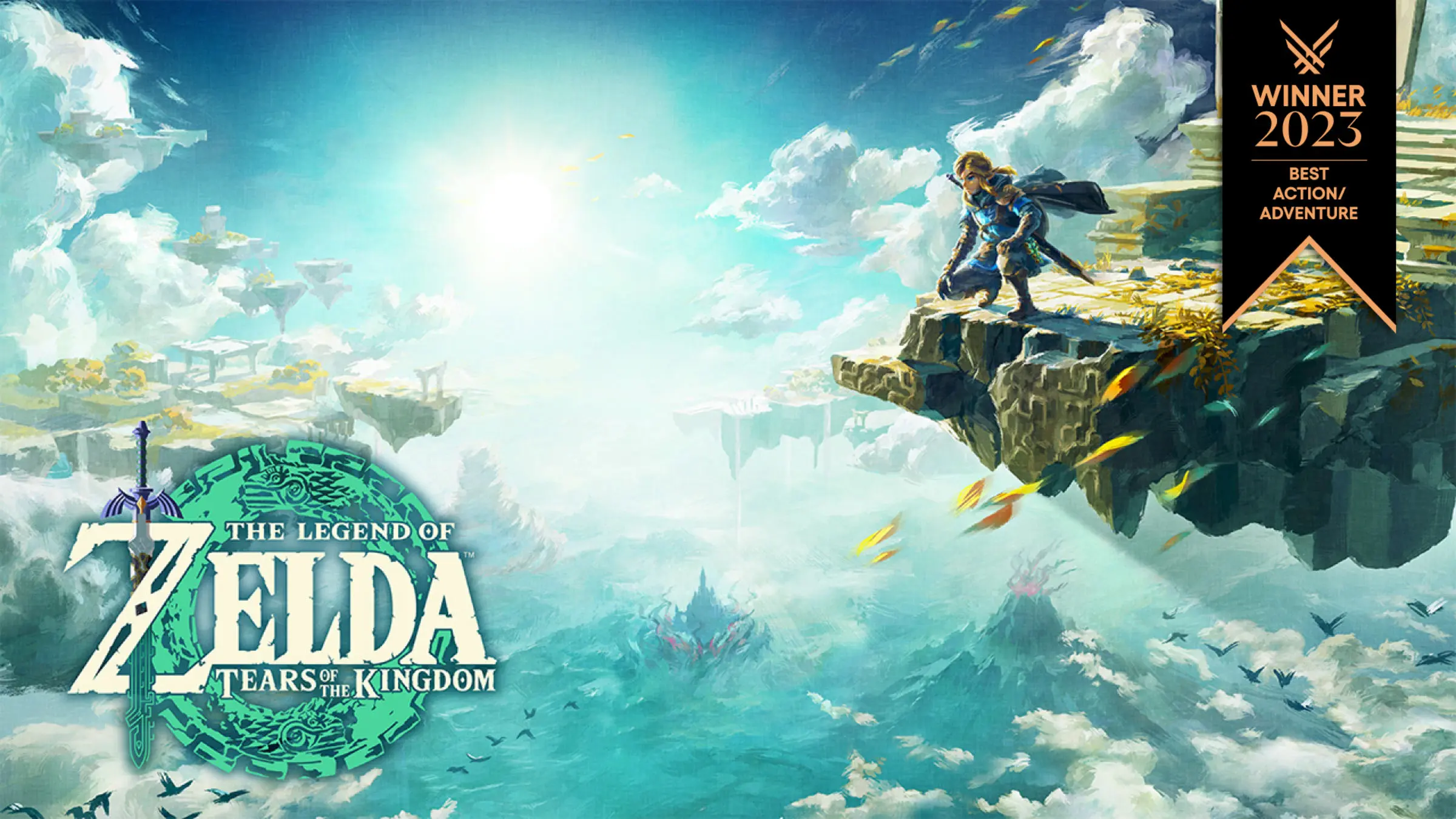
Hey everyone, ZhanLanYingRen here. Last month we ran an official announcement preview for The Legend of Zelda: Ocarina of Time Remake that covered why the game itself is worth the hype. Today’s piece skips that ground and digs into two spicier stories. First, the release slot: The Legend of Zelda: Ocarina of Time Remake lands on Switch 2 on November 5, 2026, while Grand Theft Auto 6 (GTA6) launches on November 19 — two blockbusters barely two weeks apart, the holiday season’s most delicate head-to-head lineup. Second, amiibo: the remake adds two cosmetic masks modeled on the original N64 designs, and current reporting says they can only be unlocked by scanning figurines — a pair priced at US$49.98 before tax combined, shipping in 2027, and already sold out.
On one side, a massive publishing gamble; on the other, a paywall on physical collectibles. Both lines colliding in the same autumn makes for great theater. Let’s break them down.
1. The November Head-to-Head: The Basics#
First, the confirmed facts in one table, so you don’t have to scroll through a dozen articles.
| Item | Ocarina of Time Remake | Grand Theft Auto 6 |
|---|---|---|
| Release date | November 5, 2026 | November 19, 2026 |
| Platforms | Switch 2 exclusive | PS5, Xbox Series X/S |
| Pricing | US$59.99 digital, US$69.99 physical | Per official announcement |
| Reveal timing | Announced during the early-September “Legend of Zelda 40th Anniversary Direct” stream | Previously dated and promoted multiple times |
| Series pedigree | The 1998 N64 original holds a Metacritic 99, the highest score in history for over 25 years | Predecessor GTA5 launched in 2013 and made US$1 billion in 3 days |
A few points worth flagging:
- The way the date was revealed carried real ceremony. November 5 was announced during the early-September “Legend of Zelda 40th Anniversary Direct,” with the remake confirmed as a Switch 2 exclusive. Handing the 40th-anniversary stage to a remake says plenty about how Nintendo positions this title.
- The two-week gap is deliberate. Not a same-day collision, not a near-miss — a full two weeks. As we’ll get into, that number is the most interesting figure in the whole scheduling fight.
- Pricing undercuts Nintendo’s recent big-hitter tier. US$59.99 digital and US$69.99 physical, while several recent Nintendo first-party titles sit at US$80 — including Mario Kart: World and Fire Emblem: Fortune’s Weave, both US$80. Many players read this as consumer-friendly pricing, and we’ll come back to that choice in section seven.
2. From the June Reveal to 2027: The Timeline#
Before we get into the scheduling, here’s the whole timeline in one place for reference.
| Date | Event |
|---|---|
| 1998 | The Legend of Zelda: Ocarina of Time launches on N64, later holding a Metacritic 99 — the highest score in history — for over 25 years |
| 2011 | Grezzo produces the 3DS remake |
| June 9, 2026 | Nintendo Direct first reveals the remake, with a roughly 1-minute all-CG trailer and no gameplay footage |
| Early September 2026 | The “Legend of Zelda 40th Anniversary Direct” announces the November 5 release date and Switch 2 exclusivity |
| Early October 2026 | The amiibo mask controversy catches fire; the Young Link and Young Zelda figurines sell out |
| November 5, 2026 | Ocarina of Time Remake launches at US$59.99 digital / US$69.99 physical |
| November 19, 2026 | GTA6 launches (PS5, Xbox Series X/S) |
| 2027 | The two amiibo figurines release (US$49.98 combined); The Legend of Zelda live-action movie hits theaters |
The table hides the most interesting rhythm of this whole saga: June’s reveal was just a CG trailer with no gameplay; September smashed a concrete release date into November; by October, the controversy was burning hotter than the game itself. With nearly a month still to go before launch, the amiibo discourse is already matching the game itself in buzz.
3. “Game of Chicken”: When the Biggest Truck Picks Its Lane#
The most viral line in this whole scheduling debate came from commentator Aakash Gupta. He says he worked on Fortnite at Epic Games as a producer, later ran product growth at several companies, and now writes deep-dive product strategy analysis. In a long post on X, he called this fall’s release calendar a “game of chicken” — two cars barreling toward each other, and whoever swerves first loses.
Here’s his quote verbatim: “I’ve seen this dynamic inside Epic. The release calendar is a game of chicken. When the biggest truck picks its lane, everyone else has to move.” And in his view, every major publisher cleared out of November this year — everyone except Nintendo: “Nintendo didn’t move. The math is clean: GTA6 isn’t on their hardware, the audiences barely overlap, and a remake of the highest-rated game ever gets two full weeks of exposure before the boulder lands. Nintendo is the only company in the industry with a fanbase loyal enough to make that bet.”
When I pasted the post into our internal chat, Zixing’s first instinct was to check the numbers. Honestly, the data holds together well:
| Argument | Figure | Source |
|---|---|---|
| GTA5 launch record | US$1 billion in 3 days in 2013, the fastest-selling entertainment product ever | Cited by Gupta |
| GTA6 first-year forecast | Over US$3.2 billion in revenue | DFC Intelligence forecast |
| Comparison point | Inside Out 2, 2024’s biggest Hollywood box office hit, at US$1.7 billion worldwide | Cited by Gupta |
Put that US$1 billion three-day record in film terms: over an entire year, Hollywood’s biggest hit, Inside Out 2, grossed US$1.7 billion worldwide — GTA5 did 60% of that in three days. DFC Intelligence’s forecast of over US$3.2 billion in first-year revenue for GTA6 amounts to declaring it the biggest cash magnet of the next twelve months in advance. With an object that massive sliding into November, other publishers moving dates is simply rational.
Gupta cited two examples: the Call of Duty series retreated to late October, and Phantom Blade Zero slipped from early September to late October. But fairness demands a footnote — GamesRadar, in its writeup, added its own caveats: Call of Duty has a historical October slot precedent, so that’s not purely avoidance; and Phantom Blade Zero, after slipping to late October, actually moved closer to GTA6. Release scheduling is never a single-variable arithmetic problem, and “the whole industry fled November” is more Gupta’s personal read on the board than an iron law — worth hearing, not worth worshipping.
4. Nintendo’s Confidence: The Math of Asymmetric Competition#
So what lets Nintendo hold its lane? Strip Gupta’s argument down and it’s three points, each with a source:
- Hardware asymmetry. GTA6 ships on PS5 and Xbox Series X|S and isn’t coming to Nintendo hardware. The Switch 2 and PS5 audiences overlap only partially — these two games aren’t fighting for the same stretch of time on the same machines. That’s the premise the entire bet rests on.
- A two-week oxygen window. Launching November 5 means Ocarina of Time Remake gets two full weeks of exclusive launch spotlight before GTA6 sucks up all the conversation. For a remake, those two weeks are its entire window to tell its story.
- The credit of legacy IP. The 1998 N64 original holds the all-time Metacritic high of 99 after more than 25 years, and Grezzo did the 3DS remake in 2011. Betting a remake of the highest-rated game ever on this slot is a wager that fan loyalty can carry a “not exactly new” release to blockbuster numbers.
Interestingly, people who’ve seen Nintendo from the inside are actually relieved there’s no head-on collision. Former Nintendo of America PR manager Krysta Yang has said publicly that if the two had launched the same day, “I would play GTA6 first,” and she even described the non-collision with a “thank goodness.” That’s a remarkably candid admission — even the former PR person who knows Nintendo fan passion best concedes a same-day clash would have one predictable outcome, and that a two-week gap is already the ideal script for Nintendo.
One outside signal worth recording: a Saturday Night Live (SNL) sketch folded both GTA6 and the Ocarina of Time Remake into the same bit, and the studio audience reacted more enthusiastically to the Zelda portion than the GTA6 jokes. Gupta’s read: “The audience cheers Zelda harder than they laugh at the sketch. That tells you how this ends — the biggest entertainment event of the decade is a game launch, and SNL just went where the audience already was.” When a late-night TV bit becomes a footnote to release-calendar momentum, game launches have officially outgrown the gaming bubble.
On the technical side, Digital Foundry’s analysis has the remake running at native 1080p with a stable 60fps on Switch 2, with no DLSS upscaling. A remake with that technical foundation, slotted into the year’s biggest window, is not walking in to die. There’s also a third path on display this November: Valor Mortis, a US$40 soulslike, has explicitly positioned itself as a complement you can buy alongside GTA6 and the Ocarina of Time Remake rather than a replacement. Picking up crumbs between boulders is part of the release-calendar ecosystem too.
Collapsing everyone’s positions into one table makes the opinion spectrum easy to see:
| Voice | Identity | Core Statement |
|---|---|---|
| Aakash Gupta | Product strategy commentator who says he worked on Fortnite | The release calendar is a game of chicken; only Nintendo’s fan loyalty is strong enough to make this bet |
| Krysta Yang | Former Nintendo of America PR manager | Relieved the two didn’t launch the same day; if they had, “I would play GTA6 first” |
| GamesRadar editorial notes | Quoting outlet | Call of Duty has October precedent; Phantom Blade Zero actually moved closer to GTA6 after its delay |
| Valor Mortis | Mid-size same-window release | Positioned as a buy-alongside option for GTA6 and the Ocarina of Time Remake |
Keep in mind: there is zero actual sales data behind any of this. Everything above is opinion, not conclusion — until the November 5 and November 19 scorecards come in, nobody can claim they called it.
Nintendo itself has dropped one line into the discussion. A former Nintendo of America executive, discussing the remake alongside Switch 2 sales momentum, left it at “This is just the beginning” — bundling one remake’s slot decision with an entire console’s sales cycle, the implication being that November’s face-off is one move in the Switch 2’s lifecycle rather than an all-in bet. The claim is unverifiable, but the posture is telling: in Nintendo’s narrative, daring to schedule into November isn’t a risk — it’s business as usual.
The editorial room had a small fight over this one. Wubian, looking at it through the mobile-games and social-amplification lens, thinks two super-hot topics landing back to back in November is a double feast of traffic for the content ecosystem — “the hype lifts both boats, it’s not zero-sum.” Zixing insists Gupta’s math isn’t finished: whether the Switch 2’s installed base can absorb a US$59.99 remake depends on real first-week sales data, and betting now is premature. I sat in the middle saying nothing, thinking about something else entirely: the amiibo ledger isn’t settled yet.
5. The amiibo Mask Controversy: Two Masks, Fifty Dollars#
If the release slot is a gamble at the publisher level, the amiibo line goes straight for the player’s wallet.
Here’s the situation: the remake adds two cosmetic masks, modeled on the original N64 designs of Link and Zelda. According to information currently available, both masks require scanning the Young Link and Young Zelda amiibo figurines to unlock, with each figurine priced at US$24.99 — US$49.98 before tax combined. The controversy ignites where the numbers stack up: the masks are pure cosmetic items with no gameplay impact, but getting them costs nearly US$50 extra; the two amiibo don’t arrive until 2027, not alongside the November 5 launch; and as of early October, both figurines were already sold out, with no restock date announced — only wording on the official product pages hinting that restocks will come.
| Item | Detail |
|---|---|
| Item type | Pure cosmetic masks, no gameplay impact |
| Design basis | Original N64 Link design, original N64 Zelda design |
| Unlock method | Current information says amiibo scan required; Nintendo has not confirmed an in-game unlock path |
| Figurine pricing | US$24.99 each, US$49.98 combined before tax |
| Figurine release window | 2027 (no specific date announced), not concurrent with the game’s launch |
| Availability | Both sold out as of early October, no restock schedule; wording on Nintendo’s official pages hints at future restocks |
One crucial point needs to be said plainly: “amiibo is the only unlock path” is currently an inference based on available information — Nintendo has never officially confirmed that no in-game unlock method exists. Media coverage has broadly run with the “requires an amiibo scan” framing, but until Nintendo states it outright, this remains open. Don’t rush to a verdict, readers — wait for the launch-day testing.
Push that uncertainty forward and there are three ways this goes. One: Nintendo holds the line, amiibo is the only unlock, and that US$49.98 becomes a hard collector’s toll — the controversy burns until the 2027 figurine restocks. Two: after launch, Nintendo adds an in-game unlock path, the amiibo becomes a “get it early” shortcut, and most of the paywall anger evaporates. Three: Nintendo stays silent and lets the market absorb it — judging by its past amiibo management, Nintendo prefers strategic vagueness over closing doors on cosmetic content. Any bet placed right now is a gamble; all we can do is wait for the post-launch testing after November 5.
Even so, the controversy caught fire, mainly on two fronts:
First, the paywall creep has a paper trail. Media outlets dug up amiibo pricing history: the product line’s historical baseline price was US$12.99, and this release nearly doubles it to US$24.99. A doubled unit price stacked with “cosmetics tied to figurines” reads, to many players, like a signal that the physical-collector paywall is rising — amiibo used to be a nice-to-have trinket; now it’s becoming the key that unlocks in-game content.
Second, supply scarcity poured fuel on it. Zelda 40th anniversary merchandise is tight across the board: the Zelda-themed Switch 2 console cycled through sellout, restock, and sellout again, and now two amiibo have sold clean out without even a release window announced. Players who want both masks aren’t facing a “buy or not” question — they’re facing a “can you even get one” reality. A piece of cosmetic game content has been turned into a scarcity item by sheer supply and demand.
By comparison, the game itself starting at US$59.99 almost looks restrained. A discounted core game with monetized peripherals — that structural observation gets its full airing in section seven.
6. An Art Editor’s Bias and Ledger: The Collectible Value of the N64 Designs#
On amiibo, nobody in this office is better positioned to take a stance than me — I came up through art, and I still have a shelf of figurines inherited from the Stone Age of my collection. I want to split the mask controversy into two layers.
On the art layer, I genuinely love this. Low-poly Link and Zelda from the N64 era — hard silhouettes, slightly awkward proportions — are the most primordial image of Hyrule in many veterans’ memories. Building masks on those designs is turning a 1998 memory into a wearable item inside the remake — the design intent alone is the most direct tribute to the original possible. From a figurine art-collecting angle, the Young Link and Young Zelda amiibo are almost certainly the two most distinctive pieces of the 40th anniversary merchandising run, carrying far more collecting narrative than a standard recolor or fixed-pose release. My expectations for the N64 design fidelity are high, and from what’s been shown so far, modern figurine paint and mold quality should render the low-poly era’s charm better than the original hardware ever could.
On the business layer, I understand the anger but won’t pile on. Honestly, from World of Warships to every live-service game out there, players have seen cosmetic paywalls of every shape. Tying cosmetics to amiibo isn’t new for Nintendo either — there are precedents of amiibo unlocking non-core content before. What actually stings this time isn’t “paying” itself, but three conditions stacked at once: the masks cost nearly US$50 extra, the figurines won’t arrive until 2027, and you can’t even buy them now. The money barrier and the wait time are both maxed out; player frustration is understandable.
But flip it around: two masks are still pure cosmetics with zero gameplay impact, and the base game’s content completeness hasn’t been cut down to sell back — that’s a fundamentally different thing from “remove content, then sell it.” My position: criticize the paywall design all you want, but there’s no need to escalate to “Nintendo has turned evil”; and if Nintendo confirms an in-game unlock path after launch, this controversy cools by half on its own. It’s too early for final verdicts.
7. The Pricing One-Two Punch: A Restrained Core Game and Ruthless Merchandising#
Put the scheduling line and the amiibo line side by side, and Nintendo’s commercial strategy this time shows a pretty clear structure:
- Restrained core-game pricing. US$59.99 and US$69.99, below the company’s US$80-tier big hitters (Mario Kart: World and Fire Emblem: Fortune’s Weave are both US$80). On a heavyweight slot, this pricing lowers the entry barrier for launch buyers and blunts the natural “remakes shouldn’t cost full price” objection.
- Aggressive peripheral pricing. amiibo unit pricing jumped from the historical US$12.99 baseline to US$24.99, with the pair approaching US$50 — already past 80% of the digital edition’s price. Tying cosmetic content to physical figurines shifts part of the monetization from software price to hardware-flavored merchandise.
- Scarcity management. 40th anniversary merchandise is tight everywhere — the console sold out twice, the amiibo sold out early. A hungry shelf underwrites collectible value on its own, but for players who genuinely want the items, the experience is hardly friendly.
Chasun’s verdict on the combo in the office: “textbook price discrimination” — paying collectors go through the merch channel, price-sensitive players go through the game channel, and neither is left on the table. I’d add one more layer: the restrained core pricing is de-risking the November slot gamble, while the merch business is monetizing the 40th anniversary year itself. Both landing in the same year is hard to call coincidence.
Closing: Two Faces of One Gamble#
By the time I got here, the two lines had fused into a single picture in my head: Nintendo slots the remake of the highest-rated game in history into a two-week window ahead of GTA6, betting on hardware asymmetry plus fan loyalty; and the amiibo mask paywall is that gamble’s most visible friction point on the player side. Outward, it has to prove to the industry that it dares to share a lane with the biggest truck on the road; inward, it intends to convert every drop of 40th-anniversary nostalgia into revenue with meticulous precision. The gamble and the spreadsheet have always been two faces of the same coin.
As for me, here’s my position on record: I want the masks — the N64 designs are etched into a generation’s retinas. But whether I budget nearly US$50 for two cosmetics and then wait until 2027 depends on the launch-day testing and whether another unlock path exists. Sentiment is sentiment; the ledger is the ledger. At my age, you have to perform some rationality. Oh, and one bit of comedy before filing this piece: a retailer apparently swapped the retail labels between The Witcher 3 remake and the Ocarina of Time Remake — The Witcher 3 itself is still squatting on our site, and now even the labels are fighting for screen time. This autumn refuses to be quiet. Looking further out, 2027 also brings that Legend of Zelda live-action movie — figurines on the shelf, Hyrule in the theater. The wallet is heading for a full “Zelda year.”
See you all on November 5 — and let’s agree now: don’t all crowd over on the GTA6 side.
— ZhanLanYingRen, NTGame Art Editor