The Legend of Zelda Live-Action Movie Is Locked for April 30, 2027#
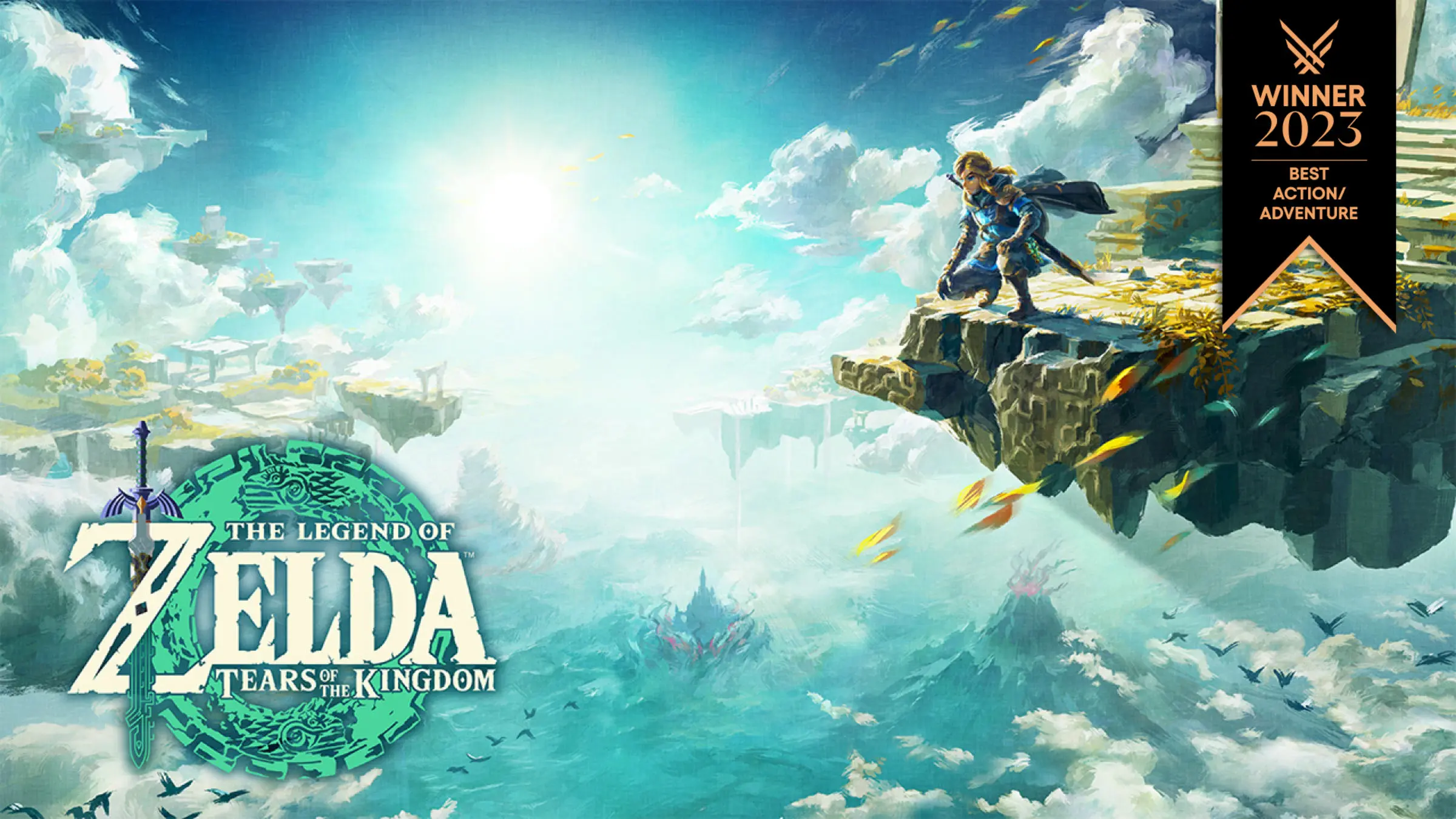
Hey everyone, LongZhuiRi here. Today I’m teaming up with ZhanLanYingRen to talk about the piece of news that had our entire editorial team out of their seats: Nintendo, together with Sony Pictures, has officially dated The Legend of Zelda live-action movie for a worldwide theatrical release on April 30, 2027.
The afternoon the news landed, the office went quiet for a few seconds, then simply exploded. ZhanLanYingRen bolted straight into the art room and dug out the Hyrule art book, muttering that “if this film can nail the water reflections of Breath of the Wild, I’ll happily watch it three extra times.” I went over the revealed cast list again and again, and the more I looked, the clearer it became: Nintendo isn’t just “making a video game movie” this time — it’s playing a long game about the company’s entire future.
First, let’s lay out the verified hard facts, and then talk about what this actually means for us as players.
What the Official Date Announcement Says#
Nintendo and Sony Pictures’ joint announcement can be boiled down to a handful of core points. The key questions: what is being made, who is making it, and when does it hit theaters.
| Item | Announced Detail |
|---|---|
| Film type | The Legend of Zelda live-action movie |
| Release date | April 30, 2027, worldwide simultaneous release |
| Director | Wes Ball |
| Link | Benjamin Evan Ainsworth |
| Production and distribution | Co-produced by Nintendo and Sony Pictures, with Sony handling global theatrical distribution |
For both companies, this partnership carries real weight. Sony brings a mature theatrical distribution network and Hollywood-grade production resources, while Nintendo supplies one of the most bankable top-tier game brands on the planet. Call it a head-on collision between a “premier game brand” and “premier film industry muscle.”
Wes Ball, the attached director, is one of the most closely watched names in this announcement. Being chosen by Nintendo to helm a brand on Zelda’s level says a lot about how high the bar is set for live-action storytelling here. Link is the single hardest problem in the whole film — he barely speaks, and the entire performance has to rest on body language, expression, and a coming-of-age arc. Who plays him, and how, will largely decide whether this movie stands or falls. Casting Benjamin Evan Ainsworth is the studio’s first answer to that question.
Production Status: Live-Action Filming Has Wrapped#
For anyone still sitting on the fence, the strongest signal that “this movie is genuinely moving forward” is the hard production milestone: live-action filming wrapped in April 2026. That means the most time-consuming portion of principal photography is done, and the project has officially moved into post-production.
From the April 2026 wrap to the April 30, 2027 release date, roughly a full year remains. For a live-action fantasy blockbuster that leans heavily on visual effects, this post-production window is critical — motion capture work, scene compositing, score recording, and color grading all have to be polished and locked within that year to make the worldwide simultaneous release.
| Production Phase | Timing |
|---|---|
| Principal live-action photography | Complete; wrapped in April 2026 |
| Post-production | VFX, score, and editing polish |
| Theatrical release | April 30, 2027, worldwide |
The completion of live-action filming also says something about how seriously Nintendo is taking this. It isn’t treating The Legend of Zelda as a lightweight promotional experiment, but investing in it like a standard big-budget theatrical production.
From Mario to Zelda: Nintendo’s Film Cadence#
To understand what this live-action movie means to Nintendo, you first have to look at the previous step. The Super Mario Bros. Movie, released in 2023, grossed over US$1.3 billion worldwide and became one of the most successful animated films in history. It not only proved the enormous commercial potential of Nintendo’s game brands on the big screen, it also pushed “film and television” firmly into the company’s long-term strategy.
| Nintendo Game Brand | Screen Format | Status |
|---|---|---|
| Super Mario Bros. | Animated feature | Released; worldwide gross over US$1.3 billion |
| The Legend of Zelda | Live-action feature | Dated for April 30, 2027 |
The comparison lays out Nintendo’s strategic logic: first test the waters with the family-friendly, lightweight Super Mario Bros. animation and build confidence, then push the weightier, more epic Legend of Zelda live-action film to broaden the audience. Animation first, live-action later; light first, heavy after — a remarkably clear roadmap.
Why did Zelda go live-action instead of following Mario’s animated path? That’s the question many players are asking. A live-action film differentiates itself from the animated adaptations already on the market and can pull in more adult viewers and general moviegoers, not just gamers. At the same time, the live-action format is naturally better suited to carrying heavier, more epic narratives — which lines up neatly with how the Legend of Zelda series’ worldbuilding has grown deeper and darker over the years.
What This Movie Means for Players#
For players, the ideal outcome of a Legend of Zelda live-action movie is obvious: satisfy the veterans while winning over newcomers. But past game-to-film adaptations show that these two goals are usually in tension: lean too hard into fan-service details and general audiences get lost; bend too far toward the mass market and you risk losing what makes Zelda Zelda.
The risks of live-action adaptation run higher than animation, too. It has to carry the epic scale of Hyrule while keeping the characters’ emotional weight believable inside a fantasy world; it has to reproduce the “official image” in players’ heads while reinterpreting it in the language of cinema rather than photocopying it. A single off-note in a set, a costume, or the lighting can ignite a fanbase firestorm.
Different player groups are watching this film with very different expectations.
Veterans who have been playing since the NES era care most about whether the mood is right. As ZhanLanYingRen put it in the office: “We old-timers keep saying we want a faithful adaptation, but deep down we all know a live-action version will never look exactly like the game. The question isn’t ‘does it match’ — it’s ‘does the mood land.’ As long as that Hyrule sunlight and that lonely-traveler flavor are still there, I’m sold.”
Newcomers who came in through Breath of the Wild and Tears of the Kingdom focus on visual presentation. Their Hyrule is the floating sky islands, the openness of the ground-level plains, the oppressive gloom of the Depths caves. Whether the film’s cinematography can recreate those signature spatial experiences is the first yardstick they’ll use to judge it.
General moviegoers who have never touched the games will judge The Legend of Zelda as a standalone fantasy adventure blockbuster. They don’t know the lore of Link, Zelda, and Hyrule, and they’ll ask one question: is this story good on its own terms, and do the characters move me? For this audience, whether the film can stand without the “video game adaptation” label is what matters.
| Audience | Core Expectation |
|---|---|
| Veteran players | Preserve Hyrule’s atmosphere and the feel of a solitary journey |
| Newer players | Recreate the iconic spaces and art of Breath of the Wild and Tears of the Kingdom |
| General moviegoers | Does it work as an independent fantasy story, and does it earn emotional investment |
These three groups want different things from the same movie, and their expectations can actively pull against each other. Finding the balance among them is exactly the test The Legend of Zelda’s live-action film has to pass.
And yet, it’s precisely that tension between faithful recreation and fresh interpretation that makes the film so worth anticipating. Our editorial team leans toward optimism: with the success of The Super Mario Bros. Movie behind it, and with Shigeru Miyamoto — the man who personifies Nintendo — personally shepherding The Legend of Zelda brand, this live-action film has a genuine shot at landing on the “successful adaptation” side of the ledger.
Closing: The Wait for an “Adventure to Begin”#
From the April 2026 wrap of live-action filming to the April 30, 2027 worldwide release, we have a stretch of time to savor the anticipation. Along the way, Nintendo will most likely drip out trailers and promo stills the way it did for The Super Mario Bros. Movie, leaving us veterans free to dissect every frame.
Some say game adaptations are pure gambling. But the way I see it, with The Legend of Zelda as its ace, Nintendo isn’t just betting on box office — it’s betting on whether the Nintendo brand can truly break into the wider pop-culture mainstream.
For me and ZhanLanYingRen, who both came up through the NES era, The Legend of Zelda has never been just a game. It’s a kind of primal imagination about what “adventure” means. Now that imagination is heading to an actual movie theater.
By the way, our site’s complete Tears of the Kingdom guide hub keeps updating, covering everything from beginner basics to advanced play. If you want to revisit Hyrule while the movie buzz builds, go dig through it.
Between now and the film’s release, every casting reveal, every costume look, and every trailer drop will surely set off another round of debate in the community. That’s part of a movie’s buzz, and for us veterans, part of the ritual we enjoy. Whether the final cut stays faithful to the source or strikes out on its own path, simply getting to see Hyrule brought to a live-action screen in our lifetime is exciting enough on its own.
See you all at the movies on April 30, 2027.
— LongZhuiRi & ZhanLanYingRen, NTGame Editorial