Diablo V Returns to Procedural Dungeons: Blizzard Ditches the Seamless Open World and Reconnects With Veterans at BlizzCon 2026#
Opening: The Editorial Team Back at the Screen#
This time it is not a rumor — it is an official announcement. Blizzard formally revealed Diablo V at BlizzCon 2026, and our editorial team once again gathered late at night in front of that shared screen. The last time we huddled like this was for that industry analysis of a hype cycle painted three years early — back then, staring at two sold release windows and the hooded silhouette of a plague knight, our verdict was “two promises, zero gameplay,” and we advised everyone not to buy in ahead of time.
This time, while Blizzard still showed no gameplay footage, the direction it disclosed was more concrete than we expected. Not CG concept work, not a single piece of key art, but a set of design principles that speak directly to “how is this game actually meant to be played.” We laid those principles out, held them against more than two decades of Diablo history, and decided this deserved a proper discussion: which way is Blizzard actually walking this time?
What Happened: Diablo V Is Officially Announced#
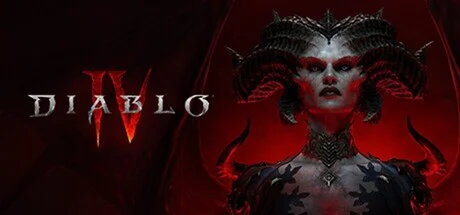
First, the event itself. At BlizzCon 2026, Blizzard officially announced Diablo V and gave it a clear release window — spring 2029.
For a game planned to ship years from now, what an announcement can offer for discussion is usually not visuals but “direction.” And Diablo V’s first piece of direction left quite a few veterans on the team stunned: Blizzard stated explicitly that Diablo V will abandon the seamless open world design used in Diablo IV, and instead re-center the experience on procedural dungeons as the absolute core.
The weight of that sentence only registers when you place it inside the iteration history of the Diablo series.
Why Abandon the Seamless Open World: A Retreat Toward the “Dungeon-Running Rhythm”#
When Diablo IV launched, the seamless open world was one of its headline selling points. Blizzard stressed repeatedly that Sanctuary was finally no longer a collection of instanced levels stitched together, but one continuous continent you could gallop across on horseback or explore on foot. You rode your mount from the deserts of Kehjistan all the way to the snowy peaks of the Fractured Peaks, no loading in between, the world flowing beneath your feet. At launch, the design genuinely delivered freshness — many players felt for the first time that “Diablo can be as grand as those open-world blockbusters.”
But the problems followed. The most fatal contradiction of a seamless open world is that it naturally conflicts with the dungeon-running rhythm the Diablo series lives on.
Diablo’s core loop has always been “enter a clearly defined target zone — clear the monsters — collect the drops — return to the hub to sort — head out again.” That loop needs a clear, compact, repeatable spatial structure — ideally “a closed scenario carefully bounded by its designers.” The essence of an open continent, by contrast, is “roaming”: wandering a vast map, triggering events, discovering nodes. The two experiences pull against each other at the foundational level: the more open the world, the more easily player attention drains into travel time and the question of “should I even go to this zone”; the more contained it is, the stronger the sense of farming efficiency.
Across Diablo IV’s long-tail live operations, this showed very clearly. Mid-season feedback from large numbers of players clustered on “I spend more time on horseback than killing monsters,” “the map is carpeted with world events and I cannot tell what matters,” and the most cutting line of all — “farming this feels more and more like going to work, not playing a game.”
Blizzard’s decision this time amounts to admitting the open world went sideways for the Diablo genre. It is not a hand-tuned “have both” compromise with event filler — it is a direct retreat to the older Diablo structure of “one discrete dungeon after another.” In Long Zhui Ri’s words: “It finally understands that Diablo players do not want a world to stroll through — they want a door they can push open at any moment, with something to chop on the other side.”
Procedural Generation Is Not New: From Diablo 3 Rifts to Diablo 5#
One clarification first: procedural dungeons are nothing new to the Diablo series.
In Diablo II: Resurrected and its original, dungeons already carried randomized features — re-enter the same map and the positions of monsters, chests, and events would differ. By Diablo 3’s Adventure Mode, procedural generation had been pushed much further: Nephalem Rifts propped up replay value with random maps and random affixes, but were long criticized for a “patchwork feel” — players could tell at a glance “this is a cave assembled from randomly placed rooms, not a designed dungeon.” The generation logic of that era was closer to “random words, random puzzle pieces,” lacking the unified narrative pacing and difficulty curves.
Diablo 4’s approach was a hybrid of “handcrafted design + procedural filler”: some dungeons did gain a much better sense of rhythm, while others still felt hollow. It kept searching for balance between “preset dungeons” and “random affixes” — that is not true procedural generation.
So what Diablo 5 is setting out to do — push procedural generation deeper, or just reskin Diablo 4’s dungeon generator? Officially, there is no gameplay footage to answer that yet. But one thing is certain: the fact that Blizzard made “a return to procedural dungeons” one of the core directions of this announcement means it believes the mechanic deserves to be lifted back to the throne. If it can genuinely make randomly generated dungeons carry the narrative density and pacing that only handcrafted design used to have, that will be a real, solid breakthrough; if not, Diablo 5’s dungeon experience could fall back to the “random cave” level of early Diablo 3. That is the biggest variable in this entire direction.
Fallen Towns and the “Sanctuary Caravan”: A Mobile Hub#
Beyond dungeons, Blizzard also disclosed a narrative-level direction: when the game opens, Sanctuary’s major towns have already fallen. Players will no longer enjoy the relatively safe havens of Diablo 4, and must instead survive across the wasteland from a mobile base — the “Sanctuary Caravan.”
For Diablo veterans, this premise is a nostalgia strike of almost surgical precision.
Looking back across the series, towns have always been the player’s psychological “safe anchor.” The Tristram campsite of Diablo 1, the Rogue Encampment and Lut Gholein of Diablo 2, the chapter hubs of Diablo 3 — these places were not just functional zones for trading, repairing, and storing gear, but spots where characters caught their breath and regrouped between runs at the edge of life and death. The warmth of town against the chill of the dungeon forms the series’ most fundamental emotional tension.
Now Blizzard has shattered that “safe anchor” outright. With the towns fallen, there is no absolutely safe place left in Sanctuary. What players can rely on is a moving caravan. As a narrative device this is enormously powerful — it presses the despair of “exile,” “rout,” and “nowhere to belong” onto the player from the opening moments. You are not defending an existing home; you yourself are the home. Wherever the caravan goes, the last ember of Sanctuary’s civilization follows.
From a systems standpoint, the “caravan as mobile hub” design fits the “return to dungeon-running rhythm” direction hand in glove. The core logic of a hub system: a fixed, upgradeable base where players return between runs to sort loot, trade, craft, and recruit, then head out again. Diablo 2 called it “camp,” Diablo 3 called it “town,” and in countless loot games it is the most important link in the farming loop.
But the “moving caravan” pushes the idea to a new height: it makes the hub itself part of the progression system. The caravan does not sit in one place waiting for players to come back; as the story advances and as players make their choices, it moves, grows, and upgrades through the ruins of Sanctuary. The merchants and artisans you recruit become part of the caravan, and may even shape the range of services it can provide. Compared with Blizzard simply handing you a fixed blacksmith, this adds a layer of “building your own hub” immersion.
Diablo Returns: “Special Bond” and “Realm of Fear”#
If procedural generation is a regression-flavored return at the systems level, “Diablo returns” is the narrative heavyweight.
Blizzard disclosed that the Lord of Terror, Diablo, returns in this installment, and that a special bond exists between him and the protagonist. That bond is not just a plot seed — it feeds directly into gameplay: it lets the protagonist enter a special space called the “Realm of Fear” and unlock new abilities within it.
This design should be read against the series’ narrative tradition. Diablo, the Lord of Terror, the central villain of the entire Diablo series. From Tristram Cathedral in Diablo 1, to the Prime Evils of Diablo 2, to Diablo’s towering demon form in Diablo 3, Diablo has always been the wellspring of every calamity in Sanctuary. He is fear incarnate — and “fear” is exactly the psychological register this series is best at painting: those gloomy dungeons, the sudden demonic whispers, and the protagonist’s step-by-step erosion by fear.
The most tantalizing part of the “special bond” is not the plot puzzle of “why is the protagonist connected to Diablo,” but the power-acquisition logic it implies. In Diablo 2, characters grew by slaying demons and looting gear; in Diablo 3, by skill runes and set combinations; in Diablo 5, the protagonist seems to draw some power beyond the norm by stepping through the special gateway of “entering the Realm of Fear.”
It evokes a motif the series has used again and again: the relationship between protagonist and defeated demon was never a simple “justice destroys evil,” but a dangerous symbiosis. Diablo 3’s Nephalem premise already made the source of the hero’s power ambiguous — descendant of both angel and demon, wielding the strength of both. Is the “special bond” a further deepening of that same motif?
The name “Realm of Fear” is worth savoring too. It could be a standalone play space, something like Diablo 3’s rifts or Path of Exile’s maps, or a resource-and-progression system threaded through the whole game. The most exciting reading: the way the protagonist gains power is no longer pure “gear-driven” grinding, but a narrative-driven act of “stepping into fear and mastering it” — a layer deeper than stacking numbers.
Chasun added his systems-level take: “If it is pure story dressing, the ‘special bond’ is at most a narrative highlight. But if it actually opens into a repeatable ability-unlocking space, it could well be the core new system that separates Diablo 5 from Diablo 4. Turning ‘fear’ from background flavor into an interactive system is the most creative direction Blizzard has shown in years.”
What Blizzard Said: A “Return to Roots” Statement#
Setting specific mechanics aside, the wording Blizzard chose at BlizzCon 2026 itself carries an intriguing “return to roots” flavor.
This time there was no talk of “the most immersive world,” no “groundbreaking seamless experience.” The emphasis fell on “procedural generation,” “hub,” “recruitment,” “fear” — vocabulary that players of the Diablo 2 and Diablo 3 era know by heart. That is a signal — it says Blizzard, this time, is narratively walking toward the language its veterans speak.
At the same time, paired with the opening premise of “fallen towns” and a “caravan in exile,” the whole game’s tone is likely to head somewhere more oppressive, more “survive against the odds.” From the first moment you are no longer “a hero setting off to adventure” but “an exile who has lost a home.” Elevating “fear” from flavor to mechanic, turning the “hub” from fixed towns into a moving caravan — taken together, these changes point to a common verdict: Blizzard is no longer chasing “a bigger world,” and is trying to find again “a deeper loop.”
What It Means for Players: A Deliberate “Subtraction” Aimed at Veterans#
Put these directions side by side, and the most immediate read for players is a deliberate “subtraction.”
Diablo 4 tried to cram in everything a “blockbuster” should have — seamless open world, seasons, mounts, world events, reputation systems — and every one of those systems scattered player attention, diluting “running dungeons,” the core joy of the genre. Nearly every direction in Diablo 5’s announcement is subtraction: cut the open world, cut the fixed towns, turn “adventure” into “exile,” and re-concentrate the energy on three things — dungeons, hub, and growth.
| Design dimension | Diablo 4’s approach | Diablo 5’s approach | How veterans feel |
|---|---|---|---|
| World structure | Seamless open world, horseback roaming | Procedural dungeons as the core | Back to the compact “dungeon run” feel |
| Dungeon generation | Handcrafted design mixed with random affixes | Procedural dungeons | To be proven — hoping it finally solves the old “random but meaningless” problem |
| Character growth | Mostly gear-driven | Presumed “Realm of Fear” ability unlocks | Rekindled hope for a real “sense of growth” |
| Hub | Fixed towns, safe refuge | Towns fallen; “Sanctuary Caravan” mobile hub | Pure nostalgia; rebuilding-home fantasy maxed out |
| NPC roles | Fixed merchants, blacksmiths | Recruitable merchants and artisans | An upgrade from service desk to running things |
| Fear theme | Mostly background flavor | “Realm of Fear” and “special bond” as the core | From atmosphere to something you can interact with |
For veterans who have played from Diablo 2 all the way to now, this kind of “subtraction” is undoubtedly welcome. Diablo 2 became a classic largely because it distilled the farming loop to perfect cleanliness: enter a dungeon, clear a pack, pick up an item, wonder whether that unique is actually useful, and keep going. No open-world wandering in the way, no romantic horseback riding — only the pure anticipation of “will the next drop change my build.” Diablo 3’s late-game comeback through Adventure Mode and seasons worked for the same reason: it brought back that clean loop of “run dungeons — return to town — run again.”
So when Blizzard says Diablo 5 will “return to procedural dungeons,” what we see in it is not necessarily “regression,” but something closer to a return toward the DNA of the Diablo series. Blizzard has finally realized that this IP’s foundation is not “scale,” but “purity of the loop” and “the pull of the drop.” It is trying to win back, with purity, the veterans worn down by the open world.
What to Watch, and What Is Still Undisclosed#
Of course, the editorial team did not sit around for a whole evening just to applaud Blizzard. We are also veterans who have been let down since the Diablo 2 days, and we know the gap between “the direction is right” and “actually pulling it off” is enormous. A few things strike us as the ones most worth watching.
First, the maturity of the procedural generation. This is the biggest variable. Procedural generation sounds lovely, but landing it is an engineering mountain. It demands that the system understand not just space, but whether “this sequence of rooms builds an escalating sense of dread,” whether “this stretch’s monster density wrecks the pacing,” and whether “this drop gave the player the right dose of satisfaction.” If Blizzard cannot make the generation framework genuinely understand “design intent,” the dungeons will still be hollow and repetitive. We made this point in our previous BlizzCon analysis; here it bears repeating.
Second, whether the “special bond” and “Realm of Fear” degenerate into stat gimmicks. Elevating “fear” from atmosphere to mechanic deserves credit. But if the “Realm of Fear” ends up as just an ordinary dungeon of “go in, kill things, collect materials” wearing a fear-themed skin, it will have wasted its potential. It needs to be genuinely bound to the narrative of “mastering fear to unlock power,” or it will not become the core memory point that separates Diablo 5 from its predecessor.
Third, the hub depth of the “Sanctuary Caravan.” As Chasun pointed out, a mobile hub that merely re-skins the existing return-to-town function is nothing but novelty. For the caravan to carry real weight, it must bind substantively and durably to player progression — different merchants and artisans offering different services and crafting directions, the caravan’s route interacting with explorable regions. Those details decide whether it is “hub management” or “a stash chest in a new location.”
Fourth, and the one most on our minds: gameplay footage. For all the direction announced this time, Blizzard again has no gameplay demo to back it up. Can “returning to procedural dungeons” actually produce dungeons with real design? Can the “Realm of Fear” make the “special bond” more than lore? Can the “caravan” stay weighty over long-term play? The answers to all of these are hidden in future gameplay demonstrations. Until then, however right the direction, it is only a blueprint that has not landed.
Newsroom Banter#
By the time this piece was done, it was past midnight. Long Zhui Ri dropped into the chat a screenshot of his old Diablo 2 days — a gray-toned Secret Cow Level, the hero standing amid a carpet of loot. He said: “Happiness was so simple back then. You cleared the monsters, crouched down, picked things up one by one, checking each for quality. What game nowadays is still willing to let you farm that purely?”
I did not reply. Because I knew that line was not a complaint — it was hope. Hope that Diablo 5 can truly give back that simplest kind of joy.
Before closing the shared document, Chasun left one line: “Do not celebrate too early — wait for gameplay footage.” I smiled and shut the screen. At BlizzCon 2026, Blizzard gave us a direction we are willing to believe in. Whether it can walk that road to the end — leave that to the spring of 2029.
— Long Zhui Ri & Chasun, NTGame Editorial Team