Sanctuary Comes to the Living Room: Diablo IV Age of Hatred Collection Lands on Switch 2#
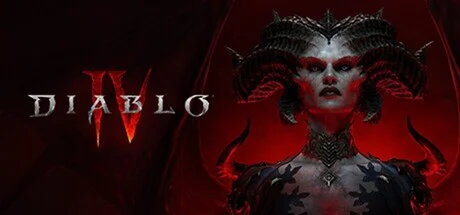
Today, Diablo Goes Portable#
At nine this morning, the editorial group chat blew up right on schedule. Wubian’s phone lit up with a push notification from the Nintendo eShop — the Diablo IV Age of Hatred Collection is officially live on Nintendo Switch 2. The chat filled with “finally” reactions; my first instinct was to open the calendar and confirm today is not April Fools’ Day.
After all, for this “Diablo on a handheld,” players have waited a very long time — from the first Switch all the way to the Switch 2. The Switch port of Diablo III was a love-hate affair — loved for the thrill of “a quick run anytime, anywhere,” resented for the frame drops, the load times, and that multiplayer mode gutted almost beyond recognition. Now Diablo IV arrives on Switch 2 in full — and not just the base game, but the Age of Hatred Collection bundled with both major expansions. That alone is worth a proper dissection.
Coffee in hand, I sat down and lined up the launch facts one by one: $69.99, 8 classes, cross-progression and cross-play. On paper, it reads as a port with maximum sincerity. But as someone who has watched mobile and cross-platform games rise and fall for years, I know one truth all too well: spec sheets are never the reason to buy. The real questions are — in what moment will you actually open it, and can it live up to your expectations?
That is why this piece exists. Should a Switch 2 make room for the Diablo IV Age of Hatred Collection? I plan to break that decision apart from the angles of the handheld experience, the cross-platform ecosystem, content volume, and long-term live service — and hand the pieces to you.
What You Are Actually Buying: A Collection Breakdown#
Do not rush to check out — first understand what is inside the Age of Hatred Collection. Here is the point that trips up many people: what is landing on Switch 2 is not just the Diablo IV base game, but a full “everything bundle” containing nearly all of the mainline content released to date. I have organized its composition into a table:
| Content | Notes | Role |
|---|---|---|
| Diablo IV base game | Open-world action RPG mainline | Base campaign and open world |
| Vessel of Hatred expansion | First expansion, bringing a new region and new content | First expansion |
| Lord of Hatred expansion | Blizzard’s follow-up second major expansion | Second expansion |
| Base classes | Barbarian, Druid, Necromancer, Rogue, Sorcerer and other classic classes | Core class lineup |
| Expansion classes | New classes introduced with the expansions | Expansion class lineup |
One detail I went and confirmed: the official line reads “8 classes” at launch — meaning beyond the base classes, each of the two expansions brought its own new class. For veterans, that means no more agonizing over “should I buy the expansions separately”; one collection packages classes, maps, and storylines in a single purchase, skipping the Lego-brick buying process. For Switch 2 players, it is even more “full content from day one” — unlike PC players who sat through long stretches of season passes and staggered expansion updates, you get, in one step, a complete version that has already iterated for two years.
On price, $69.99 sits in the mid-to-upper range among today’s console blockbusters. As a comparison: buying the base game plus both expansions separately on other platforms would typically run noticeably above that figure. So on pure “content per dollar,” this collection is actually a strong value. But value for money is not the only consideration, so let us go item by item.
Let me also correct a common misunderstanding here: many people assume a “collection” is just “the base game plus a couple of DLC packs,” no different from a standard edition. This time it is different, because Diablo IV has come through a long content iteration period since launch — from the original open-world mainline, to the new continent and new class that Vessel of Hatred delivered, to Lord of Hatred further expanding the world and its systems. One collection gathers that entire content line. For a first-time Diablo player, what you are buying is a Diablo that is “already grown full,” not a “half-finished product” still waiting on future patches. That matters especially for Switch 2 newcomers — there is nothing left to wait for; what is in your hands right now is the most complete version to date.
Diablo on the Switch 2 Handheld: How Does It Play#
As someone who watches performance numbers year-round, I have always been cautious about “Diablo on a handheld.” The reason is simple: Diablo IV is not a friendly game for GPUs or VRAM — it carries heavy particle effects, dynamic lighting, volumetric fog, and dense monster packs, the kind of load that needs a strong graphics card even on PC. Porting it to a handheld platform takes optimization work far beyond an average action game.
The Switch 2 is a massive hardware leap over the first Switch. It packs a stronger processor and greater memory bandwidth, its screen supports higher refresh rates, and its overall performance is simply not comparable to the previous generation. That gives Diablo IV a realistic hope of running a “playable” framerate in handheld mode — instead of the Diablo 3 Switch experience of dense battles collapsing into a slideshow.
My take is that for the handheld experience of the Age of Hatred Collection on Switch 2, players should focus on three things:
| Focus | Likely situation | Suggested expectation |
|---|---|---|
| Handheld framerate | Should hold a playable range at medium settings | Don’t expect locked max, but smooth farming is realistic |
| TV-mode visuals | Docked performance is stronger, higher resolution and image quality | Living-room big screen beats handheld |
| Loading | Fast storage brings a clear improvement | Transition and town waits noticeably shorter |
One more point deserves its own paragraph: controller support. Diablo IV’s gamepad support on consoles is already quite mature — the skill wheel, quick casts, and inventory management are all designed around a controller. That matters because it answers one question: is couch slouching with a gamepad genuinely comfortable? From the information available, the Switch 2 version should be “second nature” to control, without the port syndrome of “keyboard logic bolted onto a gamepad, where every press feels wrong.”
But here I still have to pour a bucket of cold water. Handheld thermals and battery life are hurdles Switch 2 players cannot dodge. Running a game the size of Diablo IV will heat the machine, and sustained high load shortens battery life. If you are the kind of player who “curls up under a blanket and farms for two hours,” you may need a power bank, or accept a start-and-stop rhythm.
One more reminder: storage space. The Switch 2’s internal storage is not large, and Diablo IV plus both expansions is a hefty install that will claim a serious share of space after installation. If you are already carrying several go-to games, budget the room or add a high-speed storage card. Know this before you buy.
There is also an underrated advantage of a game like Diablo IV on handhelds that too many people overlook: it is perfect for “farming in fragments.” Many classic loot games run on short loops — one dungeon run, one wave of monsters, one reward check, fifteen minutes or so. A loop that fits exactly one commute or exactly one lunch break is practically tailor-made for a handheld. You do not need to carve out whole blocks of time the way a big open world demands; you can pick up and put down at any moment, which makes the handheld, for “farming Diablo,” arguably more relaxed than sitting upright at a desk.
Of course, the flip side is that it is easier to fall in — the “one more run” temptation is extra lethal on a handheld, because you might be about to get off the train just as the run ends, so you fire up another. That is a sincere warning from someone who has been there, and one reason I expect this collection to “occupy Switch 2 players’ gaming hours for the long haul.”
On visuals, one more note. Although handheld-mode image quality will inevitably take a hit versus consoles and PC, Diablo IV’s art style is distinctive enough — that gloomy, murderous gothic atmosphere, paired with the Diablo series’ signature cold palette and dazzling skill effects — that the visual punch holds up even if the resolution is not top-tier. Especially in TV mode on a large screen, Diablo IV’s dark art carries even more tension. So if you have an external big screen at home, I suggest prioritizing TV mode, and keeping handheld mode as the backup for outings and fragmented time.
Cross-Platform Is the Real Killer Feature#
If “Diablo on a handheld” is the biggest selling point, then “cross-progression and cross-play” is the key that makes that selling point actually land. As someone who has long written about cross-platform and online-game topics, I must underline this.
The reason: Diablo IV is, at its core, a “loot” game — its core enjoyment is built on long-haul character growth, gear accumulation, and seasonal progress. If you build a character on Switch 2, grind gear painfully for weeks, and then discover “it only exists on the handheld, and switching to the PC is a dead end,” the handheld version loses most of its point.
The collection launching now explicitly supports cross-progression and cross-play. That brings several very tangible benefits:
First, your character file “travels with you.” A character half-ground on PC continues seamlessly on Switch 2. Business trips, commutes, couch time — any fragment of time picks up the previous progress without starting over. For a loot game that demands heavy time investment, this kind of “progress freedom” is close to a basic need.
Second, playing with friends is no longer platform-locked. Cross-play means that whether your friends are on PC, console, or Switch 2, you all end up in the same lobby farming together. Much of Diablo’s joy comes from the social loop of “clearing maps together, watching loot drop together”; cross-platform stitches together people who used to be walled off by platform lines.
Third, buying a new machine does not mean re-rolling your account. This matters especially to veterans who have already invested heavy time on other platforms. You do not have to abandon your characters and seasonal progress just because you “want to farm on a handheld” — your investment is continuous and unbroken.
I have gathered these three points into a table:
| Cross-platform capability | Practical value for players |
|---|---|
| Cross-progression | Characters and gear migrate seamlessly; fragmented time still counts toward progression |
| Cross-play | Squad up with friends on any platform, no faction restrictions |
| Ecosystem integration | Seasons, shop, and friends list stay in sync across platforms |
Honestly, cross-platform has long been a “sounds nice, painful to do” corner of the single-player gaming world. Many publishers, hemmed in by platform-holder policies, technical walls, or commercial revenue splits, choose to “cross only partially” or “promise out loud and quietly cut features.” So when a game genuinely delivers both cross-progression and cross-play, players should treasure it — behind it is a publisher’s heavy investment in engineering, legal, and commercial work. That Diablo IV extends this capability to the handheld Switch 2 says Blizzard genuinely wants this game to be a long-term companion you can “keep playing wherever you go,” not a “one-machine product.”
That is exactly why I said at the top of this section that cross-platform is this collection’s real “killer feature” — it elevates handheld play from “an extra platform version” into “an extension of the same journey.” That is something many comparable ports dream of and rarely achieve.
A Game That Lives in Seasons#
Before discussing whether it is worth it, there is one unavoidable topic — seasons.
Diablo IV has been a season-driven service game since launch. Every so often, a new season opens: the ladder resets, new seasonal mechanics arrive, new gear affixes, new themed playstyles — pulling players back into a fresh “from zero” progression loop. Which means the Diablo IV you play on Switch 2 is not a “finish and done” game but a “continuously rolling” long-haul game.
For handheld players, that is both an advantage and a responsibility. The advantage: there is always a new goal to chase, content keeps updating, and it is hard to “get bored.” The responsibility: keeping pace with the seasons takes sustained time investment — and that is exactly what many players who do not plan to “grind long-term” tend to underestimate.
Here is the seasonal mechanic split into two sides for Switch 2 players:
| Dimension | What it means for handheld players |
|---|---|
| Continuous content updates | New mechanics and playstyles every season; hard to burn out |
| Long-term commitment required | Keeping seasonal pace takes sustained time; not for short-term dabbling |
| Seasons and characters complement each other | Season resets don’t erase your permanent characters and gear |
One frequently confused point deserves special mention: seasons reset the ladder and some progress, but they do not erase your permanent characters, your unlocked powers, or your accumulated gear. In other words, a season is more like “opening a new round of the race every so often,” while your everyday accumulation persists throughout. Once you understand that, you can better judge — are you the competitive player who “loves chasing each season’s new systems,” or the relaxed player who “just wants to raise one character at leisure”? Those two mindsets lead to completely different purchase conclusions.
Seen that way: if you are a casual player who “farms idly and never chases ladder ranks,” the season system is more a gift of “regular new toys” than a pressure. Conversely, if opening a season compels you to chase the leaderboard, this game on Switch 2 may occupy a great deal of your energy. Knowing your own play habits beats any spec sheet in judging whether the $69.99 is worth it.
Pre-Purchase Homework: Accounts, Regions, and Common Pitfalls#
Before committing, many players overlook several “low-visibility but critical” details. I list the easy-to-stumble points up front, so you do not discover the problems after checkout.
First, account and platform binding. Since the headline feature is cross-platform, your Blizzard account must be bound to the Switch 2 platform. Cross-progression and cross-play both rest on “the same Blizzard account,” so if you have played Diablo IV on PC or another console before, make sure you log in with the same account — otherwise your characters and gear cannot sync over. It sounds trivial, but it is the step that breaks most often in actual use.
Second, regional and version differences. Store pricing, language support, and unlock times in certain regions can differ. If you keep the habit of registered accounts in multiple regions, confirm before purchase whether your region supports the Chinese interface and which servers you can choose. Diablo IV has always been reasonably friendly to Chinese-language support, but even so, switching regional servers on a handheld can affect multiplayer latency and friend-matching pools.
I have gathered these common questions into a “pre-purchase checklist”:
| Step | What to confirm |
|---|---|
| Account binding | Same Blizzard account already bound to Switch 2 |
| Region and version | Store pricing, language support, and server region all match |
| Storage space | Reserve enough room; add a high-speed storage card if needed |
| Cross-platform | Friends’ accounts and platforms can actually squad up with yours |
These questions look like trivia, but they directly decide whether post-purchase day one is “smooth farming” or “an afternoon of fiddling before you even get into the game.” I have always believed the worst part of buying a game is not a bad game — it is “losing the experience to skipped homework.” I hope this checklist saves you a detour.
Finally, if you are still torn between “digital or physical,” one quick note. Digital: download and play instantly, no courier wait. Physical: resale or collection value, which for a game of this size may hold keepsake appeal. Each has trade-offs; it all comes down to your habits, and I will not make that call for you here.
The Purchase Decision: Is $69.99 Worth It#
Now we reach the article’s core question: $69.99 — do you pay or not?
As an editor who has written about games for years and answered “should I buy this?” countless times, I must be honest: there is no one-size-fits-all answer, but there is a clear decision framework. I would sort potential buyers into three camps — find yours:
Camp one: veterans already deep into Diablo IV on other platforms. For you the question is simple — do you want a “farm anywhere, anytime” route? If you travel often, commute, or simply like lying on the living-room couch playing handheld, this collection’s value is not “new content” but “convenience of access.” You can continue your seasonal journey on a handheld with the same progress — an experience neither PC nor console alone can give. If that is you, I would say buy: cross-progression turns this Switch 2 into a genuine “second screen” for your Diablo journey.
Camp two: newcomers who have not played Diablo IV but love the Diablo setting and loot games. For you, this collection is almost “the optimal entry point.” One purchase gets the base game, both expansions, and all 8 classes — start complete, no agonizing over whether to back-pay later. And the Switch 2’s portability lets you farm in any fragment of time. If the genre already interests you and you own a Switch 2, $69.99 for this “content per dollar” is actually a good deal. I would say very much worth it.
Camp three: light players — only gaming occasionally, indifferent to loot loops, or fresh to the Switch 2 and still browsing. For you, I would actually counsel calm. Diablo IV is a game that demands heavy time investment and runs on gear and seasons as its engine. If your situation is “bought a new machine, looking for a game to test the waters,” then the $69.99 price plus its “must keep investing to feel the fun” nature may not suit you. Rather than be swept up by the “big production” and “big IP” labels, play what you already own first, or wait for a discount window.
Here is the framework as a table, so you can find your row:
| Player type | Buy? | Core reason |
|---|---|---|
| Veterans deep in Diablo IV on other platforms | Recommended | Cross-progression makes the handheld a second screen; fragmented time connects seamlessly |
| Newcomers who love the loot genre | Recommended | One purchase, full content, optimal entry, portability bonus |
| Light players / indifferent to loot loops | Wait | High time investment + high price; expensive trial-and-error |
The Long View: Blizzard’s “Homecoming Ticket” for Wanderers#
Finally, I want to step outside the “worth it” question and talk about something bigger.
Over the past couple of years, I have clearly felt Blizzard’s cross-platform strategy getting more aggressive. From Diablo IV’s simultaneous multi-platform releases, to now bundling the base game and both expansions into a “collection” landing directly on Switch 2 — behind it is a coherent long-term operations logic: make the game “everywhere,” and keep player investment “barrier-free.”
What does that mean for players? It means you are no longer playing “a game on some platform,” but “a persistent content world spanning devices.” Your characters, your season, your gear, your friends — all live in one unified ecosystem that does not zero out because you switched machines. That experience is precisely where many cross-platform games have stumbled — plenty of games claim cross-platform, then drop the ball on progress sync, shop interoperability, or friends lists, making the crossing feel cramped.
The Diablo IV Age of Hatred Collection, in this wave, has at least on paper filled in every one of those “dropped” pieces: cross-progression, cross-play. The whole combination is less “selling a game” and more “handing players a promise — as long as you keep playing, your progress follows you forever.”
Of course, paper promises always need live hardware to prove out. Today’s (9/15) launch is only the beginning; what will really decide this collection’s reputation is the framerate in actual play over the coming days, online stability, and whether cross-platform sync truly flows as advertised. As an editor, I will keep tracking the real-world feedback, and if there is anything worth reporting, I will come back and talk.
But either way, “Sanctuary moves into the living room” is, for every Diablo player who ever farmed past midnight in front of a monitor, a moment worth celebrating. You can finally stuff this demon-hunting journey into your pocket.
Closing Thoughts for the Wanderers#
As an editor who lives inside game content year-round, I have watched plenty of games “peak at launch,” and plenty of “handheld ports that wreck the original.” So while writing this piece I kept reminding myself: do not add a halo just for the “big IP” and “big production” names, and do not pre-emptively look down on it because of the words “port” and “collection.”
What truly separates the Diablo IV Age of Hatred Collection from an ordinary port is how seriously Blizzard took “cross-platform” this time. It did not treat “coming to Switch 2” as an isolated, trimmed-down stopgap port, but folded it into the Diablo ecosystem as a whole — the same progress, the same account, the same friends, continuing on every platform. That “handheld as one puzzle piece of the Diablo ecosystem” approach is exactly what I find most praiseworthy.
Of course, a lamp worth praising still has to actually light your way home. Whether this “homecoming ticket” is worth buying comes back to the plainest question: how much time are you willing to spend on a handheld, farming this Diablo journey? If the answer is definitely, enjoyably, expectantly — the $69.99 will not feel wasted. If the answer is hesitant, squeezed-in, half-hearted — think a little longer, and wait for the moment that suits you better.
Whatever choice you finally make, I wish you the legendary item that belongs to you somewhere in Sanctuary.
— End —
— Wubian, NTGame Editor