Bloodborne Turns 11: Yharnam’s Hunters Still Hunt Beneath the Moonlight#
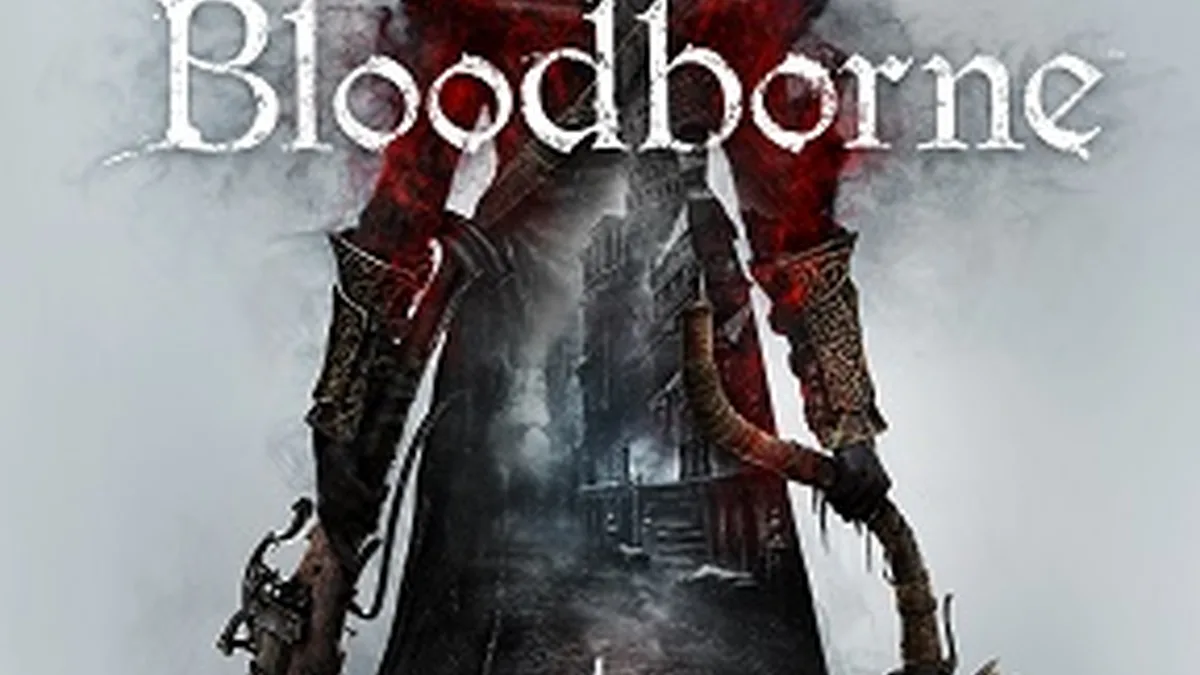
March 24, 2026 — Eleven years ago to this day, Bloodborne first arrived on PlayStation 4, planting a fated tale of blood and dreams in countless players’ hearts. As FromSoftware’s marquee exclusive at the handoff between console generations, its aggressively offensive combat philosophy and its Victorian-gothic city of Yharnam redrew the boundary of what “suffering for your hobby” means.
For many new hunters, the word “exclusive” once meant you had to own a PlayStation 4 before you could play at all. Which is why, across eleven years, “will it ever come to PC” has stayed one of the community’s favorite topics, and with no clear answer ever given on the record, that longing has simply hung in the air.
1. What Is Worth Remembering About This Anniversary#
Around the game’s eleventh anniversary, let’s pull the focus back onto the facts that can actually be confirmed. To veterans this may be well-worn ground, but for every new hunter setting foot in Yharnam, these numbers are the most practical reference before you commit.
Key Facts at a Glance#
| Item | Details |
|---|---|
| Release date | March 24, 2015 |
| Platform | PlayStation 4 (exclusive) |
| Genre | Action role-playing |
| Developer / Publisher | FromSoftware / Sony Computer Entertainment |
| Producer | Hidetaka Miyazaki |
| Metacritic critic score | 92/100 |
| Metacritic user score | Around 8.9 |
| Global sales | Around 7.5 million copies (as of 2020) |
| Major expansion | The Old Hunters (November 2015) |
The numbers in this table are the credentials Bloodborne has had placed on the table most often over eleven years: high marks from critics and players alike, with sales underlining its weight within the exclusive lineup. And the pairing of “92 from critics, around 8.9 from users” is genuinely intriguing — a slight temperature gap between authoritative opinion and player feel, proof that this game keeps swinging between “masterpiece” and “gatekeeper,” and that judging it has never been a comfortable exercise.
2. A Worldview Buried in Blood and Dreams#
Looking back eleven years on, the most fascinating thing about Bloodborne is how it stretched a “cure by blood transfusion” premise into the tragedy of an entire city.
Before Yharnam was founded, a group of scholars drew blood from the Great Ones and found it carried the power to heal disease — the origin of “blood ministration.” For a time it made Yharnam a holy land of medicine and pushed blood ministration to its peak. Then the price arrived: residents transfused over the long term mutated irreversibly into beasts, shedding their humanity, and the scholars who tried to commune with the Great Ones through rituals dragged the whole affair toward an abyss with no way back.
Behind the story also sits a tragedy of the Great Ones themselves: they are not evil, merely bearers of power and desire humans cannot comprehend, yearning for offspring yet forever robbed of their children. The Moon Presence that created the Hunter’s Dream, the infant Great One Mergo, church founder Laurence, workshop master Gehrman — the threads between them were deliberately shattered and scattered across items and dialogue, for players to piece together themselves. That “the closer you get to the truth, the deeper the unease” quality is the most celebrated aspect of its storytelling.
For precisely that reason it spawned a mountain of community lore-hunting and interpretation. Plenty of players roll credits on the final boss and still go back to reread item descriptions, all to restore those fragments into one complete story.
3. What It Actually Changed#
A game remembered for eleven years runs on more than launch buzz; it left its mark on both the combat road and the narrative road.
Making Aggression the Other Answer in the Souls Formula#
Look back at Dark Souls and the habits were shield up, spacing, and answering each move as it came. Bloodborne flipped all of it: no conventional shields, a standing invitation to close distance without hesitation, gunfire to stagger an enemy the instant it commits — the gun parry — then a visceral attack to cash it in. Risk and reward were pushed up together, and the tempo quickened with them.
That “high-risk, high-reward” thinking flowed straight into Dark Souls 3, Sekiro: Shadows Die Twice and later work, and “fast-paced Souls” became a direction revisited again and again.
Packing Cthulhu-Style Horror Into a Gothic City#
Yharnam itself is an unfurled scroll of Victorian architecture: spires, flying buttresses, dim streets, a blood-red moon and creeping fog. Underneath the gothic surface sits another layer — as the plot advances with the hunter’s investigation, the worldview slides from hunting beasts toward cosmic horror and the existence of the Great Ones, and that “closer to the truth, deeper the unease” quality becomes the most praised thing about its narrative.
Fragmented item descriptions, half-sentences from NPCs and environmental detail force players to assemble the story themselves — and in turn produced a vast body of community analysis and reading.
4. The Old Hunters and the Layers of Yharnam#
In November of its release year, Bloodborne received its major expansion, The Old Hunters. It is not just a few extra boss fights: it brought in whole new areas such as the Hunter’s Nightmare and the Research Hall, and supplied a key missing link for the parts of the script the base game left unsaid. Bosses like Ludwig and Lady Maria have long been discussed by the community in the same breath as the base game’s very best encounters, and they turned “there is more after the base game” into a standing reason for players to start fresh files.
As for Yharnam itself, it hides things superbly. From Central Yharnam where you begin, to the great bridge, Cathedral Ward and the Forbidden Woods, then on to Neodos Castle, the Unseen Village and nightmare stacked upon nightmare. Residents writhe and mutate beneath lanterns, shortcuts are built as loops that force you to double back, and exploration carries its own suspense. That “one door pulls open another door” layout is precisely why people are still willing to walk it all again eleven years later.
The players who got in early on PlayStation 4 usually trace the way the name Yharnam stuck with them for a decade straight back to this interlocking design.
5. Why It Keeps Tormenting Us#
Many new hunters take one look at Bloodborne’s interface and call it “user-hostile.” But the game builds difficulty into a system, not a pile of raw numbers. The following designs are still its most vivid calling cards today.
- No conventional shields, only guns. Defense is no longer the fallback; attack is. Every fight becomes a standoff: you must judge, before the enemy’s blade falls, whether to fire first or dodge first.
- Rally health. Strike back within a short window after taking a hit and you recover part of your health, turning “getting hit” into a gamble with a payout — flinch, and you forfeit the chance.
- Trick weapons. Weapons like the Saw Cleaver and Saw Spear shift between two forms — short for agility, long for reach — forcing a trade-off between attack speed and range.
- Chalice Dungeons. Procedurally generated deep dungeons underpin the grind for blood gems and the pursuit of extreme challenges, and they sustained years of community sharing and speedrun culture.
- Multiple endings. The endings guide on this site lays out the three paths clearly — the Hunter’s Dream, refusing the hunt, and the Moon Presence ending that requires collecting a third umbilical cord — so “one clear” is nowhere near the finish line.
Worth stressing: none of this scares people off with blunt, one-size-fits-all difficulty. Quite the opposite — Bloodborne turns “hard” into a learnable language: enemy wind-ups, the gun-parry window, the rhythm of the dodge, all written into the movements of every fight. A new hunter willing to study will go from being flattened by the Blood-starved Beast to handling Ludwig with room to spare. That “effort gets a response” feedback loop is the real reason it hooks people.
And that “hard” is exactly why Yharnam has kept people coming back for eleven years. Whether it is players chasing no-damage clears or hunters delving into Chalice Dungeons together, this has become a proving ground where you can test your skill against the game over and over.
6. Eleven Years In: Turning “Suffering” Into “Enjoyment”#
If any of the above hooked you, NTGame’s Bloodborne hub has already laid out the full path from first steps to deep dives. The links below take you straight to the corresponding pages and will spare you some detours.
| Focus | Page | Notes |
|---|---|---|
| Getting started | Beginner’s start guide | Hunter class choice, starting weapons and basic controls |
| Weapons and stats | Weapon guide · Stat allocation guide | Full trick-weapon breakdown and build advice |
| Runes | Rune system | Memorials, runes and loadout pairing |
| Combat | Combat breakdown | Gun parry, dodging and stamina management |
| Bosses | Boss guides | Strategies and ratings for every boss |
| Exploration | Area guides | District-by-district walkthrough of Yharnam |
| Chalice Dungeons | Chalice Dungeon guide | Depths, rites and challenge routes |
| Collectibles | Item collection | Blood vials, runes, eyes and hidden areas |
| Endings | Endings guide | Trigger conditions and routes for all three endings |
7. Closing Thoughts#
Eleven years on, Yharnam’s streets still sit beneath a blood-red moon, and hunters still chase their prey in its light. For many players Bloodborne was never just a game — it is a stretch of time worth replaying in memory. What it taught us is not only how to slip a swing, but how to get back up after every fall. If you have not yet set out on this journey, there is no better time than now.