China Takes Its First Nagoya Asian Games Esports Gold: Naraka: Bladepoint Opens the Asian Games Door for Chinese Wuxia Competition#
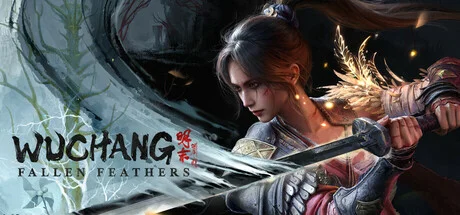
By Wubian (NTGame Editor)
September 24, 2026, Aichi-Nagoya: the Naraka: Bladepoint final at the 20th Asian Games’ esports program.
China beat Thailand 3:0, clean and conclusive, and climbed to the top of the podium. I watched the whole thing on screen, and one thought kept echoing — this is not an ordinary gold medal.
It is the first Asian Games gold in Naraka: Bladepoint for China’s national esports team, and the Chinese delegation’s first gold of this edition’s esports program. More than that, it is the first Chinese-wuxia esports gold in Asian Games history.
As an editor who has long followed domestic games and the mobile esports ecosystem, I know better than most that this medal weighs more than the scoreline. Today I want to talk properly with you about the story behind this gold — how it was won, where it came from, and where it will take domestic esports next.
I. The Making of a Gold Medal: From Shutout Groups to a 3:0 Final#
Back to the arena itself. These Nagoya Asian Games mark Naraka: Bladepoint’s first appearance on the Asian Games stage. In other words, this was the first time Chinese players wrote a result for this domestically made wuxia combat game on the Asian Games stage.
China’s run was remarkably steady — you could say they arrived at the end carrying an “unstoppable” air.
| Stage | Opponent | Score | Result |
|---|---|---|---|
| Group stage | Indonesia | 2:0 | Win (shutout) |
| Group stage | Malaysia | 2:0 | Win (shutout) |
| Group stage | Thailand | 2:0 | Win (shutout) |
| Semifinal | Chinese Taipei | 3:0 | Win |
| Final | Thailand | 3:0 | Gold |
The standout word in that table is “shutout.” Across three group matches, China beat Indonesia, Malaysia, and Thailand 2:0 in turn — all three by clean sweep — to top the group into the knockout rounds. The semifinal was a 3:0 rout of Chinese Taipei into the final. And in the final against Thailand, whom they had already met in the groups, China again gave the opponent nothing, closing it 3:0.
Worth noting: the bronze in this event went to Chinese Taipei and Vietnam. Two of the three teams on the Asian Games podium come from the Greater China region — a reflection of East Asia’s deep soil in the wuxia combat genre.
One disclosure: the official sources did not itemize the final’s exact venue name or per-game score details, so I strictly stick to accounts confirmed by multiple sources — “3:0” and “three group-stage shutouts” — and add nothing beyond the facts.
II. Five Players and a Coach: the Club Pipeline Behind the National Team#
Five people won this gold. They are the full roster of China’s Naraka: Bladepoint national training squad: Wang Feng, Wang Tongrong, Xu Kunbin, Sui Xiangyun, and Tan Xujie, with Weng Bo as coach.
The complete list, for reference as information on the other events lands:
| Role | Name |
|---|---|
| Player | Wang Feng |
| Player | Wang Tongrong |
| Player | Xu Kunbin |
| Player | Sui Xiangyun |
| Player | Tan Xujie (in-game ID: TXJ) |
| Coach | Weng Bo |
(Note: the sources retrieved this time did not itemize the other three players’ career details, so this piece verifies the list only and adds no speculation.)
What I want to discuss is the system behind these five.
In the domestic esports ecosystem, a national team is not conjured out of thin air — behind it stands an entire structure of professional leagues and clubs supplying talent continuously. Nowhere is that more typical than in Naraka: Bladepoint: two key players come from the Shenzhen TE Su and JL organizations.
First, Tan Xujie (in-game ID: TXJ). He is a top trio-format player in the NBPL (Naraka: Bladepoint Professional League) mainland China circuit, with stints at Shenzhen TE Su and then JL. His resume reads like a textbook list of achievements:
- 2023: won the NBPL Spring Split trio championship with Shenzhen TE Su
- Same year: reached the Jie Cup, took the trio championship there, and claimed the “Immortal War God” FMVP
- 2025: won the NBPL Autumn Split trio championship with JL
Then Wang Feng. He also came out of Shenzhen TE Su, helped JL take the NBPL Autumn Split trio championship in 2025 as a core member, and after transferring back to TE Su in 2026 added the NBPL Spring Split first-stage trio title. Wang specializes in the hero “Tianhai” — in wuxia duels, Tianhai’s role and playstyle often dictate the tempo of a team fight.
Put those two resumes together and a clear path appears: professional league (NBPL) → top club (Shenzhen TE Su / JL) → Asian Games national team. Clubs build players’ competitive level and match experience; the national team converts that experience into honors on the biggest stage. This “club-to-national-team” pipeline is a mechanism Chinese esports has matured over recent years — and this time it bore real fruit.
I want to unpack how this chain actually runs, because it is precisely where domestic esports differs most from traditional sport’s “whole-nation system” — and feels most of its era.
In traditional sport, athletes are often plucked from youth sports schools up into provincial teams and the national team — a relatively top-down path. Esports growth runs far more bottom-up: players first reach a game’s high ranks on talent and passion, then get scouted by professional clubs, enter the league system, sharpen themselves against the best opposition in league play, and only then get chosen for the national team and the world stage.
Take this article’s two key players, and the chain is plainly visible:
- Join a top club: Tan Xujie and Wang Feng both played for Shenzhen TE Su, one of the country’s top Naraka: Bladepoint organizations.
- Prove yourself in the professional league: Tan Xujie won the NBPL Spring Split trio title with TE Su in 2023 and later topped the Jie Cup; Wang Feng took NBPL seasonal titles with JL and then TE Su.
- Get chosen for the national team: off sustained league form, both made the national training squad and the Asian Games stage.
The reason to stress this chain is what it implies: this gold was not assembled by a crash training camp — it was nourished into being, year over year, by an entire mature professional ecosystem. In other words, Naraka’s first gold is a concentrated cash-out of years of accumulation across the domestic wuxia esports ecosystem.
Coach Weng Bo’s words after the win confirm the system’s effect on the human level too. He said: “From their first day at the training base the players were tremendously excited — they felt they were going to win glory for their country.” A plain sentence that captures exactly where these young players’ talent and sweat were pointed. In that sense, the national team is more than an honor call-up — it is a tempering that turns “fighting for a dream” into “fighting for the country.”
III. Post-Match Voices: From “We Believe in Ourselves” to “Glory for the Country”#
After a title, what players and coaches say is often the most moving part of all.
Tan Xujie said in his post-match interview: “We also played Thailand in the group stage… today they came out in tremendous form, but we believed in ourselves — we’ve trained this long…”
Several details in that quote deserve savoring.
First, “we also played Thailand in the group stage” — China was no stranger to its final opponent; the group-stage shutout had already built complete psychological preparation for Thailand’s style. Second, “they came out in tremendous form” — that is respect for the opponent: the Thai side of the final was not helpless, and the suspense going in was real. Third, and most central: “we believed in ourselves — we’ve trained this long.” It pulls the cause of victory away from “luck” and back to “skill and accumulation”: only long, deep preparation lets you believe in yourself on the stage.
Coach Weng Bo’s line — “they felt they were going to win glory for their country” — sharpens the event’s emotional undertone further. For athletes in their early twenties, the jersey at the Asian Games is no longer just clothing; it is a weighty national honor. That plain instinct to “win glory for the country” is exactly where competitive sport touches people most.
Hearing all this, I kept noticing a subtle contrast: on stage they play with the sharpness of clashing cold weapons and the coolness of professionals; in interviews, what comes through is the frankness and sincerity of twenty-somethings. That gap — “ferocious on stage, plain and genuine off it” — is competitive sport at its most precious: it shows us that the athletes at the summit are real, warm young people underneath the titles.
Which is why I keep feeling that what moves us most about a gold medal is rarely the medal itself — it is the persistence behind it, unrelated to age. Tan Xujie’s “we’ve trained this long” — a few short syllables holding up countless training days of early mornings and late nights.
IV. The First Chinese-Wuxia Esports Gold: Why Naraka: Bladepoint Is “Special”#
Next, the most special layer of this medal — it is the first Chinese-wuxia esports gold in Asian Games history.
Why does the “Chinese wuxia” label matter so much? Zoom out and look at the other genres on the Asian Games esports stage.
This edition’s esports program spans multiple events covering MOBA, tactical shooters, asymmetric competition, football simulation, racing, fighting, and more. Most of these descend from mature Western or Korean esports systems — MOBA’s international rules and event frameworks took shape back in the Dota and League of Legends era, and shooters grew out of the first-person gunplay tradition. For a long stretch, the rule foundations of Asian Games esports were carried by “internationally mainstream” genres.
Naraka: Bladepoint is different. It is a domestically created wuxia action combat game whose core play is cold-weapon combat and sect-based wuxia duels. Its matches carry no modern firearms — in their place, blade-light and sword-shadow, movement duels, close-quarters exchanges. This competitive form, rooted in traditional Chinese culture, is a genre distinct from Western MOBAs and FPS titles.
| Dimension | Mainstream international esports genres | Naraka: Bladepoint (Chinese wuxia) |
|---|---|---|
| Thematic roots | Western fantasy / sci-fi / modern warfare | Traditional Chinese wuxia culture |
| Core competition | Abilities / aim / macro play | Cold-weapon moves and movement duels |
| Cultural symbols | Western / East Asian pop culture | Sects, blades, jianghu atmosphere |
| Spectator identity | Globally homogeneous | Highly distinctive Eastern aesthetics |
So when a homegrown wuxia work stepped onto the Asian Games stage for the first time and took gold in one stroke, what it gave the international stage was not just the signal that “a Chinese team won,” but a refresh of perception — “so esports has this Eastern wuxia mode of expression too.” Through the Asian Games’ international stage, Chinese original esports presented Eastern wuxia culture in a fiercely competitive, highly watchable form — and that is where the label “Chinese-wuxia esports gold” draws its weight.
From the game’s first Asian Games appearance to Chinese players taking its first gold took only days — a complete leap from “debut” to “gold.”
I also want to say more about “sects and the flavor of the duels.” Where exactly does the competition in Naraka: Bladepoint differ? For readers less familiar with the game, here is a simple framework:
- Cold-weapon foundation: high-intensity exchanges rest on blades, spears, and other cold weapons, with the core in close-quarters reads and move selection — a completely different competitive language from MOBAs built on ability rotations and stat pressure, or shooters built on trajectories and cover.
- Movement duels: in wuxia matches, “movement” operations — repositioning, dodges, displacement — become the decisive variable; top-level duels are decided in split-second repositions and move trades.
- Wuxia cultural symbols: sects and the jianghu, rooted in traditional Chinese culture, are injected directly into the matches’ watchability, giving the competition a layer of cultural identity beyond sport.
Understand those three points and you see why this gold carries the name “Chinese-wuxia esports” — it demands both the rigor of sport and the uniqueness of Eastern culture; neither is dispensable.
V. Only the Beginning: Honor of Kings, Game for Peace, and Identity V Take the Baton#
Seen only through September 24, it is the high point of Chinese esports at these Games. Widen the view, though, and this “first gold” is a prologue — China still had three more esports events to play.
Per Xinhua, China will also compete in three more esports events at these Games: Honor of Kings, the Game for Peace Asian Games version, and the Identity V Asian Games version.
| Event | Genre | Storyline |
|---|---|---|
| Honor of Kings | MOBA (mobile) | Hangzhou defending champion; direct spot in the main draw |
| Game for Peace Asian Games version | Tactical shooter | Defending champion; direct to the main draw |
| Identity V Asian Games version | Asymmetric competition | Dark horse through qualifying |
I covered these three events’ schedules and storylines in detail in my earlier opener, so on the “first gold” angle I will say just this: with one medal, Naraka: Bladepoint steadied the entire Chinese delegation’s nerves. It validated the national training squad model and confirmed the strategy of concentrating fire on strength events. With the first gold banked, the three events ahead carry a “press the advantage” momentum, in morale and in public opinion alike.
I also want to remind everyone: Naraka’s gold is not the finish. Honor of Kings and Game for Peace are both Hangzhou defending champions, and Identity V is a powerhouse that fought out of qualifying — together the three events make up China’s complete gold map at these Asian Games. First gold banked; the good part is still ahead.
One more “relay” angle on these three events. Naraka’s first gold gave the delegation a running start:
- Opponent perception: that a brand-new Asian Games event like Naraka could take gold shows Chinese players can adapt quickly and perform stably in a brand-new genre — a useful reference for the other events facing unfamiliar formats too.
- Morale: the positive feedback of a first gold transmits to the teams that follow; the “win glory for the country” drive Coach Weng Bo described only grows after a first gold lands.
- Mechanism: three straight shutouts show Chinese players’ composure under an extreme “one day decides everything” compression — a quality that will be tested again across the dense schedules of the remaining three events.
That said, I know sport has no formula that converts morale into gold automatically. Real outcomes depend on performance on the day. But at minimum, Naraka’s clean gold told every teammate still to compete: Chinese players are fully capable of standing at the top of this stage.
VI. Community and Player Reactions: One Gold Medal Lights a “Wuxia Esports Wave”#
As an editor who watches social and player ecosystems, I paid particular attention to the ripples this match sent through player communities and public opinion. Compared with other events’ golds, the emotion this one triggered has a very distinct direction — cultural pride.
On domestic social platforms, much of the discussion did not stop at “we won”; it settled on “Chinese original wuxia esports won Asian Games gold.” The recurring emotional keywords fall roughly into these buckets:
- National sentiment: China’s win carries the honor of doing the country proud, and taking gold in wuxia — a genre so distinctly Chinese in flavor — makes the pride feel singular.
- Wuxia culture going global: many players see this as traditional Chinese culture successfully riding esports, a modern vehicle, onto the international stage; wuxia stories now appear not only in film, TV, and novels but on Asian Games arenas.
- Recognition of the game itself: players who had never followed Naraka: Bladepoint were drawn by the Asian Games effect into re-discovering the game’s competitive depth.
To be clear: these community reactions are my synthesis of the overall drift of public discussion; for the wording of any individual comment, defer to the actual discourse — I make no quote-by-quote claims.
At bottom, what moves people about a gold medal is not whose chest it hangs on, but how many people it makes notice, discuss, and even fall for something unfamiliar. Naraka: Bladepoint did that — it carried the phrase “Chinese-wuxia esports” into a far wider public view.
From the “domestic esports ecosystem” angle, I want to add one more layer of observation on these reactions.
At past Asian Games, Chinese players mostly chased gold in MOBAs, shooters, and other genres speaking an “international common language,” and the emotional baseline was the competitive pride of “we beat strong teams.” This time was different — the players’ pride carries an extra layer: “this is our own thing.” Wuxia, blades, sects — these symbols are rooted in Chinese cultural memory, and when they appeared in competitive form on an international multi-sport stage and were raised overhead by Chinese players, the feeling was one no previous Asian Games esports gold could replicate.
That is why I say this medal’s meaning for the domestic ecosystem may run deeper than we feel right now. It is not just a competitive win; it is a confidence deposit into the question “how far can Chinese original esports go?”
VII. Closing: After the First Gold, a Bigger Story for Domestic Esports#
Looking back at September 24, I will remember it with three “firsts”:
- China’s national esports team won the Asian Games gold in Naraka: Bladepoint for the first time;
- It was the Chinese delegation’s first gold of this edition’s esports program;
- It was the first Chinese-wuxia esports gold in Asian Games history.
Stack those three “firsts” together and the medal weighs far more than its scoreline: a handsome debut for the national-team system on the Asian Games stage, and a declaration of value by Chinese original esports on the international stage under the unique cultural sign of “wuxia.”
I especially want to stress the “gold on debut” detail. Naraka: Bladepoint is a brand-new event appearing at the Asian Games for the first time this edition; Chinese players had no prior Asian Games results in it to reference — they measured unknown ground starting from zero. On a stage where everything, rules and format alike, was new, China handed in a near-perfect answer sheet: three group-stage shutouts plus a knockout run without a lost series. A debut like that is the strongest proof of a game’s competitive foundation — and of Chinese players’ natural competitiveness in the genre.
For the domestic esports ecosystem, one longer-term meaning sits beneath the medal — it validated the “professional league — club — national team” pipeline. Players like Tan Xujie and Wang Feng, forged in the NBPL and at Shenzhen TE Su and JL, ended up on the Asian Games’ top podium in national-team colors. If the path works, more top players from more domestic titles will walk the same road to the world.
And for every player who has watched Chinese esports get here, the night’s meaning is plainer and warmer: we finally saw a competitive game rooted in Chinese wuxia culture wear an Asian Games gold medal, upright and unapologetic, at a world-class multi-sport event.
One industry addendum: the gold is also a rare positive jolt for Naraka: Bladepoint’s own domestic wuxia competitive ecosystem. Wuxia as a theme used to live mostly in single-player action, RPGs, and MMORPGs, and competitive play was its weak link. This Asian Games gold signals to the industry that the wuxia theme can not only “tell stories” and “build experiences” — it can carry a rigorous, watchable, internationally viable esports system. That “theme × competition” validation is a practical reference for the esportsification of more domestic themes to come.
Naraka’s first gold is banked; Honor of Kings, Game for Peace, and Identity V still wait ahead in the relay. I will keep watch on every gold night to come, together with all of you.
Finally, as an editor who watches domestic games and mobile esports daily, I want to set this medal on the longest possible timeline. It may not be Chinese esports’ flashiest win, nor its most stunning match, but it is certainly the most “Chinese” one — because it showed the world that the esports stage holds not only Western-led genres, but a place of honor for Chinese wuxia culture.
May Chinese esports keep playing its own brilliant games in Nagoya.
— Wubian, NTGame Editor, on the night of China’s first Asian Games esports gold
(Fact sources for this article: Xinhua (via Sina), Tencent News (China Media Group edition), Xinhuanet, and Southern Metropolis Daily (via Toutiao), among other public reports. All athlete names, scores, schedules, and follow-up event information follow the official accounts verified in the fact card; descriptions of event details are limited to what sources disclosed, with no inference or conversion beyond the facts.)