Black Myth: Wukong Two-Year Anniversary Retrospective#
Zhanlan Yingren | August 20, 2026
Opening: A Journey to the West Spanning Two Years#
At 10 a.m. on August 20, 2024, Black Myth: Wukong went live worldwide. That day, countless players held their breath in front of a download progress bar and, from the first rays of morning light over Black Wind Mountain, walked into a vast dream belonging to Chinese mythology.
Two years on, Black Myth: Wukong is no longer just a game — it is a milestone for China’s single-player game industry, a tour guide for Shanxi’s ancient architecture, a window for overseas players into Chinese culture, and a cultural event marking the first time a Chinese game stood on the world stage with such force. As an editor who has long covered domestic games and visual art, I want to use this particular day to organize two years of memories and observations about this monkey into a commemorative feature.
At the two-year mark, the two things most worth confirming are exactly what I most want to pass along to every player: global sales have surpassed 30 million copies, and Steam reviews have held at “Overwhelmingly Positive” for the long haul. These two pieces of news carry more weight than any marketing slogan — they prove this monkey not only sold well, but genuinely satisfied the players who paid for it.
This feature follows two threads — “art marvel” and “cultural phenomenon” — to look back over Black Myth: Wukong’s two-year journey, discuss its deep impact on Chinese games and players, and round up our complete on-site guide resources.
I. From Art Marvel to Cultural Phenomenon#
Ink-Wash Aesthetics: A Game That Paints#
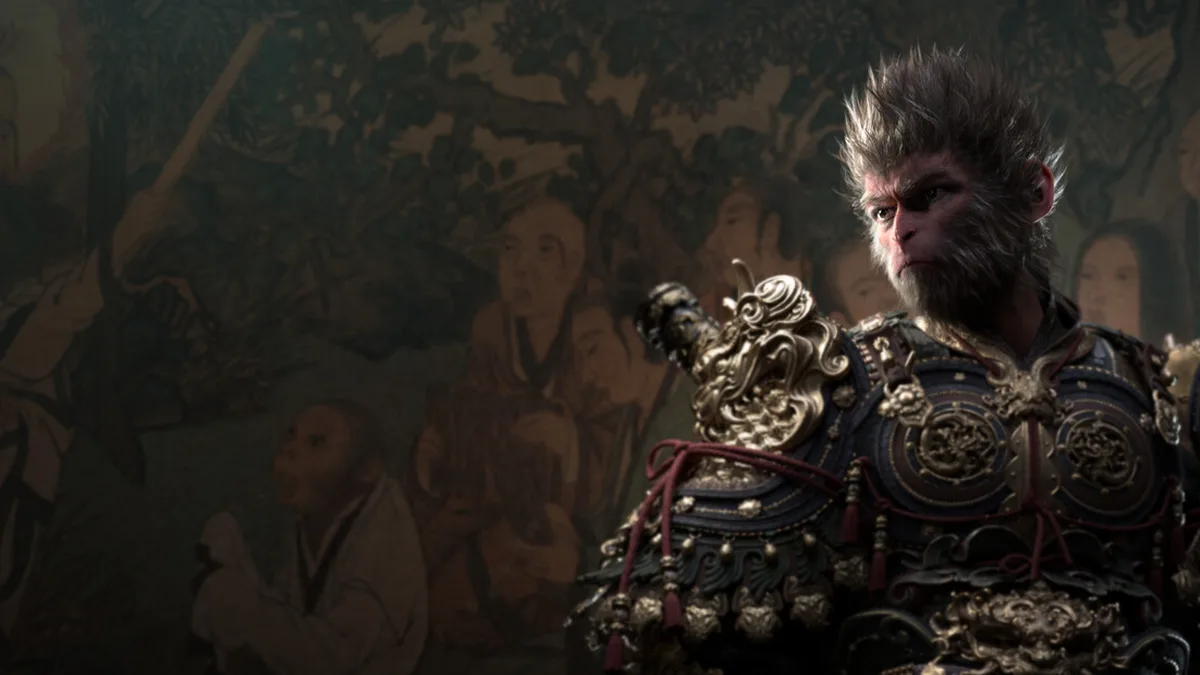
Wukong’s most immediate impact comes from its singular visual language. Built on Unreal Engine 5, the game fuses the spirit of Chinese ink painting with modern lighting technology, giving the Eastern mood of “distant mountains veiled in blue, nearby water frozen in mist” its first concrete form in real-time rendering. From the lush peaks of Black Wind Mountain in Chapter 1 to the swirling snows of Xiaoxitian in Chapter 3, every frame feels like a living landscape scroll.
| Aesthetic element | How it’s expressed | Signature scenes |
|---|---|---|
| Ink-wash transitions | Chapter interludes use ink-wash animation, with brushwork and negative space straight out of Chinese painting | End-of-chapter animations |
| Pigment palette | A three-color system of cinnabar, indigo and gilt gold runs through scenes and character design | Purple Cloud Mountain, Flaming Mountains |
| Suspended sculpture | Many scenes draw on real temple suspended sculpture and painted clay figures, dense with ornate detail | Xiaoxitian’s suspended sculpture, Shuanglin Temple’s painted clay |
| Buddhist statuary | Giant Buddhas, Heavenly Kings and Vajra warriors blend Yungang and Dazu carving styles | The great pagoda, the road to Spirit Mountain |
| Calligraphy titles | Chapter titles rendered in calligraphy, complete with seal stamps | All chapters |
| Light and atmosphere | Global illumination builds religious moods — Buddha’s glow, candlelight, dusk | Yellow Wind Ridge, Webbed Hollow |
This “industrialized ink wash” is no filter slapped on top; it is the result of the art team layering craft into materials, lighting and scene design. The team translated the aesthetic grammar of traditional art into the language of a modern engine, letting players everywhere feel the power of Eastern aesthetics without a single line of explanation.
Shanxi Architecture and Scene Research#
Wukong’s art was not conjured from nothing — many scenes have real-world prototypes. During development, the team made repeated field trips to Shanxi, Shaanxi, Fujian, Sichuan, Chongqing, Yunnan and elsewhere, digitally scanning ancient buildings, grottoes and painted sculpture before rebuilding them in-game. This “research-driven art” opened a wondrous channel between the game and real history.
| Game scene | Real-world prototype | Location |
|---|---|---|
| Yuhuang Temple-style buildings with Twenty-Eight Mansions painted clay figures | Jincheng Yuhuang Temple | Jincheng, Shanxi |
| Halls showcasing suspended-sculpture mastery | Xiaoxitian suspended sculpture, Xi County | Linfen, Shanxi |
| Snow-covered pagodas and flying eaves | Yingxian Wooden Pagoda, Chongfu Temple, Hanging Temple | Shuozhou and Datong, Shanxi |
| Solemn painted clay ensembles | Shuanglin Temple and Zhenguo Temple in Pingyao, Jinci’s Goddess Hall | Pingyao and Taiyuan, Shanxi |
| Grotto giant-Buddha imagery | Yungang Grottoes | Datong, Shanxi |
| Water-and-Land ritual statuary | Shuilu’an Temple, Lantian | Xi’an, Shaanxi |
| Pagodas and esoteric motifs | East and West Pagodas of Kaiyuan Temple | Quanzhou, Fujian |
| Guanyin statuary and grottoes | Anyue Grottoes, Dazu Rock Carvings | Sichuan and Chongqing |
| A southern-Yunnan Buddhist realm | Three Pagodas of Chongsheng Temple | Dali, Yunnan |
After launch, Shanxi’s culture and tourism authorities rode the wave with a “Travel Shanxi with Wukong” campaign; the Yingxian Wooden Pagoda, Xi County’s Xiaoxitian, Jinci Temple and other sites briefly became hot destinations, and side-by-side comparisons of game scenes and real locations flooded social platforms. A single-player game driving a province-wide tourism boom is extraordinarily rare in global gaming history — the strongest possible footnote to the words “cultural phenomenon.”
Resonance Among Overseas Players#
If art was the key that knocked open the world’s door for Wukong, what made overseas players truly stay was the Eastern narrative hidden underneath. Western streamers gaped at the visuals on stream, and video platforms filled with deep-dive content analyzing scene prototypes frame by frame and explaining the backstory of Journey to the West.
More intriguing still is the “reverse export” of cultural recognition: many foreign players, to follow the plot, went out and read translated editions of Journey to the West and studied the lore of Guanyin, the Golden Cudgel and the Six-Eared Macaque; some flew to Shanxi specifically to tour the ancient buildings along the game’s routes. The game stopped being a one-way cultural display and became a bridge the world walked toward on its own. As the legend of “the Destined One” spread across the globe, this monkey had already completed a pilgrimage across cultural barriers.
II. Two Years On: Sales and Word of Mouth, Confirmed Together#
If Black Myth: Wukong two years ago was a “dark horse” carrying enormous expectations, then looking back from the two-year mark, it has answered every one of them with hard numbers. Global sales above 30 million copies mean this monkey stayed vibrantly alive across two full years — not a flash-in-the-pan hit riding a news cycle, but an evergreen work that keeps pulling new players in and drawing veterans back.
And what gives that number its real weight is that it came with long-term rating stability. Steam reviews holding at “Overwhelmingly Positive” show that the goodwill did not come from a launch-week emotional premium, but from a real experience that survives the test of time. Sales and word of mouth both intact is the healthiest — and rarest — posture a game can have.
For the Chinese game industry at large, the demonstration value of this record goes far beyond the digits. It proved to the market that products rooted in traditional Chinese culture and polished to industrial-grade quality are fully capable of winning commercial and critical success worldwide. That certainty is now giving confidence to those who come after — since Wukong, more domestically rooted single-player projects have been greenlit, seen and anticipated than ever before.
The second anniversary is a node of confirmation. It confirms Black Myth: Wukong’s status as a cultural phenomenon, and it confirms that “Chinese culture” has an irreplaceable power of expression inside the medium of games.
III. What the Two-Year Mark Means for Players#
For players, the most direct meaning of this anniversary is that the monkey has settled from “a new game worth trying” into “a mature work worth revisiting.”
On one hand, the game’s post-launch updates and optimization have made the current experience far smoother than shipping day. The rough edges early adopters navigated — progression, combat feel, visual performance — have been polished flat. Whether you are a first-timer or a returning veteran, you can now enter this world on far calmer terms.
On the other hand, the community ecosystem around Black Myth: Wukong never went quiet: fan works, art research, music covers and speedruns keep coming. Beating the game has evolved from “kill the boss” into “how stylishly, how fast, how flawlessly can I kill it,” with no drop in the depth or heat of discussion. A game sustaining its heat for two full years has long since outgrown the category of “game” and grown into a cultural asset worth tending for the long haul.
For anyone still on the fence about jumping in: understand that this is a substantial, content-rich work — a complete campaign, layered play systems, and collectibles worth repeated exploration. We won’t make the call for you, but every piece of homework you need is ready on this site to help you decide whether this monkey deserves your time.
IV. Guide Resources on Our Site#
If you are stepping into Black Myth: Wukong’s world, or already wandering through it, these on-site resources will save you detours:
- Black Myth: Wukong guide hub — navigation for all chapters, bosses, gear and collectibles
- Full walkthrough — detailed guides for all six chapters
- All boss guides — tactics for every difficulty and fight
- Achievements and trophies — how to earn every achievement
- New Game+ guide — new content and the true-ending route
- Beginner’s guide — fast starts with stances, spells and the Roots system
- Controls — key bindings and inputs explained
- Performance optimization — graphics settings by hardware tier
- Maps — chapter maps and route guidance
- Story and lore — Journey to the West narrative and character background
- Secrets — hidden bosses, treasures and Easter eggs
- Speedrun guide — racing routes and technique reference
Related game recommendations:
- Phantom Blade Zero — wuxia ink-wash action game carrying the Eastern aesthetic mantle
- Wuchang: Fallen Feathers — late-Ming-set action RPG
- Elden Ring — the pinnacle of open-world soulslike design
- Sekiro — Sengoku-era action adventure with a one-of-a-kind deflection system
- Wo Long: Fallen Dynasty — Three Kingdoms soulslike action RPG
- Lies of P — dark fairy-tale soulslike action RPG
Editor’s Note#
While writing this feature I dug out my screenshots from launch day — the fog at the mouth of Black Wind Mountain, the candlelight in the Keeper’s Shrine, the sound of the first Wandering Wight stepping out of the trees. Two years ago I wrote a line: “Chinese games finally don’t need technical prowess to prove anything — they only need to be seen.” Looking back now, Black Myth: Wukong was not only seen; it made the whole world gladly remember the weight of the words “Chinese art.”
I keep thinking that this monkey’s greatest achievement is not how many copies it sold, but that it let a generation of Chinese players realize for the first time: our own mythology can be made into a masterpiece that astonishes the world. Ink bleeds, lanterns burn out, but the road the Destined One walked will stay in the memory of everyone who comes after.
Happy second anniversary, fellow Destined Ones. The mountains are high and the rivers long — the Journey West goes on.
— Zhanlan Yingren, NTGame Art Editor