Twenty-Eight Years of Survival Horror: A Retrospective on the Resident Evil Series#
Long Zuiri | August 23, 2026
Hello everyone, I’m Long Zuiri.
I’ve wanted to write this piece for a long time.
The editorial office’s air conditioning is blasting in late August, while outside the window it’s the muggy heat of a Shanghai summer sliding into autumn. On my monitor, Resident Evil 4 Remake is sitting in Mercenaries mode — I just pulled an S+ rank on the village map, a run of Matilda headshots, killing Krauser at the very last second. “Save Room” is still looping in my headphones, that safe-room theme that makes your soul leave your body.
At the next desk, Zixing is fiddling with a 4090 running the RE8 ray-tracing benchmark; Chasun is buried in speedrun route charts for the Resident Evil 2 Remake; Wubian is forwarding a Resident Evil lore video from Bilibili into the group chat. I leaned back in my chair and suddenly felt like saying something. About this series.
Three years ago, Resident Evil 4 Remake launched: 4 million copies shipped in its first week, a 93 media average, and awards for best action game of the year. The whole editorial office erupted — not just because we had new guides to write, but because we all realized: Capcom had pulled this series back from the abyss.
And then it came back. Back with its chin up.
So today, no guides. Something bigger. Let’s talk about the road this series has traveled over twenty-eight years.
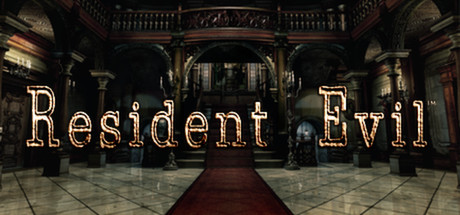
Chapter One: Original Sin in the Spencer Mansion#
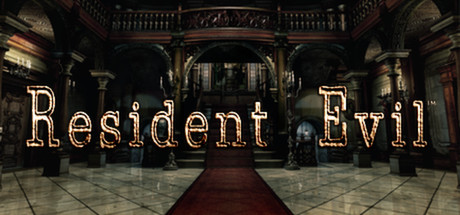
March 22, 1996, Japan. That black CD with white lettering slides into a PlayStation.
Shinji Mikami was 30 at the time, freshly moved over from another project team, handed a design document titled “Resident Evil.” The original concept wasn’t survival horror at all — it was a “first-person shooter,” at one point even meant to be a fast-paced action game along the lines of DOOM. When Sony executives saw the prototype they said: “It’s too scary. Kids will wet their pants.” Mikami shot straight back: “Isn’t that exactly the point?”
The rest of the story we all know: fixed camera angles, tank controls, limited save ribbons, door-opening loading screens, and that classic line from Klaus Krauser — “Jill, here’s a lock pick. It might be handy if you, the master of unlocking, take it with you.”
I posted this bit in the office group over the weekend, and Wubian’s reaction was: “Isn’t this just the Japanese ‘indie developer narrative’ of the nineties?” I said exactly — except back then they didn’t call it indie games, they called it “people serious about making games.”
But the real horror was never the zombies — it was resource management. The handgun that holds only 6 rounds, the item box that stores only 8 items, the deep breath before every entry into a safe room — the original Resident Evil taught an entire generation of players: fear isn’t a jump scare; it’s deciding to keep one bullet for yourself when there aren’t enough to go around.
Chapter Two: The Dusk and Dawn of Raccoon City#
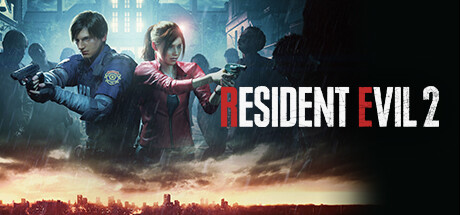
1998: Resident Evil 2 launches. Leon S. Kennedy and Claire Redfield step into the burning Raccoon City police station.
RE2 was the original’s “full evolution”: bigger maps, more enemies, more complex puzzles, and a two-scenario dual-protagonist system (A/B routes). The marble floor of that police station lobby, the shattered stained glass, the despair flowing through the dialogue — “It’s not over yet.” To this day it remains, in my mind, the textbook model of survival-horror level design.
Chasun says: “The structural layout of the RE2 police station would still score full marks in a level-design course today.” I disagree — because above it sits Raccoon City’s streets in Resident Evil 3. The office argued about this over one entire lunch; the final verdict: “Adults don’t choose. We take both.”
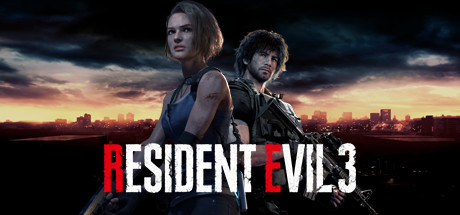
1999 brought Resident Evil 3: Nemesis. Jill Valentine’s escape route, the introduction of a “live selection” system, a dodge mechanic, and that thing you can never shake — Nemesis (the T-103 Tyrant).
Zixing dug up some data the other day and told me: game sizes from that era wouldn’t even fill one modern HD texture pack. And yet this handful of discs defined the basic paradigm of an entire genre: limited resources, puzzle-gated progress, dread-soaked atmosphere, story-driven structure.
Capcom of that era shipped at a staggering pace. Between 1996 and 2000 — the main trilogy, the spin-offs Resident Evil: Gun Survivor and Resident Evil: The Darkside Chronicles, Code: Veronica… every entry kept laying bricks into the edifice of “survival horror.”
Chapter Three: Code Veronica — Where a Dream Ends and a Rebirth Begins#
2000: Resident Evil Code: Veronica launches. A Dreamcast exclusive (later ported to PS2).
This was the last “classic RE” personally supervised by Shinji Mikami. Fully real-time 3D rendering replaced pre-rendered backgrounds; Claire and Chris shared the screen at last; the Ashford family’s twisted tragedy, the T-Veronica virus, that ending burning across the Antarctic base —
If I had to sum up Code Veronica in one word, I’d say: “Farewell.”
It said farewell to fixed cameras, farewell to pre-rendering, farewell to the technical limits of the PS1 era — and farewell to Mikami’s direct grip on the series. The Dreamcast version undersold (the console itself was a failure), but technically it paved the road for Resident Evil 4.
In 2001, the Nintendo GameCube exclusivity deal was signed. Mikami told Shigeru Miyamoto: “I want to make the best Resident Evil on GameCube.” Miyamoto replied: “Do as you like. Just don’t disappoint me.”
Then Mikami vanished into the development room. For four whole years.
Chapter Four: The Revolution in a Spanish Village#
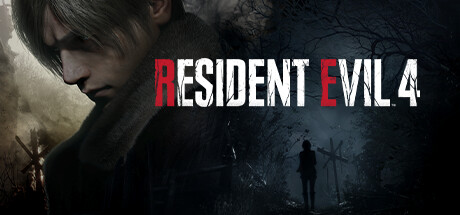
January 11, 2005: Resident Evil 4 launches.
This was Capcom’s moment.
Mikami threw “survival horror” into the trash and built an “action horror game.” Over-the-shoulder camera, laser aiming, QTEs, the merchant’s “Whaddya buyin’?”, a physics system that lets you hurl bricks at enemies, melee moves that kick foes across the yard — even a speedboat chase, helicopter shooting, and a battle against a giant Salazar statue —
The press was stunned. Players were stunned. Scores maxed out almost across the board. GameSpot awarded a perfect score with the caption: “This is not Resident Evil. But it’s better.”
Zixing’s verdict in the office was the sharpest: “RE4 isn’t a betrayal of Resident Evil — it’s Mikami’s obsessive pursuit of ‘games being fun’ taken to its limit. He moved the horror from ’not enough resources’ to ’the pressure of controlling your aim against an overwhelming horde’ — that’s still horror, just written in a different grammar.”
But some said: “Is this even Resident Evil anymore?” Wubian added: “If the original was Psycho, RE4 is Aliens. The genre changed; the genes didn’t.”
RE4 went on to spawn the GameCube version, PS2 version, Wii version, PC version, HD version, Ultimate HD Edition, VR version, and more, selling over 12 million copies in total. It redefined the standard for third-person shooters — Gears of War, Uncharted, The Last of Us, even the over-the-shoulder framing of God of War 2018, all cast shadows traceable to RE4.
Mikami later left Capcom, founded his own studio, made The Evil Within — then the studio was acquired, and eventually shut down. RE4 became the swan song of his career, and the watershed of the entire series.
Chapter Five: Action Excess — the Carnival and the Drift#

2009: Resident Evil 5 launches. Chris Redfield is built like a tank, Sheva Alomar runs alongside, and co-op becomes the core selling point.
RE5 pushed RE4’s action DNA to the extreme: more guns, more melee moves, more co-op QTEs — even a motorcycle chase and a volcano-lava showdown. It ultimately sold over 14 million copies and was, for a time, Capcom’s best-selling game, until other franchises overtook it.
Reception was polarized. Some outlets hailed co-op as reinventing Resident Evil; others said outright that it had lost its soul.
Chasun’s retrospective hit closest: “RE5 isn’t a bad game — it’s a good game in the wrong context. If it were called ‘Chris Redfield: Africa Operation,’ everyone would praise its elegant co-op design and its magnificent boss fights. But it’s called ‘Resident Evil 5’ — players expected horror and got Call of Duty.”
2012: Resident Evil 6 launches. Four campaign lines, seven protagonists, global terrorist attacks, Leon turned into an action-movie hero, Jake Muller parkouring across walls, Ada Wong with her own standalone chapter — even a Mercenaries mode straight out of Call of Duty.
RE6 sold 4.5 million in its first week, eventually crossing 10 million. But Metacritic slid to 67 (console versions), and its Steam reviews read “Mixed.”
I remember the year RE6 launched being the loudest our office group chat ever got. Wubian: “RE6 is Capcom’s desperate attempt to turn Resident Evil into Call of Duty.” Zixing: “RE6’s Mercenaries mode is actually great — the combat system has the most depth in the series.” Chasun slapped down a spreadsheet: “RE6 has several times RE4’s volume of story text, but far lower density of useful information.”
In the end it was Zixing who smoothed things over: “Enough. This was a directional error, not a craftsmanship problem. Capcom knew it too — otherwise they wouldn’t have turned right around and made Revelations and RE7.”
Chapter Six: The Return Through the Fog#
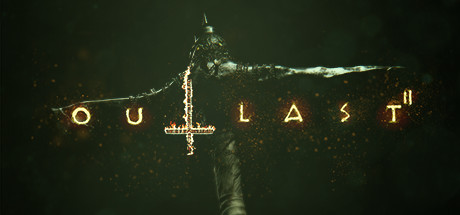
January 24, 2017: Resident Evil 7 biohazard launches.
First-person perspective. The Bakers. Jack Baker chasing you down with a shovel. No Chris, no Leon, no Ada, no Wesker. The protagonist is an everyman — Ethan Winters — armed with an axe and a handgun, fighting to survive in a rotting Louisiana homestead.
Under the internal codename “Project 2015,” the development team was scaled down dramatically from the franchise’s peak. They played Alien: Isolation, Outlast, and P.T. from cover to cover, then decided: “Back to the roots. Make the purest survival horror.”
After launch, both reputation and commerce rebounded. And the VR mode made countless players actually wet their pants.
Wubian’s reaction: “RE7 is Capcom’s apology letter to veteran players. Dear player, we’re giving the horror back to you.” I said: “Skip the sentiment. RE7 was a commercial decision — Capcom realized ‘action doesn’t sell anymore, so sell nostalgia instead.’” Zixing pushed up his glasses: “Whatever the motive, RE7’s RE Engine is a technical miracle. Low memory footprint, fast loading, great lighting, rock-solid across platforms — the payoff of ten years of repaid technical debt.”
RE7’s “videotape” mechanic, the mold premise, Ethan’s severed hand (which he keeps shooting with anyway), the ending’s “stay or leave” — these details made people think: ah, this is what Resident Evil was supposed to feel like.
Chapter Seven: The Golden Age of Remakes#
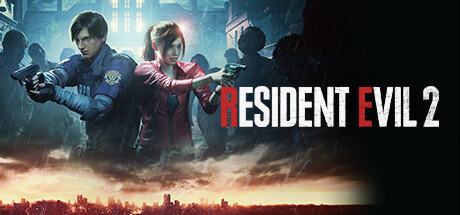
January 25, 2019: Resident Evil 2 (Remake) launches.
RE Engine evolved a second time. Over-the-shoulder camera, real-time lighting, physical destruction, a relentless Tyrant pursuit AI, a restructured police station (no more A/B scenarios — one merged story), and complete, separate full campaigns for Leon and Claire.
Commercially and critically, it became the benchmark for “how to remake a classic.”
Zixing told me: “The RE2 Remake is the standard answer to ‘how to remake a classic.’ It didn’t rebuild the old map 1:1 — it ’translated’ the original’s core experience into modern level-design language — that lobby, the west office, the underground parking garage, the chemical plant; every area hides a new surprise.”
April 3, 2020: Resident Evil 3 Remake launches. Jill’s escape, Carlos’s perspective, a linearized rebuild of the Raccoon City streets, an upgraded Nemesis AI. Reception split; the criticism centered on “too short” and “cutting the clock tower, the park, the factory, and other original areas.”
Wubian said: “The RE3 Remake feels like the RE2 Remake’s DLC sold at full price.” Chasun twisted the knife: “But RE3’s combat feels better — the dodge mechanic, perfect dodges triggering slow motion, a counter into a full combo. That’s what modern action games should feel like.”
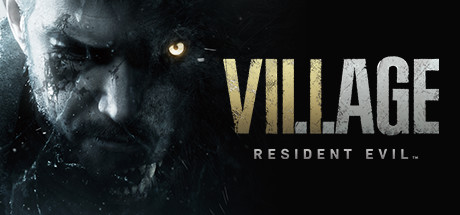
May 7, 2021: Resident Evil Village launches. Ethan returns — first-person, the mountain village, four lords (Miranda, Donna, Moreau, Heisenberg), Chris Redfield joining as an NPC, even a boss fight tipping its hat to mecha classics.
The post-launch controversy centered on: “Terrifying in the first half, an action show in the second.”
March 24, 2023: Resident Evil 4 Remake launches.
This time, no controversy. Media average of 93, 4 million copies shipped in week one, plus awards for best action, best audio, best performance (Leon’s voice actor), and more.
The Ganado siege of the village opening, the lake Salazar, the castle’s Ashley escort, the island duel with Krauser, the final Saddler transformation — every frame says: “This is what a remake should be.”
Nobody argued in the office anymore. Zixing said: “The RE4 Remake proved that when Capcom balances ‘respecting the original’ with ‘modern reimagining,’ there’s no game it can’t nail.” Chasun added: “And it fixed all the original’s ‘insane design choices’ — Ashley’s AI, the teleporting Salazar, the QTE frenzy — while keeping the soul.”
Chapter Eight: An Office That Argued for a Week#
Honestly, this article set off a full week of arguing in the office.
The question at issue: which entry in the series is the best?
Zixing’s position was unambiguous: Resident Evil 4 (the original). “Judged across four dimensions — historical significance in game design, feel, level pacing, replay value — the original RE4 is still the peak. The remake is more fun, but the historical standing belongs to the original.”
Chasun disagreed: “You’re underrating the historical standing of the RE2 Remake. Without the RE2 Remake pulling off the ‘return of horror’ in 2019 and steadying the core audience, this series might have died outright after RE6. The RE2 Remake is this franchise’s lifeline.”
Wubian’s take was the most contrarian: the Mercenaries mode in Resident Evil 6 is severely underrated. “RE6’s combat depth, cancels, counter combos, skill loadouts — no Resident Evil since has dared pick that system back up — and it’s one of the most valuable design directions the series ever had. Imagine RE6’s combat system running on RE Engine. What couldn’t you do with it?”
I said you’re all right, but my vote goes to the original Resident Evil. Not because it’s the best — because it’s where I got hooked. That summer, my older brother brought home a bootleg disc with Chris’s face on the cover. I installed it, and the first zombie that turned around in the mansion made me drop the controller. Later I learned speedruns, memorized every safe code, saved my allowance to buy legitimate copies of 2, 3, and 4. Without that summer, there’s no me sitting here writing this piece.
Once again it was Zixing who broke up the fight: “Enough. This is a matter of personal attachment, not objective evaluation. You all keep arguing — I’m going to build a spreadsheet.”
Minutes later he dropped a screenshot into the group — a “series quality index” weighted across four dimensions: Metacritic score, Steam positive rating, player retention, and sales. The result: RE4 Remake first, RE2 Remake second, the original RE4 third, RE7 fourth, Code Veronica fifth.
The group went quiet for a minute. Then Wubian typed: “You did this during work hours?”
Zixing: “Lunch break.”
Chapter Nine: Why It Matters#
After writing everything above, one word kept surfacing in my head: “survival.”
I thought it over carefully, and I think the word fits.
What makes Resident Evil special is that it grew up alongside an entire generation of domestic players. In the era when PCs and consoles were first entering Chinese households, Resident Evil was standard equipment in practically every internet café and on every cousin’s computer. A ten-yuan bootleg disc, a few-hundred-megabyte ISO, a save file a few megabytes wide — these things composed countless late nights and every hallway conversation between classes.
I still remember playing Resident Evil 2 at my cousin’s place: two of us squeezed in front of a 14-inch monitor, me reading the map and calling directions, him on the controls. The moment a Licker pounced at Claire in the station hall, we both screamed. Simple. Terrifying. Happy. Direct.
Chasun once said something to me that I think is the best possible ending for this article: “Resident Evil was never one of those games you ‘should play.’ It’s one of those games you ‘survived.’”
Yeah.
If you open Steam today, see the Resident Evil 4 Remake, the Resident Evil 2 Remake, or Resident Evil 7 on the front page, peek at the reviews and screenshots, and feel the little itch of “maybe I should try again” — then this article was worth writing.
Buy it. Play it. When the bullets run out, duck into a safe room, save, and get a good night’s sleep.
The Full Series at a Glance#
| Title | Release year | Development / engine | My score | Core standing |
|---|---|---|---|---|
| Resident Evil | 1996 | PS1 / proprietary | ★★★★★ | The foundation that defined survival horror |
| Resident Evil 2 | 1998 | PS1 / proprietary | ★★★★★ | Peak of the golden age; the police station is a textbook |
| Resident Evil 3 | 1999 | PS1 / proprietary | ★★★★ | Nemesis brings live choices and pursuit |
| Code: Veronica | 2000 | DC/PS2 / proprietary | ★★★★ | Full-3D transition; closes out the Mikami era |
| Resident Evil 4 | 2005 | GC/PS2 / proprietary | ★★★★★ | The over-the-shoulder revolution; redefined action shooting |
| Resident Evil 5 | 2009 | MT Framework | ★★★☆ | Co-op action at its limit; horror core lost |
| Resident Evil 6 | 2012 | MT Framework | ★★☆ | Global action blockbuster; directional drift |
| Resident Evil 7 | 2017 | RE Engine | ★★★★★ | Return to first-person survival horror; technical rebirth |
| Resident Evil 2 Remake | 2019 | RE Engine | ★★★★★ | The remake benchmark; translation, not replication |
| Resident Evil 3 Remake | 2020 | RE Engine | ★★★★ | Best combat feel in the series; trimmed-runtime controversy |
| Resident Evil Village | 2021 | RE Engine | ★★★★ | Horror and action fused; four lords superbly designed |
| Resident Evil 4 Remake | 2023 | RE Engine | ★★★★★ | The definitive remake; honors and surpasses the original |
Office Easter Egg#
While I was writing this piece, Zixing strolled past my desk and glanced at the screen. “You’re nearly four thousand words in — how many people are actually going to finish it?”
I said: “If I finish it, someone will.”
Wubian popped up in the group: “Where does that confidence come from?”
“From that black CD with white lettering, back in 1996.”
— Long Zuiri, NTGame Editor-in-Chief