The Witcher 3 Remake Is Out Free Today: The White Wolf Returns, Still Holding Two Old Tickets#
LongzhuiRi | September 29, 2026
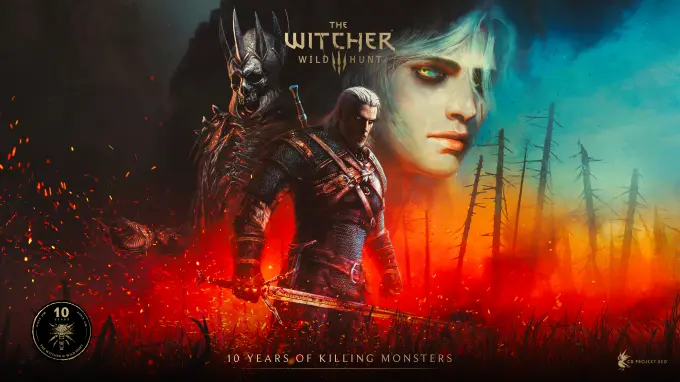
Hello everyone, LongzhuiRi here. At six this evening — 18:00 Beijing time on September 29 (10:00 UTC global unlock) — the remake of The Witcher 3: Wild Hunt went live across every platform simultaneously. From PC to PS5, Xbox Series X|S, a native Switch 2 build, and even a first-ever arrival on Blizzard Battle.net, an eleven-year-old game has just completed a full-platform overhaul in 2026.
For us in the newsroom, this is no ordinary news flash. Back in early August we talked about the five-minute work stoppage the whole editorial team took when the Songs of the Past expansion was announced, and I said then that CD Projekt Red had not treated The Witcher 3 as a relic of the past. Two months later, that promise landed faster than anyone expected: the remake was pushed straight to every veteran player for free, and along the way it knocked the 2026 review charts sideways.
I have written this article in the order veteran players care about most: first how to upgrade and how big the download is, then what the remake actually changed, then the review logic behind that MC 94 number, and finally CDPR’s roadmap for the next two years. All data and details are limited to the official patch notes and public media reporting; reviews are still being aggregated and the score figure will drift over time.
1. The Practical Stuff First: How to Upgrade and How Big the Download Is#
The smartest thing about the remake is that it drove the barrier to “upgrading” down to zero. The official rule in one sentence: players who own the original within the same system ecosystem automatically receive the remake for free, and it includes both Hearts of Stone and Blood and Wine. Note the qualifier “same system ecosystem” — Steam players claim it on Steam, GOG players on GOG, and the same applies to PS5 and Xbox Series X|S; no cross-ecosystem migration is needed.
The upgrade method and footprint per platform, organized into a table:
| Platform | Upgrade method | Size | Notes |
|---|---|---|---|
| PC (Steam, GOG, Epic) | Own the original in the same ecosystem, free automatically, both expansions included | Full install with expansions roughly 70GB | First time with path tracing and other PC-exclusive features |
| PS5 | Own the original in the same ecosystem, free automatically, both expansions included | No standalone size published | PS5 Pro supports PSSR; up to 60 fps with ray tracing on |
| Xbox Series X|S | Own the original in the same ecosystem, free automatically, both expansions included | No standalone size published | Unlocks in sync with the PS5 version |
| Switch 2 | Original Switch owners claim the native build free; old saves carry over | Standalone download roughly 43.5GB | The first native version on Switch 2 |
| Blizzard Battle.net | First launch on Battle.net (CDPR and Blizzard partnership) | — | The remake’s first appearance on that platform |
A few practical reminders, all spelled out in the official patch notes:
- The roughly 70GB PC full install figure includes both expansions — that is the install size cited by Trusted Reviews and other outlets; the standalone sizes for the PS5 and Xbox console versions were not published, so do not trust any specific number of unknown origin.
- The system requirements have changed alongside the remake, and the official notes remind you to install the latest graphics drivers across all three channels: NVIDIA, AMD and Intel. Updating your drivers first will save you a lot of in-game grief.
- The original game was discounted 50% before launch (to about $24.99), with the PC discount once reaching 74% and Xbox 81%; buying the original now grants the remake automatically. For anyone who has not yet jumped in, this is essentially the cheapest entry point there will be.
- Original Switch owners can carry their saves directly into the Switch 2 native build — no need to redo those contract quests you ground through on the handheld.
As someone who put hundreds of hours into the PC version back in the day and later bought it again on Switch, I am probably more sensitive than most to the words “save inheritance”. CDPR flattened the free upgrade path for original Switch owners too, which looks remarkably generous in an era where most publishers treat remakes as a second round of charging.
A Per-Platform Upgrade Checklist#
To keep anyone from scrambling on unlock night, here is the verification checklist per platform, in operating order. The upgrade rules themselves have no gate — all you need to do is confirm status, reserve space and update drivers.
PC players (Steam / GOG / Epic):
- Confirm which ecosystem holds your original: the remake follows the platform where your original lives — Steam library matches the Steam version, GOG matches GOG, Epic matches Epic; no cross-ecosystem handouts.
- Reserve disk space: the full install with both expansions is roughly 70GB, and you should leave headroom for later patches.
- Update your graphics drivers: NVIDIA, AMD and Intel were all named in the official reminders, and system requirements have changed alongside the remake.
- If you want the PC-exclusive path tracing, first confirm your GPU clears the threshold for the upscaling solution — AMD FSR 4 frame generation requires an RX 7000 series card or newer; anything below falls back to FSR 2.
PS5 / Xbox Series X|S players:
- Owning the original in the same ecosystem grants the remake free automatically, both expansions included; no upgrade pack purchase required.
- PS5 Pro users should pay special attention to PSSR support: up to 60 fps with ray tracing enabled — the first time a console has touched the 60 fps bar in the ray-traced tier.
- The console versions’ standalone install size was not published; go by the actual prompt at download time.
Switch 2 players:
- Original Switch owners can claim the Switch 2 native build free — the first native version of The Witcher 3 on the platform.
- Old saves carry over, so handheld progress does not have to restart from zero.
- The standalone download is roughly 43.5GB, the only handheld size figure published so far.
This “free upgrade within the same ecosystem” design actually takes care of every category of veteran: PC players across three storefronts claim it where they already own it, console players move straight onto current-gen machines, original Switch owners even carry their saves over, and PS4-generation players have a corresponding current-gen path. For an eleven-year-old game, an upgrade path laid this thoroughly is genuinely rare — most remakes cannot even be bothered to answer the question of whether veterans need to buy twice. CDPR shut down every such question with a single phrase: “granted automatically, free”.
One Reminder About Install Sizes#
A word more on install sizes. During research, an alternative claim of “45GB required on PC” surfaced, which conflicts with Trusted Reviews’ figure of “roughly 70GB full install on PC (including both expansions)”, while the Chinese-language compilation of CDPR’s patch notes gave no explicit size figure. This site adopts the 70GB (with expansions) figure and notes its source; the 45GB claim is neither confirmed by official material nor does it explain whether expansions are included, so we recommend not accepting it. Likewise, the PS5 and Xbox sizes, and the Switch 2 version’s frame rate and resolution targets, all lack official figures — until official numbers land, any “measured data” online should be treated as rumor.
2. What the Remake Changed: One Comparison Table for Patch 5.00#
The remake’s version number is 5.00. To understand its weight, you need one piece of context first: in December 2022, The Witcher 3 received a next-gen update that added ray-traced global illumination, shadows, reflections and HD textures. Today’s 5.00 stacks another layer on top of that update — it is not a rebuild from scratch.
The change comparison table first, then my read on each item:
| System | Remake change | How veterans should read it |
|---|---|---|
| Graphics tech | PC-exclusive path tracing; DLSS 4.5 Ray Reconstruction, AMD FSR 4 (frame generation, requires RX 7000 or newer, otherwise falls back to FSR 2), Intel XeSS 2.0 (frame generation plus low latency) | A further upgrade on the 2022 next-gen update; the ray-traced tier maxed out |
| Rendering pipeline | Integrates textures and models from The Witcher 3 HD Reworked Project mod; native DirectX 12 multithreaded rendering; GTAO ambient occlusion; updated HDR calibration panel; ray-traced local shadows; Ray-Traced HairWorks | The community’s strongest graphics mod officially promoted into the game |
| Console visuals | PS5 Pro supports PSSR; up to 60 fps with ray tracing | First time a console touches 60 fps with ray tracing on |
| Feedback | DualSense haptic feedback (on PC) | One more layer of physical feedback for gamepad players |
| Skill system | Rebuilt as a skill tree: 3 ranks per skill, skill prerequisites, skill point resets, some skills renamed and rebalanced | The allocation logic is redone; old build thinking needs a rethink |
| Combat presentation | New execution finishers; all five sign visuals refreshed; improved behavior for common enemies like wolves and drowners; new dynamic combat and exploration cameras | The most visible changes are in combat’s look and rhythm |
| Movement and riding | Refined Geralt jump, climb and vault animations; improved Roach riding feel (including crowded stretches like Novigrad); loot from horseback | Both old annoyances that once drove newcomers away are fixed |
| Transmog | Official transmog system (called Reforge in-game): changes appearance only, no stats, offered by blacksmith Yoana and armorer Hattori; Blood and Wine dyes still usable | Mastercrafted sets no longer force a choice between stats and looks |
| Photo mode | Massively expanded: rebuilt UI, character placement, poses and expressions, camera lock, environment presets, aspect ratio control, first-person camera, weather and time control, rule-of-thirds grid, prop placement | Upgraded from a screenshot tool to a small photo studio |
| Mods and tools | Built-in mod.io cross-platform mod integration (browse and install from the main menu); REDkit engine improvements | Console players can finally use mods properly |
| Accessibility | New “Bard’s Ballad” preset: faster self-healing, infinite breath, no encumbrance, faster boat and more | Story-focused players finally get official toggles |
Let me expand a few items with my own take.
The Skill Tree Rebuild: The Smallest Line Item, the Biggest Consequence#
The skill tree rebuild is the change with the deepest impact on veterans in this entire update. The patch notes give four new rules; here they are matched to their practical effects:
| New rule | Content | Practical effect on builds |
|---|---|---|
| Rank structure | 3 ranks per skill | A finer growth curve per skill; the investment and trade-offs of maxing one skill all need recalculating |
| Prerequisites | Skill prerequisites introduced | Allocation now has ordering constraints; rush builds need their paths replanned |
| Skill point resets | Skill points can be reset | The cost of trial and error drops sharply; switching builds is no longer a bone-deep ordeal |
| Renames and rebalancing | Some skills renamed and rebalanced | The numbers behind familiar skill names may have changed; allocating from memory is risky |
Stacked together, these four change the entire decision structure of character building. The old universal opener of “max attack speed and alchemy first, ask questions later” may not be dead outright, but the introduction of prerequisites means that after a reset, fast re-building requires lighting up the trunk nodes first. Fortunately, skill point resets slash the cost of experimentation: switching mid-game from swordplay to a signs build no longer depends on a late-game potion of clearance. Watch out for the renamed and rebalanced skills too — the math under a familiar name may have shifted, so re-read the whole tree before drawing conclusions.
For anyone running a hybrid build on Death March, my suggested return order is: reset your skill points first, walk the new tree from zero, split your old build into “core nodes to keep” and “peripheral nodes to rearrange”, then relight the tree under the new prerequisite rules. Do not rush to apply a ten-year-old template — enemy behavior has been buffed too, and old templates are no longer facing the same enemies.
Combat Presentation and Enemy Behavior: The Layer You Can See#
All five signs — Aard, Igni, Yrden, Quen and Axii — have had their visuals fully refreshed, and combined with the new execution finishers and dynamic combat cameras, the combat layer is the most immediately visible change in this remake. The patch notes also confirm improved common enemy behavior: wolves will act more like wolves, and drowners will no longer line up to die the way they did a decade ago.
Do not underestimate that “improved common enemy behavior” line. The Witcher 3’s combat ceiling has long been dragged down by trash mobs — one-on-one, griffins and wraiths put up a fight, but wolf packs and drowner groups spawned hundreds of “stand still and win” strategies over eleven years. Buffed enemy behavior means those old tricks may not hold, sign crowd control needs re-evaluating, Quen is no longer universal insurance, and Aard’s knockback windows need relearning. On Death March, that hands some of the tension back to combat.
Transmog and Photo Mode: This One Is for the “Lifestyle Players”#
Transmog (Reforge) is the feature I personally welcome most. It changes appearance only, never stats, is offered by blacksmith Yoana and armorer Hattori, and the Blood and Wine dye system remains usable. You can finally wear the best-looking set into the hardest contracts without worrying that aesthetics and numbers are at war. Those of us who endured two playthroughs of ugly mastercrafted gear for the stats — consider that old debt repaid. Keeping the dyes is a thoughtful touch too: the stockpile you built up in Toussaint is not invalidated, and your color freedom doubles overnight.
The scale of the photo mode expansion is obvious from the feature list. Here it is item by item, and you can judge for yourself that this is no longer a screenshot tool but a small studio for content creators:
- Rebuilt interface, entirely new interaction logic
- Character placement, with pose and expression editing
- Camera lock and environment presets
- Aspect ratio control and rule-of-thirds grid
- First-person camera
- Weather and time control
- Prop placement
Kaer Morhen’s snow, the Toussaint vineyards, Novigrad’s harbor — with weather and time control plus environment presets, there is one more reason to replay Blood and Wine. Chasing half a day of weather for one “wolf school medallion close-up at sunset” is over; now you dial it in from a menu.
Mods and Accessibility: Two Doors That Did Not Exist Before#
The mod.io cross-platform mod integration deserves its own paragraph: browsing and installing mods straight from the main menu means console players can finally use mods properly in The Witcher 3, while PC players no longer have to juggle version compatibility through external channels. Combined with the REDkit engine improvements, officially folding community graphics mods like The Witcher 3 HD Reworked Project into the official build is itself a nod to years of mod community labor — those textures and models have been the standard rocket fuel for PC visuals for a decade. Installing HD Reworked used to require researching load orders and compatibility patches; now the official build ships with it, and that promotion is real recognition for the mod authors.
The “Bard’s Ballad” accessibility preset is an easily missed feature that shows real good faith: faster self-healing, infinite breath, no encumbrance, faster boat and more. For story-first players, it is an official set of “story mode” toggles; for older players or those with motor difficulties, it may be the first real chance to walk through Velen’s swamps in full. Accessibility features are increasingly common in AAA, but appearing in a free update for a 2015 game means something different — it serves not new sales, but the experience of the existing player base.
3. MC 94: How a 2015 Game Tops 2026#
Then there is the set of numbers flooding every gaming outlet today: the remake’s Metacritic average is 94 (at press time), temporarily the highest-rated new release of 2026 on the site, above Resident Evil 9: Requiem and Forza Horizon 6. For reference, the original Witcher 3’s Metacritic average is 92.
First, the known outlet scores:
| Outlet | Score |
|---|---|
| Eurogamer Germany | 100 |
| Combo Infinito | 100 |
| Noisy Pixel | 90 |
| GamingBolt | 90 |
| The Games Machine | 90 |
Two caveats must be stated clearly — a professional habit: read the qualifiers before the number:
- Reviews are still being aggregated; 94 and 95 are snapshots from different moments. Gamersky’s average at press time was 95, which settled to 94 as more reviews came in. This article uses 94 (at press time), and that figure may still move.
- The remake has fewer aggregated reviews than Resident Evil 9: Requiem and Forza Horizon 6. A smaller sample means the average is more easily swayed by a single outlet, so the “top spot” claim deserves an objective discount. Tech4Gamers’ report flagged this specifically.
The criticism is worth recording too; reviews raise four main issues:
- Camera control friction: the new dynamic combat camera is a presentation upgrade, but more than one outlet flagged how the camera handles;
- Minor UI issues: sporadic interface problems — not fatal, but real;
- Art direction divides: some players disagree with the remade art direction; a matter of taste, but the voices are genuine;
- Age still shows: combat and movement still feel dated — the remake fixed a lot, but it is not a from-scratch rebuild.
None of these four criticisms look out of place in a 94-score article; if anything they make it more credible. No eleven-year-old game becomes a native 2026 AAA through a remake — the points deducted were always going to be deducted for age itself.
Setting the qualifiers aside, the review logic behind a 2015 game reclaiming the top of the 2026 charts after a free upgrade breaks into three threads:
Thread one: the original’s foundation. The Witcher 3’s narrative density, quest design and world-building were industry benchmarks in 2015, and 2016’s Blood and Wine pushed the series’ quest design to its peak. The remake touches only skin and flesh — the bones are unchanged — and that is precisely its most stable trait. Veterans returning eleven years later find the same story, just clearer. Ranking charts rotate new faces every year, but the authority to define a “good game” still rests with content quality, and that has not changed in eleven years.
Thread two: the generosity of free. Same-ecosystem automatic upgrades, both expansions bundled, Switch save inheritance, a discounted original — there is not a single paywall anywhere on the upgrade path. Compared with the industry’s habit of selling remakes twice, this good faith earns CDPR reputation on its own. Review scores are never just about technology; they also grade attitude.
Thread three: the scale of technical modernization. From the 2022 next-gen update to today’s path tracing, the HD Reworked Project promotion and the skill tree rebuild, CDPR has used two free updates to keep lifting an old game toward current standards. This “treat the old game like a new one” operations style shows reviewers not a reheat warehouse but a product still under serious care.
Of the three threads, I think the second matters most. Every publisher can upgrade visuals, but the decision to “push our best-selling old game to every veteran for free” takes not technology but confidence in the long-term value of your own work. A good chunk of that 94 was scored for that confidence. Do not forget the earlier qualifier either: the review sample is smaller than the two new releases on the same chart, so this lead is closer to “front-runner out of the gate” than “final verdict” — for a game with an expansion still coming, there is plenty of time to settle that question by 2027.
4. CDPR’s Roadmap: 5.00 Is Only the Opening#
Zoom out, and today’s remake launch is only the first step in CDPR’s broader rhythm. The official patch notes put it bluntly: this remake lays the gameplay foundation for the Songs of the Past expansion.
Counting forward from today, the series timeline looks like this:
| Date | Item | Notes |
|---|---|---|
| December 2022 | Next-gen update | Added ray-traced global illumination, shadows, reflections and HD textures |
| September 29, 2026 | Remake (version 5.00) free rollout | Simultaneous unlock on all platforms, both expansions included, lays groundwork for the expansion’s gameplay |
| 2027 | Songs of the Past paid expansion | Chinese-language media use two renderings of the title; this site sticks with Songs of the Past |
| 2028 | The Witcher 4 (target) | The planned year for the series’ next mainline entry |
Some background: the remake was surprise-announced at gamescom 2026’s Opening Night Live, barely more than a month before today’s launch — under two months from reveal to release, an unusual pace for AAA and more like a long-prepared final strike.
For detailed analysis of the expansion, see our August piece, the Songs of the Past announcement breakdown: CDPR stated plainly that this is a full Blood and Wine-scale expansion, not a handful of quest packs. With the remake now landed, the technical foundation is laid — that line in the patch notes about “laying the gameplay foundation for the Songs of the Past expansion” points exactly at this relationship: system-level changes like the skill tree rebuild, sign refresh and enemy behavior buffs are almost certainly preparing the gameplay framework for 2027’s new content.
That ordering is worth savoring. If CDPR merely wanted to sell nostalgia, the remake could have stopped at a visual upgrade; instead, the free update touches gameplay skeleton items like the skill tree and enemy behavior — changes that invalidate old guides and force veterans to readjust, which is a negative when fending off “cash-grab remake” reviews. The only coherent explanation: the 2027 expansion needs a new gameplay framework as its foundation, and that framework is being delivered first, free, in 5.00 to every player. By the time Songs of the Past arrives, every player’s save will have run a year on the new systems, and the new content plugs straight in with no disruptive system migration.
And one step further out sits the targeted 2028 release of The Witcher 4. Remake, expansion, mainline sequel — three milestones on one clear line: first pull all-platform players onto a common version baseline with the free 5.00, then extend Geralt’s story with Songs of the Past, then hand off to a new protagonist. For CDPR, this is a three-year series mobilization; for us players, it means that as of today, returning to Velen requires no excuse.
Final Words#
While writing this piece, I dug out my old save — the last checkpoint sat in a Toussaint vineyard, timestamped spring 2023. It is a strange feeling: a game walks beside you for years, then one day it returns in new clothes for free, save intact, Roach intact, even the dyes intact.
I have written about The Witcher 3 many times in eleven years — the main story, Blood and Wine, Gwent. Today is probably the last time I write about it as a “legacy version player”. From tomorrow, we discuss the version with path tracing, transmog and a new skill tree. When an old game gets treated this well, that is the player’s good fortune.
Upgrade, everyone. Velen’s swamps are still Velen’s swamps — but this time, they are brighter.
— LongzhuiRi, NTGame Editor-in-Chief