NARUTO Mobile Officially Goes Global: The PROJECT: RASENGAN Three-Year Plan and a Chinese Mobile Game Ten Years in the Making#
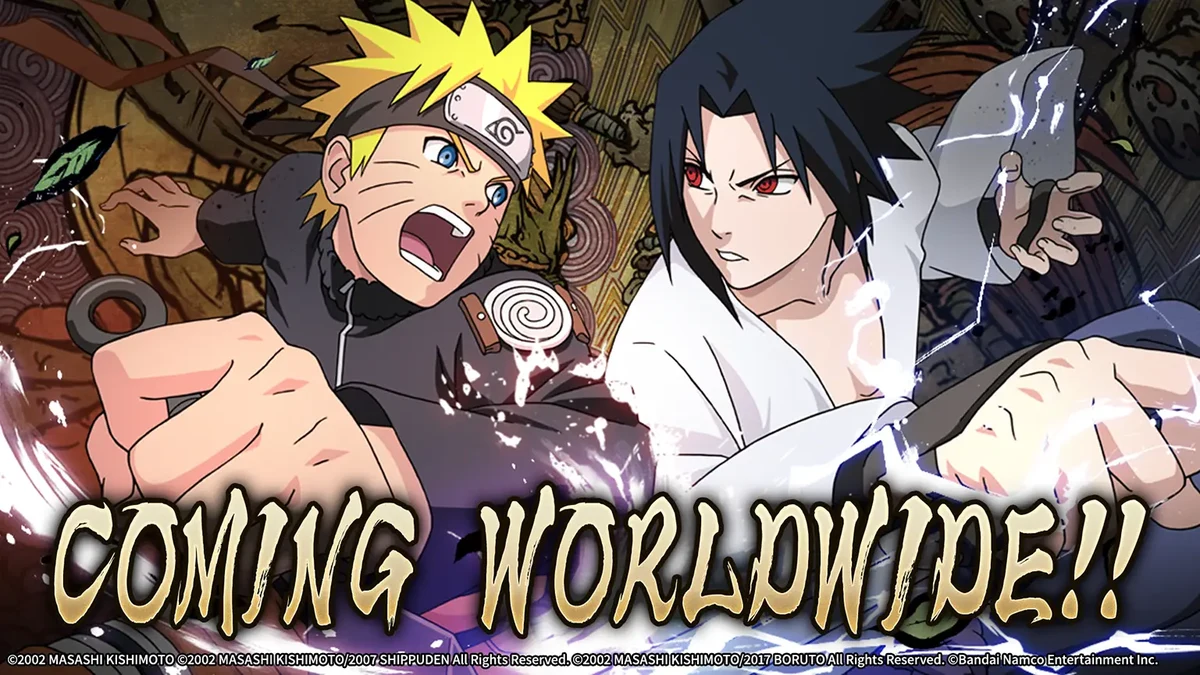
Hello everyone, Zhanlan Yingren here. On the evening of October 10, at the “NARUTO: What’s Next?” panel of New York Comic Con, Bandai Namco fired a Rasengan straight into the global player timeline: NARUTO Mobile, running for a full ten years, is going worldwide on iOS and Android, with a teaser trailer released alongside. As the news traveled back, overseas community comment sections flooded with “we’ve waited ten years,” while veterans of the China server posted screenshots of their ninja squads from the game’s opening days ten years ago. On one side, long waiting; on the other, long companionship — the same game trended on both sides of the Pacific in two entirely different moods.
As a veteran of Chinese online games who came up through Stone Age, I am unusually sensitive to the measure of “ten years” — you can count on one hand the domestic online games that players have accompanied for a decade. And this protagonist is a bit special: it is a Japanese-IP-licensed, Chinese-developed-and-operated collaboration, and after a ten-year run on the China server, it now goes to knock on the global market’s door for the team. This article wants to do four things: sort out what was announced, lay out the ten-year China-server operations timeline, take apart the “Japanese IP plus Chinese development” globalization machine, and finally place the game within the decade-long context of Chinese mobile games going overseas, giving it a coordinate. I will keep it restrained — no hype, no hit piece, a factual record, but with warmth.
1. What Was Announced at New York Comic Con: One Table for the “Rasengan Plan”#
First, the event itself. On October 10 (local time), on the “NARUTO: What’s Next?” stage at New York Comic Con, Bandai Namco announced that NARUTO Mobile will release worldwide, with an English teaser trailer released alongside; the official notes also warn that some devices may be incompatible, visuals and audio are still in development, availability and supported languages vary by country and region, and the game may not release in all regions. No release date yet — in other words, an “announcement in transit” rather than a “play-on-day-one” launch.
More importantly, the mobile game’s overseas push is not an isolated event but one of the first moves of a Naruto IP global content plan named “PROJECT: RASENGAN” (literally, the Rasengan Plan). The plan spans the next three years (2027 through 2029) and covers manga, anime, cards and games. The four first-wave projects:
| Project | Format | Key info | Timing |
|---|---|---|---|
| NARUTO Mobile international version | Mobile game | Global release, iOS and Android, English teaser already out | Release date TBA |
| NARUTO CARD GAME | Trading card game | A Bandai card project, global release | June 2027 |
| Naruto × Ninku | Collab anime | A four-episode crossover anime | Timing TBA |
| NARUTO SHADOW RISING | All-new manga | Written by original author Masashi Kishimoto, set in the gap between the end of the Fourth Great Ninja War and the start of Boruto | More details to come |
Three details in this table deserve attention. First, the four projects span anime, cards, games and manga — Bandai Namco is clearly not pushing a single product but laying a globalized content web for the whole IP; the mobile game is just the piece occupying the “game” square. Second, Kishimoto’s new manga fills the gap between “the end of the Fourth Great Ninja War” and “the start of Boruto” — the exact story band the game has not yet covered, meaning version material for years to come now has a canonical source. Third, with the card game dated for June 2027 and more manga details plus new mobile intel expected at Jump Festa 2027 in December, the plan’s cadence is clearly scheduled, not squeezed out ad hoc.
The practical official caveats are worth transcribing here too; anyone planning to jump on the international version at first opportunity should check themselves against them:
| Official note | Content | What it means for players |
|---|---|---|
| Device compatibility | Some devices may be incompatible | Older phones and some tablets may not be able to run the game |
| Development status | Visuals and audio still in development | The teaser does not represent final quality |
| Regions and languages | Availability and supported languages vary by country and region; the game may not release in all regions | Whether “all regions” get the game remains open; no list announced |
Bandai Namco has also put up an official project site, with entry points for all four projects on the page, and official social media accounts for the mobile game are live as well. For a plan built to run three years, the official site is the first landing point for future intel — bookmark it.
2. Ten Years on the China Server, Now Going Global: This Game Travels With Form#
2.1 A Mobile Game’s Ten-Year Timeline#
First, the ten-year operations timeline; I have noted the sourcing for each line:
| Time | Milestone | Source |
|---|---|---|
| May 19, 2016 | China server officially launches | Official statement |
| 2021 | Cumulative registered users pass 80 million | Official announcement |
| May 2024 | Milestone of 10 million average daily active users | Tencent Q2 2024 financial report |
| August 2026 | Monthly revenue estimated at roughly 582 million yuan; climbs back to No. 6 on the App Store top-grossing games chart, driven by the new “Akatsuki 3” character | Third-party estimate, relayed by media |
| September 2026 | New long season “Undying Hidden Serpent” launches, Legendary Sannin Orochimaru arrives, back to No. 2 on the top-grossing chart | Third-party estimate, relayed by media |
| October 10, 2026 | New York Comic Con announcement of global release under the PROJECT: RASENGAN three-year plan | Bandai Namco on-stage announcement |
Two spots in this timeline deserve a second look. First, this is not an “old game’s last flare”: 2024 still brought a ten-million-scale average DAU, and in August and September 2026 the “Akatsuki 3” character and the new long season “Undying Hidden Serpent” pushed the top-grossing chart to No. 6 and No. 2 — ten years in, the product is still active. Second, the August revenue and chart figures come from third-party estimates rather than official financials; I have noted that in the table, and citations should carry the same qualifier.
2.2 “A Decade of Waiting” and “A Decade of Companionship”: Two Moods Across the Pacific#
What hits hardest in this announcement is the contrast between the two communities. In overseas social media and press coverage, “a decade of waiting” is the comment-section refrain — for Naruto fans abroad, this game has always been a China-exclusive “legendary existence,” ten years of watching domestic players play the side-scrolling fighter through streams and videos, and now it is finally their turn. Veterans of the China server feel something far more complicated: relief that “the game I have played for ten years is finally seen by the world,” worry that “once the international version lands, will the China server be neglected,” and pure happiness for the game itself.
I understand both moods. The overseas “decade of waiting” is easy to grasp: a product with a complete ninja roster and ten years of update accumulation sat there behind a region wall — anyone who has played a “region-locked classic” knows that particular thirst. The domestic “decade of companionship” is a different feeling: players who were in college when the game launched in 2016 are now mostly working and raising families, and the in-game roster grew from the original launch lineup to an all-star cast spanning Naruto, Shippuden and Boruto — that sense of companionship is genuinely earned. The international version will inherit this decade of roster and content directly, meaning overseas newcomers start with a “max-level” game — both a monetization of ten years of domestic accumulation and a long-overdue recognition of what China-server players put in.
To be clear: “overseas communities flooding feeds” is a community-sentiment observation with no authoritative stats on scale, so I will not dress up a number — but the direction is clear: a lot of people have been waiting.
2.3 Why Now: Three Readings of the Timing#
Why announce the overseas push at this particular moment? From public information, at least three readings.
First, product condition. As the table above shows, the game is still active in the top tier of the charts; September 2026’s long season just pushed it back to No. 2. Going out with momentum is far more dignified than rushing out in decline — an international launch gets exactly one first-impression window, and entering from a high point is the sound commercial call.
Second, the IP window. “PROJECT: RASENGAN” packages the mobile overseas push, the new manga, the card game and the collab anime into one announcement band, and IP-level global heat feeds itself: the manga fills the canonical gap and feeds the game, cards and anime widen the casual audience, and the mobile game takes the deepest monetization-and-retention layer. Within the plan, the mobile game’s role is not “charting in one more region” but serving as one of the three-year plan’s cash-flow and activity pillars.
Third, execution readiness. The next section covers this — from job postings to the announcement, this was not a snap decision but a move prepared for a good while.
2.4 Gameplay and the International Version’s Starting Content#
Per the official and media descriptions, the game’s foundation is 2D side-scrolling action fighting; the two main modes and the roster’s span:
| Gameplay dimension | Form | Meaning for international players |
|---|---|---|
| Real-time PvP | Fast-paced real-time fighting | The competitive main stage; side-scrolling fighter skill ceilings decide depth |
| Story mode (PvE) | PvE retelling of the original story | The nostalgia gateway for Naruto fans; relive famous scenes along the canon timeline |
| Ninja roster | A cast spanning Naruto, Shippuden and Boruto | Ten years of accumulated characters carry over directly — a huge roster from day one |
Here is what “directly inheriting ten years of accumulation” means (fact-card framing: at launch, the international version will directly inherit the character roster and update content accumulated over ten years). For a fighting mobile game, the roster is the foundation of the play ecology: much of side-scrolling fighting’s pleasure comes from the width of the ninja pool — different skill sets, openers and counters create the game’s strategic space. Ten years of China-server roster assets mean the international version is not an “empty-shell new game” from day one but a content-rich mature product. What overseas players waited ten years for is exactly this: not a new game, but a complete form ten years in the maturing.
For China-server players, the inheritance is a good signal too: moving the domestic decade of content assets straight into the international version recognizes the value’s origin — the China server’s ten years were not a resource library to be “harvested” by going overseas; they are the very body of this expansion.
3. Bandai Namco × Tencent MoreFun: A Mature Global Division of Labor#
3.1 How the Three Roles Divide#
This game’s partnership structure is a textbook sample for understanding Chinese mobile globalization. The roles, taken apart:
| Role | Party | Responsibility |
|---|---|---|
| IP licensor | Bandai Namco (Japan) | Provides the Naruto IP license; leads the overall global IP content plan, PROJECT: RASENGAN |
| Developer and operator | Tencent’s MoreFun Studios (China) | Game development and long-term operations; ten years of China-server content supply and version iterations all came from its hands |
| China publisher | Tencent | China-server publishing and domestic operations |
| International publishing arrangement | Not fully disclosed | Release date, monetization model and supported-language list all unannounced |
Note the “unannounced” in the last two rows: who leads international publishing, how monetization is structured, which regions launch first — none have official answers, and I will not guess. But the first two rows are clear: Japan supplies IP and the global plan; China supplies development and ten years of operational experience. The efficiency of this division has been proven by a decade on the China server — Bandai Namco chose to take a product validated for ten years in the Chinese market to the world rather than build a separate “international special edition,” which is itself an endorsement of MoreFun’s development and operations capability.
3.2 MoreFun’s Overseas Record: Not the First Knock on the Global Door#
Tencent’s MoreFun Studios are no newcomer to going overseas. Per financial media roundups (single-source figures below — read with care), MoreFun’s recent overseas scoreboard:
| Title | Overseas milestone | Global performance (media figures) |
|---|---|---|
| Arena Breakout | Overseas since 2023 | Global registered users pass 180 million |
| Arena Breakout: Infinite | Launched on Steam | “Very Positive” rating; topped Twitch viewership charts at its peak |
| Roco Kingdom: World | Day 9 after launch | Registered users pass 30 million; 2026’s domestic new-game champion in both DAU and revenue; overseas release already announced |
| The Hidden Ones | Dated for December 2026 launch | Manhua-adapted 3D fighter; 30 million+ pre-registrations across all platforms |
Read this table next to the Naruto mobile push and MoreFun’s globalization path has a clear shape: first test markets with their own genres (shooters, fighting), accumulating publishing experience and infrastructure, then take a decade-refined, top-tier IP product for a high-profile global launch. The Naruto mobile game is the heaviest piece on this path so far — behind it stands a top-tier Japanese IP, and the product carries ten years of content accumulation.
3.3 An On-Site Comparison: Two Routes to Going Global#
Among the games already covered on our site, this partnership model has ready-made comparisons. One route is “foreign IP plus Chinese development and operations”: Tencent’s Marvel partnership Marvel Rivals is exactly this structure — the overseas rights holder supplies IP, the Chinese studio supplies development and operations, released straight to the global market. The Naruto mobile game walks the same road, and with ten extra years on the China server, its content depth is rare among partnership projects of this kind.
The other route is “self-developed IP plus global release”: miHoYo proved with Genshin Impact and Honkai: Star Rail that self-owned IP can stand at the top of global markets directly, and Kuro’s Wuthering Waves carved out its own share on the same road. This route’s moat is IP ownership — revenue structure and version cadence are fully autonomous, with no rights holder to answer to.
Neither route is superior; the constraints simply differ. Self-owned IP runs on global consistency; licensed IP runs on the product of “IP heat × development capability.” The Naruto mobile game is special as a rare “long-distance runner” on the licensed route: most licensed mobile games measure their life cycle in years; this one measures in decades. A manga-adapted fighter keeping players for ten years must rest on sustained content supply and solid fighting mechanics — exactly the most valuable assets when going overseas. By the way, Tencent’s other self-developed overseas card, Delta Force, has also made global noise in recent years, and together with MoreFun’s Arena Breakout series forms Tencent’s FPS overseas echelon — the global map of Chinese mobile games stopped being a single-genre, single-model story long ago.
4. From Job Postings to Jump Festa: A Scheduled Global Campaign#
What reassured an old editor like me most in this story is its execution rhythm. Laying out completed and announced nodes in order:
| Time | Action | Nature |
|---|---|---|
| Earlier | Tencent’s MoreFun Studios opened large-scale hiring for the full pipeline of a “well-known IP overseas project,” covering client development, server development, level design, version operations and more (financial media, single source) | Talent reserve |
| October 10, 2026 | New York Comic Con announcement of global release, English teaser published, official project site and social accounts opened | Official announcement |
| December 19 to 20, 2026 | Jump Festa 2027 takes place; per overseas media, further international-version intel is expected there (mobile portion single-source); more details of the new manga NARUTO SHADOW RISING also revealed at the same event | Next node |
| June 2027 | NARUTO CARD GAME global release (part of PROJECT: RASENGAN’s first wave alongside the mobile game) | IP content ammunition |
| 2027 through 2029 | PROJECT: RASENGAN three-year window | Long-term plan |
The rhythm’s keywords: staff first, announce second, date third. Full-pipeline hiring up front means the client, server, localization and version-operations infrastructure for going global is already recruiting — especially the server and version-operations openings, which point to long-term operational preparation rather than a one-time launch sprint. Announcing at New York Comic Con, a stage where global fans gather, with an English teaser and official social accounts, left no market-preparation step out. And withholding the release date signals restraint: the official line that “visuals and audio are still in development” is honest — an international version inheriting a decade of content carries serious localization and compliance workloads, and matching the card game’s firm June 2027 date is better than grabbing a vague launch window.
For players, the rhythm means the next six months are an observation window: December’s Jump Festa 2027 is the first firmly dated intel node, and the international version’s release window, launch regions and monetization model will most likely settle there or after. Overseas communities waited ten years and will not mind a few more months; China-server players need no “abandonment” anxiety either — the publisher has said the international version directly inherits the decade of roster accumulation, and the roots of that accumulation grow in the China server’s ten-year soil.
5. The Decade-Long Arc of Chinese Mobile Games Going Global#
Zoom further out and this announcement deserves positioning within a decade of Chinese mobile going overseas. In broad strokes, those ten years passed through three stages: earliest exports tested waters with tools and light products, opening markets on app-store distribution efficiency and user-acquisition spend; then came genre exports, with mid-to-heavy genres like SLG, shooters and survival builders gaining footing in Western and East Asian markets while acquisition playbooks grew more refined; and most recently, premium IP exports — either self-owned IP going straight to global (miHoYo’s and Kuro’s titles as representatives) or securing top overseas IP, developing and operating from Chinese studios and feeding back worldwide (Marvel Rivals and this Naruto mobile game representing that route).
The Naruto mobile game’s sample value in this arc is threefold.
First, it proves that “long-term operations capability” is itself an exportable asset. Ten years ago, Chinese mobile exports sold acquisition efficiency; today they sell the complete methodology of a product proven to run for a decade — version cadence, event design, fighting-feel tuning, community maintenance. These are the unteachable, un-rushable skills, and they are the hardest currency of this launch.
Second, it is a sample of “two-way IP flow.” Over the past decade, many Chinese teams took overseas IP for localized agency work; few turned a top overseas IP into a benchmark via the “Chinese development, global release” model. If the Naruto mobile game succeeds, it provides another replicable case for the “Japanese IP plus Chinese development plus global market” combination — a positive reference for licensing partnerships industry-wide.
Third, it marks a global repricing of a “domestic-native” mobile game. A product operated in the Chinese market for ten years sees its content assets (a ninja roster spanning Naruto, Shippuden and Boruto), community assets (a decade of gameplay ecology) and reputation assets (top-of-chart performance) repriced at the moment of going overseas. This inverts the old pattern where “the China server was downstream of global blockbusters” — this time, the domestic version is the source and the overseas market is the increment.
The other side of the coin deserves sight too: the global mobile fighting-and-action market is a red ocean; overseas tolerance for gacha monetization, regional differences in mobile habits and the complexity of multilingual operations are all areas where ten years of China-server experience cannot transfer directly. The official caveat that “the game may not release in all regions” carries, in its restraint, a hint that this voyage is no smooth road. The project has just been announced; judge its substance after December’s Jump Festa 2027.
6. The Next Six Months: Two Checklists for Two Kinds of Readers#
Finally, two observation checklists for the two audiences following this story. Every node comes from the official and media sourcing above — no forecasting mixed in:
If you are an overseas-oriented player waiting for the international version (or a China-server player eager to try it first):
| # | Watch item | Notes |
|---|---|---|
| 1 | Bookmark Bandai Namco’s official PROJECT: RASENGAN site | Entry points for all four first-wave projects; first landing point for future intel |
| 2 | Follow the mobile game’s official social accounts | Account entry points are live on the official page; release window and region list most likely debut there |
| 3 | Watch Jump Festa 2027 on December 19 and 20 | Per overseas media, further international-version intel is expected (mobile portion single-source) |
| 4 | Check your device against the official compatibility note | “Some devices may be incompatible” is explicit official wording; older-device users take note |
| 5 | Manage expectations on visuals and audio | Officially “still in development”; the teaser does not represent final quality |
If you are a China-server veteran:
| # | Watch item | Notes |
|---|---|---|
| 1 | Whether the version cadence holds | August 2026’s “Akatsuki 3” and September’s “Undying Hidden Serpent” long season kept content supply at top level; the domestic update rhythm is worth continued observation |
| 2 | The international monetization model once revealed | The publisher has not disclosed the international payment structure; once out, compare against the China server before choosing how to play |
| 3 | Details of the new manga NARUTO SHADOW RISING | Set “after the Fourth War, before Boruto” — whether this canonical gap enters the game later is worth watching |
Honestly, the biggest trap with “announcement in transit” projects is filling blanks with imagination: guessing release windows before dates are set, taking sides before monetization is revealed. Every item in the two checklists above sits on explicit official or media sourcing; December’s Jump Festa 2027 will deliver the first batch of answers.
7. Sourcing Notes: What Is Confirmed and What Is Pending#
As usual, the fact boundaries laid out clearly so readers carry their own scale:
| Item | Sourcing |
|---|---|
| NYCC announcement timing, global release plan, platforms and teaser | Bandai Namco on-stage announcement, cross-checked by multiple outlets |
| PROJECT: RASENGAN three-year plan composition (anime, cards, mobile game, new manga) | Official project site, cross-checked by multiple outlets |
| China-server launch date, 80 million registered users, 10 million average DAU in May 2024 | Official statements and Tencent financial reports |
| August 2026 revenue of roughly 582 million yuan and No. 6 on the top-grossing chart; September’s “Undying Hidden Serpent” and No. 2 | Third-party estimates relayed by media; not official financials |
| MoreFun overseas record figures (Arena Breakout 180 million registered, etc.) and hiring details | Financial media, single source |
| International-version intel at Jump Festa 2027 | Overseas media; mobile portion single-source |
| International release date, publishing entity, monetization model, supported languages and launch regions | Nothing announced by officials; no speculation here |
| “Overseas communities flooding with a decade of waiting” | Community-sentiment observation; no quantitative stats |
Closing: A Sword Ten Years in the Forging, Now Drawn#
Time for something personal.
I still remember the mood of the Chinese mobile market around 2016: reskinned fast-moving products everywhere, and “recoup in three months, reskin in a year” was the unspoken survival rule. In that environment, MoreFun picked a national-level Japanese manga IP, honestly built a 2D side-scrolling fighter, and spent ten years polishing it — growing the ninja roster from the original cast all the way to Boruto, and refining a fast-paced real-time fighting feel into the house craft. As an art editor, I feel the weight of that persistence especially: a 2D side-scrolling action game’s beauty hides in every frame of hit feedback and every jutsu animation — work you cannot cheat on.
Ten years later, this decade-forged sword leaves its sheath. Overseas players waited ten years and receive a content-complete form; China-server players accompanied ten years and see what they love acknowledged by the world. The two waits converge in one announcement — a rare warm scene in the story of Chinese mobile games going overseas.
My expectation for the international version stays measured: may it make its name in the global market, and may the China server’s decade of soil keep being treated well — after all, for countless players that is not just a game; it is the habit of every version-update day for ten years, “the ninja road with no regrets.” The sword is out of the sheath; the rest belongs to December’s Jump Festa 2027.
— Zhanlan Yingren, NTGame Art Editor