Monster Hunter Wilds Officially Launches#
February 28, 2025
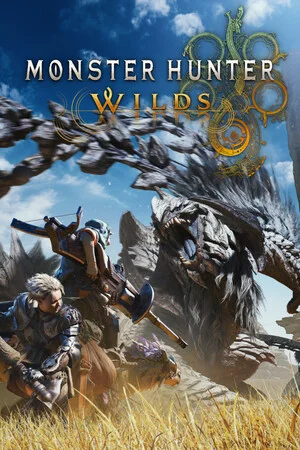
Monster Hunter Wilds officially launched on February 28, 2025, the newest entry in the Capcom series. Dropping the zone-by-zone transitions of previous entries, it is the first time the hunting stage has been built as a fully seamless open world, paired with Focus Mode and the Wound system in an attempt to redefine the rhythm of the hunt. This piece centers on the launch event itself, covering Capcom’s official positioning, the mechanical changes this entry brings, and what they mean for newcomers and returning hunters. The complete mechanical breakdown lives on the Monster Hunter Wilds guide hub.
1. Launch Context: The Series’ Technical Line Comes to a Head#
The release date of Monster Hunter Wilds matches the window Capcom previously announced, and it is the series’ answer sheet after next-generation consoles and high-performance PCs went mainstream. The most visible selling point: monsters and hunters share one vast map with no zone-loading, the ecosystem runs unbroken from the settlements all the way into wasteland and deep jungle, and monsters change their behavior with weather and terrain.
Within the series’ own arc, Monster Hunter Wilds is developed and published by Capcom, covering the current mainstream platforms: Sony’s next-generation consoles, Microsoft’s next-generation consoles, and PC (Steam). From launch day on, it addresses the widest possible audience rather than a single platform’s users — which is exactly the confidence behind making “co-op hunting” a headline selling point.
This technical route did not appear from nowhere. The series had already accumulated a great deal in environmental ecology and monster movement, and this entry makes “seamless” its central thesis — converting the node-based experience of migrations, supply runs, and sharpening stops into one continuous flow. For veterans, the biggest change is that a hunt no longer steps through a grid of zoned maps but chases prey along the terrain; for newcomers, the barrier to hunting alongside strangers drops accordingly.
Judging by the promotional framing Capcom has put out, the emphasis falls on “there are more ways to hunt” rather than simply stacking more monsters. Focus Mode, the Wound system, and the cross-platform co-op infrastructure are all built around the same brief: let players fight in richer ways.
2. What Capcom Says: Reshaping the Hunt with New Mechanics#
In the run-up to launch and after, Capcom repeatedly stressed how deliberately this entry adjusts the series’ traditional framework. At the core sit Focus Mode and the Wound system:
- Focus Mode: while aiming, the hunter locks onto monster weak points far more automatically. Compared with the series’ earlier “manual targeting” approach, the barrier to precise aim drops noticeably. Capcom positions it as an aid that lets more players feel the core thrill of “hitting the weak spot.”
- Wound system: by sustaining damage on a specific monster part, the hunter builds up a wound, then lands a Focus Strike on it for extra damage. Part-breaking turns from a passive windfall into a goal you actively manage.
- Seamless map: one continuous map with no zone changes; monsters migrate and the environment shifts. The hunt changes from “entering an instance” to “tracking an ecosystem,” and players can use falling rocks, vines, traps, and other environmental elements to bend the fight.
Capcom’s framing of these changes leans toward a both-and route — “hunts that are more strategic and also easier to pick up” — rather than a simple difficulty cut. From a design standpoint, the game pulls “skill ceiling” and “entry barrier” toward the middle at the same time, keeping the series’ signature depth while trimming the trial-and-error cost for newcomers.
3. Weapons Adjusted Alongside the New Mechanics#
Alongside this entry’s mechanical overhaul, the weapon roster has also been sorted through. The series’ signature weapon variety remains fully intact, with each weapon’s mechanical theme drawn more clearly:
| Weapon | Core play in this entry |
|---|---|
| Great Sword | Charged heavy slashes and huge single hits; pair with mounts and part breaks for big staggers |
| Long Sword | Foresight Slash, Spirit Blade combos, and the Spirit Roundslash; sustained output with flair |
| Sword & Shield | Agile, item-friendly, balanced offense and defense; a fine starter for newcomers |
| Dual Blades | Extremely fast attack speed and Demon Mode; highly efficient elemental and status buildup |
| Hammer | Blunt blows stack stun; built around hitting the head and breaking parts |
| Hunting Horn | Plays buffs to support the squad; the core role of team hunts |
| Lance | The strongest guard plus precise counters; the steady pick |
| Gunlance | Shelling fused with slashing; shells ignore hitzones for reliable damage |
| Switch Axe | Sword-axe morphing and Element Discharge; trades resource management for high burst |
| Charge Blade | Shield-mode defense flips into axe-mode burst; a high ceiling and high reward |
| Insect Glaive | Aerial attacks paired with kinsect extracts; aerial mobility like nothing else |
| Light Bowgun | High-mobility ranged and rapid fire; flexible elemental ammo output |
| Heavy Bowgun | High single-shot damage and siege fire; the advanced ranged artillery post |
| Bow | Charged shots and the coating system; elemental damage and ranged mobility together |
You can see the weapon lineup has not been flattened — instead, different complexity now maps to different payoffs. Players who want immediate, readable fun can start with weapons of clean rhythm like Long Sword or Great Sword; those willing to manage resources and push a skill ceiling still have Charge Blade, Bow, and Gunlance worth mastering. This “each to their own” arrangement is exactly how the officials lowered the entry barrier while preserving the series’ depth.
4. Stage and Hunting Loop: The Windward Plains Ecological Stage#
The main stage of this entry, the Windward Plains, is the series’ first genuinely seamless open world. It is no single biome but several ecological communities joined into one, with monsters migrating freely among them and the environment shifting dynamically with time and weather. Based on the site’s map materials, this world spans at least the following sharply distinct region types:
| Region | Terrain features | Ecological traits |
|---|---|---|
| Plains | Open land where desert and oasis interweave | Blistering days and cooler nights; sandstorms cut visibility but open ambush chances |
| Dense Forest | The layered vertical structure of tropical rainforest | Ground, trunks, and canopy platforms interlink; unique endemic life emerges at night |
| Oilwell Basin | A high-temperature zone of volcano and oil pools | Oil surfaces can be ignited; luring monsters in deals area damage |
| Iceshard Cliffs | A cold zone of snowfields and ice caves | Freezing conditions, home to ice-element monsters |
| Dragon’s Nest | The final zone where elder dragons dwell | The main battleground for high-difficulty hunts |
That ecological structure directly supports the hunting loop of this entry. Hunters track monsters along the terrain, set environmental traps with plants and stone pillars, and launch Focus Strikes at the right moment. The Wound system and Focus Mode chain “finding the weak point” and “hitting the weak point” into one continuous guide — repeated hits on the same part first leave scratches, sustained damage develops them into wounds, wounds glow under Focus Mode, and landing a strike on one brings heavy damage plus bonus drops. Add the mount system, which lets hunters ride large monsters and control positioning, and the hunt is no longer a plain trade of hit points — it is a game played around ecology and timing.
5. What It Means for Players: Barriers, Co-op, and the Long Game#
Different players will feel this launch very differently.
Friendlier for action newcomers. Focus Mode and the Wound system make “hitting the weak point” intuitive — even without memorizing every hitzone table, you can find effective targets through lock-on and wound markers. For players new to the series, that is a far smoother opening curve than the old memorization-heavy grind.
Smoother co-op. The game supports cross-platform play, so hunters on different hardware can gather in the same hub. Capcom has designed multiplayer hunts around four-player parties — whether you bring real-life friends or pick up strangers in open lobbies, hunting flows freely across modern platforms, PC, and consoles, no longer split by platform walls.
Depth hunters still have room. The mechanical differences between weapons remain sharp, and the interplay of resource management and part-breaking is still there. Capcom is also counting on title updates and a major expansion to sustain the long game — meaning this entry’s value will not be locked to launch day.
For players still on the fence, the launch point marks a moment where the content foundation is fairly complete: the seamless world lowers the patience tax of running routes, Focus Mode lowers the targeting barrier, and cross-platform co-op makes finding hunting partners easier. For how to pick a weapon and how to open the early game, see the corresponding sections on the site (navigation below).
6. What to Watch After Launch#
Looking back at this launch, it is not just a new game arriving — it represents the series advancing on two lines at once, “ecological presentation” and “onboarding experience”:
- Ecology and presentation first: the seamless open world makes monster movement and environmental change the core of the experience; visual and ecological detail are this entry’s biggest source of identity.
- Mechanics lean toward the majority: Focus Mode and the Wound system reshape the series’ previously hardcore targeting play into a form that keeps its showmanship while being easier to pick up.
- The long game depends on content: cross-platform co-op grows the hubs bigger — and that makes Capcom’s ongoing updates and the coming major expansion the decisive factors in this entry’s long-term life.
If you chase immediate hunting feel, the “hit the weak point” positive feedback from Focus Mode and the Wound system is the first change you will notice; if you prefer the old depth of resource-managing play, the mechanical differences between weapons are still there — traded for a smoother opening experience. Whichever preference you hold, this launch makes Monster Hunter Wilds a starting point for the series in a new era.
7. Game Content Page Navigation#
- Beginner’s Guide — hunting basics, the camp system, and the early-game flow
- Weapon Guide — handling points for every weapon
- Monster Gallery — monster weaknesses, breakable parts, and material drops
- Builds — set recommendations, skill combos, and early-to-endgame routes
- World Exploration — deep-dives into the Windward Plains and other regions
- Combat System — the deeper mechanics of Focus Mode, the Wound system, and mounting