Complete Ending Guides: Full Endings Guides for 5 Narrative Games#
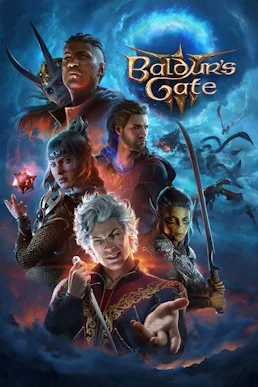
NTGame has launched ending guides for five narrative games in one go, covering the most influential multi-ending titles of recent years. The greatest charm of these games lies in branching stories; the greatest pain is how easily one or two key choices lock you out of a brilliantly constructed alternate ending line — or several of them. These five guides exist to fill exactly that gap, marking key decisions, save points, and the route to each ending, step by step.
The Five Games at a Glance#
Each of the five ending guides maps to a dedicated guide hub on site, and each game’s hub carries more than twenty dedicated pages. The table lists each game’s developer, its endings guide entry point, and the current total of guide pages in that hub.
| Game | Developer | Endings guide | Hub guide pages |
|---|---|---|---|
| Baldur’s Gate 3 | Larian Studios | Baldur’s Gate 3 Endings Guide | 27 |
| Cyberpunk 2077 | CD Projekt Red | Cyberpunk 2077 Endings Guide | 24 |
| The Witcher 3 | CD Projekt Red | The Witcher 3 Endings Guide | 26 |
| Hogwarts Legacy | Avalanche Software | Hogwarts Legacy Endings Guide | 21 |
| Kingdom Come: Deliverance 2 | Warhorse Studios | Kingdom Come: Deliverance 2 Endings Guide | 21 |
Why These Five Games#
All five are narrative-driven, but their ending designs emphasize different things — which is exactly what gives this guide series its variety:
- Baldur’s Gate 3 binds its endings deeply to each companion’s personal fate; the differences between companion endings give second and third playthroughs a real reason to exist.
- Cyberpunk 2077 leverages a single rooftop choice into the entire finale, then Phantom Liberty added new closures in the expansion.
- The Witcher 3 lays groundwork through multiple early and mid-game decisions — the textbook case of “choices taking effect long before the ending.”
- Hogwarts Legacy works its magic school setting into the endings: house allegiance and the moral drift of side characters each shape their own finales.
- Kingdom Come: Deliverance 2 hands its endings to faction standing, accumulated over time; the neutral route demands you resist picking a side across the entire game.
Because each game’s “ending gameplay” differs, generic guides simply can’t help — each title’s decision mechanics must be dissected on its own terms. That’s why we built separate hubs instead of merging everything into one article.
Baldur’s Gate 3 Endings Guide#
Baldur’s Gate 3’s endings revolve around the key choices before and after the Chapter 3 final battle, falling broadly into three main branches: dominating the mind flayers, destroying the Netherbrain, and having the protagonist (or Omeluum) become a mind flayer and sacrifice themselves. Beyond this trunk, each branch holds a large number of sub-variants, with the direction depending on companion survival, alliance relationships, and each origin character’s personal quest completion.
If you’re out to walk every branch, this guide lists the trigger conditions of the three main endings, the ability check DCs, and the unlock order of companion side endings as checklists, so you can plan your saves with a clear map.
Cyberpunk 2077 Endings Guide#
Cyberpunk 2077’s endings are decided by the rooftop scene at the endgame, branching into The Devil, The Star, The Sun, and Temperance, plus a hidden ending triggered only through specific dialogue choices. The Phantom Liberty expansion adds new ending branches on top, further widening the spread of final outcomes.
The guide dissects each ending into prerequisite quests, linked characters, combat scenarios, and key choices, and keeps each ending’s unlock conditions separate from the romance lines that can alter ending cinematics — handy when you want a quick clean sweep of every ending.
The Witcher 3 Endings Guide#
The Witcher 3’s endings flow from five key decisions accumulated across the whole story; getting the right choice in a handful of pivotal meetings directly determines Ciri’s final fate and the direction of Geralt’s personal ending. Beyond the base campaign, both Hearts of Stone and Blood and Wine carry their own independent endings, and romance lines likewise change how the closing scenes land.
The guide marks the weight and consequences of those five decision points along a timeline, and gives expansion endings and romance endings their own sections, helping you save and reload correctly before the critical nodes. The core meetings that shape Ciri’s fate — where the right choice accumulates into very different finales — all come with comparison tables for quick reference.
Hogwarts Legacy Endings Guide#
Hogwarts Legacy’s finale is decided by how you handle ancient magic in the final stage, leading to the good ending, the evil ending, and another one hidden among them. On top of that, each of the four houses has an exclusive questline, and Sebastian’s side quest carries its own good-and-evil branch — none of this fully experienceable within a single playthrough.
Beyond dissecting the three directions of the final choice, the guide separately lists the differences between house-exclusive quests and the branch conditions of Sebastian’s side quest, so players of every house can find the solution for their own line.
Kingdom Come: Deliverance 2 Endings Guide#
Kingdom Come: Deliverance 2’s endings accumulate from faction standing across the entire game. The main directions include backing the Hussites, backing the Catholic Church, refusing to take a side and walking your own path, and the chaos of every faction losing. The refusal route — staying fully neutral — is the one that tests planning hardest, demanding conscious balancing of choices across quests and clearing multiple key checks.
From Chapter 1 onward, the guide marks the quest nodes that sway faction favor, and offers save strategy both for holding the neutral line and for farming other endings. The moral leanings and key character fates of the four main directions are laid out in comparison tables, making it easier to decide which stance to take.
A Look at the Hardest Endings#
The endings below are notorious for harsh conditions in their respective games; the difficulty lies mostly in trade-offs at key choices and passing certain stat checks. Use them as a reference if you’re chasing high-difficulty routes.
| Game | Ending | Achievement difficulty |
|---|---|---|
| Baldur’s Gate 3 | Dark Urge resistance ending | Requires sustained restraint from murderous impulses at key narrative nodes plus a specific quest chain; one slip locks you in |
| Kingdom Come: Deliverance 2 | Full neutral route | Requires precisely balanced favor across four factions plus consecutive passes through high-difficulty checks |
| Cyberpunk 2077 | The Devil ending | Requires repeatedly making reverse-favor dialogue choices in specific conversations |
| The Witcher 3 | Blood and Wine bad endings | Requires counterintuitive choices in the sisters’ feud clues and dialogue; key clues are easy to miss |
| Hogwarts Legacy | Sebastian side quest bad ending | Requires deliberately poor choices in the questline while avoiding key quest nodes |
All Guide Entry Points#
All five games’ endings guides are now live. Jump straight into each dedicated page from the links below:
- Baldur’s Gate 3 Complete Endings Guide — full unlock paths for the three main branches and companion side endings.
- Cyberpunk 2077 Complete Endings Guide — the five base endings and the Phantom Liberty branches, with dialogue choice trees.
- The Witcher 3 Complete Endings Guide — base game, Hearts of Stone, Blood and Wine, and romance endings all covered.
- Hogwarts Legacy Complete Endings Guide — house quest differences and the Sebastian storyline endings.
- Kingdom Come: Deliverance 2 Complete Endings Guide — the four faction branches and the hidden full-neutral route.
Beyond the endings hubs, each game’s section carries a full system of companion guides. The table lists a few representative topics from each hub besides endings, arranged per the site’s actual pages, for further reading.
| Game | Representative companion guides | Directions worth watching |
|---|---|---|
| Baldur’s Gate 3 | Builds, multiclass builds, party compositions, romance, achievements, Honour Mode | For planning multiplayer parties or pushing Honour Mode, start from these topics |
| Cyberpunk 2077 | Character builds, cyberware, quickhacking, weapons, netrunning, Phantom Liberty, romance | Build theory and netrunner archetypes for the expansion are expanded in the companion topics |
| The Witcher 3 | Alchemy, mutations, witcher gear, Gwent, Blood and Wine, Hearts of Stone | The expansions and Gwent are what keep many players coming back |
| Hogwarts Legacy | Spells, talents, gear, house quests, achievements | On house-exclusive routes, spell synergy and gear trade-offs are key |
| Kingdom Come: Deliverance 2 | Skills, builds, combat, gear, achievements | Against high-difficulty checks, build trade-offs and skill growth matter a lot |
Together with the endings guides, these topics form a complete guide loop for each game. Whether you’re stepping in for the first time or hunting every possibility on a second playthrough, start from the corresponding hub’s front page and work your way through the whole game.
Closing#
Every game’s ending is the final expression of its developers’ narrative intent. A good ending doesn’t just satisfy — it makes the whole journey echo. We hope these five guides help you see every ending line worth experiencing, so you never again regret one impulsive choice.
Thanks for reading, and may you find your own path through the multi-ending narrative maze.
This article reflects the current version of each game hub on site; future updates may change how endings unlock.