Xbox Cuts 268 More Jobs as Ninja Theory Faces Closure: The Withering and Consolidation of First-Party Studios — Where an Old Fan’s Heart Settles#
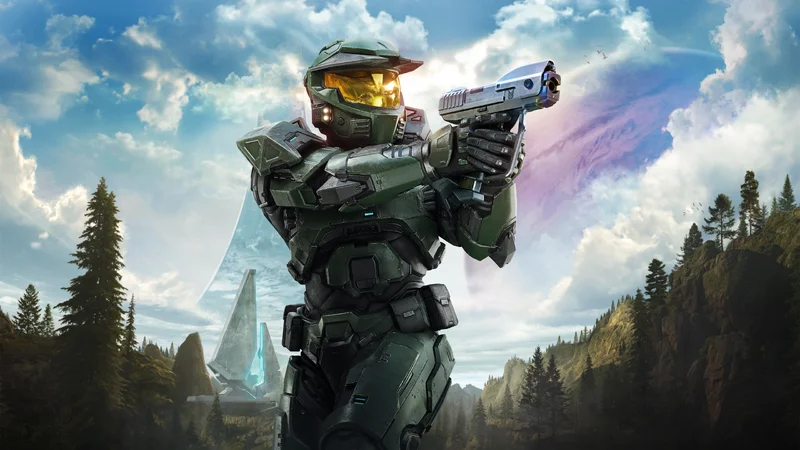
Hey everyone, Zhanlan Yingren here. Yesterday in the newsroom I wrote a long piece on the “Halo mainline moving to Activision” story, walking through more than twenty years of Halo’s baton passes. But when I set the pen down, the stone actually sitting on my chest wasn’t Halo — it was another studio: Ninja Theory. When Xbox confirmed this new round of layoffs on September 22, 2026 (Eastern Time) via Xbox Wire, what really sank this old fan’s heart was the item tucked away in the corner: Ninja Theory may be shutting down.
The reason I can’t let go of this British studio is that it never fit the words “big-publisher product” in spirit. It worked on DmC: Devil May Cry and Enslaved: Odyssey to the West, and it made the Hellblade series — a game I’ve described as “stunning” more times than I can count. Watching it slide to “two failed sales, consultations over a proposed closure” leaves me with an ache deeper than the one I felt yesterday when Halo landed in Activision’s hands.
In this piece I want to pull the lens off the macro ledger of “who got reassigned to whom” and aim it squarely at Ninja Theory and the other studios caught in this round whose fates hang unresolved. Yesterday’s piece was about the big picture shrinking. This one is about specific people, specific teams, specific losses.
1. The Hard Facts of This Round: 268 Roles and a “Proposed Closure”#
1.1 The baseline of this round’s layoffs#
Let’s lay out the restructuring facts confirmed on September 22, one by one. The core figures and scope look like this:
| Key item | Details |
|---|---|
| Announced | September 22, 2026 (Eastern Time) |
| Announced via | Xbox chief content officer Matt Booty, through the Xbox Wire blog |
| Layoff scale | 268 roles cut this round |
| Scope | Halo Studios, other first-party studios, plus Xbox Game Studios leadership and central functions |
| Context | Part of the restructuring announced in July 2026 (3,200 roles planned), about three-quarters complete so far |
One detail in that table deserves a flag. On its own, 268 is not the cruelest number in Microsoft’s months of layoffs — but set beside the July wave, it stops being an isolated event. July’s first wave cut 1,600 roles, hitting Obsidian, Zenimax Online Studios, and id Software. This round’s 268 is simply the latest station on a long restructuring road — against the 3,200 total, the announcing side itself put progress at “about three-quarters complete.”
1.2 “Proposed closure”: the key phrase#
Of all the information here, the term I most want to parse with you first is “proposed closure.” That’s not sentimentality — the state of the thing the term describes directly shapes how we should talk about Ninja Theory’s fate.
According to multiple sources, Xbox has begun consultations with Ninja Theory staff over a “proposed closure,” while continuing to explore other paths. Industry figure Geoff Keighley promptly confirmed that “Xbox will now close Ninja Theory.” So the accurate state of play is: both sale agreements failed, Microsoft has begun the closure consultation process, but this is not yet a done deal of “shut down today, lights out” — it sits in an intermediate state of “consultations launched, other paths still alive.” Honestly, though, when a company starts talking to employees about a “proposed closure,” longtime followers of these processes know full well what it usually means: the eve of a final accounting for the team’s fate.
Here’s my separation of “settled fact” from “not yet landed,” so emotion doesn’t blur the facts for us:
| Status | Details |
|---|---|
| Confirmed | Both sale agreements over Ninja Theory’s future failed |
| Confirmed | Xbox has begun consultations with staff over a proposed closure |
| Confirmed | Microsoft is still exploring other paths for Ninja Theory |
| Confirmed | Geoff Keighley confirmed Xbox will close Ninja Theory |
| Not disclosed | The identities of the buyers in the two failed deals |
| Not disclosed | The deal values |
| Not disclosed | Ninja Theory’s current headcount and the status of its released and in-development projects |
2. Ninja Theory’s Rise and Fall: From Acquisition to Two Failed Sales#
2.1 What kind of studio it was#
Ninja Theory is a British studio, and its weight in longtime fans’ hearts rests on a handful of very distinctive works. Here’s its road and its calling cards:
| Phase / work | Notes |
|---|---|
| Studio background | British developer |
| DmC: Devil May Cry | Its entry in the Devil May Cry series |
| Enslaved: Odyssey to the West | An action-adventure inspired by Journey to the West |
| The Hellblade series | The studio’s most acclaimed work, built on narrative and psychological horror |
On Hellblade, I need a few more words. It gave players a rare experience back in the day — it didn’t conquer through combat spectacle, but with an almost obsessive insistence on weaving mental illness, Norse mythology, and one warrior woman’s inner world into a single whole. It ran in exactly the opposite direction of the “bigger is better, louder is better” commercial blockbuster: small and deep, focused and fierce, moving people through narrative and art. In players’ eyes this studio was never a “throughput machine” but “an artist that actually makes things.”
2.2 From acquisition to the June reveal: a thread full of twists#
Straighten the timeline and Ninja Theory’s predicament this year had already shown its edges earlier on.
At the Xbox Games Showcase in June 2026, Xbox revealed Ninja Theory’s new game Senua — in practice the third entry in the Hellblade series — planned for a 2027 release. The fan community erupted: the Ninja Theory we knew was coming back, and with a proper Hellblade sequel, no less.
But reporting soon surfaced a possibility that tightens the chest — one purpose of that reveal was, incredibly, to shop the studio for a buyer. It plays like a cruel running joke: you thought it was a victory lap; it was really a price tag hung on the storefront. Show off Senua, let potential buyers see “we still have a valuable new project in hand,” and negotiate a better selling position for yourself.
2.3 Two failed sales: the turning point#
Then came the central plot of this restructuring. On Ninja Theory’s future, Microsoft negotiated two sale agreements in succession, and both fell through. Nobody knows who the buyers were or what the price was — none of it has been disclosed, and the sources explicitly flag it as “unconfirmed.” I have no interest in guessing at numbers that were never made public; what I care about, as an old fan, is what the bare fact itself signals:
A studio once brought in-house as a first-party pride point was first “packaged for the shelf” via a new-game reveal, then failed to close two consecutive sales, and finally arrived at consultations with its own employees over a “proposed closure.”
The emotional signal in between is hard to miss. When a platform holder is willing to “sell” a studio, it has stopped treating that studio as an asset that must stay in its long-term system; when it cannot even sell it, the market itself has reservations about the studio’s future value. Squeezed in the middle are the studio’s team and the players hoping for another Hellblade.
2.4 Where my heart lands: sentiment is not a line on a balance sheet#
Writing this section, I had to stop for a moment. As an old fan I don’t care whether the deal counts as “stop-loss” in a financial report. What hurts is the other layer of all this: a studio whose lifeblood was narrative and art did not get to stay because it “made good things” — it was treated as merchandise priced for sale, and then couldn’t even be sold.
A work like Hellblade never fit on a balance sheet to begin with. It isn’t measured in gun stats, gacha revenue, or concurrent players; it’s measured in that feeling of finishing late at night, putting down the controller, and being unable to speak for a long while. And precisely this “unquantifiable value” is, under capital-consolidation logic, the part that gets weighed first and abandoned most easily.
Let me lay out this contrast between the “quantifiable” and the “unquantifiable” — call it my own accounting:
| Measure | Narrative works of the Hellblade kind | Metrics the business model prizes |
|---|---|---|
| Core | Psychological portraiture, artistry, narrative depth | Concurrents, revenue, retention |
| Aftertaste | Immersion, resonance, hard to forget | Replicable consumption stimulus |
| Place in a restructuring ledger | Easily filed as a “pending item” | Stable, predictable cash flow |
| Difficulty of replacement | Nearly impossible to swap in a similar title | Relatively easy to backfill with lookalikes |
This table isn’t arguing that narrative works are “superior.” It’s making a simpler point: a kind of value exists, real and solid, that a ledger simply cannot record in full. Once the whole system starts recognizing only that ledger, works like Hellblade — weighty as a mountain in players’ hearts — can look like nothing more than an “optimizable” page to the people deciding.
3. The Same-Round Consolidation: First-Party Studios Shrink Further#
Ninja Theory’s fate is just the most glaring cut in this round; behind it, the entire first-party map is being reshuffled. I touched on these moves roughly yesterday; here I want to read them together with “what happens to the affected studios,” not as a dry table of ownership changes.
3.1 The full picture of ownership changes#
First, where each studio in this round ends up:
| Studio | Outcome this round |
|---|---|
| Rare (Sea of Thieves) | Taken over by Activision |
| World’s Edge (Age of Empires) | Taken over by Activision |
| Next mainline Halo | Goes to Activision, handled by a newly built team separate from Call of Duty development |
| Obsidian Entertainment | Taken over by Bethesda; continues Grounded and co-develops a new Fallout with Bethesda Game Studios |
| Microsoft Casual Games | Taken over by King |
| Playground (Fable, Forza Horizon) | Merges with the remaining slimmed-down Turn 10 (Forza Motorsport) into one studio focused on Forza and Fable |
| Halo Studios (formerly 343 Industries) | Cut to its smallest size after layoffs, becoming a support team for released games; no longer develops the next Halo |
| Undead Labs | Leaves Xbox on terms similar to Double Fine and Compulsion Games; State of Decay 3 moves to a new publisher and launches day one on Game Pass |
| Ninja Theory | Two sales failed; consultations over a proposed closure begin |
| Arkane | Consultations ongoing, expected to run through the end of 2026 |
3.2 Room to survive under the “consolidation” logic#
Read the table together and the logic of this round is strikingly uniform: pull the scattered independent studios into a few big structures — Activision, Bethesda, King. Activision swallows the new Halo mainline, Rare, and World’s Edge; Bethesda takes Obsidian; King picks up the casual games. What remains keeps merging and shrinking — Playground and Turn 10 pressed into one, Halo Studios reduced to a small support-only team.
The logic, plainly, is “control development costs, concentrate resources on certainty”: keep the valuable IPs, sell or restructure the teams, and keep the games on Game Pass wherever possible. There may be business sense in it, but what I care about is the trail of question marks it leaves — under a filtering standard of “can it make money, can it fold into the big system,” how much room is actually left for studios built on narrative and art whose products aren’t natural blockbusters?
3.3 The comparison that weighs on me most: Arkane#
Of all these studios, beyond Ninja Theory there’s one more I can’t put down: Arkane. Its consultations are still ongoing, expected to last until the end of 2026. In other words, Microsoft’s consolidation isn’t fully settled, and Arkane’s fate still hangs in the air.
Part of it is that Arkane strikes me as the same temperament of studio as Ninja Theory: neither survives on “high output, high revenue,” but on a distinctive worldview and design signature. Under consolidation logic that herds blockbusters, teams like these are precisely the ones most likely to become “pending items.” So I’ll treat Arkane’s final destination as a long-running window into where this consolidation is headed — how its negotiations end will, to a degree, mirror the real standing of this kind of studio inside Microsoft’s system.
3.4 Reading the ownership table for the “harmed” and the “benefiting” poles#
Looking over this round, studio fates split into two clear poles: on one side, those herded into big structures or kept on as aces; on the other, the casualties — sold, shrunk, or in closure consultations. Ranked roughly by degree of harm, this round’s outcomes show exactly where the consolidation knife fell:
| Situation | Studios | Concrete state |
|---|---|---|
| Fully taken over | Rare, World’s Edge, Obsidian, Microsoft Casual Games | Reassigned to Activision / Bethesda / King; carry on under a new flag |
| Merged and restructured | Playground + the slimmed-down Turn 10 | Pressed into one studio focused on Forza and Fable |
| Shrunk but retained | Halo Studios (formerly 343) | Becomes a support team for released games; no longer develops the next Halo |
| Divested, departing | Undead Labs | Leaves Xbox on terms similar to Double Fine and Compulsion Games |
| Sale failed, facing closure | Ninja Theory | Two sales failed; consultations over a proposed closure begin |
| Still in consultation | Arkane | Consultations ongoing, expected to run through the end of 2026 |
Reading the table top to bottom, a pattern emerges: this restructuring isn’t a simple “shut down whatever loses money.” Under the overall approach of “keep the IP, sell the team, keep the game on Game Pass,” each studio is being placed in a different position. Being taken over isn’t necessarily bad — Obsidian lands at Bethesda and still gets to make a new Fallout; Rare’s Sea of Thieves won’t vanish just because it moved to Activision. But the further down you read, the more it looks like an asset-disposal site: fold in what can be folded, divest what can be divested, and what can’t be sold ends up where Ninja Theory is now.
4. Coda: Reflections as First-Party Studios Wither#
4.1 From “many flowers blooming” to “fewer and bigger”#
I’ve spent these days wondering why the names that once made my pulse quicken keep vanishing from the map. More than any one company’s strategic misstep, it reflects an industry-wide drift: in an era that repeats the words cost, certainty, and efficiency like a litany, mid-sized studios — “small and beautiful, focused and deep, moving people through narrative and art” — now occupy a genuinely awkward position.
They don’t print money like a flagship IP, so platforms have little incentive to shield them; yet they carry real artistic value, too distinctive to discard outright. So they get acquired, handed over, merged, downsized — the standard career arc of this kind of studio. Ninja Theory’s path, from first-party inclusion to two failed sales and closure consultations, is almost a complete footnote to that arc.
4.2 Words from the newsroom#
Last night I dropped the news into the editorial group chat and the debate reignited. Zixing, as ever, ran the numbers first: “Don’t just sit there grieving. What does it tell you when a studio goes from being acquired to being unsellable? It means the market no longer has a clear price at which anyone will catch it. This is business logic walking its own path.”
Wubian took a different angle: “I’d actually argue that whether the games survive matters more than whether the studio does. Look — Undead Labs is gone, but isn’t State of Decay 3 still launching day one on Game Pass? IP intact, game intact, players still get to play.” He had a point.
I was quiet for a moment, then said: “But Hellblade was never decided by whether the IP survives. It was that team, those people, building that flavor frame by frame. Dismantle the team, keep the IP — does what comes out taste the same?”
The group went quiet for a while. Longzhui Ri had the last word: “At bottom it’s people. Things are made by people. When the people scatter, whatever remains is just a shell.”
Chasun typed a line from the side that read like a footnote to our whole argument: “You’re all right. On one side is the ledger of cost and certainty; on the other, the ledger of people and flavor — and those two are exactly the ones this consolidation can never balance at once. Microsoft chose the first. All we can do as players is keep watch over the second.”
4.3 An old fan takes stock#
The discussion forced me to cool down and ask what exactly I’m mourning. Not a company closing — companies come together and drift apart; that’s their nature. What I mourn is that works like Hellblade needed, in order to exist at all, a creative environment willing to “not chase quick money, not play it safe.” And once environments like that are consolidated away, round after round, we may simply never see a new Hellblade again.
Let me write my takeaways down too — an accounting of the past few days’ mood:
- What I miss isn’t the Ninja Theory brand itself, but that drive to “put the inner world and raw emotion directly into a game.”
- What I fear isn’t whether Hellblade gets another sequel, but whether the next team willing to take this kind of expression seriously will ever get its chance.
- I understand platforms must run the numbers. But I don’t believe “value that can be calculated” and “value that shouldn’t be casually abandoned” are the same thing.
- I’ll keep following Arkane’s path — not rooting for a winner, but watching whether this consolidation logic leaves any room at all for teams like these.
None of these thoughts is profound. I’m writing them down exactly as they are because I believe that in an era where everything flows toward “efficiency” and “certainty,” occasionally stopping to mourn, for a moment, a group of people who made things with real care is itself worth doing.
4.4 Before I go#
As an old fan who has played Hellblade from day one to now, my mood at this moment is neither anger nor despair — more a dull, persistent loss. I know Senua — in practice the third Hellblade — was previously planned for a 2027 release. I know this “proposed closure” is still in the consultation stage, with Microsoft still exploring other paths; on paper, nothing is final. But watching a studio built on narrative and art get handed around repeatedly and finally arrive at closure — it shook, a little, my old belief that “some things stay forever.”
Sometimes I think what this industry truly lacks was never the things that convert instantly into revenue, but the people willing to fight for a singular expression, for a story, for a visual style. They may not be profitable, but they’re the part that gives this industry warmth. When those people are treated, again and again, as “optimizable cost,” what we lose may be far more than one studio.
I will never forget the midnight shock Hellblade left me with. I’m not writing this to litigate anyone’s grievance or to rule on commercial right and wrong — I only want, before that world goes fully quiet, to leave a small record, as an old fan, for the people who made things with real care.
— Zhanlan Yingren, NTGame Editor
Appendix: Key Takeaways at a Glance#
- Microsoft confirmed a new round of restructuring on September 22, 2026 (Eastern Time), cutting 268 roles across Halo Studios, other first-party studios, and Xbox Game Studios leadership and central functions.
- The layoffs and reorganization were announced by Xbox chief content officer Matt Booty via the Xbox Wire blog.
- It forms part of the restructuring announced in July 2026 (3,200 roles planned), now about three-quarters complete; July’s first wave cut 1,600 people, affecting Obsidian, Zenimax Online Studios, and id Software.
- Ninja Theory: both sale agreements over its future failed; Xbox has begun consultations with staff over a proposed closure while continuing to explore other paths; Geoff Keighley confirmed Xbox will close Ninja Theory.
- Ninja Theory is a British studio whose signature works include DmC: Devil May Cry, Enslaved: Odyssey to the West, and the Hellblade series.
- At the June 2026 Xbox Games Showcase, the new game Senua (the third Hellblade) was revealed with a planned 2027 release; reports later suggested one purpose of the reveal was finding a buyer for the studio.
- First-party consolidation: the next Halo goes to Activision under a newly built team separate from Call of Duty development; Rare and World’s Edge taken over by Activision; Obsidian taken over by Bethesda to develop a new Fallout; Microsoft Casual Games to King; Playground merged with the remaining slimmed-down Turn 10.
- Halo Studios (formerly 343 Industries) was cut to its smallest size after layoffs, becoming a support team for released games and no longer developing the next Halo.
- Undead Labs left Xbox on terms similar to Double Fine and Compulsion Games; State of Decay 3 moves to a new publisher and launches day one on Game Pass.
- Arkane’s consultations are ongoing and expected to last until the end of 2026.
- In July 2026, Xbox had announced the sale of Ninja Theory and Undead Labs, with Double Fine and Compulsion Games going independent.
- The buyers and deal values behind the two failed transactions, along with Ninja Theory’s current headcount and project status, remain undisclosed.
- The closure remains at the “proposed / consultations launched” stage; this article uses “facing closure / closure consultations begun” and does not treat a shutdown as accomplished fact.
- This piece focuses on the concrete target and emotional angle of “Ninja Theory’s closure + the fate of the affected studios,” complementing — without duplicating — yesterday’s “Xbox Mass Layoffs and Restructuring” piece on Halo’s move to Activision and the overall first-party downsizing.