Control Resonant Launches Today: Remedy’s Action RPG Pivot, Dylan Faden as Protagonist, and an 84 on Metacritic#
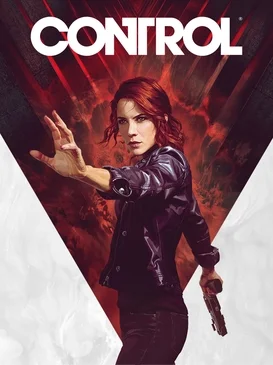
September 24, 2026 — Hello, everyone. Today is a day Remedy fans will want to remember: on September 24, 2026, Remedy Entertainment’s new game Control Resonant launched simultaneously on PC, PlayStation 5, and Xbox Series X|S. The genre has moved from the third-person shooting everyone knew to an action RPG (Action RPG), and the game carries an M (Mature) rating.
As a Remedy veteran going back to Max Payne, I stared at the store page for a good while. Nearly every new entry from this studio tears up its own blueprint: linear shooting, time powers, literary horror, even turning an entire federal bureau into a living building. Control Resonant’s pivot is, as I see it, the biggest gameplay turn in Remedy’s history — it does not reskin an old game; it swaps out the protagonist, the stage, the weapons, and the combat model all at once.
In this piece, I put on my veteran action RPG hat and break down what matters most about this launch: what carries over and what changes from the previous game, the early critical split, Remedy’s narrative and art craft, and whether it is worth picking up on day one.
1. From Jesse to Dylan: Both the Protagonist and the Stage Have Changed#
The most visible change in Control Resonant is the protagonist: Jesse Faden, who carried the “Service Weapon” through the previous game, gives way to her brother Dylan Faden. If you played 2019’s Control, you may remember Dylan as the brother the Federal Bureau of Control studied for years, with a tragic fate hanging over him. This time, he is the protagonist of his own story.
On the timeline, this game takes place seven years after Control. Dylan wakes from a coma into a Manhattan corrupted by a paranatural invasion (the Hiss). The first game unfolded mostly inside the Oldest House, the Federal Bureau of Control’s ever-shifting headquarters; this one moves the stage into the city itself — a warped, corrupted Manhattan.
From a “Building” to a “City”: How the Scene Logic Changed#
| Dimension | Control (previous game) | Control Resonant |
|---|---|---|
| Protagonist | Jesse Faden | Dylan Faden (her brother) |
| Stage | Inside the Oldest House | A warped, corrupted Manhattan |
| Era | The previous game’s present day | Seven years after the first game’s story |
| Enemies | Paranatural threats | The Hiss, the invasion corrupting Manhattan |
| Combat core | Third-person shooting | Melee-driven character action RPG |
The direct consequence of that shift is a “dramatically larger stage.” According to review coverage, the game runs on Remedy’s in-house Northlight engine — the same tech that powered Alan Wake 2 — stretching the stage from a single building into an entire city. For an action RPG, having a whole urban sandbox to explore and grow into inherently opens up “large-scale storytelling” possibilities: both the struggle of small people inside a vast city and the “godlike” sense of steadily growing power.
2. The Gameplay Pivot: No More Guns, a Shapeshifting Melee Weapon#
If “the brother takes over” is the narrative turn, the combat system is where this pivot gets truly hardcore. This is no longer a third-person shooter; the protagonist does not carry a gun and instead wields a paranatural melee weapon called Aberrant. The weapon is not fixed — it shapeshifts mid-combat.
There is a big bet buried in that design. The heart of an action RPG is the growth curve of the character’s own abilities — levels, skills, gear, build synergies. Making a shapeshifting melee weapon the primary arm means Remedy has deliberately put “game feel,” the thing veteran players are quickest to pick apart, front and center on the table.
As someone who lives in action games, I will say the choice is bold — and it puts the studio square in the line of fire, because “does the melee feel good enough” is exactly where this wave of critical opinion splits hardest. More on that when we get to the scores.
3. The Critical Split: What Stands Behind the 84#
First, the big picture. The first wave of reviews is in:
| Metric | Value |
|---|---|
| Metacritic aggregate | 84 (Generally Favorable) |
| Reviews counted by Metacritic | 66 |
| OpenCritic average | About 85 |
| Positive ratio | About 91% (60 positive, 5 mixed, 1 negative) |
| Control (previous game) Metacritic | 82 |
| Alan Wake 2 Metacritic | 89 |
On the raw numbers, 84 sits above the previous game’s 82 but below Alan Wake 2’s 89. Plotted on Remedy’s historical chart, that is a “solid but not deified” position.
The really interesting part is the internal structure of that 84. Here are some of the high scorers and low scorers — the fault line becomes obvious at a glance:
| Outlet | Score | Lean |
|---|---|---|
| IGN Benelux | 100 | High |
| IGN Brasil | 90 | High |
| Screen Rant | 90 | High |
| XGN | 85 | Upper-middle |
| RPGamer | 80 | Upper-middle |
| Push Square | 80 | Upper-middle |
| GamePro Germany | 80 | Upper-middle |
| ComicBook | 40 | Negative; the verdict says it “betrays the concept of a Remedy game” |
Notice something? There is no middle ground — the scores split into two camps, nearly down the middle: one side hands out 100s and 90s, the other drops a 40. This is not a game “everyone thinks is fine”; it is a game people deeply love or deeply resent.
Where the Praise Clusters, and Where the Criticism Points#
Put the high-score and low-score verdicts side by side and the conclusion is crisp: the praise sits almost entirely on Remedy’s “atmosphere, world, and story” axis, while the criticism lands almost entirely on “does the melee action feel good enough.”
That split explains the extreme scores. Judged by traditional action-game standards, the melee feel falls short and the number drops; judged by Remedy’s trademark atmosphere, world-building, and narrative, the execution fully carries a high score. In other words, this game loses almost nothing on “the Remedy flavor,” but the “action-game feel” is genuinely contested.
So if you are a hardcore action player who cares obsessively about impact frames, hit detection, and fluid animation, this game’s flash points may aim straight at you. If instead you prize Remedy’s enigmatic atmosphere, layered world-reveals, and literary storytelling, the high-score consensus will almost certainly not let you down.
4. Release Cadence and Pricing: How to Get In#
The rollout here is well layered, and it reserves a path for players who want in early. Here is the timeline:
| Point in time | Event |
|---|---|
| 2026-09-22 | PS5 digital deluxe edition 48-hour early access unlocks |
| 2026-09-24 | PC / PS5 / Xbox Series X|S full launch |
On pricing: the standard edition costs $59.99 / £60. What I can confirm today is the USD and GBP pricing; regional pricing elsewhere and whether a physical edition is coming have not been detailed by the publisher yet.
Runtime and “Skill-Friendliness”#
First-wave reviewers estimate a runtime of roughly 20–30 hours, side content included. For a semi-open-world action RPG, that is a solid, honest, middle-of-the-road scope — not short enough to feel thin, not long enough to scare you off.
Even better: the game ships with a full Assist Mode. The system offers mature difficulty options, including damage, enemy speed, plus one-hit kills and invincibility. One design detail deserves its own spotlight: turning these assist options on does not disable achievements. For players who struggle with action games — myself included — this is the studio stating plainly: clear it the way you want, keep your achievements, and enjoy the story.
For a narrative-driven action RPG, that design matters enormously. It decouples “finishing the game” from “playing it beautifully,” so players who are here only for Remedy’s story and world can see it through comfortably.
5. Remedy’s Signature Craft: Narrative and Environmental Art#
Scores and feel aside, I want to end on the thing that separates Remedy from almost everyone else — its storytelling and environmental art.
The previous game’s Oldest House, with its constantly reconfiguring layout, remains a masterclass in environmental storytelling. A building that moves and reassembles before your eyes — “architecture as puzzle, architecture as narrative” — is practically Remedy’s registered trademark. In Control Resonant, the stage grows from one building into a warped Manhattan, and that reversal — the familiar city turned alien — lands closer to home than any fantasy building could. Everyone has seen a real city, so when the Hiss invades and the streets start to deform, the “world breaking down” shock hits twice as hard.
Then there is the narrative itself. Elevating a “background character” from the previous game (Dylan) into the lead takes nerve and real storytelling muscle. In Control, Dylan was a hidden thread, carrying many of the Bureau’s darkest secrets; this time he wakes from a coma to face the world seven years on, pulling every buried thread into the open. For returning players, that continuing emotional arc is a huge plus. And for newcomers, it leads straight into our last topic.
6. Should You Buy It on Day One: For Two Kinds of Players#
Finally, the practical question: is this worth a day-one purchase? I will take the two camps in turn.
If You Played the First Game#
For players who finished 2019’s Control, my advice is fairly clear-cut. The story picks up the previous thread — the world seven years on, Dylan’s emotional arc — and assumes you know what came before. Much of the review coverage recommends playing the first game first, precisely to fully absorb where Dylan comes from. If you have that history, this game’s emotional payoff compounds.
If You Haven’t Played the First Game#
For newcomers, this is not an unfriendly entry point, but there is a “previous game threshold.” The protagonist, the stage, and the seven-year time skip all interlock tightly with Control, so going in cold costs you some of the emotional buildup. The good news: Remedy has always known how to pull people into its worlds, and the full Assist Mode lets new players get through smoothly. If you want the most complete emotional experience, though, circling back to Control first is a bonus, not a chore.
One Caveat Worth Noting#
One thing I should flag: on whether this game “surpasses Control,” critics disagree — some verdicts say it does, others say it has not reached Alan Wake 2’s level. Both camps are commentary opinions, not official pronouncements; treat it as reviewer judgment, nothing more.
Also, two items remain unconfirmed, so if you are the patient type, put them on your watch list: first, whether the game joins Game Pass is not confirmed; second, whether a physical edition is coming, plus detailed regional pricing, is also not fully disclosed. And note that the Metacritic user score has not opened yet — player-side data is still pending, so today’s 84 is a critics’ “first verdict” only. The player verdict needs a few more days.
7. Closing: Was This Gamble Worth It?#
As a longtime Remedy player, I genuinely admire the nerve of this pivot. Telling the story of one building and sustaining an entire city are challenges on completely different scales. Control Resonant dares to hand the lead to Dylan, to swap shooting for melee action RPG combat, and to move from the Oldest House to a corrupted Manhattan — and behind that string of “dares” is Remedy reinventing itself yet again.
Judged by the final 84, it did not ascend like Alan Wake 2, but it stands firmly in “excellent” territory, above the first Control. And those sharp 40-score objections only prove it is a game with a strong point of view — some love its atmosphere, some fault its feel; both voices existing at once is itself evidence it refuses to be mediocre.
So: if you like action RPGs, Remedy’s literary brand of horror, and exploring a corrupted city in a semi-open world, this one deserves your consideration. If you care above all about melee feel and frame-perfect combat, I would watch some gameplay footage first, or wait for the user score before deciding.
The editorial desk will keep following this one. Once the player verdict is in, I will come back to talk.
— Long Zhuiri, Editor-in-Chief, NTGame
Appendix: Fact Sources for This Article#
The core facts of this piece (release platforms and date, score data, pricing, protagonist and stage, weapons and combat systems, engine, runtime, Assist Mode, and more) all come from the following sources, used here for information synthesis and personal commentary; linking them does not imply endorsement of these outlets:
- Metacritic: Control Resonant — release platforms and date, the Metacritic 84, 66 reviews, score distribution, user score not yet open.
- GameMetaHub: review roundup — platform averages, the PS5 digital deluxe 48-hour early access, the $59.99 price, Assist Mode, runtime, and whether to play the first game first.
- Games Newswire — seven years on, the Hiss invasion, the Northlight engine, the $60 price, PS5 Pro as the best way to play.
- Pixelnitro — Dylan as protagonist, the semi-open Manhattan, the shapeshifting Aberrant melee weapon, the RPG systems, and player controversy.