Xbox ‘Disc to Digital’ Rolls Out Everywhere: From License Mechanics to the Helix Survey, Projecting the Endgame of All-Digital Consoles#
Hello everyone, Zhanlan Yingren here.
On September 29, the official Xbox account posted a single line: “Your discs just got a digital upgrade today”. With that one sentence, the “Disc to Digital” feature that had been bouncing around for over a month officially left the Xbox Insider program and opened to all players.
As someone who has been gaming since the days of hourly point cards, I have a near-obsessive attachment to the idea of “physical proof”. That row of steelbook cases on the top shelf is less a collection than the index of my gaming life over the years. So when “insert a disc, click confirm, a digital version appears in your library” actually became reality, my feelings were mixed — relief that “I never have to swap discs again”, and an inexplicable tinge of loss.
This article will not stop at nostalgia. Microsoft’s move is really a linked combination: first convert the installed base of discs into digital licenses, then use a survey to probe whether the next console keeps a disc drive. Both lines need telling — the mechanics breakdown and the endgame projection.
1. Mechanics Breakdown: How a Disc Becomes a Digital Copy#
1.1 Event Timeline#
First, the whole story laid out as one line:
| Date | Event |
|---|---|
| August 26, 2026 | Gamescom 2026 opening day: Xbox Wire first reveals Disc to Digital, in a post by Jason Ronald, VP of Xbox Next Generation, positioned as part of the “game preservation” push, with thousands of games covered at launch and more to come |
| August 31, 2026 | Feature enters the Xbox Insider program for testing |
| September 29, 2026 | Opens to all players, confirmed by the official X post; per Inven Global, Sega joined support the same day, following Ubisoft which had already joined |
From first reveal on Gamescom’s opening day to full rollout a month later, this is a fast cadence by Microsoft’s recent standards — at minimum, it signals they know this cannot wait.
1.2 Two Ways to Claim#
At the operational level, there are two paths to claim the digital license:
- Automatic claim: while signed into your account, insert a supported Xbox One or Series X disc into the console and run the game; a confirmation dialog appears, and on confirmation the digital license lands in your account;
- Manual claim: find the game’s tile in your library, press the Menu button, and choose “Get digital license → Claim”.
A few details worth noting:
- Any Xbox with a disc drive can perform the claim, with no generational pairing restrictions;
- After a successful claim, neither installing nor playing requires the disc;
- The library shows a digital conversion badge marking which games are now digital licenses.
1.3 Practical Details for Batch Conversion#
If your disc collection runs to hundreds of titles, these official tips save real time:
- Microsoft recommends turning off “auto-run disc games” in settings when converting in batches, so each disc does not launch its game on insertion;
- An Xbox engineering lead said on X that if the claim option doesn’t appear, “you may need to restart the console”;
- The official FAQ covers special cases like Ultimate editions and multi-disc games;
- The official materials mention no fees of any kind — for now, at least, this feature has no visible cost.
2. Support Scope: One Table for the Boundaries#
Any “open to everyone” headline only means something once it lands on a support list. Disc to Digital’s boundaries are drawn clearly:
| Item | Status |
|---|---|
| Xbox One discs | Most supported |
| Series X discs | Most supported |
| Xbox 360 discs | Not supported |
| Original Xbox discs | Not supported |
| Multi-disc games | Only the first disc counts |
| Redeem codes / DLC content | May not be included |
| Eligibility standard | Depends on technical factors, license status, publisher willingness and production batch, and can change over time |
That last row is the easiest to miss: eligibility is not lifetime. A disc that converts today may not convert forever; a disc that cannot convert today is not necessarily barred forever.
2.1 Publisher Participation: Fragmentation Is the Norm#
What really complicates matters is each publisher’s participation status:
| Publisher | Status |
|---|---|
| Ubisoft | Absent in early Insider testing, has since joined |
| Sega | Absent in early Insider testing, joined September 29 (per Inven Global) |
| Square Enix | Absent in early Insider testing, still a famous holdout |
| Bandai Namco | Absent in early Insider testing, no follow-up reports |
The community-maintained compatibility list currently tracks over 1,400 disc games, but whether Square Enix will join, or Bandai Namco will follow, remains open. For disc collectors, that means checking eligibility for the titles you care about before starting a big library cleanup.
2.2 Digital Resurrection for Delisted Games#
The most touching detail in this update: games already delisted from the Xbox store are covered too. Titles like Deadpool and Minecraft: Story Mode, which “vanished” when their licenses expired, can regain a digital version through this feature — as long as you own the disc.
For a feature that advertises “game preservation”, this is probably its most human footnote — the digital storefront’s shelves are governed by business decisions, but the disc in your cabinet becomes these games’ only passport.
2.3 What About Disc-Less Consoles#
Series S owners may ask: I have no disc drive — what do I do? The official path is:
- A Series S cannot claim by itself, but you can complete the claim on a disc-drive Xbox One first, then play normally on that Series S;
- Xbox Play Anywhere titles can be played on PC and handhelds under the same license after claiming;
- Some titles also support cloud gaming.
This design exposes Microsoft’s real intent: claiming depends on a drive, but playing does not. The disc’s role in this system is quietly shifting from “medium” to “credential”.
3. Tied to the Disc, Not the Account: The Secondhand Market’s Elegance and Cruelty#
The most interesting design choice is how the license is bound. Per heise, relaying Windows Central’s reporting:
- The digital license is tied to the disc, not permanently bound to an account;
- Selling or losing the disc may cost you access to the corresponding digital version;
- Conversely, another person inserting the same disc transfers the license to their account.
In plain terms: this design turns the disc into a transferable digital license credential.
For the secondhand market, it is a rather elegant balance — a disc’s trade value still stands; the buyer takes the disc home, inserts it, and the license transfers to their account. The foundation of secondhand circulation has not been cut.
But it also blocks a path many were quietly planning: “keep the digital, sell the physical” does not work. You cannot sell the disc and keep the digital version — the license travels with the disc. This is entirely unlike Steam’s “library is account property” logic; it is closer to treating the physical disc itself as the DRM carrier.
The knock-on effects for collectibility are just as direct:
| Change | Effect |
|---|---|
| Discs shift from “playable medium” to “title deed” | The core value of a collection moves from “playable anytime” to “holding the credential” |
| License travels with the disc | Secondhand price logic persists, but the transfer mechanism becomes transparent |
| Keeping digital while selling physical is impossible | A collection of discs is “sell one, have one fewer” — the scarcity of a complete collection is instead reinforced |
| Delisted games revive via disc | The “pass” value of out-of-print discs is confirmed by an official mechanism |
As an art editor, I must add: game cover art is its own school of graphic design, and those steelbooks, cartridge binders and spine labels can never be replaced by a thumbnail on a storefront page. Now, on top of that aesthetic value, a functional layer is stacked — those discs deserve better care than you might think.
4. The Helix Survey: The Disc Drive Question for the Next Console#
If Disc to Digital is “finding a path for existing discs”, then the survey that followed is a probe of “does the next generation still want a drive”.
4.1 What Is Officially Confirmed About Project Helix#
Project Helix is the codename for the next-gen Xbox; the official information so far includes:
- Microsoft formally confirmed its development in March 2026;
- It is positioned as a next-generation console that plays both Xbox console games and PC games;
- It uses a custom AMD SoC with a new generation of DirectX and FSR technologies;
- It claims substantially improved ray tracing performance, with intelligence woven into the graphics and compute pipelines;
- The target is alpha hardware for developers starting in 2027;
- Microsoft says it aims to keep four generations of Xbox games playable — a compatibility list stretching from titles over two decades old to new flagships like Halo: Campaign Evolved.
4.2 The Disc Drive Question Inside the Survey#
Starting in late September, a Helix survey distributed through the Xbox Insider Hub has circulated in the community:
- The survey asks users to rate each candidate feature on a three-tier scale: Not Necessary / Nice to Have / Must Have;
- One of the items is precisely — whether the next console should support installing games from physical discs;
- The survey screenshots come from a deleted X post by user @XBOXTIMDOG, obtained by Power Up Gaming;
- Other candidate features asked about include console lighting effects that react to games, automatic highlight capture, watching YouTube in-game, cloud streaming, TikTok, and keyboard-and-mouse support;
- Reddit users pointed out that the disc-related question is actually formatted as a “pick-one-of-five priority ranking” rather than a standalone yes/no question.
Putting “disc installation” on the same survey as console lighting effects and TikTok support is itself informative — on Microsoft’s feature priority chart, a disc drive is no longer a baseline item that exists by default, but a candidate competing with entertainment features for a slot.
4.3 The Drive Question: Three Claims, Zero Verdicts#
On whether Helix ships with a drive, every source so far points to “undecided”:
| Source | Claim | Credibility note |
|---|---|---|
| Microsoft internal memo disclosed by The Verge | Helix will run Xbox games from previous generations but may not have a disc drive; the physical media mechanism is still being determined, and the memo describes digital One/Series disc licenses roaming with the user across devices | Internal document disclosed by a major outlet, but still not an official verdict |
| gamegpu.com (September 2026) | Helix will include a drive reading original, 360 and One discs | Lower-tier single-source rumor, no official corroboration, recorded for reference only |
| John Linneman (Digital Foundry) | Microsoft considered keeping drive support, which may instead appear as an external drive accessory | He himself cautioned the information may predate Xbox’s strategy shift |
It must be stressed: there is no official decision on whether Helix includes or supports a disc drive. Microsoft has not published the survey results either; whether disc installation on the new machine requires an additional download, which generations of discs qualify, and whether the disc is needed to play — none of these are addressed in the survey. Every conclusion is premature.
5. A Three-Way Comparison: Physical Media’s Trajectory and Public Opinion#
Pull the lens back from Microsoft alone, and the board for physical media becomes clearer.
5.1 Sony Has Already Shown Its Timetable#
On July 1, 2026, Sony announced via the PlayStation Blog: production of new physical game discs stops from January 2028. We already traced that whole story in Report: Sony surveying a disc exit — the twilight of physical games — the questions written in that article are now being answered, one by one, by Microsoft’s moves.
5.2 The Three Platforms’ Spectrum of Attitudes#
| Platform | Physical media status | Signal sent |
|---|---|---|
| Sony | Announced stop of new game disc production from January 2028 | Timetable fixed; digital countdown begun |
| Xbox | Disc to Digital open to all, Helix survey probing drive demand | License digitization first; drive fate unresolved |
| Nintendo | Switch 2’s physical releases widely discussed as “game key cards” | Medium kept, but the data is essentially downloaded |
The three companies form a complete spectrum: Sony is retreating, Nintendo is transforming, and Microsoft is paving the way while watching. All roads converge — the medium is ceding to the license, with only the posture and speed differing.
5.3 The Other Side: Public Opinion and Media#
Player sentiment and the industry’s direction, however, are not fully in sync:
- The “Don’t Kill the Disc” petition gathered 120,000 signatures in 4 days;
- A July 2026 poll found 63% of Xbox players want the next console to keep a disc drive;
- German outlet Playfront offered a cooler commentary angle (note: media opinion, not official information): the survey can be read as “a measurement of residual resistance before a full digital switch” — Xbox’s physical sales share is far below PlayStation and Nintendo platforms, many third parties have stopped shipping Xbox physical editions, and most Microsoft first-party discs contain almost no game data, acting purely as license keys.
Put those three pieces together and the picture is fairly complete: user sentiment runs strong, the business reality is harsh, and Microsoft has chosen to “outsource” part of the decision to public opinion via a survey. The survey is not a promise — but it is not meaningless either; for the first time, the size of the resistance has been quantified and put on the table.
6. What Physical Collecting Still Means in 2026#
Having come this far, we can answer the question disc collectors care about most: what is left of physical collecting in 2026?
My answer has three layers:
One layer is property. The tied-to-disc, not-to-account design turns a disc into a transferable license credential. Your collection is no longer just “a stack of plastic” but a row of certificates of title that can be activated, transferred or liquidated at any time. Far from vanishing, that value has been confirmed by an official mechanism.
One layer is preservation. Titles like Deadpool and Minecraft: Story Mode, already pulled from the store, regained digital life through their discs. The digital storefront’s shelves are forever hostage to business cycles, and physical collecting is the only private hedge against that uncertainty. When “game preservation” is said by Jason Ronald himself, the thing disc collectors have insisted on all these years is, for the first time, formally caught by the platform.
One layer is emotion. This layer admits no reasoning. The snap of shrink wrap, the feel of leafing through a manual card, the satisfied click of a steelbook sliding into its shelf slot — these have no counterpart in a license system, and need none.
For those about to organize their libraries, a practical checklist:
- Check eligibility first: match your discs against the community compatibility list; hold off on judging Square Enix and other absent publishers’ titles;
- Before batch claiming, disable “auto-run disc games” in settings — much faster;
- If the claim option is missing, restart the console and try again;
- Series S owners can claim on a disc-drive Xbox One, then return to the Series S to play with no issues;
- After claiming, store your discs properly — keep them dry, out of the sun, and do not lend them out for long: the disc remains your access credential for the digital version;
- And the most important one: a survey is not a promise. The drive’s final fate on the new console rests with Microsoft’s official decision.
Closing: The Soft Click of Putting the Disc Back in Its Case#
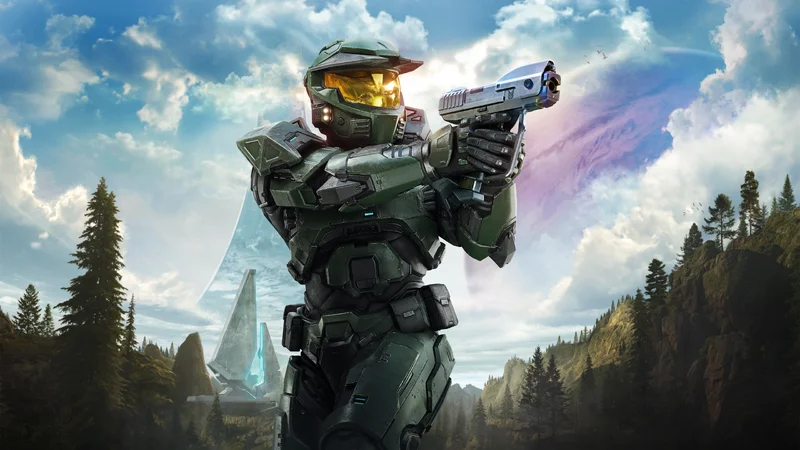
While writing this, I fished a Halo: Campaign Evolved disc out of the cabinet — fine, I really just wanted a fitting header image for this article, but as my fingers crossed the disc surface, I was pulled back to that afternoon twenty years ago, crouching at a computer shop counter watching the owner unwrap the seal.
From point cards to game key cards, from steelbooks to badges, the form of the medium keeps changing; what stays constant is that we always want a credential we can hold in our hand. Microsoft turning the disc into the license key of the digital age is a dignified staircase handed to disc collectors: those ready to leave can go, and those who stay will be looked after.
But the Helix survey still hangs there, and Sony’s countdown keeps ticking. The endgame for physical discs may already be written; only the execution date is unset. Until then, I will keep slotting every disc squarely back onto the shelf — because “game preservation” should never have to depend on the heartbeat of servers and license servers alone.
— Zhanlan Yingren, NTGame Editor
Appendix: Key Points at a Glance#
- On September 29, 2026, Disc to Digital opened to all Xbox players, following Insider testing from August 31 and its first reveal by Jason Ronald on Xbox Wire on Gamescom’s opening day, August 26.
- Mechanics: while signed in, insert and run a supported disc to get a claim prompt, or use the tile menu’s “Get digital license → Claim”; after claiming, no disc is needed and the library shows a digital conversion badge; official materials mention no fees.
- Scope limits: only most Xbox One and Series X discs are supported; 360 and original Xbox are not; multi-disc games count only the first disc; redeem codes and DLC may not be included; eligibility depends on technical factors, licensing, publishers and production batch, and can change over time.
- Licenses bind to discs, not accounts: selling or losing a disc may forfeit digital access, and another person inserting the same disc transfers the license (per Windows Central); secondhand circulation works, but “keep the digital, sell the physical” does not.
- Publisher participation is fragmented: Ubisoft and Sega have joined, Square Enix remains absent, Bandai Namco has no follow-up; the community compatibility list tracks over 1,400 titles.
- Delisted games like Deadpool and Minecraft: Story Mode regain digital versions via disc; Series S owners claim via an Xbox One; Xbox Play Anywhere titles play on PC and handhelds under the same license.
- Project Helix is confirmed in development (announced March 2026; custom AMD SoC; alpha hardware from 2027; four generations of Xbox games supported); the drive question is undecided, the survey rates the disc topic on three tiers, and results are unpublished.
- Industry backdrop: Sony has announced stopping new physical game discs from January 2028; the “Don’t Kill the Disc” petition took 120,000 signatures in 4 days; a July 2026 poll shows 63% of Xbox players want the drive kept.
On-Site References
- Halo: Campaign Evolved guide hub — dedicated site for the Xbox flagship IP
- Report: Sony surveying a disc exit — the twilight of physical games — the backstory behind this article’s Sony section