Krafton Cancels PUBG: Black Budget: Two Derivatives Dead in One Year, a Retrospective on the Extraction-Shooter Gamble#
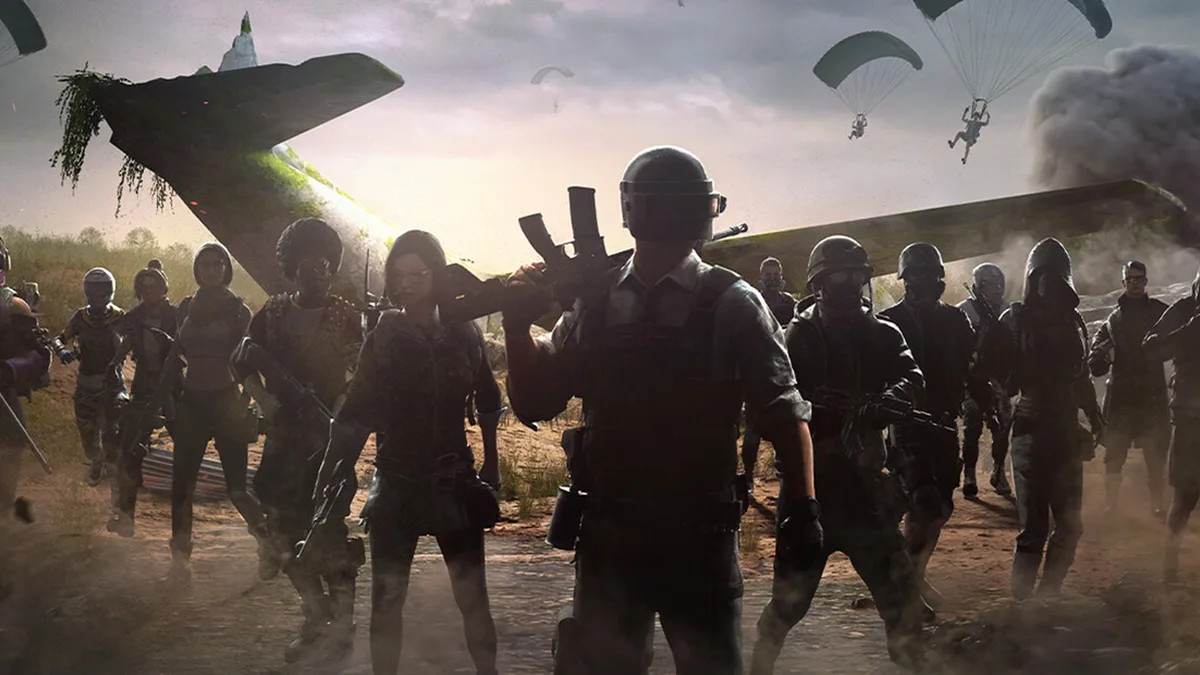
Hello everyone, Long ZhuiRi here. This morning the first hot item waiting in the editor backend was this one: Krafton has terminated development of PUBG: Black Budget. As a veteran who has lived on extraction shooters as a staple diet for years, I stared at that announcement for a long while — not out of surprise, but because the entire trajectory of this affair is simply too valuable as a case study.
The event itself is not complicated: on October 1, 2026, the official development-update announcement on the PUBG: Black Budget Steam page declared development terminated. This first-person PvPvE extraction shooter never officially launched, never announced a release date or a price — it died after two closed tests and before a single commercial release. And set against Krafton’s year, this is already the second PUBG derivative to die: PUBG: Blindspot, which entered Early Access in February and went offline at the end of March, was the first; Black Budget is the second.
The franchise’s next expansion experiment has its chips placed elsewhere — PUBG: DED.NET, the roguelite shooter revealed at Gamescom in August.
I don’t intend to merely restate the announcement in this piece. I want to answer four questions in order: what this project originally set out to build, how to read the official cancellation rationale, why Krafton’s IP expansion kept missing this year, and what this means for the extraction-shooter field. All concrete facts follow the official announcement cross-checked against multiple media reports; media paraphrase and official confirmation are kept strictly apart — no rumors, no filling in the blanks.
1. October 1: A Goodbye Posted on a Steam Page#
1.1 What the Announcement Actually Said#
First, the announcement itself. Posted through the Steam page’s development-update section, its core information comes down to three layers:
First, development terminated. The official wording: after reviewing the project’s development status and future direction, the team concluded the current direction could not deliver “an experience players could enjoy over the long term”.
Second, thanks. The studio called this a “difficult decision” and thanked the players who took part in the closed Alpha tests.
Third, aftermath. PUBG Studios said lessons from this development and testing cycle would carry into future projects — but the announcement named no successor project. Not one.
1.2 What Is Confirmed, and What the Official Side Never Said#
Doing this for years, I’ve built a habit: take the official announcement, split “what was said” and “what was not said” into two columns, then write the analysis. This time is no different:
| Category | Content |
|---|---|
| Confirmed | Development terminated, announced October 1, 2026 via a Steam page development update |
| Confirmed | The game never launched; no release date or price was ever announced |
| Confirmed | Cancellation reason: after reviewing development status and future direction, the team concluded the current direction could not deliver “an experience players could enjoy over the long term” |
| Confirmed | The studio called it a “difficult decision” and thanked closed Alpha test participants |
| Confirmed | PUBG Studios will carry development and testing lessons into future projects; no successor project was named |
| Undisclosed | No specific problem, financial consideration, or piece of player feedback was cited as the cause |
| Undisclosed | Where the team goes, its size, and whether the cancellation involved financial factors |
Note the last line. From start to finish, the official side never cited any specific problem — nothing about test data, nothing about funding, nothing about team trouble. That means every “insider interpretation” can only be speculation. We will read between the lines of this verdict later, but the boundary goes up first.
2. What Black Budget Was: Extraction in a Time Loop#
2.1 The Core Setup at a Glance#
Before dissecting the failure, you need to know what it was trying to build. Black Budget’s premise actually put in real work within the extraction genre; I’ve organized it into a table:
| Setup item | Content |
|---|---|
| Perspective and genre | First-person PvPvE extraction shooter |
| Stage | Coli, an island trapped in a time loop, roughly 2.5×2.5 km |
| World distortion | The island is warped by a supernatural force, the Anomaly |
| Zone-collapse mechanic | The Anomaly’s contraction provides the shrinking-zone pressure |
| Player role | Contractor, infiltrating abandoned research facilities to seize secret tech |
| Match scale | Up to 45 players per match, 3-player squads, matches capped at roughly 30 minutes |
| Gear risk | Die and you lose the gear you brought in |
| Meta progression | Gear extracted successfully returns to your personal base; the base keeps expanding, supporting skill upgrades and gear crafting |
The most noteworthy part of this framework is the “time loop + extraction” combination. In a traditional extraction shooter the map is static; the variance comes from other players and AI. Black Budget built its stage as an island trapped in a time loop, then used the Anomaly’s contraction to recreate the battle-royale pressure of a closing safe zone — grafting the “the zone keeps closing in” psychological tension that PUBG: Battlegrounds was built on, onto the loot loop of the extraction genre. At the design level, this was not a lazy project; you could even say it knew exactly what it wanted to differentiate on.
The match parameters were restrained too: up to 45 players, 3-player squads, matches capped at roughly 30 minutes — considerably lighter than the marathon hundred-player maps; add the classic extraction economy loop of losing gear on death and banking it on extraction to feed base progression. The skeleton was mature, the skin newly painted — probably why it had the confidence to run two rounds of testing.
2.2 From Earnings-Report Codename to Two Closed Tests: The Full Timeline#
This project did not move fast. Straightening out the public timeline:
| Time | Milestone |
|---|---|
| Between 2022 and 2023 | The project first surfaced in Krafton earnings materials under the codename “Project Black Budget” (sources differ on the first-appearance month, with November 2022 and November 2023 both cited; both versions stand) |
| February 2023 | Krafton’s 2022 annual report described an extraction-shooter project in development at PUBG Studios |
| November 2023 | An investor briefing gave a “second half of 2024” launch target, later unmet |
| November 2025 | PUBG: Black Budget formally revealed; Steam page opened and first closed-test signups began |
| December 12-14 and 19-21, 2025 | First PC closed Alpha, covering players in North America, Europe and Asia |
| June 26-29, 2026 | Second closed Alpha, the largest of all its tests |
| October 1, 2026 | Steam page announcement declared development terminated |
| October 2-3, 2026 | News widely reported and followed up by multiple outlets |
A few milestones deserve a second look. First, between surfacing in earnings materials and its formal reveal lies a gap of about three years — the November 2023 investor briefing still carried a “second half of 2024” launch window, a window that quietly slipped away before the game finally stepped on stage as PUBG: Black Budget in November 2025. Second, the pace after the reveal was actually brisk: a first test across two December weekends (December 12-14 and 19-21), then the largest round on June 26-29, 2026. Three signups, two live tests, covering players across North America, Europe and Asia — by the usual script, the next step should have been a release date and a price.
What came instead was a termination notice.
3. How to Read the “Long-Term Experience” Verdict#
3.1 Three Layers of Information in One Sentence#
“Could not deliver an experience players could enjoy over the long term” — it sounds like boilerplate, but taken apart, it carries a lot.
Layer one: it concedes the game is playable “now”. The verdict points at long-term experience, not a collapse in current playability. In other words, the official side never said “this game cannot be built” or “this game isn’t fun” — it said “keep going this way, and players won’t stay”.
Layer two: it is a direction judgment, not a quality judgment. Note the stated precondition: “after reviewing the project’s development status and future direction”. The problem was assigned to the “future direction” — continuing along the current path does not arrive at the destination of “long-term retention”. That phrasing usually implies changes big enough to break bones, and rather than rebuild halfway, the whole hand was folded.
Layer three: “long-term enjoyment” carries special weight for the extraction genre. This genre lives on long-haul operations: meta progression, gear accumulation, social circles — player investment is measured in seasons. An extraction shooter without confidence in the long game is a half-finished product even with a strong launch. The team chose “long-term experience” as the verdict’s wording, which says they never doubted they could “build it” — they had no grip on “sustaining it”.
3.2 Still Saying “Road to Launch” in June, Pulling the Plug in October#
More interesting than the verdict itself is the time gap.
When that largest closed test ended in June 2026, PUBG Studios’ line was still: player feedback was valuable for polishing the “road to launch”. That is standard, launch-sprinting language — the test was wrapping up, feedback was working, the road was still being paved.
Three months later, on October 1, the same Steam page posted a termination notice. From “road to launch” to “development terminated” is one quarter, without even a public transition of messaging. That kind of hard swerve is rare for a major publisher — most projects die a slow leak: first delays, then team shrinkage, and only at the end does an announcement claim the body. Black Budget was not like that. It was unplugged directly from a “preparing to launch” state.
And to repeat: the official side cited no specific problem. No financial consideration, no piece of player feedback, no team incident — nothing. This “conclusions without evidence” announcement posture is, in itself, the most telling part.
3.3 Test-Feedback Rumors Need a Quarantine Zone#
One part demands careful handling here. According to Gamerhub, player concerns raised during the Alpha tests fell into two categories: combat readability and situational-awareness problems, plus fatigue from repeated runs.
But hold on to the sourcing: media reported such feedback existed during testing; the official side never linked it to the cancellation decision. PUBG Studios never named any piece of player feedback as a reason; readability issues and repetition fatigue are single-source paraphrases. I can use them as observational samples — to understand what an extraction shooter typically gets criticized for in testing — but I cannot state them as the cause of cancellation. Until the official side confirms that causal chain, it does not exist.
It is fair, though, to discuss the two feedback items on genre logic. Readability in an extraction shooter is a bedrock question of “was the risk fairly judged” — players are losing real, brought-in wealth; if the cause of death is an unreadable scrum, frustration multiplies several times over through the gear loss. And repetition fatigue lands squarely in the official verdict’s crosshairs: an extraction shooter that bores players after a few runs has no claim to “long-term enjoyment”. So even without a causal finding, the two items and the official verdict form a striking intertext — my observation, not the official position.
4. Two Derivatives Dead in One Year: Krafton’s IP Expansion Ledger#
4.1 Blindspot Died First: Two Months#
Wind the clock back a few months and Krafton had already felt one pang in 2026.
PUBG: Blindspot — a top-down 5v5 tactical shooter, free to play, styled close to Rainbow Six Siege — entered Steam Early Access on February 5, 2026, then shut down on March 30, 2026. From listing to shutdown, about two months. The team’s stated reason: it could not sustainably deliver the Early Access experience it had promised. That was the first PUBG derivative to die in Krafton’s 2026; Black Budget is the second — one died two months after launch, the other before launch.
The two also died differently, and the difference is worth recording: Blindspot “launched and could not hold up” — Early Access spreads the development process open for players to watch, and weakness shows immediately; Black Budget “never launched, was judged directly” — no release date had even been announced before the heartbeat stopped. The former is an operational collapse; the latter is a direction-level veto.
4.2 A Three-Derivative Comparison#
Putting Krafton’s three PUBG experiments from this year side by side, the pattern is very clear:
| Project | Positioning | Outcome |
|---|---|---|
| PUBG: Blindspot | Top-down 5v5 tactical shooter, free to play, styled close to Rainbow Six Siege | Entered Steam Early Access February 5, 2026; shut down March 30; survived about two months |
| PUBG: Black Budget | First-person PvPvE extraction shooter on a time-loop island | Terminated after two closed Alphas, announced October 1; never launched |
| PUBG: DED.NET | Multiplayer shooter, 1980s aesthetics, roguelite elements | Revealed at Gamescom in August 2026; developed by Krafton’s Madison (Wisconsin) studio; in development |
At a glance: the first two bets on “horizontal expansion of orthodox gameplay” — one died in two months, the other never reached a formal debut; the third completely changed the approach — DED.NET’s 1980s aesthetics and roguelite elements share no overlap with Black Budget’s realistic extraction positioning. It is a stylized new product through and through.
4.3 From Spreading Bets to Betting on Stylization#
Strung together, Krafton’s IP-expansion strategy has actually executed a hard swerve.
The previous thinking was “spread across many lines”: the tactical-competition flagship held the base while two tech trees lit up in parallel — top-down squad combat (Blindspot) and extraction (Black Budget) — the classic move of lending PUBG’s brand credit to new genres. Both lines snapped within a year, and the brand endorsement became a risk amplifier instead — every derivative that dies spends the credit of the “PUBG” prefix itself.
The thinking has now turned to “betting on stylization”: the next experiment, DED.NET, simply gave up converging on mainstream genres and runs an 80s-aesthetic-plus-roguelite differentiation route. The official line only says Black Budget’s development and testing experience will carry into future projects; whether the team moves to DED.NET was not named — but the directional signal is clear: rather than grind against rivals in a crowded lane, build something so strange it cannot be directly benchmarked.
Put plainly, this is a shift from “arms race” to “rapid falsification”: in the multi-line era, every experiment had to be nurtured to launch before the verdict came in; now, the testing period is the falsification period — if it doesn’t run, cut it on the spot and lock the loss before launch. Blindspot’s two-month shutdown and Black Budget’s in-testing termination are both execution samples of this new logic — it is just that, for players, this logic runs a little cold.
5. A Red Ocean: Krafton Is Not the First to Stumble#
5.1 The Field at Large: Hype High, Retention Low#
What kind of field did Black Budget die in? Per industry media tallies (aggregator analysis sites such as VPEsports citing Steam Charts), the extraction genre’s headliners from 2025 to 2026 look roughly like this:
| Title | Key milestone | Numbers | Source |
|---|---|---|---|
| ARC Raiders | After launching November 2025 | Steam peak 481,966; down to about 122,000 by May 2026 | Industry media tallies (VPEsports citing Steam Charts) |
| Marathon (by Bungie) | Launched March 5, 2026 | Launch peak 88,337; July average down to about 4,749 | Industry media tallies |
| Escape from Tarkov | Hit Steam 1.0 in November 2025 | June 2026 monthly average up 32.92% to 16,986 — the steadiest retainer in the table | Industry media tallies |
| Mistfall Hunter | Launched July 29, 2026 | Launch peak 44,472, then slid fast | Industry media tallies |
First, the sourcing note: all of the above are third-party figures compiled by industry media, not official financials — trends matter more than absolute values. And the trend is stark enough —
- Even ARC Raiders, which hit a Steam peak near 480,000 in November 2025 and was briefly hailed as the genre’s new king, fell back to about 122,000 within half a year — down more than seventy percent;
- Bungie’s Marathon, half a year after launch, saw average daily concurrents fall from an 88,000 peak to under five thousand;
- Newcomer Mistfall Hunter’s 44,000 launch peak in late July slid away within weeks;
- The only riser is the old guard — Escape from Tarkov after its Steam 1.0 arrival, up 32.92% month-over-month in June 2026 to 16,986.
5.2 Three Judgments Read From the Numbers#
I don’t do armchair analysis — from the numbers above, three judgments with explanatory power for Black Budget’s death.
Judgment one: the genre’s capacity is far smaller than assumed. Within 2026, four major new entries or milestones (Marathon’s launch, ARC Raiders’ decline, Mistfall Hunter’s debut, Tarkov’s Steam 1.0) — their combined peak concurrency cannot fill the volume of one hit battle royale, and apart from Tarkov the whole line trends down. The core fun of extraction shooters is built on high risk and high investment; player daily hours are limited, and the field simply cannot hold many simultaneous competitors.
Judgment two: switching costs for existing players are extremely high. An extraction player’s assets are not just aim — they are meta accumulation: base, gear, skills, a fixed squad circle. All of it resets to zero with every game change. That is why Tarkov’s long-cultivated player pool holds best, while ARC Raiders’ 480,000 peak was mostly a “novelty tray” that receded once the heat passed. Black Budget hoped to pry players loose with the time-loop gimmick — but judgment two says novelty of skin rarely beats the weight of accumulation.
Judgment three: incumbents’ moats widen while latecomers’ trial windows narrow. The steadiest retainer in industry tallies is Tarkov, which has ground through many years; every fresh face fell back hard within six months of launch. In this landscape, an extraction shooter without even a set date, even if it launches cleanly, faces the interrogation head-on: “Why should veterans reset everything for you?” Krafton, after two tests, chose not to answer — the “could not deliver a long-term experience” verdict is, in a sense, a written surrender to this field.
Put the three judgments together and Black Budget’s death is not mysticism: in a red ocean with limited capacity, high switching costs and widening moats, a product that two tests failed to turn into a differentiation moat was halted by its publisher — commercially, a calm stop-loss. That calm is just built on the expectations of every tester.
6. Impact on Players and the Genre#
6.1 The People Who Played It and Can Never Buy It#
The bitterest cut here lands on the closed Alpha participants. The two December 2025 weekends plus the largest June 2026 round — two batches of people actually played this game — and then it died. Not “can’t buy it yet” but “can never buy it”: no release date, no price, no successor; the game jumped from awaiting release straight to nonexistent.
That experience is rather unique. The common gaming-industry story is “waited years for a broken launch” — at least you can buy it and complain about it; the Alpha testers’ situation is having touched something alive with their own hands, then watching it deregistered. The concerns they raised — if Gamerhub’s reporting holds — readability and repetition fatigue — are problems they expected patched out in the full game, and no fixed version will ever arrive. The only comfort offered was that line about “experience carried into future projects”: the falls you took become someone else’s stepping stones. True enough — but for the players involved, it feels a bit like sitting an exam with no graduation ceremony.
6.2 If You Wishlisted It: How to Treat the Project Now#
For players still sitting on the Steam wishlist or signed up for test registration, my advice is blunt: treat this project as dead and keep no expectations on it. The official announcement has said everything — development terminated, game never launched, no successor named. The Steam page is unlikely to see substantive updates again. Rather than wait for a release date that will not come, move that anticipation to products still alive.
6.3 A Signal to the Industry: The Testing Period Is the Life-or-Death Line#
At industry scale, this event’s signal value may exceed the event itself. The old playbook for big publishers was “push through”: once a project reaches testing, sunk costs pile up, and publishers tend to grit their teeth toward market, letting sales and live metrics clean up the mess — the marketing machine is already running; stopping costs more than walking. Krafton just showed the industry another way: two tests done, Steam page up for nearly a year, press preview in motion — cut it anyway, locking the loss before launch.
From arms race to rapid falsification — the pivot may not be industry consensus, but it is a lesson Krafton bought with two dead derivatives in one year. For the genre, this reads both ways: one side is contraction — big publishers’ faith in extraction is cooling, and the next team entering the field will face harsher greenlight interrogation; the other side is purification — competitor density falls, and survivors may capture more attention. The genre will not die, but the room for coasting just shrank again.
7. Coda: The Cup of Tea That Went Cold in the Editorial Room#
Last night I dropped this news into the editorial group chat, meaning only to sync a quick item — and several of us ended up talking past midnight.
Zixing ran the numbers first, as usual: “Two closed tests, spanning nearly a year, cut before launch — textbook stop-loss. The R&D money is already spent, but marketing, servers and long-term operations — three mountains — cost not a cent. From a financials angle, this is a clean cut.”
Chasun added the mechanics angle: “The most informative word in that verdict, to me, is ’long-term’. Short-term fun is the easiest thing to build in this genre — loot, extract, adrenaline; anyone can do that. The hard part is keeping players into month three. If they tested it and found people don’t stay, that is what the verdict actually means.”
Wubian picked it up: “I just think it’s a pity. Nobody in extraction has used a time-loop skin before. If this weren’t called PUBG — if an independent studio had hatched it slowly — it might have had a chance. Under a major label, nobody grants it three years.”
I closed with: “So what we’re watching may not be the death of a game, but the death of a playbook — trading big-IP credit for a genre entry ticket. The ticket was bought; the seat was gone.”
The chat went quiet for a moment, and Zhanlan Yingren delivered the last cut, unhurried: “Come to think of it, years from now, these two derivatives probably won’t leave behind a single decent screenshot. For people who make games, that is the scariest thing.”
Indeed. As a veteran who has shot his way through from the genre’s first year, I have watched too many majors wade into a hot genre, test, retreat, test again. Black Budget’s time-loop premise was genuinely fresh — but extraction has never been a genre where “a bit of novelty keeps you alive”. It is a genre where progression is measured in years and trust is tested with each extraction. Krafton chose not to bet, converting two months of Blindspot and two rounds of Black Budget testing into experience, and pushed the whole stack onto the 1980s-styled DED.NET.
This hand is played out and the chips are swept off the table. The next time Krafton shows its cards in extraction — or any red ocean — I hope it remembers this tuition: players will accept a rough game, but they rarely accept that something they played in earnest never even got a formal chance.
— Long ZhuiRi, NTGame Editor-in-Chief
Appendix: Key Points at a Glance#
- Krafton announced development termination on October 1, 2026 via the PUBG: Black Budget Steam page development update; the game never launched, and no release date or price was ever announced.
- Official cancellation reason: after reviewing the project’s development status and future direction, the team concluded the current direction could not deliver “an experience players could enjoy over the long term”; the studio called it a “difficult decision” and thanked closed Alpha participants.
- PUBG Studios said development and testing experience will carry into future projects; the announcement named no successor project; the official side cited no specific problem, financial consideration, or piece of player feedback.
- Project history: first surfaced in Krafton earnings materials as the codename “Project Black Budget” between 2022 and 2023 (first-appearance month differs by source — November 2022 and November 2023, both versions stand); the February 2023 annual report described the extraction project in development; a November 2023 investor briefing gave a second-half-2024 launch target that went unmet.
- November 2025: formal reveal, Steam page opened, first closed-test signups; the first PC closed Alpha ran the weekends of December 12-14 and December 19-21, 2025, covering players in North America, Europe and Asia.
- The second closed Alpha ran June 26-29, 2026 — the largest round; at the time the official line still called player feedback valuable for polishing the “road to launch”.
- News was first widely reported on October 2 (per Gamerhub), with Escapist and Eurogamer following on October 2-3.
- Gameplay setup: first-person PvPvE extraction; set on Coli, a time-looped island of roughly 2.5×2.5 km, warped by the supernatural Anomaly whose contraction provides the shrinking-zone pressure; players are Contractors infiltrating abandoned research facilities to seize secret tech.
- Core parameters: up to 45 players per match, 3-player squads, matches capped at roughly 30 minutes; dying loses brought-in gear, and successfully extracted gear returns to a personal base that keeps expanding (skill upgrades, gear crafting).
- Per Gamerhub, player concerns during testing included combat readability/situational awareness and repetition fatigue, but the official side never linked them to the cancellation decision (single-source paraphrase, flagged in the text).
- PUBG: Blindspot (top-down 5v5 tactical shooter, free to play, styled close to Rainbow Six Siege) entered Steam Early Access on February 5, 2026 and shut down on March 30, surviving about two months; the team said it could not sustainably deliver the promised Early Access experience — the first PUBG derivative to die in Krafton’s 2026.
- The next PUBG expansion experiment is PUBG: DED.NET: revealed at Gamescom in August 2026, developed by Krafton’s Madison (Wisconsin) studio; a multiplayer shooter with 1980s aesthetics and roguelite elements, entirely unlike Black Budget’s extraction positioning.
- The field at large (industry media tallies): ARC Raiders peaked at 481,966 on Steam after launching November 2025, falling to about 122,000 by May 2026; Marathon launched March 5, 2026, peaking at 88,337 with a July average of about 4,749; Escape from Tarkov rose 32.92% month-over-month in June 2026 to 16,986; Mistfall Hunter peaked at 44,472 on its July 29 debut before sliding fast.
- The official side never disclosed test-participant counts, retention data, whether the cancellation involved financial factors, or where the team goes; whether the team moved to another project was not named, and this piece makes no finding.