Street Fighter Live-Action Movie Flop, Broken Down: A Third Adaptation, a 40 Percent Opening, and Capcom’s WWE Crossover Hedge#
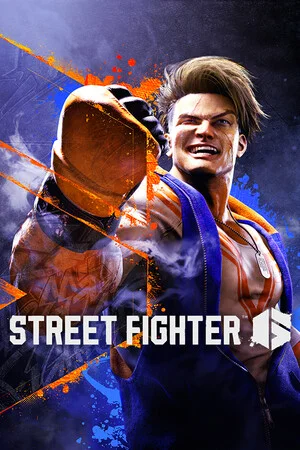
Hey everyone, Chasun here. Last week, the game-adaptation beat produced an event with real sample value: the Street Fighter live-action movie, directed by Kitao Sakurai, opened in North American theaters on October 16, and the reviews after the embargo lifted were almost uniformly brutal. At nearly the same moment, 2K and Capcom officially announced a WWE 2K26 × Street Fighter crossover project. The screen side crashed; the game side struck. Within 48 hours, one IP traced two completely opposite curves.
What makes this worth writing up is not “yet another game movie turned out bad.” It is that the structure of its reception, the box office tracking data, and the tempo of Capcom using a game-side crossover to hedge film-side risk all reward being taken apart. On the game side, our Street Fighter 6 guide section keeps updating, and the film side’s three attempts happen to form a complete reception series. Let’s peel it layer by layer.
First, the key information for the whole piece compressed into one quick-read list, expanded section by section below:
- October 15, midday: Review embargo lifts (hours before release); the same day, 2K and Capcom announce the WWE crossover
- October 16: The live-action movie opens in North American theaters (directed by Kitao Sakurai; the IP’s third live-action film)
- Reception: Rotten Tomatoes opened at 28% (25 reviews), now around 40%, still not past half; Metacritic average 46; IGN 6/10; The Associated Press gave one star out of four
- Box office: North American opening-weekend tracking projected in the $22 million-$40 million range; pre-sales running at roughly half of Mortal Kombat II; production budget reported in the $82 million-$120 million range
- October 28: The WWE 2K26 × Street Fighter Elite Pack goes live (standalone paid DLC, price unannounced)
- Contrast: Last month, the Resident Evil live-action movie shot past the 90+ percentile on Rotten Tomatoes and beat box office expectations
1. The Reception Data: An Opening Curve From 28% to “Around 40%”#
Start with the numbers. The review embargo lifted at midday on October 15 — just hours short of the North American opening. The score trajectory since the embargo:
| Snapshot point | Rotten Tomatoes score | Reviews counted |
|---|---|---|
| Opening (embargo lifted Oct 15, midday) | 28% | 25 |
| First rebound as reviews accumulated | 34% | — |
| Rebound (second snapshot) | 38% | 34 |
| Rebound (third snapshot) | 40% | 48 |
| Final snapshot across outlets | 44%-45% | — |
Note that because each outlet logged its review at a different time, the exact figures differ between snapshots; the safest summary is: opened at 28%, then recovered to around 40 percent, but never crossed the halfway mark. Beyond Rotten Tomatoes, the other two key anchors: review aggregator Metacritic at 46, IGN at 6/10, and The Associated Press at just one star out of four.
Two details in this curve deserve to be called out separately:
- The embargo timing is itself a signal. Lifting reviews only hours before release has long been read in the industry as a studio short on confidence in the final cut — the shorter the window for word of mouth to ferment, the smaller the opening weekend’s exposure to a bad-review shock. This embargo was late enough that the box office trackers noticed it and said outright they were nervous (that is the press’s observed characterization, not my speculation).
- The climb from 28% to 40% is not a reception reversal. As more reviews are logged, the score slowly crawls up — that is mean reversion after the sample grew, not “the more people watch, the better it gets.” A final landing at around 40% says: the negative consensus is mainstream, the positives are the minority, and within that minority there are a few individual bright spots of real substance (more below).
2. Where the Negative Consensus Concentrates: A Film with Structural Symptoms#
Put the various negative reviews side by side and the criticism converges tightly — nearly all of it points at structure rather than taste:
- Too many characters, thin story. The most frequent criticism — far too many series characters appear on screen, each one’s share of the runtime thinned out, the main narrative squeezed into a whirlwind ensemble tour.
- An abrupt ending with the sequel hook showing. Multiple reviews note the film simply stops where the story is unfinished, with a post-credits scene nakedly setting up a sequel. In other words, this movie is closer to a two-hour extended prologue.
- The comedy fails. The film clearly goes down the comedy route, but most critics found the jokes never stood up.
- The fight scenes are surprisingly flat. For a fighting-game adaptation, this one hurts nearly the most — both The Times and The Guardian called out fight scenes flatter than expected.
- Variety’s review sums it up well: it starts strong before it “nosedives into nonsense.”
These five criticisms are not five isolated symptoms; they are the same structural problem expressed at different layers. Let’s pull apart the causal chain piece by piece:
- “Too many characters” is the cause; “thin story” is the effect. Street Fighter’s character roster is a commercial asset, but on the big screen every character needs an entrance, a beat, and a role in the main line — once the cast outgrows what two hours of narrative can hold, everyone shows their face and no one gets fully told. This film’s main line of Chun-Li recruiting an estranged Ryu and Ken is, in essence, only connective tissue, and it cannot carry that many side characters.
- “The abrupt ending” shares the same root as “too many characters.” Spread the cast wide, and the narrative budget gets spent on entrances instead of resolutions; stack on a post-credits scene blatantly seeding a sequel, and the film effectively cedes its third act to the next installment. For audiences not told up front that “this is a prologue,” that is the direct source of the “it doesn’t hold together” verdict.
- “The comedy fails” amplifies the perception of the first two. Comedy rhythm depends on narrative setup, and when the story is thin the jokes become rootless; once the comic tone fails, the flat fight scenes in the same film look flatter still — the audience’s psychological expectation for a “fighting-game adaptation” falls through twice.
- “Flat fights” is the most reputation-damaging of all. For other kinds of game adaptations, action scenes are one option among many; for a fighting-game adaptation, they are the core selling point. The Times and The Guardian both naming the fights surprisingly flat amounts to a verdict that the film did not win on the very axis it most needed to win.
A tangent that fits here too: Uwe Boll. His films have been mocked for twenty years, and one of the core charges was precisely that he could not shoot action — this time even he came out to ride the bad reviews, which tells you how low the audience’s tolerance is for fighting films that cannot fight.
Add the background setting and cast, to make “too many characters” concrete: the story is set in 1993, with Chun-Li recruiting the estranged Ryu and Ken to enter the next World Warrior tournament. The lead cast includes Andrew Koji as Ryu, Noah Centineo as Ken, Callina Liang as Chun-Li, Jason Momoa as Blanka, rapper 50 Cent as Balrog, and David Dastmalchian as M. Bison. Two WWE stars also appear: Roman Reigns as Akuma and Cody Rhodes as Guile, and Eric André is also in the cast — some outlets listed this last casting among the misfire cases (his specific character identity is not given in the reports, so no speculation here).
3. The Minority Praise: Why “the Most Street Fighter Part Is the Animation”#
The negatives are the mainstream, but the distribution of the positives carries a lot of information. Summing up the reviews from all sides, five bright spots got name-checked:
| Highlight | The verdict it earned |
|---|---|
| Cody Rhodes’ Guile | Comedy performance uniformly praised — the most reliably liked character in the film |
| Jason Momoa’s Blanka | Performance affirmed |
| Callina Liang’s Chun-Li | Performance affirmed |
| The Koji and Centineo lead pairing | The duo was accepted |
| The hand-drawn flashback sequences by animation studio Titmouse | Compared to a modernized Street Fighter II: The Animated Movie |
The last one is, I think, the most worth unpacking of the whole praise pile: the single most acclaimed stretch of the film is the hand-drawn animation. That detail confirms the core of the negative consensus in reverse — the live-action footage failed to carry Street Fighter’s kinetic identity, while the animation actually delivered the sense of impact in the fights. For a fighting-game adaptation, that is a stinging contrast.
On the overall characterization: the review site IndieWire called it a “chaotic, maximalist reboot destined for cult status”; The New York Times’ review leaned relatively positive. In other words, the film is not without supporters — it is just that the advocates’ story is “cult potential,” not “genuinely great,” and those two kinds of praise differ completely in how much they can pull an opening weekend.
The distinction between the two kinds of praise deserves its own note: “genuinely great” praise converts directly into ticket recommendations, while “cult potential” praise pays out on a horizon measured in years — it means the film will find rewatch-style audiences in the long tails of home video and streaming, but it contributes almost nothing to the theatrical opening weekend and week two. In this case, the actual function of this batch of praise is holding the floor: keeping the “flop” narrative from hardening into an “all-time disaster” narrative — with the Titmouse animation sequences and Rhodes’ comic performance as two screenshot-grade highlights that can be cited again and again, the media post-mortems will at least not be one-sided.
4. Box Office Tracking: A “Win the Weekend, Lose the Word of Mouth” Script Taking Shape#
Bad reviews mean the box office is doomed, right? Not necessarily. First, the pre-release box office tracking:
| Tracking source | North America opening weekend projection |
|---|---|
| Box office analyst Box Office Pro | $30 million-$40 million |
| Box office analyst Box Office Theory | $22 million-$32 million |
| Converged estimates close to release | $27-34 million, or $22-35 million |
The key reference points:
- Pre-sales are running at about half of Mortal Kombat II. Mortal Kombat II previously opened its first weekend at $38.5 million — with pre-sales cut in half, this film’s opening weekend most likely lands in a “not bad, not spectacular” range.
- Global first-week projection around $70 million (that is VGTimes’ figure, which takes the lower end of the reported production budget).
- The reported production budget range is $82 million-$120 million — note this is the media-reported range; distributor Paramount has not officially confirmed it. Even counting from the $82 million floor, a $70 million global first-week projection implies no small amount of recoupment pressure.
- The same-week competition is extremely weak. The opening-weekend tracking for the same-window rivals sits at just $8 million-$15 million, which means this film’s odds of taking the opening weekend crown are very high.
Put these numbers together and a “win the weekend, lose the word of mouth” script emerges: the audience score (Rotten Tomatoes’ Popcornmeter) had not yet generated as of this writing, and the embargo compressed to a few hours before release, so opening-weekend ticket decisions were barely touched by reviews; the killing power of the bad word of mouth only shows up in week two through social spread. For the distributor, that is the textbook “first-week umbrella” structure — the opening weekend number will look fine, but the long curve and the profit margin may not.
4.1 Why Opening Weekend Might Hold: Three Mechanisms#
Break the possibility of “winning the weekend” into three verifiable mechanisms, to check against reality after release:
- The information-lag mechanism. The embargo lifted at midday on October 15, one night before the Friday opening — inside the mainstream ticket-buying decision window, reviews had no time to settle into “expectation management.” What audiences walk in on is mostly marketing material rather than reviews — the opening weekend box office reflects marketing spend intensity, not the quality of the film.
- The competitor-vacuum mechanism. The same-week rivals’ opening-weekend tracking is just $8 million-$15 million, short of even the floor of this film’s projected range. When the release window offers no alternatives, even a film with middling word of mouth is the only choice for audiences willing to watch — the opening weekend crown is nearly without suspense.
- The missing-audience-score mechanism. Rotten Tomatoes’ critic side sits at 40%, but ordinary audiences’ ticket decisions lean more on the audience score and friends’ word of mouth, and both of those signals only form after the act of watching happens. The Popcornmeter not yet generated means the “word-of-mouth backlash” variable simply was not online for opening weekend.
The counter-inference is equally clear: all three mechanisms are one-shot. From week two on, the information lag closes, the audience score lands, the word of mouth spreads — and from then on, the decay slope of the box office curve is the true reading of this film’s commercial quality. If week two shows a drop far steeper than comparable films, the “opening overdraft” judgment is confirmed. That is the one number most worth watching in tracking this case from here.
5. The Third Adaptation: The Same IP’s Reception Series and “Failing While Improving”#
Pull the view back, and this is the Street Fighter IP’s third time being adapted into a live-action film. The three results, placed together, form a remarkably clean data series:
| Year | Film | Rotten Tomatoes score | Series position |
|---|---|---|---|
| 1994 | Jean-Claude Van Damme’s Street Fighter | 20% | The first live-action version, long treated as the canonical game-adaptation flop |
| 2009 | Street Fighter: The Legend of Chun-Li | 3% | The series’ lowest point, an all-time-level pan |
| 2026 | Kitao Sakurai’s Street Fighter | Opened 28%, now around 40% | The series’ best, yet still not past half |
Forbes columnist Paul Tassi framed the opening precisely: this is already the best result in Street Fighter live-action film history, but set against the mainstream game adaptations of the past decade, it is still a bad percentile.
That is what I mean by “failing while improving”: three films across 32 years, from 20% to 3% to around 40% — the trendline does point up, but the reference frame changed long ago. Live-action game adaptations as a whole have already entered an era of 70s and 80s percentiles; 40% is not progress, it is falling behind. Whether data “improves” must always be judged inside the same-period market — that is the step most easily skipped when analyzing any reception series.
Now lay out the spacing of the three attempts: 1994, 2009, 2026 — roughly fifteen years each from one flop to the next reboot. The cadence itself is a piece of information: each time, the rights holder waited until the previous generation’s bad-review memory had naturally weathered and a new generation of performance and VFX technology had arrived before daring another try. What makes the 2026 attempt special is that it did not open into the vacuum left after old failures had weathered; it opened into expectations raised by a 90-percentile Resident Evil. The better the overall market, the starker the relative gap of 40% looks — one reason this round of negative buzz is spreading far harder than the previous two.
6. Industry Context: The Outlier in a Recovery Market#
This flop carries one more piece of background that makes the industry’s disappointment especially sharp: it happened inside an overall recovery for game adaptations on screen.
- Just last month, Zach Cregger’s Resident Evil live-action movie shot past the 90+ percentile on Rotten Tomatoes and beat box office expectations — the industry narrative that “live-action game adaptations have climbed out of the quality trough” is built on exactly this kind of case.
- Mortal Kombat II’s $38.5 million opening weekend also proved that game IPs still carry real theatrical box office pull.
In a market like that, Street Fighter’s 40% opening becomes a glaring outlier. It shows that a recovery market solves the problem of “the industry being willing to put money in,” but each film’s quality remains an independent event — a warm market does not mean a single point cannot go cold.
One piece of trivia our desk found particularly good: director Uwe Boll — famous for bad game-adaptation films, with House of the Dead at 3% and Alone in the Dark at just 1% on Rotten Tomatoes — on October 15 retweeted this pile of negative reviews with the message “stop bashing my movies.” When a new film’s reception collapses hard enough that Uwe Boll feels he has been surpassed, the joke itself becomes the most viral link in this round of bad press.
7. Capcom’s Hedge: The WWE Crossover’s Announcement Timing and Content Structure#
Now look at the other half of the play. On the very trading day the embargo lifted — October 15 — 2K and Capcom announced the WWE 2K26 × Street Fighter Elite Pack, dated for October 28. First, the timeline:
| Date | Event |
|---|---|
| October 15, midday | Embargo lifts, the reception collapse begins to ferment |
| October 15 | 2K and Capcom announce the WWE crossover pack |
| October 16 | The live-action movie opens in North America |
| October 28 | The Elite Pack goes live (standalone paid DLC, price unannounced) |
The crossover content breaks down as follows:
| WWE star | Street Fighter counterpart | Signature move included |
|---|---|---|
| The Rock, “Final Boss” | M. Bison | Psycho Crusher |
| Rey Mysterio | Ryu | Shinku Hadoken |
| Bianca Belair | Cammy | Spiral Arrow |
| Ultimate Warrior | Blanka | Electric Thunder |
| Dominik Mysterio | Ken | Shoryuken |
Beyond the five playable stars, the pack also includes 15 Create-a-Superstar (CAS) parts modeled on Street Fighter characters such as M. Bison, Ryu, Akuma, Vega, and Chun-Li. Let me explain the commercial meaning of CAS parts here: they are not five fixed ready-made characters, but cosmetic material for players’ own created wrestlers — the five stars carry the “spectacle and the conversation,” while the fifteen parts carry “the spread of user-generated content”: every created wrestler built from Street Fighter parts becomes a free IP impression inside players’ franchise modes and sharing communities. The multiplication from five to fifteen is not arbitrary number-filling; it is the standard design for diluting a one-time crossover into sustained exposure.
Three commercial details to note:
- This is standalone paid DLC, not included in any edition or bundle of WWE 2K26, and 2K has not announced a price. Players who want the content must pay separately — the classic “crossover as incremental revenue” design.
- This is the first official crossover between the WWE 2K series and Street Fighter, and its inspiration came from Mattel’s WWE × Street Fighter Elite collectible figure line — a line launched in 2025 that has shipped four waves so far. In other words, this crossover was not conceived on a whim: physical figures first validated fans’ willingness to pay, and then fed back into digital goods inside the game.
- The crossover’s origin hangs directly on the film: the deal came together precisely because Roman Reigns and Cody Rhodes appear in the live-action movie.
The third point is the most interesting: the film itself collapsed in reception, but the “cross-industry contact surface” the film created spawned a game-side crossover business. Two WWE stars entered Street Fighter’s world through the film, and then returned in digital form inside WWE 2K26 — the screen project lost the word of mouth, yet manufactured a new co-branding asset for the game side.
Finally, list the watch points for this case so readers can verify against them as events unfold:
- Where the audience score lands: the Popcornmeter’s reading once generated is the first hard data on whether critic and audience reception diverge;
- The week-two box office drop: measured against the opening-weekend crown, it tests whether the “opening overdraft” judgment holds;
- How the Elite Pack performs: the player reaction and (still unannounced) pricing after the October 28 launch will test how real the game-side hedge is;
- Where the sequel hook goes: whether the sequel seeded by the post-credits scene moves forward will directly reflect the rights holder’s long-term confidence in this multi-bet structure.
8. Multiple Bets: The Risk Structure of Capcom’s IP Matrix#
Assemble the information above and Capcom’s “multi-bet” operating logic comes into focus:
- The game side is the base. Street Fighter 6 has run continuously since its 2023 release and is a living system behind our long-updating guide section — stable cash flow, active community.
- The screen side is a one-time risk exposure. A live-action film with a production budget of $82 million-$120 million is, in essence, a single large one-shot attempt to monetize the IP’s influence — a hit is upside, a bomb is impairment.
- The crossover is the converter between the two sides. The WWE crossover converts the heat the film brought (even heat generated by bad reviews) into paid content on the game side, letting part of the film-side risk exposure be shifted to the game side to digest.
The key to this structure is the time gap: the crossover announcement (October 15) landed between the embargo lift (same day) and the release (October 16), and the DLC launch (October 28) falls before word of mouth fully ferments and the second weekend’s box office comes under pressure. For fan sentiment, the game-side content news provided discussion material beyond the film’s bad reviews; for the finances, the crossover DLC’s revenue can offset the uncertainty of film-side receipts.
One thing to stress: no source has confirmed that this DLC contains movie-version skins or content tied to the film’s plot — it is a self-contained crossover project. So the more accurate framing is: Capcom is using the game side’s certainty of content cadence to hedge the film side’s uncertain outcome, rather than deeply binding the two together. If the film bombs, the DLC still sells; if the film somehow rebounds, the DLC catches the spillover heat. Insurance in both directions.
8.1 The Three Preconditions for This Hedge to Work#
A hedge is not omnipotent — whether it pays out depends on three preconditions, which readers can use to test what comes next:
- The crossover content itself has to hold up. Hedging solves the “attention allocation” problem — giving fans something to discuss beyond the film’s bad reviews; it cannot solve the “content quality” problem. If the Elite Pack also meets player backlash after launch, the game side turns from a hedge asset into a second bleeding point. Fortunately the figure line’s four waves validated demand first, so this path is not a blind gamble.
- The film’s heat has to convert into game-side traffic. The crossover’s origin hangs on Reigns and Rhodes appearing in the film, so the conversion channel is ready-made; the conversion rate depends on how many of the film’s viewers are potential WWE 2K26 buyers. The more the two works’ audiences overlap, the better the funnel works — judging from the character pairing table (The Rock as M. Bison, Ultimate Warrior as Blanka), this crossover was clearly designed for the greatest common denominator of both core audiences.
- The game-side base has to stay solid. A hedge works by using certain assets to absorb the volatility of uncertain assets. As long as Street Fighter 6’s operations and WWE 2K26’s seasonal rhythm are unaffected, the film’s reception loss is only a localized impairment inside the IP matrix; conversely, if the game side itself is declining, the hedge becomes fighting itself on both sides.
Closing: The Value of a Flop Is the Comparison#
As someone who spends the year breaking down game systems, my focus in events like this is never “what percentage is it on Rotten Tomatoes” — it is structure: which layer the reception collapsed in (character management and narrative resolution), why the box office tracking has not collapsed (embargo timing and a competitor vacuum), and how a publisher hedges with other product lines (crossover cadence and standalone DLC design). The Street Fighter live-action movie this time handed in textbook sample answers to all three questions.
The road of live-action game adaptation ran in both directions this past month: a 90-plus-percentile Resident Evil and a roughly 40-percent Street Fighter — proof, once again, that this lane offers no market-wide insurance, only the quality of each individual case. As for whether the Street Fighter IP gets a fourth live-action attempt, that depends on this film’s week-two curve and whether the sequel hook buried in the post-credits scene can pay off. And for players, the truly reliable “Street Fighter experience” still lives only in the game — you are welcome to start with our Street Fighter 6 guide section on-site, which has systematic breakdowns from the Drive system to ranked-tier rules.
— Chasun, Editor-in-Chief, NTGame