Star Wars Zero Company Launch Dispatch#
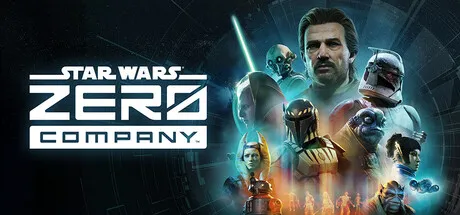
Hello, readers — Chasun here. On August 27, 2026, Electronic Arts and Bit Reactor, a studio devoted to turn-based tactics, released Star Wars Zero Company™. It is a single-player turn-based tactics game set in the late Clone Wars, built by a team of veteran developers who previously worked on the XCOM series, and it has been one of the year’s most closely watched titles among tactics players since it was first announced.
This dispatch breaks down the launch event itself, the timeline backdrop, the core tactical systems, and the progression layers, to help you decide whether this Star Wars-flavored tactics debut deserves your attention.
I. The Launch Event Itself: What the Official Word Says#
On August 27, 2026, the game officially launched, with developer Bit Reactor and publisher Electronic Arts announcing the news in sync. The official positioning calls it a tactics experience about “commanding the most cunning operatives of the Clone Wars,” stressing that players will lead the galaxy’s finest operatives against a new threat that will swallow the entire galaxy if no one stops it.
For turn-based tactics fans, this launch carries real weight. Bit Reactor’s core developers were deeply involved in the XCOM series, which gave the game a hardcore tactics pedigree from day one rather than a simple Star Wars skin over a shallow game.
| Release Details | Specifics |
|---|---|
| Game name | Star Wars Zero Company |
| Developer | Bit Reactor |
| Publisher | Electronic Arts |
| Launch date | August 27, 2026 |
| Genre | Single-player turn-based tactics / strategy / RPG |
| Platform | PC (Steam) |
II. Timeline Backdrop: The Late Clone Wars#
The story is pinned precisely to the late Clone Wars. In this period, the Galactic Republic and the Separatist forces are locked in a long and brutal war, clone legions fight side by side with the Jedi, and a vast scheme is quietly brewing in the shadows.
| Timeline Element | Notes |
|---|---|
| Time point | Late Clone Wars |
| Protagonist | Former Republic commander Hawkeye |
| Protagonist’s unit | Zero Company |
| Core conflict | Fighting a new threat that will consume the galaxy if left unchecked |
| Tone | Grim, strikingly grounded |
Across a cinematic original story, you command the galaxy’s top operatives and fight your own hard-won battles in this tension-filled gap of Clone Wars history.
III. Core Gameplay: Layered Turn-Based Tactics#
3.1 A Hardcore Tactical Foundation Inherited from XCOM#
Bit Reactor’s core team carries XCOM lineage, and Star Wars Zero Company was born with that hardcore turn-based DNA. Cover, line of sight, action points, and stress management form its tactical skeleton.
| Tactical Element | Notes |
|---|---|
| Cover system | Full cover versus half cover, with dynamically shifting hit chances |
| Action points | The cost of splitting movement and shooting within a turn |
| Line of sight | High ground and heavy weapons both grant vision advantages |
| Stress management | The status burden of prolonged operations |
| Terrain use | Elevation differences, destructible cover, environmental interaction |
3.2 Operative Development and Squad Management#
Hardcore tactics alone cannot carry long-term playability, and the game invests heavily in progression as well. Zero Company’s core operatives each carry a specialty and keep growing as battles unfold, forming a dual-track structure of “tactics on the outside, development on the inside.”
| Progression Layer | Notes |
|---|---|
| Operative specialties | Skill tree branches with differentiated roles |
| Equipment management | Weapons and attachments shape your combat style |
| Squad synergy | Operative abilities complement each other and build combos |
| Long-term growth | Experience accumulation and ability unlocks |
| Casualty mechanics | Losses and replacements on higher difficulties |
IV. Combat Design Highlights: Star Wars Flavor, Tactical Execution#
4.1 Tactical Depth Meets Star Wars Flavor#
Blending pure turn-based tactics into the Star Wars universe, the game never sinks to a reskin. Lightsabers, blasters, the Force, and clone forces are all mapped sensibly at the rules level, letting longtime Star Wars fans feel tactical depth inside familiar elements.
| Star Wars Element | Tactical Translation |
|---|---|
| Blasters | Precision shots and sustained suppression |
| Force abilities | Special powers that swing the battlefield |
| Medium droids | Heavy-firepower units that must be dealt with early |
| Environment | Star Wars-style set pieces with interactive mechanisms |
4.2 Dynamic Battlefields and Difficulty Options#
| Feature | Notes |
|---|---|
| Adjustable difficulty | Serves everyone from newcomers to hardcore players |
| Brisk turns | No forced quick-time events — deliberate decisions |
| Self-paced | Push the campaign forward at your own rhythm |
V. Positioning and Impact: What It Means for Players#
As a single-player-first tactics game, the positioning is clear and restrained: it skips multiplayer and the live-service route entirely, concentrating instead on a deep single-player campaign and a rich progression experience. That trade-off means its core audience is players who prefer working through missions alone and replaying tactical decisions over and over.
| Player Impact | Notes |
|---|---|
| Barrier to entry | Adjustable difficulty; newcomers and hardcore players both find a rhythm |
| Language | Simplified Chinese support and Steam achievements |
| Content type | Pure single-player campaign, no online play required |
| Replay value | Different experiences based on operative loadouts and tactical choices |
VI. Practical Advice Before You Start#
6.1 Getting-Started Essentials#
| Advice | Notes |
|---|---|
| Learn cover first | Cover is the heart of the tactics — watch your flanks |
| Use operative strengths | Every character has a defined role; play to it |
| Respect positioning | High ground and flanks decide outcomes |
| Manage resources | Save ammo and items for the long fight |
6.2 Quick Answers to Common Questions#
| Question | Answer |
|---|---|
| Can I play without knowing Star Wars? | Yes — the story stands alone and the entry barrier is friendly |
| Is there Chinese? | Yes, Simplified Chinese is supported |
| Real-time or turn-based? | Turn-based tactics, unhurried pacing |
| Is online play required? | No — it is a pure single-player campaign |
| Does the former XCOM team matter? | Yes — core developers carry that background |
| Can difficulty be adjusted? | Yes, for players of every stripe |
VII. Market Position and Outlook#
On the turn-based tactics track, games that hold a top-tier IP license and are run by a credentialed team are rare. Star Wars Zero Company starts from an excellent position: on one side, a tactical core hardcore enough to retain strategy players; on the other, the Star Wars IP brings natural mainstream attention.
| Differentiators | Notes |
|---|---|
| Top-tier IP | The licensed Star Wars setting |
| Team pedigree | Inherited hardcore tactical design experience |
| Long-term potential | Plenty of room for progression and content expansion |
| Audience reach | Tactics fans and Star Wars fans in one funnel |
VIII. Tactical System Breakdown#
8.1 How a Standard Attack-and-Defense Round Plays Out#
Understanding the game’s tactical rhythm comes down to mapping the information flow of one full round of attack and defense.
| Phase | What You Do |
|---|---|
| Recon phase | Read sightlines, mark enemy positions and cover |
| Positioning phase | Spend action points to seize favorable ground first |
| Strike phase | Pick the primary target and concentrate fire for kills |
| Cleanup phase | Handle stragglers, control casualties, preserve resources |
At first glance the loop looks identical to classic turn-based play, but the micro-decisions (grab the high ground first, or shoot first to chip health down) create the real decision space — and the core replay pleasure for hardcore players.
8.2 Operative Roles and Sample Squad Builds#
| Operative Type | Role | Squad Value |
|---|---|---|
| Assault | Frontline damage | Creates suppression and breaks defenses |
| Support | Healing and buffs | Holds the line steady |
| Heavy weapons | Fire suppression | Clears heavily armored targets |
| Recon | Vision and awareness | Wins the information war first |
When building a squad, resist stacking a single type. A complementary mix of roles not only handles more complicated battles, it also uses your development resources far more efficiently.
8.3 Resource and Equipment Management#
| Resource | Notes |
|---|---|
| Ammunition | Limited — allocate based on the flow of battle |
| Med supplies | The lifeline for critical moments |
| Equipment attachments | Shape feel and output; freely adjustable |
| Upgrade points | Invested into operative skill trees |
IX. A Terrain Lesson for Interstellar Battlefields#
If cover is the skeleton of Zero Company, terrain is its flesh. The marketing repeatedly stresses how decisive terrain is to tactical outcomes, and hands-on play bears that out.
| Terrain Type | Tactical Value |
|---|---|
| Elevation | Vision and hit-chance advantages from above |
| Destructible cover | Tear down the barrier your enemy is living behind |
| Narrow corridors | Hold a suppression position and lock down fire lanes |
| Open ground | A test of movement and how you distribute fire |
Players with weak terrain awareness tend to end up pinned and unable to land a shot, while veterans who use terrain well turn every engagement into an information and tempo advantage of their own.
X. What to Watch After Launch#
10.1 Long-Term Reputation and Content Updates#
| Watch Point | Notes |
|---|---|
| Balance | Numeric balance across operatives and equipment |
| Difficulty curve | Whether mid and late game stay challenging |
| Content expansion | Whether campaigns and unit types are added |
| Community ecosystem | The potential of customization and modding |
A tactics game’s real value only shows after launch euphoria fades, once players have finished it broadly and replayed it deeply. Whether Zero Company goes from “hot” to “classic” depends on sustained investment in balance and content updates.
10.2 Side-by-Side with Similar Games#
| Comparison Point | Zero Company’s Angle |
|---|---|
| Setting | The worldview dividend unique to the Star Wars IP |
| Feel | Hardcore tactical design inherited from veterans |
| Audience | Strategy players and Star Wars fans alike |
| Positioning | Deep single-player experience, not multiplayer |
XI. Editorial Wrap-Up#
From the solidity of its tactical rules to the care in its Star Wars worldbuilding, Zero Company’s debut hands in a remarkably seasoned report card. Beyond giving hardcore players genuine mechanical depth, it uses cinematic storytelling and adjustable difficulty to hold a much wider audience. This gap in Clone Wars history becomes a galactic adventure that blends tragic grandeur with strategic gamesmanship.
| Dimension | Verdict |
|---|---|
| Tactics | A solid system — cover and action points feel right |
| Worldbuilding | Earnest Star Wars fidelity |
| Progression | Operative differentiation and trade-offs are genuinely interesting |
| Barrier to entry | Adjustable difficulty; broad audience reach |
Readers, if you are pulled by both the historical weight of Star Wars and the strategic texture of turn-based tactics, Zero Company may well be the most watchable title of its kind this year. As guides, patches, and deeper reviews follow, NTGame will keep covering it.
— Chasun, Editor-in-Chief, NTGame