Resonance: A Plague Tale Legacy Launch Roundup#
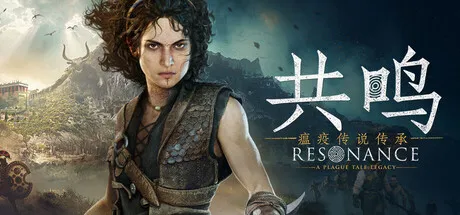
Hello everyone, I’m Long Zuiri. On August 27, 2026, Asobo Studio and Focus Entertainment jointly launched Resonance: A Plague Tale Legacy. As a new entry in the globally celebrated A Plague Tale series, this prequel carries that tragic medieval survival epic forward with an original story.
This launch roundup lays out the release details, where it sits on the timeline, the gameplay overhaul, and the critical reception, so players who haven’t picked it up yet can get up to speed fast.
I. The Game at a Glance#
| Item | Details |
|---|---|
| Title | Resonance: A Plague Tale Legacy |
| Genre | Action / adventure / narrative-driven |
| Developer | Asobo Studio |
| Publisher | Focus Entertainment |
| Release date | August 27, 2026 |
| Platform | PC (Steam) |
| Modes | Single-player |
| Languages | 17 languages including Simplified Chinese (full interface and subtitles) |
| Achievements | 36 Steam achievements |
| Critical score | Metacritic 85 (PC) |
II. Where It Sits on the Timeline: The Road Leading to the Tragedy#
Before we get into the game itself, its place in the A Plague Tale universe needs pinning down. The official setting is explicit: this story takes place fifteen years before A Plague Tale: Requiem, making it a prequel.
| Order | Title | Protagonist |
|---|---|---|
| Earliest | Resonance: A Plague Tale Legacy (prequel) | Sophia |
| Then | A Plague Tale: Innocence | Amicia |
| Last | A Plague Tale: Requiem | Amicia |
The timeline placement is elegantly clever. The “rats, fire, alchemy, and family tragedy” that veterans know haven’t yet unfolded at this point; the lead is instead a brand-new heroine, Sophia. She is a young treasure hunter — quick on her feet, stubborn by nature — on the run, who in chasing the secret of her own origins steps, piece by piece, into the mist of Minotaur Island.
| Keyword | Notes |
|---|---|
| Minotaur Island | The main stage — an island where myth and calamity intertwine |
| Sophia | An all-new lead: a young female treasure hunter |
| Original story | Set before Requiem; standalone yet complete |
| Mythic creatures | Legendary beasts nesting at the core of the cursed calamity |
| The mystery of her origins | The narrative engine driving the entire adventure |
III. Gameplay Overhaul: From Stealth to Head-On Fights#
Anyone familiar with the A Plague Tale series knows the last two entries revolved around stealth, puzzle-solving, and resource management, with combat mostly a “last resort.” This entry deliberately makes sweeping changes — players can finally stand up and fight.
3.1 The Combat System Finally Lets Loose#
| Change | Previous games | This game |
|---|---|---|
| Role of combat | Marginal, a last resort | One of the core experiences |
| Lead’s kit | A fragile young girl | A capable fighter and treasure hunter |
| Melee | Limited | Proactive parries and counters |
| Pacing | Slow-burn, stealth first | Faster, more proactive |
Reviews broadly land on one point: this game finally lets players “hit back.” While keeping the series’ somber aesthetic and narrative texture, combat is no longer passive escape but a furious, crisp, face-to-face exchange.
3.2 Exploration and Puzzles Still Deliver#
| Element | Notes |
|---|---|
| Island exploration | Open structure on Minotaur Island, branching routes |
| Environmental puzzles | Carries the series’ physics and environmental interaction |
| Clue collecting | Jigsaw-style advancement of the origins truth |
| Resource management | Limited items, multiple-use combinations |
IV. Art and Atmosphere: The Unchanged Canvas Beneath a Story-Driven Game#
For all the gameplay loosening up, the soul is still pure Plague Tale. Asobo Studio’s signature lighting, particles, and medieval-ruin aesthetics are fully preserved, and Minotaur Island is rendered as a “cursed, myth-tinged” isolated land.
| Art dimension | Style notes |
|---|---|
| Palette | Alternating gray-blue cold tones and warm orange firelight |
| Scenes | Stone ruins, damp caves, misty moors |
| Creature design | Organic beasts infused with Greek myth imagery |
| Presentation | Cinematic camera work and facial capture throughout |
V. Critical Reception: Metacritic 85 on PC#
As a new series entry, the game holds a composite Metacritic score of 85 on PC — squarely in “generally favorable” territory. Critics broadly endorsed the improved combat feel, the freshness of the prequel narrative, and an art package that deserves the praise.
Some voices also note that veterans used to the older games’ stealth rhythm will need some time to adjust to the faster combat — the inevitable growing pain of a tonal pivot. This is a bold turn, not a rerun of the series’ established route.
5.1 Highlights Worth Noting#
| Highlight | Notes |
|---|---|
| Combat | Finally proactive, with solid, weighty feel |
| Story | A prequel perspective that rounds out the worldview |
| Art | Asobo’s lighting remains on form |
| Difficulty | Adjustable, balancing challenge and experience |
VI. Overall Take#
For a series this deeply established, the smart move here is twofold: it protects the narrative and atmosphere that make A Plague Tale what it is, while taking a bold gameplay step — letting a franchise famous for “fragility” write “striking first” into its core loop for the first time.
For veterans, it’s a revisit that smells familiar yet plays different; for newcomers, it offers a nearly frictionless entry point — a complete story with no need to finish the earlier games first.
| Who it suits | Notes |
|---|---|
| A Plague Tale veterans | Revisit the worldview at a different tempo |
| Narrative-adventure fans | A complete, affecting prequel story |
| Action players | An all-new active combat experience |
| Art lovers | Asobo’s high-grade visuals and presentation |
VII. Before You Start#
7.1 Specs and Languages#
| Item | Notes |
|---|---|
| Languages | Full Simplified Chinese interface and subtitles; no Chinese voice-over |
| Requirements | Official recommended specs run smoothly at full HD |
| Saves | Steam Cloud save support, synced across devices |
| Difficulty | Adjustable in-game at any time, no restart needed |
The spec demands are not harsh — even a last-generation mainstream gaming laptop can hold stable frame rates at medium-to-high settings. If you chase maximum eye candy, make sensible cuts to the two performance-heavy options, shadows and volumetric fog; the visual impact is barely affected.
7.2 Three Tips for Newcomers#
| Tip | Notes |
|---|---|
| Don’t rush in swinging | Resources are tight early on; learn parry timing first |
| Search your surroundings | Minotaur Island hides rich clues; exploring pays off |
| Use the environment | Fire pots, ropes, and terrain can all win fights |
VIII. Getting Deeper Into Combat#
8.1 The Core Logic of Parry and Counter#
The pleasure center of this combat system is the “parry–counter” positive feedback loop. Unlike the old games’ keep-your-distance survival play, you can parry the instant an enemy strikes, then immediately follow up with heavy-damage pursuit.
| Action | Effect |
|---|---|
| Parry | Blocks an enemy attack and briefly staggers them |
| Counter | An immediate high-damage follow-up after a successful parry |
| Dodge | For unparryable heavy blows and area attacks |
| Finisher | Executes staggered or downed enemies |
8.2 Resource Loop and Combat Rhythm#
| Resource | How you get it | What it’s for |
|---|---|---|
| Fire | Map pickups and crafting | Dispersing enemies, igniting mechanisms |
| Ammunition | Limited | Ranged suppression and armor breaking |
| Herbs | Found while exploring | Restoring health at critical moments |
Combat and exploration are designed as a complementary loop: the more thoroughly you explore, the better stocked you are for a fight; and sound combat clears the way to explore deeper. This virtuous cycle gives every encounter meaning rather than serving as a mere gate.
IX. Quick FAQ#
| Question | Answer |
|---|---|
| Can I play without the earlier games | Yes — this is a complete, standalone prequel story |
| Is there Chinese | Yes — interface and subtitles are fully Simplified Chinese |
| Is it purely a stealth game | No — active combat is substantially strengthened |
| Does it need an internet connection | No — fully playable offline, single-player |
| Any sequel plans | Nothing announced; go by the base game and future news |
| Worth buying at launch | Worth considering for series fans and narrative-adventure players |
X. Post-Launch Updates and Expansions#
The Heritage Pack expansion is already listed on the Steam store, adding extra cosmetics and collectibles to the base adventure — completionists, take note.
| Expansion | Contents |
|---|---|
| Heritage Pack | Extra cosmetics and collectible items |
No firm schedule has been announced for story expansions, but given Focus Entertainment’s track record of supporting its series, balance patches and content additions after launch are worth expecting. Keep an eye on the Steam store page’s news feed for updates first.
XI. The Editorial Wrap#
As a bold pivot for the series, this game trades in “more proactive combat” for a brand-new calling card without discarding the melancholy and compassion that belong to A Plague Tale. Games like this usually have their worth confirmed by time only a few weeks after launch — whether players end up nostalgic for the older games’ claustrophobic stealth or embrace the new game’s punchy brawling is worth watching in the community.
| Dimension | Verdict |
|---|---|
| Narrative | Fresh prequel angle, emotional weight intact |
| Combat | Proactive overhaul, solid feel |
| Art | Above series standard |
| Innovation | Dares to break the series’ comfort zone |
Friends, if medieval narrative adventures are your thing, this prequel deserves a try. If guides get updated or versions change, NTGame will keep following. Enjoy your time on Minotaur Island.
— Long Zuiri, NTGame Editor-in-Chief