Onimusha: Way of the Sword Tops 1 Million on Day One — Why Revival Action Games Are Back?#
Long Zhiri | September 12, 2026
Hello everyone, Long Zhiri here.
The editorial office was restless during the first week of September.
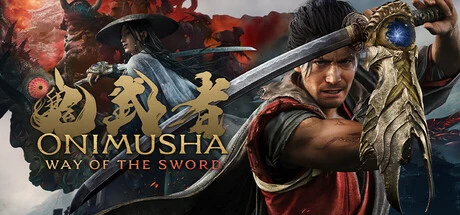
It starts with one launch announcement. On September 4, Onimusha: Way of the Sword finally arrived after years away. Before day one was even over, Capcom put out an official statement — more than 1 million copies sold on day one.
Our group chat exploded instantly. Zixing went straight for Capcom’s official wording, Chasun quietly dug up the old Onimusha sales history for comparison, and Wubian went archaeological in the comments section, unearthing years-old threads demanding to know when Onimusha would finally come back. Meanwhile I sat at my desk, watching Miyamoto Musashi cut down Genma on screen, and for a moment I was back in that summer I spent pulling all-nighters on Onimusha in a cramped server room.
One million copies sounds like just a number. But for the action genre — a category currently being ground down by “difficulty anxiety” and fast-food-style releases — that number hides something bigger worth discussing in depth: revival-style action games are genuinely back in fashion.
No guide talk today. This one is about the bigger picture for the industry.
1. One Million on Day One: What the Number Really Means#
First, the confirmed facts. What gives this announcement its weight is that it is an official sales figure published by Capcom itself, not third-party market speculation.
1.1 A Rare Day-One Sales Report#
In an era when “day-one shipments” are routinely inflated by every kind of accounting, the fact that Capcom is happy to put “1 million sold on day one” front and center as its headline stat says a great deal about its confidence. The figure comes straight from an official statement, and both its credibility and its impact are maxed out.
| Metric | Onimusha: Way of the Sword |
|---|---|
| Release date | September 4, 2026 |
| Day-one sales | Over 1 million copies |
| Launch platforms | PS5 / Xbox Series / Switch 2 / PC |
| Source of the announcement | Capcom, official |
After looking over the numbers, Zixing dropped this in the group chat: “This is not a ‘sold pretty well’ — this is a ‘came out swinging.’ Keep in mind, this is an IP that had been quiet for years, not one of those legacy brands that shows up every single year to prove it still exists.”
He is right. What makes this most remarkable is precisely how cold the IP had gone.
1.2 The Good Faith in the Official Numbers#
Putting out the day-one statement together with the platform lineup is an attitude in itself. A simultaneous launch across PS5, Xbox Series, Switch 2, and PC means the game was not betting on a single console; from the very start it spread the audience for an action game as wide as it could go.
For a classic that slept for years, an opening like this makes one thing clear: this is not a nostalgia cash grab milking existing fans — Capcom genuinely wants to put this beast back into the mainstream market.
2. What “Revival-Style” Action Games Actually Are#
Before going deeper, let’s pin down the term.
What I call “revival-style” action games are classic action IPs that were once glorious, went quiet for years, and have now returned in a completely new form. This is fundamentally different from a “remake” or an “HD port” — it is not a fresh coat of paint on an old bottle, it is setting a sleeping beast alight again.
2.1 Where Onimusha Sits in This Revival Wave#
Capcom’s official statement points to an obvious trend: revival is no longer a one-off event but a wave of back-to-back moves. And with more than 1 million sold on day one, Onimusha: Way of the Sword has become the most eye-catching entry in that wave.
Why this one? The answer lies in what makes it unique — it keeps the series’ most recognizable elements, its sword duels and Genma worldview, while rebuilding the core experience with modern technology and systems. It is not an “HD remaster”; it is a true new entry in the mainline series.
2.2 Why This Kind of Comeback Lands With Players#
This is no coincidence. Several editors on our team explained it from their own angles, and pieced together, their answers form the complete picture.
Zixing (the rational, tech-focused view): “The old fans can afford it now. The people who played these games back then have grown into middle-aged players with real spending power. They are willing to pay for good content, and that is a very real market signal for developers.”
Wubian (the social and long-term view): “Short video and streaming have amplified nostalgia. Platforms are full of nostalgia-driven fan content that reawakened the players of that era. And younger players today are ‘doing their homework’ on the classics — old IPs come with their stories built in, which makes them easier to break out of the niche than new ones.”
Chasun (the systems-breakdown view): “The core experience of action games never fundamentally evolved in all those years. A lot of what these IPs left unfinished back then, today’s technology can finally deliver. A ‘revival’ is not reheated leftovers — it is paying off, at last, a debt the studio owed its players.”
Zhanlan Yingren (the nostalgia and art direction view): “More importantly, classic IPs have an aesthetic with real memory hooks and identity. Those distinctive silhouettes, color palettes, and atmospheres are exactly what today’s assembly-line titles struggle to replicate. What comes back is the IP — and, more than that, a rare aesthetic.”
3. Titans Clash: Onimusha vs. Ninja Gaiden#
When players compare the two mountains of this revival wave, you cannot avoid Onimusha and Ninja Gaiden. Each held up its own corner of the sky during the action genre’s golden age, and both have now, independently, chosen to return.
3.1 Two Different Revival Paths#
One note first: further specifics on Ninja Gaiden await official announcements, so this section sticks to the broad strokes that are already clear and leaves unverified details alone.
| Comparison | Onimusha: Way of the Sword | New Ninja Gaiden |
|---|---|---|
| Core selling point | Sword duels, Issen counters, Genma worldview | Blistering combos, high-difficulty ninja kills, visceral hit feedback |
| Revival strategy | New protagonist, new stage, fresh start | Restarts with the original protagonist, continues the mainline |
| Difficulty positioning | Clearly layered, friendly to newcomers and veterans alike | Hardcore first, high barrier to entry |
| Market positioning | Mass-market, all platforms | Core action players |
3.2 Game Feel, Broken Down: Which One Hits “Right”#
As someone who has gone deep on both series, I want to talk seriously about how these two games differ on game feel — the fuzziest dimension, and the one that matters most.
The keyword for Onimusha: Way of the Sword’s feel is “elegance.”
It inherits the series’ proud Issen system — a frame-perfect block in the instant before an enemy’s attack lands, answered immediately by a single lethal strike. That one frame of feedback, paired with the sound of a katana slicing air and the swordsman’s afterimage, creates a classical beauty: a swordsman dancing on the blade’s edge. It does not chase relentless combo spam; it is about the rhythm and ritual of the one perfect killing strike.
The keyword for Ninja Gaiden’s feel is “explosive.”
It pushes raw exhilaration to the ceiling. High-speed aerial combos, seamlessly chained execution kills, offense and defense flipping like a meat grinder — every second puts pressure on the limits of your hands. The fun comes from that feeling of control: “I can’t believe I just pulled off something that gorgeous.”
My verdict in the office: these two are not competitors; they are the two extremes of action game aesthetics. Onimusha is “the breathing of the sword.” Ninja Gaiden is “a rhapsody of combat.” What they share is a deep respect for “action” itself — and a refusal to let enemies go down like melons being chopped, without consequence.
3.3 Difficulty Curves: Walling Players Off or Drawing Them In#
| Difficulty dimension | Onimusha: Way of the Sword | New Ninja Gaiden |
|---|---|---|
| Entry barrier | Moderate, smooth tutorial curve | High, unfriendly to newcomers |
| Core depth | Issen timing and stamina management | Combo system and enemy AI |
| Failure penalty | Forgiving, encourages retrying | Harsh, hardcore-oriented |
| Target audience | Everyone from newcomers to masters | Core action players above all |
Here is a very interesting phenomenon. Hardcore action games used to filter players through attrition and treated their barrier to entry as an article of faith. Now Onimusha has chosen the smarter path: use a low floor to welcome players in, then a high ceiling to give masters something to chase. That is a major reason it topped 1 million on day one — it satisfied the nostalgic veterans without scaring off newcomers.
Wubian’s take on this cut straight to the point: “Action games used to say ‘play it or don’t.’ Now they say ’let me lure you in first, then slowly get you hooked.’ That is what a mature market looks like.”
4. Breaking Down Capcom’s Revival Playbook#
If Onimusha is the most successful showcase of this “resurrection craft,” then Capcom is its undisputed grandmaster. Over many years, Capcom has built a remarkably mature methodology for reviving classics. We break it into its core modules.
4.1 Capcom’s Revival Playbook, Step by Step#
| Revival step | What it does | How Onimusha: Way of the Sword executes it | Result |
|---|---|---|---|
| Step 1: Pick the right soul | Choose classics with a fanbase and identity | Onimusha is one of Capcom’s action flagships | Built-in buzz |
| Step 2: Rebuild the bones | Redo core gameplay with a modern engine and systems | Brand-new combat system plus modern visuals | Sheds the dated feel |
| Step 3: Keep the original flavor | Preserve the series’ signature elements | Issen, the Oni Gauntlet, Genma, the Sengoku stage | Wakes the nostalgia |
| Step 4: Lower the barrier | Accommodate new and old players alike | Layered difficulty and tutorials | Widens the audience |
| Step 5: Steady operations | Official communication, reputation first | Official sales statement and simultaneous multi-platform launch | Builds trust |
4.2 Why Capcom Is So Good at This Craft#
The biggest difference between Capcom and other publishers is that it genuinely knows what the old IPs in its hands are worth.
Zhanlan Yingren put a fine point on it: “Many studios treat old IPs like ‘artifacts awaiting excavation,’ handling them so gingerly that what comes out is lifeless. Capcom treats them like metal that can be reforged — it dares to make sweeping changes while knowing exactly which parts of the soul must never be touched.”
From the Resident Evil remakes to the evergreen Monster Hunter to today’s Onimusha, Capcom keeps playing the same game: restore the charm of the classics to a modern standard, but never copy the skin of the past. That is the smartest part of its revival playbook.
4.3 The Limits of the Playbook: How Revivals Crash#
Of course, the craft is not foolproof. Zixing poured cold water on it in the office: “Revivals carry risk. If all you want is to harvest nostalgia without making the game itself good, longtime fans will turn on you and new players will not buy in either. The precondition of any ‘revival’ is always getting the work back above the baseline of simply being a good game.”
The same holds for Onimusha — it topped 1 million on day one not because of the name on the box, but because the game itself is solid. Nostalgia can only lure people through the door; what keeps them is a set of genuinely excellent game feel.
5. Why “Revival” Has So Much Room in the Action Market#
With the case study done, let’s pull the camera back and look at the opportunity at the genre level.
5.1 The Action Genre’s Nostalgia Dividend Is Paying Out#
| Phenomenon | What drives it | Impact on the market |
|---|---|---|
| Veterans coming back | Middle-aged players with spending power and nostalgia | Directly supports sales |
| Young players catching up | Short video and streaming deliver the classics | Expands the new audience |
| Sameness fatigue | Markets flooded with assembly-line open worlds | Rising demand for pure action |
| Classic IP scarcity | Fewer and fewer memorable titles | Revivals arrive with built-in heat |
| Technology dividend | Mature engines, controlled costs | The economics of a revival finally work |
5.2 A Gold Mine Being Dug Up Again#
Action games were long misunderstood as “only for hardcore players.” The past few years proved the genre’s ceiling is far higher than assumed — as long as the game is fun, distinctive, and memorable.
And the revival formula bundles all three in one package: a classic IP brings instant identity, nostalgia brings conversation, and a modern rebuild keeps the gameplay from feeling stale. Play those three cards together and it is no surprise the whole genre is red-hot.
The million-selling day one of Onimusha: Way of the Sword is the strongest footnote yet to that logic.
Chasun summed it up best: “Action games never died. They just changed shape and waited for us. Now the classic names are coming back one by one, and they are not living off old glories — they are telling us that the true vitality of action games never went away at all.”
6. The Player’s View: A Reunion Years in the Making#
Toward the end, I want to set the data and analysis aside and speak plainly, just as an old player.
I first touched Onimusha during a summer break in high school. On a friend’s console, I watched the opening — a straw-hatted samurai drawing his blade against the Genma — and I was nailed to the screen. That kid could not have imagined that years later I would be sitting here as a games journalist, witnessing its return.
The first time I saw Miyamoto Musashi land an Issen in the new game, the feeling was complicated. It was familiar — that was still the razor-sharp Onimusha of my memory. And it was foreign — the visuals, the systems, the feel, all of it remade from the ground up.
Zhanlan Yingren said something in the office one day that stuck with me: “A true revival is not making players recognize ‘oh, this is the old game.’ It is making players, in the middle of an all-new shock, suddenly remember who they were back then.”
I could not agree more.
That is why revival-style action games move me, and so many others. What they sell was never just a game — it is a stretch of time that was taken seriously, a passion kept alive across years.
One million copies on day one is the market’s answer. It is also the vote every old player cast with their wallet.
7. A Note From the Editorial Desk#
One heartfelt word before we close.
After years of covering games, I have seen plenty of here-today-gone-tomorrow hype, and plenty of forgotten names. When a character who has been quiet for years steps back into the spotlight and lets the quality of the work do the talking instead of harvesting nostalgia, that feeling is more reassuring than any number.
We have argued many times in the office about what counts as a true revival. Some say it is a sales victory, some say it is the return of an aesthetic, some say it is a form of compensation for longtime fans. In the end we all agree on one thing: when a new entry can make players remember their old passion years later, that alone deserves to be taken seriously.
Onimusha: Way of the Sword did that. And precisely because it did it on its own terms, this day-one million carries real weight.
— Long Zhiri, Editor-in-Chief, NTGame