Marvel’s Wolverine Near 1.9 Million in 3 Days: The Gap Between Critics and Players#
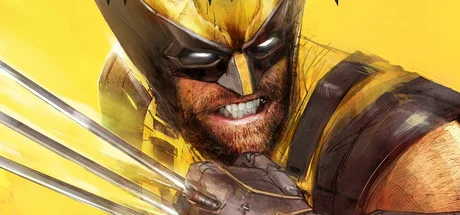
Hi everyone, Chasun here. Today’s subject isn’t a build or a boss fight — it’s a set of numbers that kept me staring at the screen for a long time. Last week this desk was still at war over a revenue story; this week Insomniac Games’ new release Marvel’s Wolverine dropped an even more intriguing case onto our table.
The headline first: three days after launch, Marvel’s Wolverine has sold nearly 1.9 million copies worldwide, with revenue estimated at around $130 million. On those two numbers alone, it is the best-performing PlayStation Studios first-party release of the year — and on a lifetime basis it has already outsold the entire PS5 run of Death Stranding 2.
But what really made me slam the table wasn’t the number itself — it was the contrast behind it: critic reviews are mixed, on Metacritic they don’t even qualify as high; meanwhile player ratings on the PS Store keep climbing, drawing an almost completely different curve. Critics nod solemnly and hand out sevens; players gnaw on wolf claws in the comment sections and hand out nines. This phenomenon of “critic scores and real player experience diverging” has grown more and more frequent across the industry in recent years, and Marvel’s Wolverine pushes the contradiction nearly to its extreme.
In this piece I want to do it my usual way — break everything into tables and numbers — and, along the way, collide with a few of the different voices around the newsroom.
1. First, the Skeleton: What 1.9 Million Copies and $130 Million Actually Weigh#
Before the discussion begins, get the numbers straight. No spin — just fact-checking.
1.1 Core Launch Numbers at a Glance#
| Metric | Value | Notes |
|---|---|---|
| Launch platform | PS5 (PlayStation 5) | New title running on Insomniac’s in-house engine |
| Sales window | 3 days | Per the officially disclosed counting method |
| Global sales | About 1.9 million copies | Closing in on the 2 million mark |
| Estimated revenue | About $130 million | Estimated at the $70 price point with a digital/physical mix |
| Critic score (Metacritic) | Mixed | Many outlets sitting in the 7-8 range; clear dispute |
| PS Store player rating | Climbing steadily | A clear divergence from critic scores |
1.2 Where It Sits in 2026’s First-Party Slate#
Absolute numbers only get you so far — you have to place it inside PlayStation Studios’ 2026 product sequence to see its position. We put together a comparison table:
| Title | Platform | Standing | Notes |
|---|---|---|---|
| Marvel’s Wolverine (this story) | PS5 exclusive | Best first-party performer of the year | Nearly 1.9 million in 3 days |
| Death Stranding 2 | PS5 | Slow-burn long tail | Lifetime sales passed by this game in 3 days |
| Other 2026 first-party new releases | PS5 | Each with its own lane | None matched this launch burst |
Chasun owes a fair word here: pulling Death Stranding 2 in for comparison is not a dig at Hideo Kojima. Quite the opposite — Death Stranding 2 represents another perfectly valid commercial path, one built on word of mouth climbing a very long slope. Marvel’s Wolverine runs the opposite pole: explode at launch, cash in the emotion within the first-party exclusive window. Both paths make money, but their “word-of-mouth curves” and “revenue schedules” are entirely different. This time, Insomniac pushed the explosive model to the very top of this year’s first-party table.
2. The Business Logic of a First-Party Exclusive: Why 1.9 Million Is Worth So Much#
Plenty of people see 1.9 million and think “less than I imagined.” That’s exactly where a common misconception hides. What I want to stress: in the 2026 first-party context, the value of an exclusive’s sales has never been as simple as “units sold.”
2.1 The Three Revenue Layers of an Exclusive#
| Layer | Direct source | How it shows up here |
|---|---|---|
| Launch layer | Digital/physical sales | Nearly 1.9 million copies in 3 days, about $130 million |
| Ecosystem layer | PS Plus / membership sign-ups and retention | Exclusives are the “flag-bearers” of the subscription library |
| Long-tail layer | Later discounts, sequels, IP extensions | Paving the way for the IP heat carried by the Marvel’s Spider-Man series |
2.2 Why Exclusivity Is Harder to Replace Than “Selling on More Platforms”#
Wubian, our mobile and online games specialist, once pushed back sharply: “Isn’t exclusivity just earning less? Go multiplatform and sell more — isn’t that better?”
Here’s how I answered him: the unit of account for exclusivity has never been “absolute sales” — it’s “how many players the game keeps inside the ecosystem.” 1.9 million copies sold on PS5 alone and 1.9 million copies sold across all platforms mean completely different things to the platform holder. An exclusive carries the function of keeping the whole console ecosystem alive — it gives potential console buyers one more “must-buy” reason, and existing owners one more excuse to renew their membership. The ledger here doesn’t count the game’s revenue; it counts the stickiness of the entire ecosystem.
That’s exactly why, after making Marvel’s Spider-Man 2, Insomniac still chose to make Marvel’s Wolverine a PS5 exclusive — what they’re selling has never been a game; it’s a console’s “reason to be used.”
3. The Root of the Split: Critic Lows vs Player Highs#
Now to the most central, most fascinating part of this piece: why do critics’ judgments and players’ experiences run in opposite directions? This is the argument that consumed our newsroom for a week.
3.1 The Two Score Sets, As Reported#
| Source | Score tendency | Central dispute |
|---|---|---|
| Metacritic critic average | Mixed (mostly around 7) | Mission pacing, repetition, and boss design criticized by some outlets |
| PS Store player rating | Climbing (9 range) | Combat feel, character fidelity, and presentation widely praised |
3.2 Why They Split: Misaligned Yardsticks#
My own read: the split isn’t about either side being “unprofessional” — the yardsticks themselves have slipped out of alignment. Taken apart:
| Dimension | What critics watch | What players watch |
|---|---|---|
| Combat | Is the system innovative, does it bring anything new | Game feel, fluidity, whether it’s fun |
| Pacing | Density of mission design, how tasks connect | Whether the time is worth it, willingness to replay |
| Characters | Depth of writing, narrative technique | “Is this Logan the Wolverine I know” |
| Fidelity | Consistency with the Marvel IP | Whether the moment the claws slice out feels as good as it should |
The problem sits precisely in the last row. Critics measure an “IP-faithful” game with a “game design” ruler, while players measure it with a “wish fulfilled” ruler. When a set of wolf claws slices through an enemy exactly the way players imagined, the player-experience score has already maxed out — while critics are still docking points with the yardstick of “how much better is this combat system than the last game.” Two rulers, measuring two different things.
4. The Vertical Comparison: Marvel’s Spider-Man#
As the sister line within Insomniac’s same universe, the Marvel’s Spider-Man series is the unavoidable reference. We keep complete guide hubs for both titles on this site: Marvel’s Wolverine and Marvel’s Spider-Man 2. I’d rather read them together and trace the product logic Insomniac has followed all along.
4.1 The Two IPs, Commercially and Critically#
| Title | Launch platform | Market position | Critic/player reception |
|---|---|---|---|
| Marvel’s Spider-Man | PS4/PS5 | Breaking in a brand-new Marvel IP | Critics high, players broadly in consensus |
| Marvel’s Spider-Man 2 | PS5 | Sequel to a mature IP | Critics and players largely converged |
| Marvel’s Wolverine | PS5 exclusive | Extension of the IP matrix | Critics low / players high, sharply divergent |
4.2 Why the Split Is Bigger Than Ever#
Zhanlan Yingren, our art lead and keeper of nostalgia, put it perfectly: “Spider-Man is the kind of IP anyone can like; Wolverine is not. Wolverine fans arrive with extremely strong presets — what they want is that foul-mouthed, claws-drawn-blood Logan, not a nicely house-trained superhero.”
I agree with that judgment. Spider-Man’s “universality” concentrates its reception naturally, while Wolverine’s “marginality” polarizes it naturally. Insomniac bet on the latter this time. High risk, high reward: when the bet lands on the fans’ sweet spots, player scores rocket upward; when it drifts from critics’ presumed “AAA design template,” the low critic scores come right along with it.
5. An Open Question Worth Asking#
Finally, I want to leave a question I won’t rush to answer. 1.9 million copies and $130 million are the facts of the first 3 days. But a few variables will genuinely decide this game’s final commercial standing over the coming months:
| Variable | Direction of impact | Window to watch |
|---|---|---|
| Later discounts and promotions | Whether long-tail sales keep being pushed forward | 3-6 months |
| PS Plus catalog timing | Whether and when it joins the membership library | 6-12 months |
| Post-launch word of mouth | Can player momentum feed back into a critic turnaround | 1-2 months |
| Crossover with the Marvel’s Spider-Man series | Whether the IPs can funnel heat to each other | Long term |
The newsroom still has no unified answer on this question. Some say 1.9 million is just an “exclusive launch bubble” that will cliff in six months; others argue that the sustained climb of player ratings is the real moat, and that this game, like Death Stranding 2, will release its value slowly over the long haul.
My position: both readings may be right, and both may be wrong. Because the genuinely interesting thing about Marvel’s Wolverine is not how much it sold in 3 days — it’s that the game has once again dragged the crack between “critical review” and “player experience” into broad daylight. Behind that crack sits a real predicament for the credibility of criticism — when players’ fun no longer aligns with the critics’ evaluation framework, who holds the power to define a “good game”?
That question is worth far more than the number 1.9 million itself.
— Chasun, NTGame Editor-in-Chief