Thirty-One Years of Hero Dreams: A Full-Series Retrospective on Heroes of Might and Magic#
Long Zhuiri | July 30, 2026
Hi everyone, Long Zhuiri here.
I’ve wanted to write this piece for a long time.
The office air conditioning is blasting in late July; outside the window, cicadas drone through Shanghai’s dog days. On my monitor, an Olden Era window is open — I just finished a 200% difficulty Hive battle, a narrow win with three Hive Queens left standing at low HP. Heroic Theme is still looping in my earphones.
At the next desk, Zixing is fiddling with his AI benchmark tests; Chasun is buried in stat sheets for new games; Wubian is sharing Heroes of Might and Magic nostalgia videos from Bilibili in the group chat. Leaning back in my chair, I suddenly felt like saying something. About this series.
Four months ago, Might and Magic: Heroes — Olden Era went live on Steam, recouped its development costs on day one, sold through 500,000 copies in 72 hours, and sat at a 91% positive rating on Steam. The editorial desk boiled over — not just because we finally had guides to write, but because all of us thought this series was never coming back.
Then it came back. And it came back with its head held high.
So today, no guide talk. Let’s talk about something bigger. About the road this series has walked for thirty-one years.
Chapter 1: One Man’s Empire#

In 1983, in an apartment in Hollywood, California, a young man named Jon Van Caneghem started writing a game on a Commodore 64.
He was 23 at the time, freshly moved from Michigan to California, scraping by writing programs for computer magazines. He had no team, no investment — just one idea: he wanted to make an RPG that could stand beside Ultima and Wizardry.
Two years later, Might and Magic: The Secret of the Inner Sanctum arrived. 250 items, 94 spells, 200 monsters, 55 maps — for 1986, that was a nuclear-scale content payload. Van Caneghem took the finished game to a publisher, whose offer was one dollar per copy sold, on a game retailing at $35. He thought it over and decided to go it alone.
The company was named New World Computing, after the Star Trek line: “To explore strange new worlds, to seek out new civilizations.”
The rest is history: the company that started in an apartment built an RPG series mentioned in the same breath as Ultima and Wizardry, and on top of that hatched one of the greatest brands in the history of turn-based strategy.
Over the weekend I posted this story in our editorial group chat. Wubian’s reaction: “Isn’t that just the American indie developer story of the eighties?” I said exactly — except back then nobody called it indie; they called it “people who take making games seriously.”
Chapter 2: King’s Bounty and the Birth of Heroes#
While the Might and Magic series grew steadily, Van Caneghem made something completely different in 1990 — King’s Bounty.
Seen today, this game is the proto-Heroes: move a hero across an overworld map, recruit troops, capture castles, turn-based battles. But at heart it was a single-player RPG experience, not a strategy duel.
In 1995, Van Caneghem took King’s Bounty’s core gameplay, dressed it in the Might and Magic universe, and made a pure turn-based strategy game.
Heroes of Might and Magic: A Strategic Quest was born.
Zixing dug up the numbers the other day: the first Heroes game’s install package was only a dozen or so megabytes. A dozen megabytes. Any random update patch we download now is ten times that size. But that dozen-megabyte package defined the basic template of an entire genre: hero-led armies, town building, resource gathering, turn-based tile movement, hex-grid battlefields.
The first game had four factions (Knight, Barbarian, Sorceress, Warlock), no expansion, no online mode, nothing extraneous. Its rules were simple enough to grasp in an afternoon, yet deep enough that ten years of play might not exhaust the tactics.
In 1996, 3DO acquired New World Computing. In interviews, Van Caneghem said he agreed to the acquisition because wearing both the CEO and designer hats had worn him down — he wanted to focus on making games, not balance the books. Looking back at that line now, there is a certain dark humor in it.
Chapter 3: The Golden Age#
Heroes of Might and Magic II: The Succession Wars shipped in October 1996. Compared with the first game, it was an across-the-board evolution: six factions, a richer magic system, a more complex artifact system, and that unforgettable hand-drawn 2D art.
HoMM II’s intro cinematic remains a classic in my book — an aerial duel between angels and demons, set to Paul Romero’s signature organ score. Chasun called it “a perfect score among all strategy game intro cinematics.” I disagreed, because above it sits the third game’s intro. The desk argued through an entire meal over this one, and the final verdict was “adults don’t choose — we take both.”
And then came the milestone no conversation can dodge.
In 1999, Heroes of Might and Magic III: The Restoration of Erathia shipped.
I honestly don’t know how to put into words what this game meant to a generation. If I must try: before Metacritic existed, before Steam reviews existed, before any quantitative tool existed, HoMM III was already “the universally acknowledged masterpiece.”
Eight factions, more than 140 unit types, a combination-artifact system, a random map generator, a fully functional map editor — in 1999, New World Computing stuffed nearly every good idea it could think of into one game. Its balance was so good that twenty-five years later, people still run tournaments on it.
HoMM III’s two expansions, Armageddon’s Blade and Shadow of Death, kept the quality extremely high. Shadow of Death in particular — its dark narrative led by the necromancer Sandro set a benchmark for strategy game storytelling in that era.
I still remember the first time I got the Cloak of the Undead King in the Shadow of Death campaign — that “I am about to be invincible” rush. Few games since have given me that feeling.
From 2000 to 2001, 3DO also released the eight-part Heroes Chronicles, threading through a hero named Tarnum. Commercially the series wasn’t a success, but its worldbuilding ambition deserves credit. Chasun once ran the numbers: the eight chapters combined hold 1.5 times the content of HoMM III’s base game. Sadly, more volume doesn’t guarantee a fuller meal.
Chapter 4: The Turn and the Break#
Heroes of Might and Magic IV shipped in 2002. It was the last Heroes game developed by New World Computing.
HoMM IV did one thing still being argued about today: it let heroes step onto the battlefield and fight.
Supporters say it added tactical depth; opponents say it broke the core Heroes experience. My take? IV was a work full of experimental spirit, and many of its design ideas — heroes as controllable field units, a more flexible magic system, the diagonal perspective — look like valuable experiments today. But it arrived at the wrong time, in the wrong market conditions.
By then 3DO was on the ropes, and New World Computing went through major layoffs during HoMM IV’s development. Van Caneghem later admitted his involvement with IV was limited — he was busy racing cars at the time.
HoMM IV’s two expansions, The Gathering Storm and Winds of War, were solid in content, but the tide could no longer be turned.
In 2003, 3DO filed for bankruptcy protection.
When the news arrived, Chinese game forums filled with wailing. Heroes of Might and Magic is dead — that was everyone’s consensus at the time. Ubisoft bought the entire Might and Magic IP at the bankruptcy auction for $1.3 million. One point three million. Think about what a game IP license costs today, then think about this price, and I honestly don’t know what to say. Zixing’s verdict was the sharpest: “Lunch money, and they bought away an entire era.”
Chapter 5: Surviving in a Foreign Land#
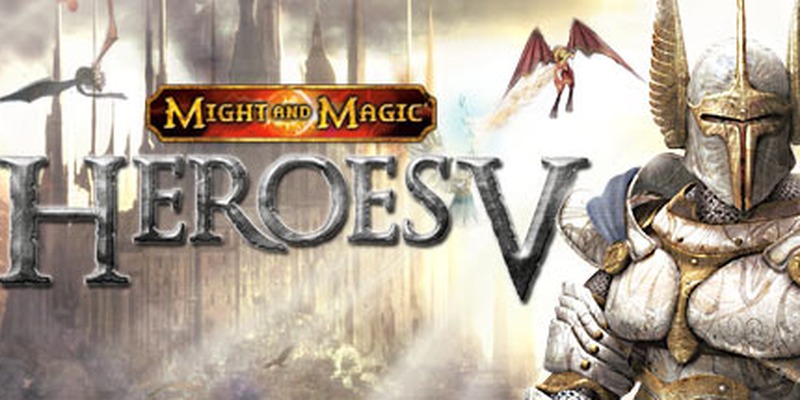
Ubisoft’s first work with the license — Heroes of Might and Magic V — was handed to the Russian developer Nival Interactive.
Honestly, when the outsourcing news broke, veterans were anxious. Could a Russian studio do Heroes of Might and Magic justice? The facts proved Nival not only could — it delivered brilliantly.
V’s first big move was going fully 3D. An obvious call today, but in 2006 the quality of 3D strategy games was all over the place. Nival’s answer was a pleasant surprise — the 3D presentation didn’t sacrifice gameplay; it instead brought fresh expressiveness to battle animations and terrain effects.
More importantly, V made a smart philosophical choice: return to the HoMM III framework. Six factions, a clean pyramid unit structure, straightforward town building — all the language veterans already knew. Nival’s job wasn’t reinventing the wheel; it was wrapping the classic experience in new technology and making it prettier.
V’s two expansions, Hammers of Fate and Tribes of the East, enriched the content further — the orc faction added in Tribes of the East in particular injected fresh blood into the series.
Chasun, while organizing guides, put it this way: “Five’s best quality is that it knows what it is. It didn’t try to reinvent the wheel — it polished that wheel until it shone.” I think that summary is spot on.
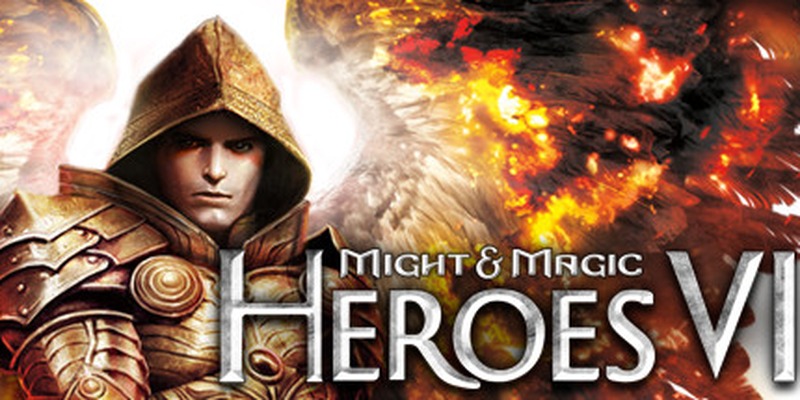
Heroes of Might and Magic VI shipped in 2011, developed by Black Hole Entertainment (with Limbic Entertainment later taking over the DLC).
VI’s reception was complicated. It hit the series’ artistic peak — concept art from the Bliss team is still my desktop wallpaper. But gameplay-wise, VI made many bold and divisive changes: resources cut from seven types to four, the town screen downgraded from full 3D to a windowed UI, the hero skill tree completely redone, and the most headache-inducing one of all — always-online DRM.
I remember how long players in China wrestled with that online verification the year VI launched. Chasun’s log from back then: “at least two calls to customer support before the game would even start.” Wubian added: “the anti-piracy measures of that era basically punished legitimate users.”
VI’s two DLCs, Pirates of the Savage Sea and Danse Macabre, were actually decent in content, but the core-mechanics controversy never really lifted.
Chapter 6: The Hard Final Stretch#
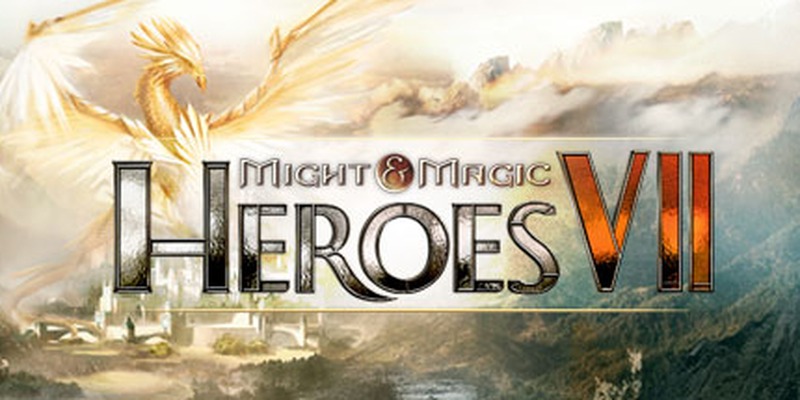
Heroes of Might and Magic VII shipped in September 2015. Exactly twenty years after the first game.
VII’s development lineup changed — Limbic Entertainment took over completely. The game’s state at release — to put it kindly, “incomplete”; to put it bluntly, “half-finished.” Bugs everywhere, dim-witted AI, a campaign story that opened strong and fizzled, multiplayer all but unusable. The negative-review wave on Steam came fast and hit hard.
Ubisoft didn’t give up: later patches and the Trial by Fire expansion fixed many problems, but first impressions had already set.
VII’s foundations weren’t actually bad. The art style returned to a cartoon-leaning high-fantasy aesthetic, unit design had real shape, and the town screen finally returned to full 3D after years away. But its luck was bad — it ran into a trough for single-player strategy games in the US market, plus internal development management problems.
After VII, the series went silent for eleven years.
Eleven years.
Plenty happened in between: several licensed mobile adaptations shipped; Ubisoft occasionally resold the old games at a discount; HoMM III’s popularity on the Steam Workshop kept growing instead of shrinking; and the Horn of the Abyss (HoTA) mod community pushed HoMM III’s balance to a competitive level. But everyone knew: a proper sequel to this series was, most likely, never coming.
Our editorial desk did a feature last year on “game series that came back from the dead,” and Chasun ranked Heroes of Might and Magic first. I said at the time: “It hasn’t come back from the dead yet — don’t list it.” Chasun fired back: “Dead, sure. But hundreds of thousands of people still buy HoMM III on Steam every year.”
He talked me around.
Chapter 7: The Phoenix Rises#
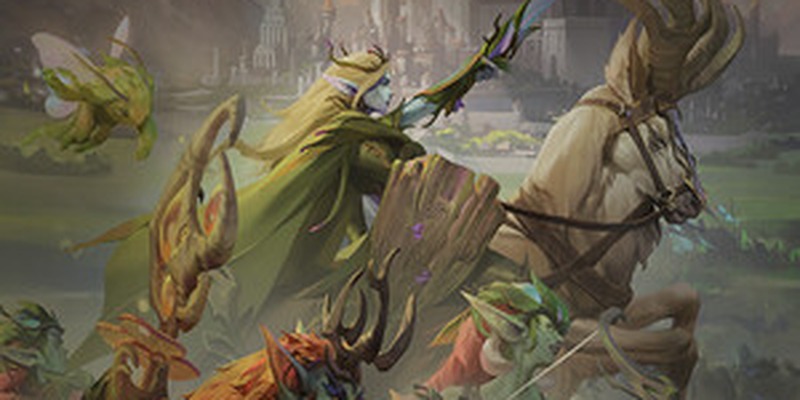
In 2023, a studio called Unfrozen announced it was partnering with Hooded Horse and Ubisoft to develop an official prequel to the Heroes series.
The group chat exploded.
Zixing immediately looked up Unfrozen’s track record — a small team of ex-Nival members behind SpellForce 3, an RTS/RPG hybrid with a solid reputation. Wubian’s reaction: “Hooded Horse? The strategy-focused publisher that’s been rising lately? If Paradox were sitting across the table I’d worry a little, but Hooded Horse’s recent taste in titles checks out.”
In October 2025, the Steam demo went live, peaked at 24,000 concurrent players within 24 hours, and the wishlist blew past one million.
Then came the heavyweight news: Jon Van Caneghem himself returned, joining development as a creative consultant.
In January 2026, the man — an elder now, truly; he was 34 when the first Heroes game launched, and he is 64 today — came back to the world he built with his own hands. He told the media: “It feels surreal. Like walking into a room I haven’t been back to in ages, and every piece of furniture is still where I left it.”
On April 30, Heroes of Might and Magic: Olden Era officially landed on Steam Early Access.
The reviews were strikingly consistent: PC Gamer said “it is neither a disruptive reinvention nor a divisive reinterpretation — it is simply an excellent strategy game”; GameStar said “it feels like coming home — home to the series’ best entry, Heroes of Might and Magic III”; Gamersky gave it 8 out of 10.
Player verdicts were blunter: “Very Positive” in Steam’s Chinese-language reviews.
I’ve logged seventy-plus hours and unlocked 19 of the 22 achievements. I still open HoMM III random maps on certain nights and slowly grind down a neutral creature camp with Fortress. Twenty-six years separate the old from the new, but you can clearly feel the shared skeleton in their bloodline — the ruleset established in 1995 still works today, and it is still fun.
Chapter 8: The Editorial Desk That Argued for a Week#
Honestly, this piece cost the editorial desk a full week of arguing.
The core question: which entry is the series’ best?
Zixing’s position was unambiguous: III, and it’s not close. “Measured on system depth, balance, and mod ecosystem, the third game is still the peak. Olden Era is good, but the Early Access build doesn’t carry that much content yet.”
Chasun disagreed: “You’re underrating V’s historical standing. Without V pulling off a beautiful 3D transition in 2006 and holding the core audience, this series might have died in the first round of the Ubisoft era. V is the lifeline of the entire series.”
Wubian’s take was the most contrarian: “IV’s experimental spirit is severely underrated. Heroes personally fighting on the battlefield — no sequel has dared pick that idea back up in all these years, and yet it is precisely one of the most valuable design directions. Think about it: if the engine and technology of the day had kept up, how much further could IV’s ideas have gone?”
I said you’re all right, but my vote goes to II. Not because II is the best, but because that’s the one that hooked me — that summer vacation, my older brother brought home a bootleg disc with an armored knight on horseback printed on the cover. I installed it and played the entire summer. Later I learned every unit’s English name, memorized all the cheat codes, and saved up to buy legitimate copies of III and IV. Without that summer, there would be no me sitting here writing this piece.
In the end it was Zixing who smoothed things over: “Alright, this is a question of personal attachment, not objective ranking. You keep arguing — I’m going to build a data sheet.”
Minutes later he dropped an Excel screenshot into the group — a “series quality index” weighted across Metacritic scores, Steam positive ratings, and player retention. The result: III first, V second, Olden Era third (current data), II fourth.
The group went silent for a minute. Then Wubian sent one line: “You’re doing this on company time?”
Zixing: “Lunch break.”
Chapter 9: Why It Matters#
After finishing the text above, I had ChatGPT generate a word cloud with the keyword “Heroes of Might and Magic.” The biggest word: “memories.”
I thought it over carefully, and the word felt accurate.
What makes the Heroes series special is that it accompanied an entire generation of Chinese players growing up. In the era when personal computers were just entering Chinese homes, Heroes of Might and Magic was standard equipment in nearly every internet cafe and school computer room. A five-yuan bootleg disc, a few dozen megabytes of install package, a save file a few hundred KB in size — these things made up countless late nights and recess debates.
I still remember playing HoMM III with classmates in an internet cafe: two of us at our own chunky CRT monitors, a row of cola cans between us as the border. We knew nothing about balance or optimal play back then — whoever got Archangels first won. Simple, joyful, direct.
Chasun once told me something I consider the perfect ending for this piece: “Heroes of Might and Magic was never one of those ‘you should play this’ games. It is one of those ‘you have already played it’ games.”
Yeah.
If you open Steam today, see Olden Era on the front page, browse the reviews and screenshots, and feel a faint tug of “should I give it another try” — then this piece wasn’t written in vain.
Buy it. Play it. It’s late — one more turn, then sleep.
The Full Series at a Glance#
| Title | Year | Developer | My score | Editorial verdict |
|---|---|---|---|---|
| Heroes of Might and Magic I | 1995 | New World Computing | ★★★★ | The founding work that defined the genre |
| Heroes of Might and Magic II | 1996 | New World Computing | ★★★★★ | The fully evolved classic |
| Heroes of Might and Magic III | 1999 | New World Computing | ★★★★★ | The series’ undisputed peak |
| Heroes of Might and Magic IV | 2002 | New World Computing | ★★★ | An experimental spirit worth respecting |
| Heroes of Might and Magic V | 2006 | Nival Interactive | ★★★★ | A flawless 3D transition |
| Heroes of Might and Magic VI | 2011 | Black Hole / Limbic | ★★★ | Top-tier art, divisive gameplay |
| Heroes of Might and Magic VII | 2015 | Limbic Entertainment | ★★ | Solid bones, terrible timing |
| Olden Era | 2026 | Unfrozen Studio | ★★★★ | The king returns; the future looks bright |
Editorial Easter Egg#
While I was writing this, Zixing passed my desk, glanced at the screen, and said: “You’re nearly 4,000 words in — how many people will actually finish it?”
I said: “If I finish writing it, someone will finish reading it.”
Wubian popped up from the group chat: “Where does that confidence come from?”
“From those dozen-odd megabytes in 1995.”
— Long Zhuiri, Editor-in-Chief, NTGame