TGS: The GTA6 Booth Was Rammed - Scarcity Marketing and Scalper Economics for a Top-Tier Blockbuster#
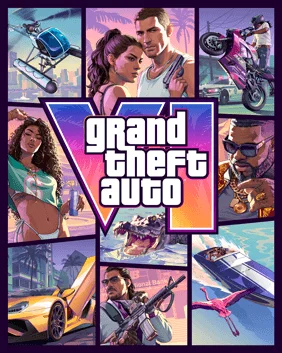
Hey everyone, Chasun here. This week the entire games industry has its eyes locked on Tokyo Game Show 2026, and the most talked-about scene there was, almost predictably, claimed by the Grand Theft Auto 6 booth.
The reason I’m turning this “booth queue” piece of show-floor trivia into a business analysis is that what sits behind it goes well beyond “players are excited.” A packed booth, limited merch changing hands fast on resale platforms, and a giveaway that had to be temporarily suspended over crowding - stack those together and you have a complete specimen of how top-tier blockbusters manufacture scarcity, how scalpers arbitrage it, and how event economics actually runs.
As someone who spends their days picking apart markets and business structures, what I want most is to lay out the underlying mechanics of this “hunger marketing” playbook.
1. Back on the Ground: Reconstructing What Actually Happened#
Before the analysis, let’s get the facts of the GTA6 booth at this year’s TGS straight.
1.1 The Booth Was Rammed and the Queue Went Capacity-Limited Early#
The thing that most rattled industry assumptions this time was the queue rhythm at the GTA6 booth. According to on-site accounts, the visitor queue hit its capacity ceiling shortly after the show floor opened each day, and staff had to throw up barriers on the fly, shut the queue down, and turn away the crowd still streaming toward the booth.
To grasp the weight of that scene, you need a reference frame: at past TGS editions, a hot title’s queue usually goes through a visible ramp-up period between opening and filling out. The GTA6 queue skipped that gradual curve almost entirely and tripped the emergency protocol in “instantly at capacity” mode. That is basically a declaration that the standard crowd-control playbook failed on the ground - the traffic model the show and the brand had planned got punched straight through by GTA6’s pull.
More importantly, this “queue spectacle” is itself an extremely striking image. What got organically spread by media, creators, and social platforms wasn’t a paid ad - it was a genuinely overflowing visitor line that had to be shut off. Compared with buying advertising, a self-organized queue is usually the more credible and more persuasive piece of brand endorsement.
1.2 Limited Merch: From “Entry Gift” to “Resale Commodity”#
The news that excites market watchers even more is the limited merchandise handed out at the booth entrance. This is a standard show-floor perk, meant to pull visitors into the booth. Very quickly, though, word spread that this merch had flowed onto resale platforms, with prices pushed far above what a normal show giveaway is worth.
To understand how extreme that premium is, start with the baseline logic: a typical show merch T-shirt is a thin-margin or even loss-making “traffic giveaway,” with essentially no commodity premium built in. But once it gets stamped “show exclusive” and “on-site only,” and sells out on the floor because demand outruns supply, its resale pricing logic changes completely - it stops being a piece of clothing and becomes a “scarce asset.”
| Attribute | Ordinary show merch | Limited merch in undersupply |
|---|---|---|
| Positioning | Entry-level traffic gift | On-site-exclusive scarce good |
| Pricing logic | Cost spread | Priced by scarcity |
| Distribution channel | On-site giveaway | On-site giveaway + resale |
| Barrier to entry | Walk in, get one | Queue to enter, demand outstrips supply |
Once a piece of inherently cheap merch is treated by the market as a “miss it and it’s gone” scarce good, its resale price detaches completely from its production cost - this is no longer “souvenir” logic, it is pure “scarce asset” pricing logic.
1.3 The Giveaway Was Temporarily Suspended#
It wasn’t only the GTA6 home booth. A partner zone handling cross-promotion on the show floor also temporarily suspended its giveaways because the crowd got dangerously dense while handing out GTA6-related freebies.
Taken alone, that is an operations incident. Set against the whole GTA6 booth frenzy, it is the spillover of the same “human flood” washing between booths - when one booth’s traffic goes past its load limit, the heat transfers straight into neighboring partner zones and sets off chain-reaction congestion.
2. The Core Breakdown: How Hunger Marketing Works for a Top-Tier Blockbuster#
Piece those scenes together and you’ll see they aren’t isolated show-floor anecdotes - they are the same “scarcity marketing” machinery projected onto different parts of the event. Let’s take the mechanism apart.
2.1 The Essence of Hunger Marketing: Manufacturing “Perceivable Scarcity”#
Plenty of people reduce hunger marketing to “deliberately stocking less,” but that’s only the surface. Real hunger marketing is about manufacturing a sense of scarcity the player can perceive, which significantly raises an item’s psychological value without ever raising its price directly.
Back to the GTA6 booth giveaways:
| Element | Hunger marketing mechanism |
|---|---|
| Limited merch | Handed out at the booth, but in limited quantity and only to those who enter, naturally forming “entry barrier + scarce supply” |
| On-site freebies | Also time-boxed and quantity-capped, triggering an on-site scramble the moment they drop |
The key point: these things cost almost nothing to make, but are extremely hard to obtain. To get one, you first have to squeeze into a line that will shut down shortly. That “queue barrier” is itself the best amplifier of perceived scarcity.
2.2 Why “Limited Giveaways” Beat “Discounts”#
In commercial terms, limited giveaways and discount promotions are two fundamentally different strategies. A discount says “this thing isn’t worth that much”; a limited giveaway says “this thing is hard to get, so it’s worth more.”
For a top-tier blockbuster about to launch, protecting the sense of high value matters far more than a short-term concession. Especially in the final window before launch, the brand urgently needs to keep market expectations and the sense of scarcity at their peak - exactly what limited giveaways can do and discounts cannot.
That is also why Rockstar Games chose “merch with entry” rather than “on-site discounts” as the centerpiece of its show-floor interaction.
2.3 Queue Time as a “Value Anchor”#
There is one more mechanism that’s easy to overlook - the length of the wait is itself a value anchor.
When a player queues a long time for a giveaway, they subconsciously assign it a higher value, because “something I traded my time for must be worth it.” Behavioral economics calls this the sunk cost effect: the longer the time invested in the queue, the less willing the player is to admit they queued for something worthless, so the item’s value keeps inflating in their own head.
That explains how a piece of nearly worthless merch ends up positioned in a player’s mind as “worth one queue” and even “worth a premium on a resale platform.”
3. The Scalper Supply Chain: A Closed Loop from “Queuing” to “Arbitrage”#
If hunger marketing is the brand’s upstream design, then scalpers are the downstream arbitrageurs riding right behind it. The resale frenzy around GTA6 merch this time happens to show us exactly how a complete scalper supply chain runs.
3.1 The Three Links of Scalper Arbitrage#
Every successful scalper play has to clear three links:
| Link | Scalper action | How it showed up here |
|---|---|---|
| Acquisition | Squeeze into the limited channel and get the item at near cost | Queue, enter, collect merch; cost is almost zero (show ticket plus time) |
| Circulation | Move the item to a public, tradable platform | Listed on resale platforms almost immediately |
| Cash-out | Sell at a scarcity premium | Priced far beyond the merch’s original value, flipped for profit |
The hinge of the loop is the first link: the scalper’s acquisition cost is extremely low. The entry cost of one merch item may be nothing more than a day ticket plus queue time. Once secured at that low price, every subsequent resale is nearly pure profit.
3.2 Why “Higher Barriers” Actually Feed the Scalpers#
Interestingly, many assume “raising the barrier” keeps scalpers out, but reality usually runs the other way. A higher entry barrier usually means stronger scarcity, and stronger scarcity is exactly what scalpers love most.
| Barrier | Effect on ordinary players | Effect on scalpers |
|---|---|---|
| Queue capacity-limited early | Harder to enter; merch feels rarer | Merch scarcer; resale premium climbs |
| Merch in limited supply | Hard-won | Supply locked; prices hold firm |
| Show floor as the only channel | No restock possible | Supply monopolized; pricing controlled |
In other words, the harder the brand works to protect the merch’s “scarcity,” the fatter it feeds the scalpers’ arbitrage margin. This is a game between brand and scalper played over “scarcity” - the brand manufactures scarcity to inflate perceived value, the scalper exploits that scarcity to arbitrage it, and the inflated resale prices in turn confirm the “high value” of the merch and the brand behind it.
3.3 “Flipping Merch” Is Really “Flipping Hype”#
The last point: what is actually being traded in that overpriced merch isn’t fabric at all - it’s the players’ anticipation for GTA6, a blockbuster about to launch.
The reason the merch can sell far beyond its original value is that it leans on Grand Theft Auto 6, one of the most watched game IPs on the planet. What the buyer pays a premium for is largely the identity and belonging of “owning a keepsake of this top-tier blockbuster.” Put plainly, what the scalper is flipping isn’t a T-shirt - it’s the market sentiment that has formed around GTA6.
4. Event Economics: A Precision Machine of Offline Traffic and Monetization#
Lift your eyes off the single GTA6 booth and a bigger picture appears: the show itself is a precision machine of traffic and monetization. The “packed booth” drama at TGS is a textbook cross-section of event economics.
4.1 Three Players, Three Ledgers#
A successful show is really a three-way negotiation in which each side gets what it came for:
| Player | Core demand | How it played out at TGS |
|---|---|---|
| Show organizer | Maximize foot traffic and buzz | Lean on landmark booths like GTA6 to pull total attendance |
| Game publisher | Maximize brand exposure and product anticipation | Use scarce giveaways to build a queue spectacle and harvest attention |
| Visitors/players | Get the experience, the merch, and the sense of participation | Willing to queue for scarce giveaways, even bid on resale platforms |
All three settle into a subtle alignment of interests along the chain “scarcity → queue → buzz → monetization”: the publisher manufactures scarcity, the players supply the crowds, the organizer harvests the traffic, and the scalpers skim a cut from the gaps.
4.2 “Queue Length” as a Free Marketing Asset#
For the brand, a long queue is an almost free marketing asset.
When a booth’s line grows long enough to force a channel shutdown, the image itself carries real visual punch and gets organically spread by on-site media, creators, and social platforms. Compared with buying ads, a queue the visitors form themselves is a more credible and more persuasive brand endorsement - it tells everyone, in the most direct way possible, that this product is genuinely in demand.
That is exactly why publishers will deliberately design the “limited giveaway + capacity-limited queue” combo just to stage a “sold-out” spectacle at a show.
4.3 The On-Site Costs Behind One Queue#
Of course, manufacturing this much heat isn’t free. A packed queue means the show and the brand must throw extra staff at sudden congestion:
- Deploying extra floor staff for guidance and barriers
- Emergency retuning of the crowd-control plan and traffic flow
- Managing the risk of crushing and stampedes
- Handling the frustration and complaints of visitors who never got in
All of that is the hidden cost sitting behind the “heat halo.” Mishandle any single link and a successful marketing win can turn into a PR incident.
5. What It Means for the Industry: Why GTA6’s Heat Matters#
Finally, let’s put this show-floor episode into a larger industry frame. It isn’t just a win for GTA6 the game - it reflects several deep signals in the current console market.
5.1 Market Thirst: How Much “Stored-Up Demand” a True Blockbuster Can Pull#
The rammed GTA6 booth proves one thing in the most direct way possible: the market’s stored-up demand for a true top-tier blockbuster is enormous.
In a cycle routinely criticized for “a shortage of innovative big titles” and “an industry stuck in a rut,” GTA6 used one queue to prove that if the product carries enough weight, players are not short on passion and not short on willingness to spend. That “one call, a thousand responses” pull belongs to a very short list of titles in this industry.
5.2 From “Product Competition” to “Emotion Competition”#
The episode is also a reminder that at this stage, competition among top-tier AAA titles has to some extent shifted from “product competition” to “emotion competition.” When product quality is already broadly taken for granted, whoever better moves the players’ emotions, manufactures topics, and creates a sense of participation wins the pre-launch narrative war.
GTA6 ran the combo of “scarce giveaways + queue spectacle + resale chatter” into a sustained wave of discussion across the entire web - a textbook case of emotion marketing.
5.3 Long-Game Lessons for the Industry#
For other publishers and the industry at large, this GTA6 booth frenzy leaves a few lessons worth chewing on:
| Lesson | Detail |
|---|---|
| Scarcity marketing is still the strongest weapon | A top IP can ignite coverage with limited giveaways alone; the return on investment is extremely high |
| Scalper governance is a shared industry problem | The scarcer the item, the more scalpers it attracts; balancing heat against order is an industry-wide puzzle |
| Offline experience is being revalued | In an era of exhausted online marketing, an offline queue spectacle becomes the scarce, memorable event |
| Anticipation is the biggest hidden asset | Emotion banked before launch converts into real day-one purchasing power |
6. Closing: The Industry Truth a T-Shirt Lit Up#
Looking back, the thing truly worth studying in this booth frenzy may not be the overpriced merch at all - it’s the whole industry logic of “scarcity, anticipation, and monetization” sitting behind it.
For Grand Theft Auto 6, this was unquestionably a successful pre-launch warm-up - one queue spectacle, once again proving a pull no rival can match. For the industry, the episode works more like a mirror: it shows the enormous power of “emotion marketing” for top-tier titles, and it also shows the very real industry problems of scalper arbitrage and on-site operations hiding behind scarcity.
As a top-tier blockbuster launching worldwide on November 19, 2026, GTA6 used one packed booth to declare its absolute pull over this market. The remaining suspense isn’t “will it be huge” - it’s “exactly how huge will it get.”
— Chasun, NTGame Editorial Team