Elden Ring In-Depth Review: Four Years Later, Why Does It Still Reign Supreme?#
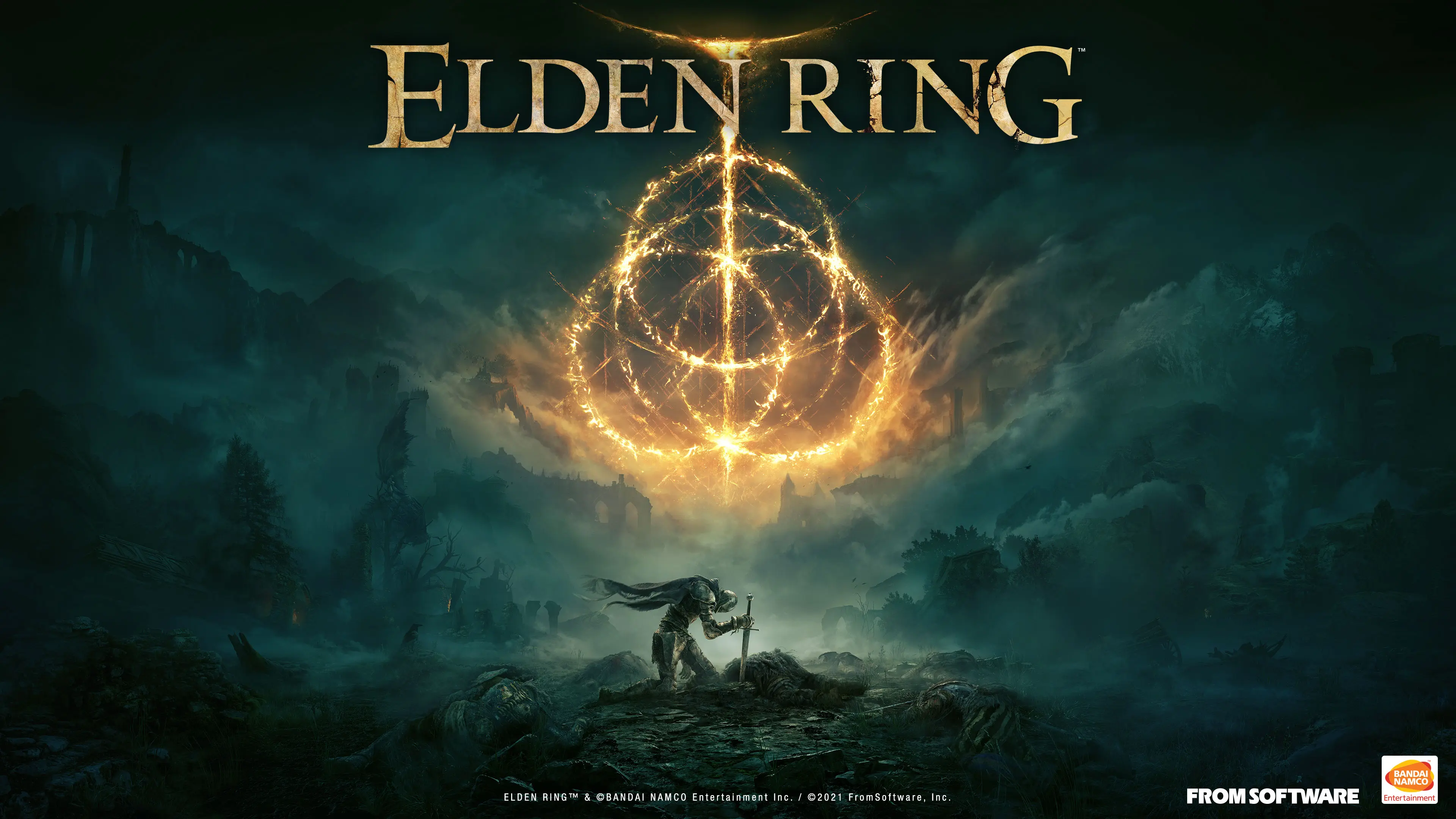
By Long Zhiri | July 2026
Before We Start#
On February 25, 2022, when players around the world first set foot in Limgrave, few predicted this game would shape the entire industry so deeply over the next four years. As an old player who has followed the series all the way from Demon’s Souls, I’ve had a front-row seat to soulslike games traveling from niche hardcore to the mainstream — and even so, Elden Ring’s scale and influence exceeded everyone’s expectations.
Four years on, the Shadow of the Erdtree expansion is long out, and imitators have flooded the field — yet when I opened the game again and rode across the waters of Liurnia, one thing hit me: it remains the unclimbable peak.
With this rewrite, I don’t intend to pile on the worn-out “masterpiece” labels. I want to seriously answer one question: four years after a game’s release, when we look at it again, were the designs once held up as gospel proven by time — or merely magnified by nostalgia?
Frankly, my feelings about this game are conflicted. It carried me through many late nights, and it made me want to hurl my controller after countless beatdowns at bosses’ hands. But it’s exactly that push-pull of love and hate that makes it worth being taken seriously — not waved away with a single word like “masterpiece.”
So this review, I want to be as frank as possible: where it’s good, where it’s bad, and looking back after four years, what it actually left us. If you’ve ever pulled an all-nighter in this world, you’ll probably understand every line I say.
Below, let’s start from its core design philosophy. In the end, what let it stand out among so many open-world games wasn’t any single trick, but a whole interlocking design logic where each piece completes the others.
A Soulslike Answer to the Open World#
FromSoftware’s biggest challenge was fitting the soulslike tradition of compact level design into an open world. Their answer is brilliant: no mindless checklist of question marks — exploration is driven by visual guidance and the player’s own curiosity.
Every direction in Limgrave hides a story: the glowing Erdtree in the distance, ruins on a cliff’s edge, a fog-shrouded swamp. The game never tells you “go here”; it simply puts interesting things out there and waits for you to walk over. Four years later, that design philosophy still feels luxurious — the vast majority of open-world games still use screen-filling icons to efficiently eliminate players’ urge to explore.
I still remember the shock of my first ride through Stormhill: broken ramparts ahead, endless misty forest behind, the Erdtree overhead seeming within reach yet forever out of grasp. That’s when I understood FromSoftware’s true brilliance: not making the map bigger, but making every inch of land feel storied. Even an unremarkable ruin often hides a buried side quest, or a talisman that reshapes your whole build.
That density of “surprises everywhere” is what imitators can never learn. They either turn wonder into repetitive checkbox question marks, or let the map degrade into commuter filler. The Lands Between keeps a sense of proportion — the payoff of exploration is always something concrete and felt, not a bouncing experience-point number.
I also want to single out the pacing design of Sites of Grace and fast travel. It nails the boundary between “effort” and “reward”: struggle over a mountain, clear out a ruin, and you usually light a new Grace that makes coming and going frictionless. The loop gives every expedition a clear anchor, and it quietly smooths away the “fatigue” that open worlds breed most easily.
Traditional box levels like Stormveil Castle and the academy of Raya Lucaria prove FromSoftware’s old trade is still elite. Layered vertical structures, the sudden clarity of unlocking shortcuts, non-player character side stories hidden in corners — these are soulslike staples, yet inside an open-world frame they feel more precious still.
Interestingly, looking back four years later, this “less is more” philosophy has become its greatest capital against the games that came after. While rivals stuff maps with cities, side quests, and collectibles, the Lands Between keeps a restrained blank space — a restraint reminding us that the core of an open world isn’t acreage, but that little jolt of “something seems to be over there” every time you turn around.
Combat: Balancing Breadth and Depth#
Elden Ring’s combat system sits in the most forgiving tier of the series, which by no means makes it simple. The addition of Ashes of War pushed weapon build freedom to unprecedented heights — a single straight sword can be pure physical, frost-and-blood, or even carry Lion’s Slash to become a heavyweight.
And that’s exactly why the famous array of “starting route” guides became countless newcomers’ first lesson. The permutations of weapons, Ashes of War, talismans, crystal tears, and stat allocation turn buildcraft itself into a genuine pleasure. Through one respec after another, you gradually find your own combat rhythm instead of being boxed in by a preset answer. Late in the game, when you’ve gathered the Great Runes and stand before that golden door facing several different endings, you’ll truly feel that every trade-off along the way has become your choice.
The spirit ashes summon mechanic sparked the community’s longest-running controversy. Some think it diluted the weight of boss fights; others think it let more players experience the full content. My view: the spirit ashes system is a clever design lever — it gives newcomers a path forward without stripping veterans of the fun of self-imposed challenge. Plenty of players finish without ever summoning, and “no ashes” has itself become an organic community difficulty tag.
Four years on, this self-imposed challenge culture grows ever livelier. The community has settled a whole set of house rules: no leveling, no summons, one specific weapon type only, even no rolling for entire runs. None of these are official settings, yet through players’ organic spread they became a kind of “invisible difficulty tier.” It proves one thing: the most precious quality of a good game is leaving players room to define their own challenges.
The boss design in the Shadow of the Erdtree expansion swings to the other extreme — the attack frequency and pursuit pressure of Messmer the Impaler and Promised Consort Radahn approach or even exceed Sekiro’s peak bosses. For players chasing extreme challenges it’s a blessing; for ordinary players, the Scadutree Blessing system became almost a mandatory collection item — a design trade-off worth questioning.
Narrative: The Summit of Fragmented Storytelling#
Hidetaka Miyazaki’s fragmented storytelling reaches a new height in Elden Ring. Item descriptions, non-player character dialogue, scene staging, and boss placement together weave the sweeping historical scroll of the Lands Between. George R.R. Martin’s mythological skeleton gives the world a weighty foundation, and FromSoftware fills in the flesh with their signature use of negative space.
For four years, the community’s excavation of the plot has never stopped — from Queen Marika’s true identity to speculation about the Erdtree’s nature, from the fall of the Eternal Cities to the mystery of the Numen race, every corner has players piecing story fragments together. That collective puzzle-solving experience is itself part of the game, and it’s the most seductive thing about fragmented storytelling.
Worth savoring: four years later, that collective scholarship still hasn’t cooled. Countless players lay out the game’s texts, items, and environmental details like archaeologists, arguing over the chronicle of the Lands Between on forums. The stage Martin built — “already collapsed into myth” — gives everyone exactly enough room: solid enough for researchers to find traces, vague enough for everyone to add their own stroke.
Fragmented storytelling has its costs, though. For players unaccustomed to digging through piles of item descriptions, it’s hardcore challenge in another form. Many key plot beats hide in offhand dialogue and progression ordering; one careless step and an entire questline is missed. Only on a second or third playthrough do you suddenly realize “so that character had this whole story behind them.” That “understood too late” experience is double-edged — some savor it, while others lose half the narrative content because of it.
Community Ecosystem and Mods#
Elden Ring’s modding community has produced a staggering volume of content over four years. The Seamless Co-op mod, randomizer mods, arena mods, even large-scale gameplay overhauls — the community runs on love, extending the game’s playability far beyond official content.
The Seamless Co-op mod deserves special mention: it delivers the full online experience the game never provided, letting players complete the entire game like a co-op RPG. FromSoftware never officially supported the feature, but their attitude toward the modding community has stayed relatively open — this unspoken understanding is one of the most beautiful parts of the PC gaming ecosystem.
That “official doesn’t lock the door, community builds anyway” model is precisely a major source of Elden Ring’s long-term life. Once players had thoroughly digested the official content, the community took the baton, keeping the game fresh with countless reworks and gameplay extensions. It isn’t the kind of work forgotten a year after launch — it’s a tree continuously watered by players, constantly sprouting new branches.
One more phenomenon worth noting: today’s new players mostly grew up on “guides and short videos.” They enter the game already carrying questions — “how am I supposed to read this story?” “what class should I pick?” — shuttling back and forth through endless community content. And that quality fan creation and those guides loop back into being part of the game: it’s no longer just that hardcore action RPG, but a world rebuilt by its community so anyone can enter with a map in hand. That vitality is one reason it’s still being talked about four years on.
The Shortcomings#
No game is perfect. Elden Ring’s problems are just as visible — and that’s exactly what makes this review complete: it deserves neither blind praise nor reflexive dismissal, but a fair, level look.
Thinning late-game content: from the Mountaintops of the Giants onward, exploration density drops noticeably. The Consecrated Snowfield is vast and empty, and the Haligtree branch’s hostility stacking turns exploration from a pleasure into an ordeal. The late-game boss gauntlets are spectacular, but short on fresh ideas.
PC performance history: the stuttering and frame drops of the PC version at launch remain community lore. Later patches improved a great deal, but performance issues persist in specific scenes.
PvP balance: from launch through the expansion, PvP balance was never fully solved. Some weapons and weapon arts dominate; others barely see play at all.
Honestly, any one of these, back at launch, could fuel weeks of forum arguments. But four years later, what really steadied its reputation is precisely the sincerity of a studio willing to answer those voices with update after update. It was never untouchable — it kept finding ways to get better, and that sustained investment is itself the most admirable posture a long-tail game can have.
Final Words#
Four years on, Elden Ring remains the benchmark for open-world action RPGs. It isn’t perfect — no game is — but in the places that matter most, it achieved the absolute: letting players feel the wonder of exploration and the joy of conquest in an unfamiliar world.
For many old players steeped in the genre for years, its meaning may lie more in “bridging what came before and after.” With one expansive, inclusive Lands Between, it caught everything the series had accumulated, and opened a door toward wider worlds for those who followed. You may argue it’s past its peak; it’s harder to deny that it remains the reference point still cited and re-measured to this day.
And to the new players who arrived following guides and streamed playthroughs, I’ll say this: guides and videos can spare you detours, but they can’t give you the heartbeat of your first step into Limgrave. If you put it down long ago, pick a weekend, log back in, and choose any capital city’s direction to walk to the end — you’ll find the places you never had time to look at back then still hold things worth stopping for.
And by now, there are probably a few more young people in there willing to walk slowly with you. May everyone who steps into the Lands Between find the answer that belongs to them.
For those who haven’t yet set foot in the Lands Between, here’s what I want to say: don’t be scared off by the “soulslike” label. Elden Ring gives you plenty of choices and retreats — if you can’t win, go explore elsewhere; if a boss walls you, summon spirit ashes; if you’re lost, follow the Sites of Grace. This game is great not because it’s hard, but because it respects your time and intelligence, trusts your curiosity, and generously rewards every venture.
Finally, I admit it: I who write this review am, in the end, wishing with fondness. But it’s exactly that fondness that makes me willing, four years later, to sit down and walk you through its virtues and flaws, one by one.
— Long Zhiri, a player of twenty years